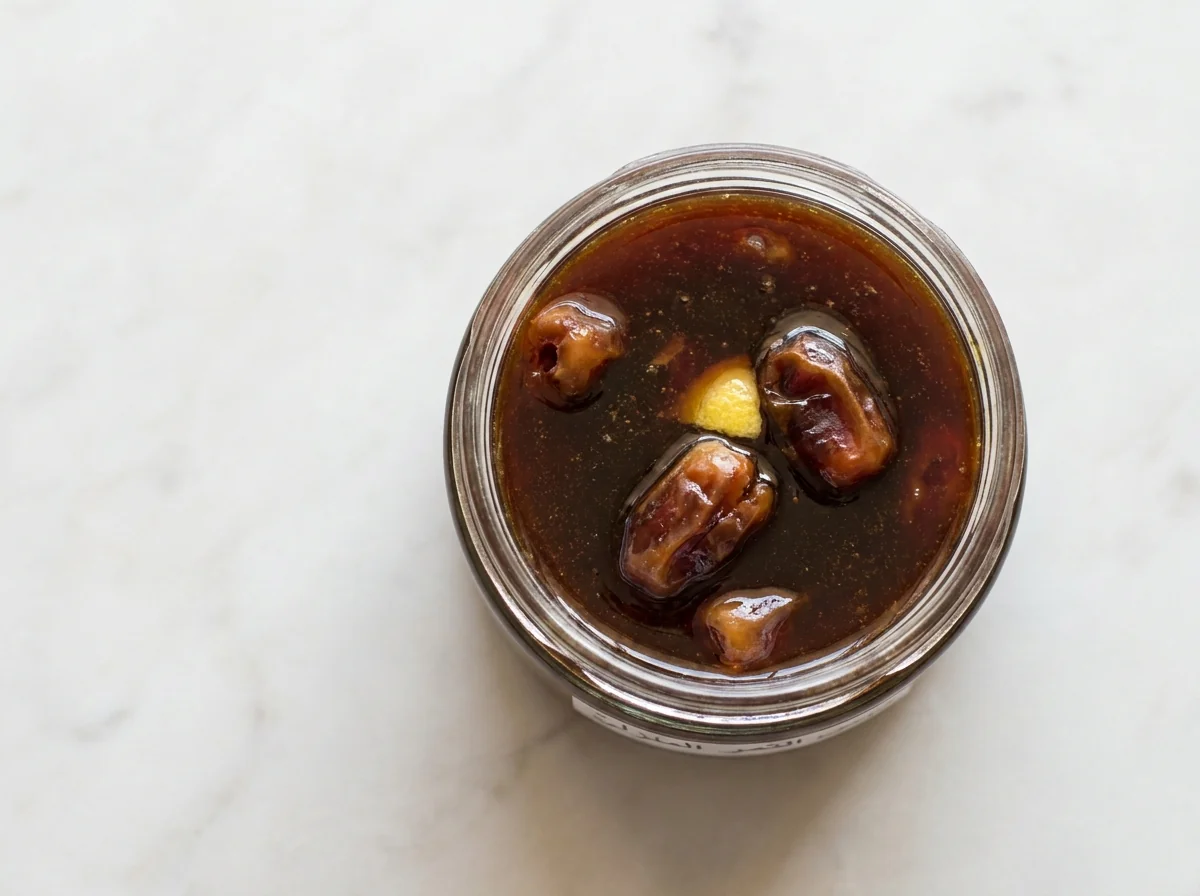
The pressed, concentrated date extract with which the homes of the Peninsula sweetened their centuries before white sugar. Making it at home is nothing more than cooking, pressing, and reducing, and its jar drizzles half the desserts of our heritage library.
Preparation Steps
Cook the dates until fully broken down
In a pot, bring the dates and water to a boil, then lower the heat and simmer covered for half an hour until the dates fall completely apart and the water turns dark brown. Mash them thoroughly right in the pot and turn off the heat.
Press the extract through cheesecloth. The heart of the craft
Strain the mixture through a doubled cheesecloth over a clean pot and squeeze the bundle with a patient grip down to the last drop; in this pressing lies all the date extract, and what stays in the cloth is spent fiber that did its part.
Reduce the liquid over low heat
Return the clear liquid to low heat, uncovered, for half an hour, stirring every few minutes as it evaporates, thickens, and darkens until it coats the back of the spoon in a dark, glossy layer and runs off it in a slow, unbroken thread; add the lemon juice to guard its color and balance its sweetness.
Turn it off one degree before the final consistency
Take it off looser than you want. The molasses thickens noticeably as it cools, and cooking it all the way to its full consistency means scooping it tomorrow with a spoon as if carving.
Bottle the gold of the date
In a sterilized bottle or jar. Pure date molasses with no added sugar and no additives: a drizzle for marasee, aseeda, luqaimat, and date pancakes, and the oldest Arabian alternative to honey.
Blood Sugar Impact
The glycemic index (GI) measures how quickly a food raises blood sugar, while the glycemic load (GL) measures how much a full serving raises it. Together they give the complete picture.
Glycemic Index
GI
49Low
Low0–55Medium56–69High70+
A low value (≤55) means a gradual rise in blood sugar — the most suitable range for diabetes and insulin resistance.
Glycemic Load
GL
10Low
Low0–10Medium11–19High20+
Glycemic load reflects the impact of the full serving. To lower it: take half a serving, or pair the recipe with a source of protein and fiber.
Nutritional Information
Per ServingMakes 16 servings · one serving is about 95 g of raw ingredients
Calories87 kcal4%of Daily Value*
Protein1 g2%of Daily Value*
Carbohydrates23 g8%of Daily Value*
Fat0 g0%of Daily Value*
Fiber2 g7%of Daily Value*
Sodium0 mg0%of Daily Value*
Potassium218 mg5%of Daily Value*
Phosphorus19 mg2%of Daily Value*
* Percent Daily Values are based on a 2,000-calorie diet per FDA food-label reference values — your daily needs may be higher or lower. Values are derived from the recipe's ingredients via the USDA database.
Troubleshooting
The most common problems when preparing Homemade Date Molasses, and how to fix them:
The molasses came out thin like a syrup
Too short a reduction. Return it to low heat uncovered, and the slow unbroken thread off the spoon is the sign of doneness before cooling.
It turned solid in its jar
The reduction went past its limit. Soften it with a warm water bath for the jar, and take the lesson of turning the next pot off earlier.
A burnt note in the background
High heat or inattentive stirring in the final third. Keep it low and the spoon vigilant. Concentrated sugars burn in a moment's distraction.
The color is pale, not dark
Light-colored dates. Dark Khalas and Sukkari give the molasses its deep color, and the lemon prevents its pale oxidation.
Storage and Make-Ahead
At room temperature
Two months in a sterilized, airtight jar away from the sun. Like store-bought molasses.
In the fridge
Six reassuring months; it thickens in the cold, so take it out a few minutes before use.
Sign it has gone off
Fermentation foam or a sharp smell. Rare with sterilization and a dry spoon.
Tested Ingredient Substitutions
Original Ingredient
Tested Substitute
Ratio
Flavor Difference
Khalas dates
Any soft dark date
1:1
All local dates work, and the darker the deeper
The lemon juice
Omit it
to taste
It works, but it guards the color and the balance
Using it as a drizzle
In place of honey in all our recipes
1:1
The first Arabian sweetening alternative
The leftover cheesecloth fiber
Knead it into energy balls
to taste
Zero waste. Its fiber is one last prize
How Much Does It Make? Scaling Guide
Ingredient
One bottle ~350 g
175 g
Two bottles
Dates
500 g
250 g
1 kg
Water
1 L
500 ml
2 L
EEINA Nutrition Tip
Squeeze the cheesecloth with a patient, gradual grip while it is warm and bearable. Squeezing it hot will scald you, and a hasty, despairing squeeze leaves half the extract in the fibers; a grip that tightens slowly draws out everything the date came to give.
Add This Recipe to Your Plan
The EEINA app saves your favorite recipes, calculates them from their real ingredients, and shows your daily numbers toward your goal. Try it free now.
The paste is whole mashed dates with their fiber, as a spread and a filling; the molasses is its pressed, concentrated extract, a liquid to drizzle. Two siblings from one palm for two jobs.
Is it really healthier than sugar?
It sweetens alongside the minerals of the date and some of its extract, not as isolated sugar, yet it remains a concentrated sweetener to be drizzled in a thread, not poured: the advantage lies in the company and the moderation together.
How many recipes does it serve for us?
Marasee, aseeda, khabees, luqaimat, date pancakes, and yogurt compotes. The thread of date molasses runs through the veins of the whole heritage library.
Is it worth making when stores sell it?
Store molasses is often stretched with sugar and glucose. Read the label; your jar is pure date at a third of the cost, with the certainty of a single ingredient.