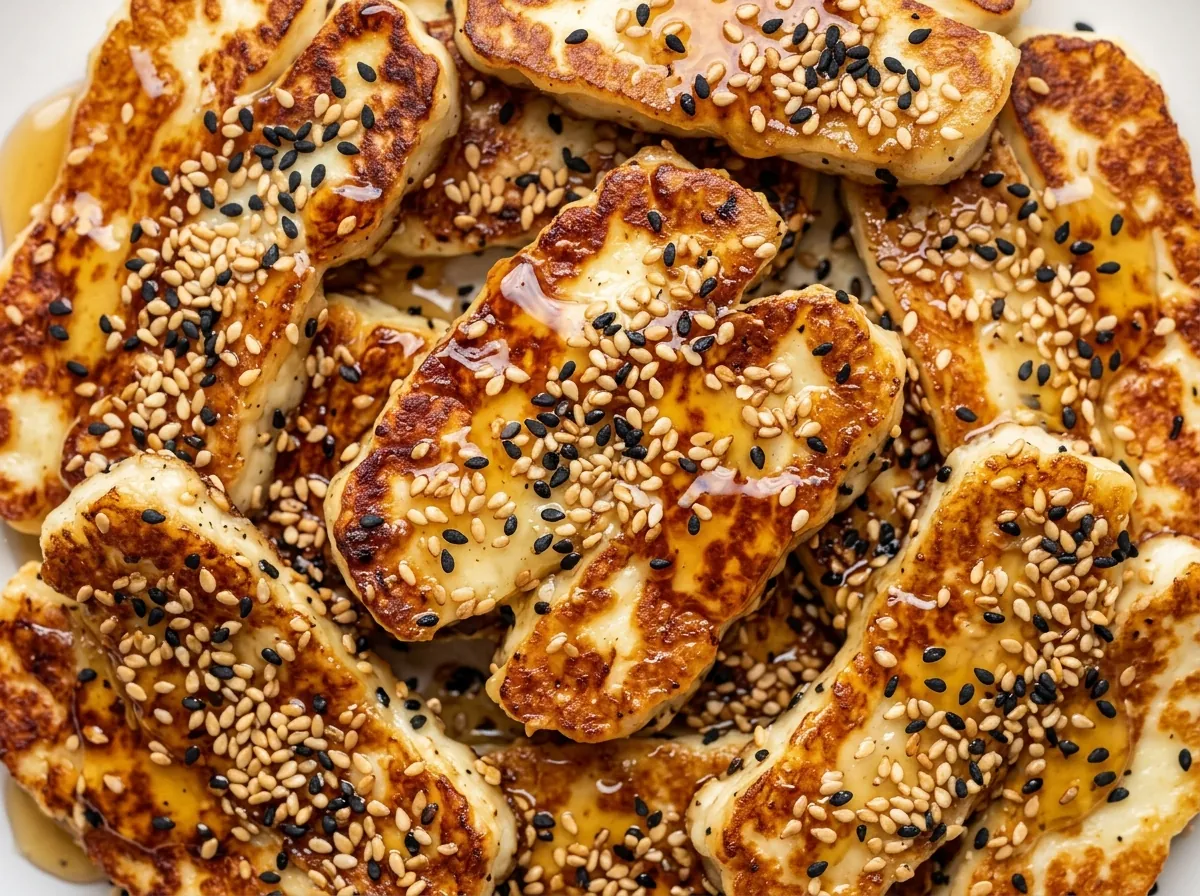
Halloumi slices seared in a dry pan until golden-faced, then drizzled with honey and scattered with sesame and nigella seeds — salty meets sweet in a Gulf-style bite ready in ten minutes. A sweet Kuwaiti variation on our grilled halloumi, good for quick entertaining or a snack between meals.
The sweet variation on our grilled halloumi, from a Kuwaiti home recipe on Cookpad: the original goes the oil, lemon, and za'atar route with vegetables, while here the direction flips — the hot halloumi is drizzled with honey and scattered with sesame and nigella seeds, the sweetness balancing the cheese's saltiness.
We kept the original's searing as is: one-centimeter slices, one to two minutes per side, and immediate serving. And we cut the source's honey from 3 tablespoons to one and a half; the hot slices spread it, so the smaller amount covers the whole plate.
Preparation Steps
Slice the halloumi and dry it
Cut the halloumi block into slices one centimeter thick, using a long knife in a single motion per slice; thinner falls apart and thicker never heats through at the center. Pat the slices dry of their packing brine with a paper towel — a dry surface is the condition for browning.
Heat the pan
Heat a dry nonstick pan with no oil over medium-high heat for two minutes, until your hand feels the heat rising from a distance; halloumi is naturally fatty and releases its own fat as it sears, so it needs no oil.
Sear both sides
Arrange the slices in the pan spaced apart and leave them one to two minutes without moving until the underside turns golden brown, then flip with tongs and sear the other side another minute. Do not linger — halloumi toughens and turns rubbery if over-seared.
Drizzle with honey and scatter the seeds
Transfer the slices immediately to the serving plate and drizzle them with honey while hot so it runs over their faces, then scatter the sesame and nigella seeds so they cling to the honey, and serve at once; halloumi toughens as it cools, so immediate serving is part of the recipe.
Blood Sugar Impact
The glycemic index (GI) measures how quickly a food raises blood sugar, while the glycemic load (GL) measures how much a full serving raises it. Together they give the complete picture.
Glycemic Index
GI
45Low
Low0–55Medium56–69High70+
A low value (≤55) means a gradual rise in blood sugar — the most suitable range for diabetes and insulin resistance.
Glycemic Load
GL
5Low
Low0–10Medium11–19High20+
Glycemic load reflects the impact of the full serving. To lower it: take half a serving, or pair the recipe with a source of protein and fiber.
Nutritional Information
Per ServingMakes 3 servings · one serving is about 90 g of raw ingredients
Calories302 kcal15%of Daily Value*
Protein18 g36%of Daily Value*
Carbohydrates12 g4%of Daily Value*
Fat21 g27%of Daily Value*
Fiber1 g4%of Daily Value*
Sodium1014 mg44%of Daily Value*
* Percent Daily Values are based on a 2,000-calorie diet per FDA food-label reference values — your daily needs may be higher or lower. Values are derived from the recipe's ingredients via the USDA database.
Troubleshooting
The most common problems when preparing Pan-Seared Halloumi with Honey and Sesame, and how to fix them:
The halloumi is tough and rubbery
Over-seared or eaten after cooling. Sear only one to two minutes per side until golden, and serve at once; halloumi toughens with overcooking and as it cools.
The halloumi never browned and stayed pale
The pan was not hot enough or the slices were wet. Pat the slices dry with a paper towel, heat the pan a full two minutes before arranging, and leave each slice unmoved until the golden face forms.
The honey slid off the slices and did not cling
It was drizzled over cold slices. Drizzle the moment they leave the pan while hot so it clings to the surface, and scatter the seeds right after, before it dries.
The dish came out too salty
Halloumi brands vary in saltiness. Soak the slices in cold water 10 minutes to half an hour before searing, or choose a low-salt halloumi from the start.
Storage and Make-Ahead
Immediate serving
Eat hot as soon as it is made; seared halloumi toughens as it cools and does not keep well, so sear only what will be eaten right away.
The raw cheese
An unopened block keeps in the refrigerator for weeks per the package date; once opened, submerge it in salted water in an airtight container and use within a week.
Smart prep
Slice, dry, and refrigerate the slices in a container before guests arrive, leaving only the searing and drizzling for when they come — 5 minutes from pan to table.
Tested Ingredient Substitutions
Original Ingredient
Tested Substitute
Ratio
Flavor Difference
Halloumi cheese
Mushallal or low-salt Akkawi cheese
1:1
Withstands searing without melting, with less sodium; the browning comes out lighter.
Honey
Date molasses
1:1
A deeper Gulf sweetness with a darker color; sugars are comparable, so it does not count as a reduction.
Nigella seeds
Crushed walnuts
10 g → 15 g
A clearer crunch and unsaturated fats — and it adds tree nuts to the recipe.
Pan searing
Grilling on a grill pan or under the oven's top broiler
About the same time
The grill adds a smoky note and visible marks; watch closely — top-down heat is faster.
How Much Does It Make? Scaling Guide
Ingredient
1 serving
3 servings (the recipe)
6 servings
Halloumi cheese
75 g
225 g
450 g
Honey
10 g
30 g
60 g
Sesame seeds
3 g
10 g
20 g
Nigella seeds
3 g
10 g
20 g
EEINA Nutrition Tip
Halloumi is a salty, high-sodium cheese, and the sweetness hides the saltiness on the tongue, not in the body. For anyone watching their blood pressure: soak the slices in cold water 10 minutes before searing to draw out some of the salt, and keep to a moderate serving of about 75 g.
Add This Recipe to Your Plan
The EEINA app saves your favorite recipes, calculates them from their real ingredients, and shows your daily numbers toward your goal. Try it free now.
How does it differ from the grilled halloumi in our library?
The direction after searing: the original is salty-sour, dressed with olive oil, lemon, and za'atar and served with vegetables and bread for breakfast; this one is sweet-salty, drizzled with honey and scattered with sesame and nigella seeds, becoming an entertaining plate or a snack. The searing is the same in both.
Why did we cut the honey from the source?
The source drizzles the block with three tablespoons, but the hot slices thin the honey so one and a half tablespoons cover them completely — clear sweetness at half the sugars.
Does it suit anyone watching their blood sugar?
Halloumi itself is nearly carb-free; the honey is the main source here at about 10 g per serving. The amount is moderate, but it is fast sugar — anyone monitoring their blood sugar should count it within their allowances and consult their specialist.
Should the sesame seeds be toasted before scattering?
The source scatters them as they are. A light toast in a dry pan, two minutes over low heat until fragrant, clearly lifts their flavor — an optional step we recommend.