An Egyptian winter juice — fresh guava blended with water or milk and strained to a creamy, fragrant juice rich in vitamin C, with a low glycaemic load and free of common allergens (or containing dairy in the milk version).
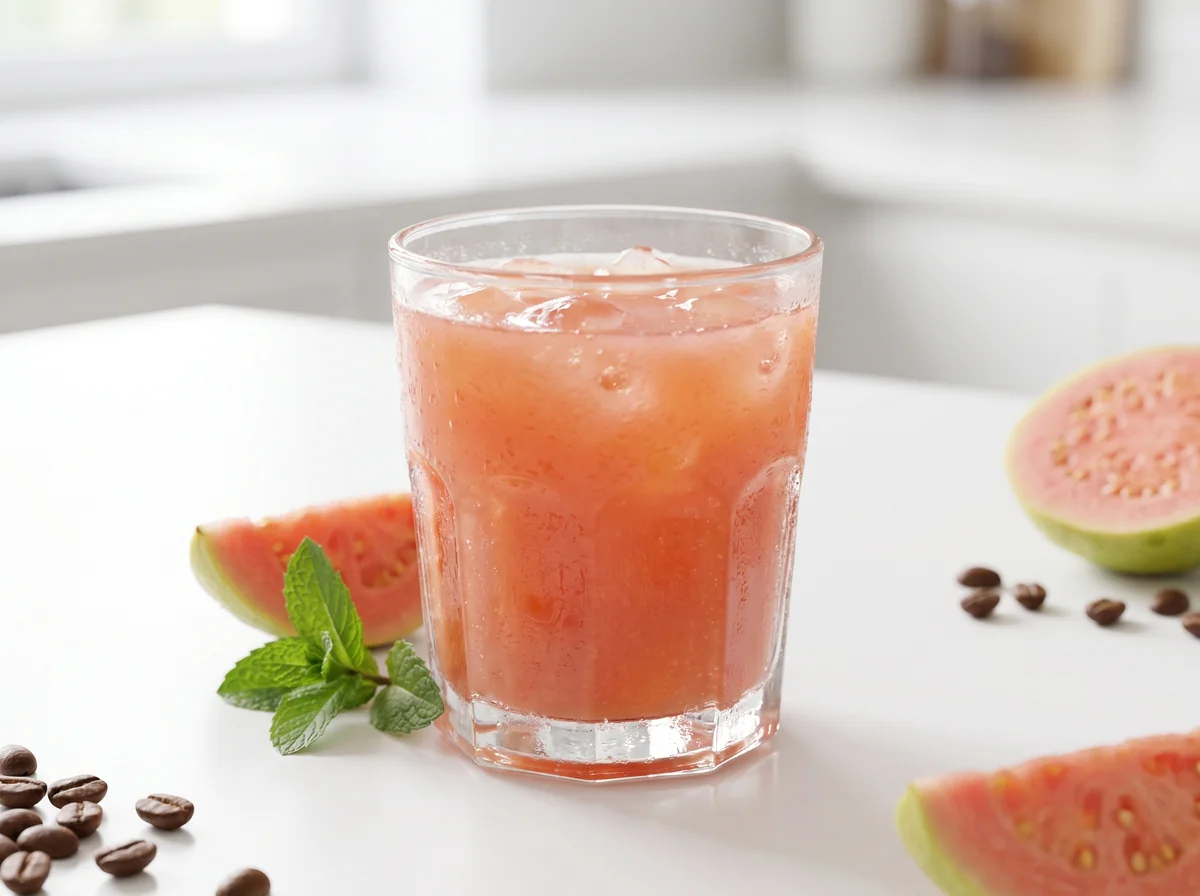
Guava juice is a beloved Egyptian winter drink — guava is a winter fruit that ripens in abundance in Egyptian orchards and fills the markets with its distinctive, wafting fragrance. It is blended in juice bars and homes, with water or milk, and served cold and fragrant.
Guava is among the richest fruits in vitamin C, making this a winter drink that boosts immunity and refreshes. Its unique tropical fragrance and sweet, aromatic flavour have made it one of the most cherished Egyptian winter juices, present at festivities and on family tables, a symbol of the bounty of Egyptian fruit seasons and the generosity of the land.
Preparation Steps
Prepare the guava
Choose ripe, fragrant guavas (they should give off a scent and yield slightly to the touch), wash them, and cut into pieces (with the skin, which is rich in vitamins, or without — your choice). Ripe, fragrant guava is the secret of the juice — unripe guavas are hard and flavourless.
Blend
Place the guava pieces and cold water (or milk) in the blender and blend on high speed until the guava is completely broken down. Guava contains hard seeds — do not blend for too long or the seeds will crack and give a bitter taste. Enough blending to break down the flesh is sufficient.
Strain
Strain the juice through a sieve to separate the seeds and coarse fibres from the smooth juice, pressing the pulp to extract as much juice as possible. Straining removes the hard seeds and gives a smooth juice. You may skip this step if you prefer the full-fibre version (without the seeds).
Sweeten
Return the strained juice to the blender, add the sugar or honey if needed (depending on the sweetness of the guava) and a squeeze of lemon (which brings out the guava flavour), and blend briefly. Taste and adjust the sweetness — ripe guava may be sweet enough on its own.
Adjust the consistency
Adjust the consistency by adding water (or milk) to thin it — guava juice tends to be thick. The milk version is creamier and richer; the water version is lighter and more refreshing. Choose according to preference.
Serve
Serve the guava juice cold with ice immediately. It is a beloved Egyptian winter juice (guava season is winter), served in juice bars and homes, fragrant and rich in vitamin C. Its distinctive tropical aroma and sweet flavour have made it one of the most loved Egyptian winter juices — it boosts immunity, refreshes, and is a symbol of Egyptian fruit seasons.
Blood Sugar Impact
The glycemic index (GI) measures how quickly a food raises blood sugar, while the glycemic load (GL) measures how much a full serving raises it. Together they give the complete picture.
Glycemic Index
GI
26Low
Low0–55Medium56–69High70+
A low value (≤55) means a gradual rise in blood sugar — the most suitable range for diabetes and insulin resistance.
Glycemic Load
GL
4Low
Low0–10Medium11–19High20+
Glycemic load reflects the impact of the full serving. To lower it: take half a serving, or pair the recipe with a source of protein and fiber.
Nutritional Information
Per ServingMakes 3 servings · one serving is about 300 g of raw ingredients
Calories100 kcal5%of Daily Value*
Protein3 g6%of Daily Value*
Carbohydrates22 g8%of Daily Value*
Fat1 g1%of Daily Value*
Fiber6 g21%of Daily Value*
Sodium3 mg0%of Daily Value*
Potassium516 mg11%of Daily Value*
Phosphorus49 mg4%of Daily Value*
* Percent Daily Values are based on a 2,000-calorie diet per FDA food-label reference values — your daily needs may be higher or lower. Values are derived from the recipe's ingredients via the USDA database.
Troubleshooting
The most common problems when preparing Guava Juice, and how to fix them:
A bitter or gritty taste from the seeds
Blending too long cracked the seeds. Blend just enough to break down the guava flesh without extending the time (hard seeds give a bitter taste when cracked), then strain to remove all the seeds completely.
The juice has no fragrance and is flat
The guava was not ripe. Use ripe, fragrant guavas (they give off a scent and yield slightly to the touch) — unripe ones are hard and flavourless. Ripe guava gives a fragrant, sweet juice.
The juice is too thick
Not enough liquid. Add water or milk and blend until the desired consistency — guava juice tends to be thick because guava flesh is dense. Adjust the liquid to your preferred thickness.
The juice has hard seeds in it
It was not strained. Strain the juice through a sieve after blending to remove the hard small seeds, pressing the pulp. Guava is full of seeds, so straining is necessary for a smooth juice (or keep the pulp without the seeds for more fibre).
Not sweet enough or too sweet
Guava sweetness varies. Taste and add sugar or honey if needed (ripe guava may be sufficient), or dilute with water if it is too sweet. A squeeze of lemon balances and brings out the flavour.
Storage and Make-Ahead
Drink fresh
Guava juice is best drunk fresh immediately after blending (most delicious and richest in vitamin C, which oxidises with time). Store chilled in a sealed cup for one day — the flavour may change slightly, so fresh is best.
Refrigerator (4°C)
Store chilled for one day in a sealed jug. Stir before drinking (it may separate). The milk version should be consumed sooner (contains dairy). Vitamin C decreases over time, so fresh is most nutritious.
Freezer
Guava juice (water version) can be frozen for weeks, or freeze the strained guava pulp for juice later. Thaw and blend — fresh is better in flavour and nutritional value, but freezing preserves the guava season.
Food safety
Wash the guava thoroughly, use clean water or milk, and drink the juice fresh. The milk version should be kept chilled and not left unrefrigerated (contains dairy). Clean the blender thoroughly.
Tested Ingredient Substitutions
Original Ingredient
Tested Substitute
Ratio
Flavor Difference
Water
Milk (creamy version)
Same amount
Milk makes the juice creamy and rich (guava with milk juice is popular) and adds protein and calcium (adds dairy allergen)
Sugar
Honey, dates, or none
To taste
Ripe guava may be sweet enough without added sugar (the healthier option) — honey and dates are natural alternative sweeteners
Full straining
Keep the pulp (without the seeds)
—
Keep the mashed guava pulp (remove the hard seeds only) for fibre and higher nutritional value — fully strained juice loses some fibre
How Much Does It Make? Scaling Guide
Number of cups
Guava
Water
2 (half recipe)
2 fruits
1 cup
3 (base)
4 fruits
2 cups
6 (family)
8 fruits
4 cups
EEINA Nutrition Tip
Guava juice is one of the healthiest juices: guava is among the richest fruits in vitamin C (several times higher than orange — it boosts immunity) and is rich in fibre, antioxidants, and potassium, with a low glycaemic index. To maximise the benefit: do not over-strain (keep some fibre — remove only the seeds), reduce or omit added sugar (ripe guava is sweet), and the water version is lighter. An excellent nutritious winter juice for immunity, especially in cold-and-flu season.
Add This Recipe to Your Plan
The EEINA app saves your favorite recipes, calculates them from their real ingredients, and shows your daily numbers toward your goal. Try it free now.
Both are delicious: the water version is lighter and more refreshing with the guava flavour shining through, while the milk version (guava with milk juice) is creamier and richer and adds protein and calcium. Choose according to preference — the water version gives the purest guava flavour.
How do I deal with guava seeds?
Guava is full of hard seeds — blend just enough to break down the flesh without extending the time (prolonged blending cracks the seeds and adds bitterness), then strain to remove the seeds. You can keep the mashed pulp without the seeds for the fibre, removing only the hard seeds.
Is guava juice healthy?
Yes, it is one of the healthiest juices: guava is among the richest fruits in vitamin C (several times higher than orange — it boosts immunity), fibre, antioxidants, and potassium, with a low glycaemic index. Keep some fibre, reduce sugar (guava is sweet), and it becomes an excellent winter juice for immunity.
When is guava season?
Guava is a winter fruit in Egypt (it ripens in winter and early autumn), making its juice a seasonal winter drink. In season it is plentiful, fragrant, and affordable — the perfect time to enjoy fresh juice rich in vitamin C that is especially fitting in cold-and-flu season.
Sources: University of Sydney · Gulf GSO · Our methodology · Updated on