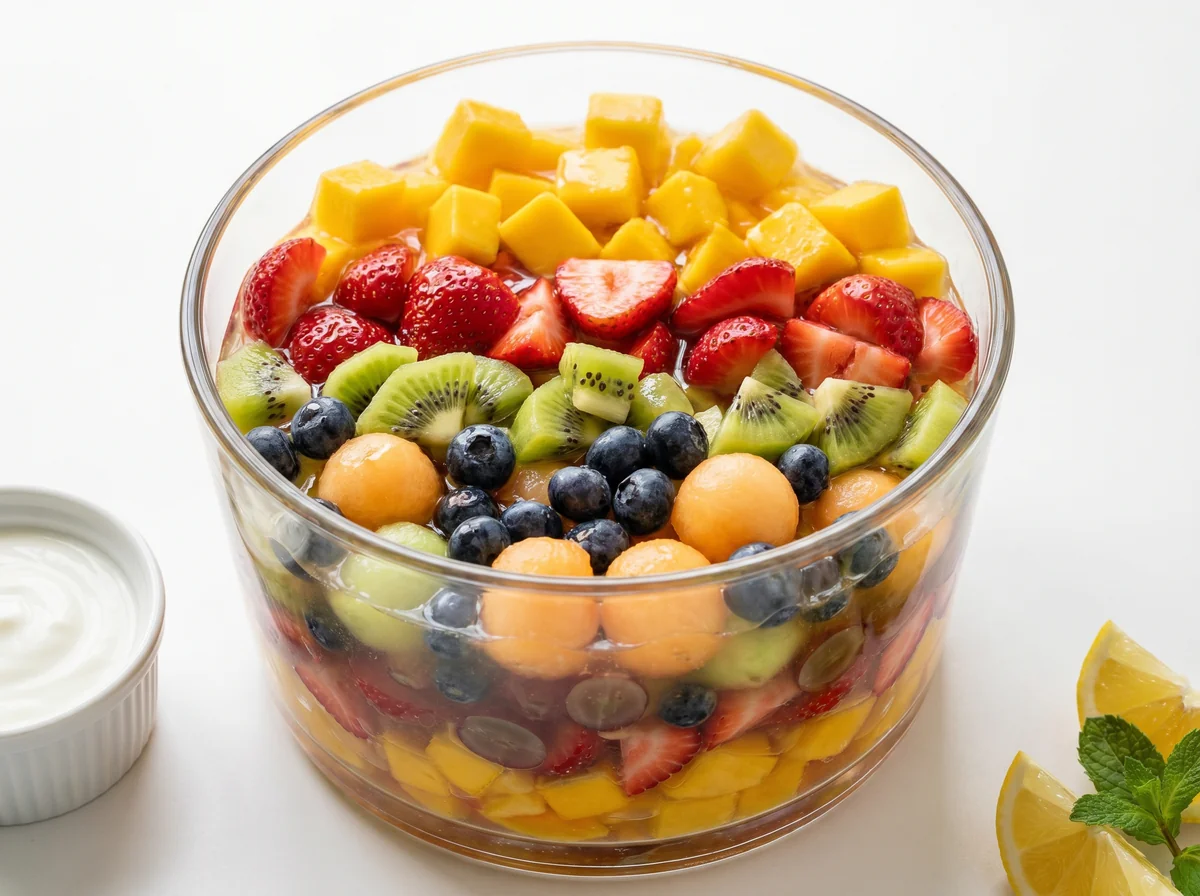
An Egyptian drink-dessert — layers of thick fruit juices and diced fruit (mango, strawberry, banana) with cream and nuts in a glass. A refreshing, colourful treat with a low glycemic load; contains dairy and tree nuts.
Fruit cocktail (Fakhfakhina) is a beloved Egyptian drink-dessert — layers of colourful fruit juices (mango, strawberry, banana, and more) with diced fruit, cream, nuts, and raisins in a transparent glass. Sold in famous Egyptian juice shops (which take pride in their colourful layers) and made at home, especially in summer and during Ramadan.
It is a celebration of fruit's abundance and variety, a pleasure for the eye with its colours and for the palate with its multiple flavours. It combines juice, salad, and dessert in one glass, and has become a symbol of popular juice bars and the refreshing Egyptian summer.
Preparation Steps
Prepare the juices
Blend each fruit separately with a little water or milk into a thick juice (mango, strawberry, banana), giving you juices in different colours. Separate coloured juices are the foundation of the beautiful contrasting layers in a fruit cocktail.
Prepare the diced fruit
Dice fresh fruit into small cubes (banana, strawberry, apple, or whatever is available). These pieces are distributed between the layers to add texture and variety — a fruit cocktail is not just juice but a combination of juices and chunks.
Prepare the cream and nuts
Prepare the cream (or diluted sweetened condensed milk) for the creamy layers, and crush the nuts and raisins for topping and layering. The cream adds a rich creaminess that balances the fruit, and the nuts add crunch and nutritional value.
Layer in the glass
In a transparent serving glass, pour a layer of juice (mango, for example), then some diced fruit, then a layer of cream, then a different-coloured juice (strawberry), and so on alternating. The transparent glass showcases the coloured layers — that is the beauty of a fruit cocktail.
Garnish
Top with a layer of cream, diced fruit, the crushed nuts and raisins, and a drizzle of honey for those who like it. The colourful, generous garnish is what makes a fruit cocktail so visually appealing — a feast for the eyes before the mouth.
Serve
Serve the fruit cocktail cold immediately (or after brief chilling) with a long spoon. A beloved Egyptian drink-dessert (known as Fakhfakhina), sold in famous juice shops and made at home, especially in summer and Ramadan. Its coloured layers of juices, fruit, cream, and nuts are a refreshing, nourishing delight — a celebration of fruit's abundance.
Blood Sugar Impact
The glycemic index (GI) measures how quickly a food raises blood sugar, while the glycemic load (GL) measures how much a full serving raises it. Together they give the complete picture.
Glycemic Index
GI
46Low
Low0–55Medium56–69High70+
A low value (≤55) means a gradual rise in blood sugar — the most suitable range for diabetes and insulin resistance.
Glycemic Load
GL
17Medium
Low0–10Medium11–19High20+
Glycemic load reflects the impact of the full serving. To lower it: take half a serving, or pair the recipe with a source of protein and fiber.
Nutritional Information
Per ServingMakes 4 servings · one serving is about 280 g of raw ingredients
Calories268 kcal13%of Daily Value*
Protein7 g14%of Daily Value*
Carbohydrates44 g16%of Daily Value*
Fat9 g12%of Daily Value*
Fiber6 g21%of Daily Value*
Sodium14 mg1%of Daily Value*
* Percent Daily Values are based on a 2,000-calorie diet per FDA food-label reference values — your daily needs may be higher or lower. Values are derived from the recipe's ingredients via the USDA database.
Troubleshooting
The most common problems when preparing Layered Fruit Cocktail, and how to fix them:
The layers mixed and did not stay separate
Juices are too thin or poured forcefully. Make the juices slightly thicker (more fruit, less water), and pour each layer gently over the back of a spoon so it slides down without mixing. Thick cream between layers also keeps them separate.
The cocktail is too sweet or too rich
Too much cream, condensed milk, and honey. Reduce the cream and sweetened condensed milk, add no honey (fruit is sweet), and increase the fresh fruit and juices. Balance between fruit and cream is key.
The diced fruit darkened (banana and apple)
Oxidation. Toss cut banana and apple with a squeeze of lemon juice (slows browning) and assemble the cocktail close to serving time. Fruits that brown quickly (banana, apple) should be cut just before layering.
Juices are pale in colour
Unripe fruit was used. Use ripe, colourful fruit (golden mango, red strawberries) — ripe fruit gives vivid-coloured juices. Colour contrast is the beauty of the cocktail.
Watery and thin
Too much water in the juices. Blend fruit with minimal water (or none for soft fruit) for thick juices. A concentrated cocktail tastes better and creates more beautiful layers. Cream and diced fruit also add body.
Storage and Make-Ahead
Serve fresh
Fruit cocktail is best served immediately after assembly (freshest flavour, vitamins, and colours at their peak). It can be kept refrigerated for a few hours, but cut fruit darkens and layers may blend. Assemble close to serving time.
Advance prep
Juices can be prepared and firm fruit diced in advance and stored refrigerated, then assemble the layers in glasses at serving time. Fruit that browns quickly (banana, apple) is cut at the last moment.
Freezer
The assembled cocktail is not recommended for freezing (fruit and cream change). Fruit flesh for juices can be frozen, and the cocktail assembled fresh. Fresh layers are its essence.
Food safety
Wash fruit well, use fresh refrigerated cream (dairy), serve the cocktail fresh, and do not leave it out of refrigeration (it contains dairy and fresh fruit). Use clean utensils.
Tested Ingredient Substitutions
Original Ingredient
Tested Substitute
Ratio
Flavor Difference
Cream
Greek yogurt, milk, or omit it
As desired
Greek yogurt is a lighter, protein-rich alternative; milk is even lighter; omitting the cream makes it a pure fruit cocktail with fewer calories.
Fruit mix
Any available seasonal fruit
As available
Use seasonal fruit (peach, pomegranate, watermelon, grapes, avocado) — variety and colour are the cocktail's beauty; choose ripe, colourful options.
Sweetened condensed milk
A little honey or none
To taste
Condensed milk adds sugar and fat; replace with a little honey or skip the sweetening entirely (fruit is sweet) for a healthier version.
How Much Does It Make? Scaling Guide
Number of cups
Fruit (juice and pieces)
Cream
2 (half recipe)
half the amount
1/4 cup
4 (base)
full amount
1/2 cup
8 (feast)
double
1 cup
EEINA Nutrition Tip
Fruit cocktail is a relatively good dessert choice compared to manufactured sweets: its base is fresh fruit rich in vitamins, fibre, and antioxidants; the nuts add protein and healthy fats; and its glycemic load is low (natural fruit sugar with fibre). Its challenges are the cream and sweetened condensed milk (fat and added sugar) if used too generously. To lighten it: reduce the cream and condensed milk, add no extra sugar (the fruit is sweet enough), and increase the whole fruit pieces. A nutritious fruity treat in moderation with the add-ins.
Add This Recipe to Your Plan
The EEINA app saves your favorite recipes, calculates them from their real ingredients, and shows your daily numbers toward your goal. Try it free now.
An Egyptian drink-dessert of colourful fruit juice layers (mango, strawberry, banana, and more) with diced fruit, cream, nuts, and raisins in a transparent glass. Sold in juice shops and made at home, especially in summer and Ramadan — a refreshing, colourful treat that combines juice, salad, and dessert.
How do I get separate layers?
Make the juices thick (more fruit, less water), pour each layer gently over the back of a spoon so it slides without mixing, and use thick cream between juices (it separates them). A transparent glass shows the layers, and similar densities help keep them separate.
Is fruit cocktail healthy?
A relatively good choice: its base is fresh fruit (vitamins, fibre, antioxidants), the nuts provide protein and healthy fats, and its glycemic load is low. The challenge is the cream and sweetened condensed milk — reduce them, add no sugar, and increase the whole fruit. A nourishing fruity treat in moderation.
How do I stop the banana and apple from browning?
Toss cut banana and apple pieces with lemon juice (vitamin C slows oxidation and browning) and assemble the cocktail close to serving time. Fruit that does not brown (strawberry, mango) can be cut ahead; quick-browning fruit should be cut just before layering.
Sources: University of Sydney · Gulf GSO · Our methodology · Updated on