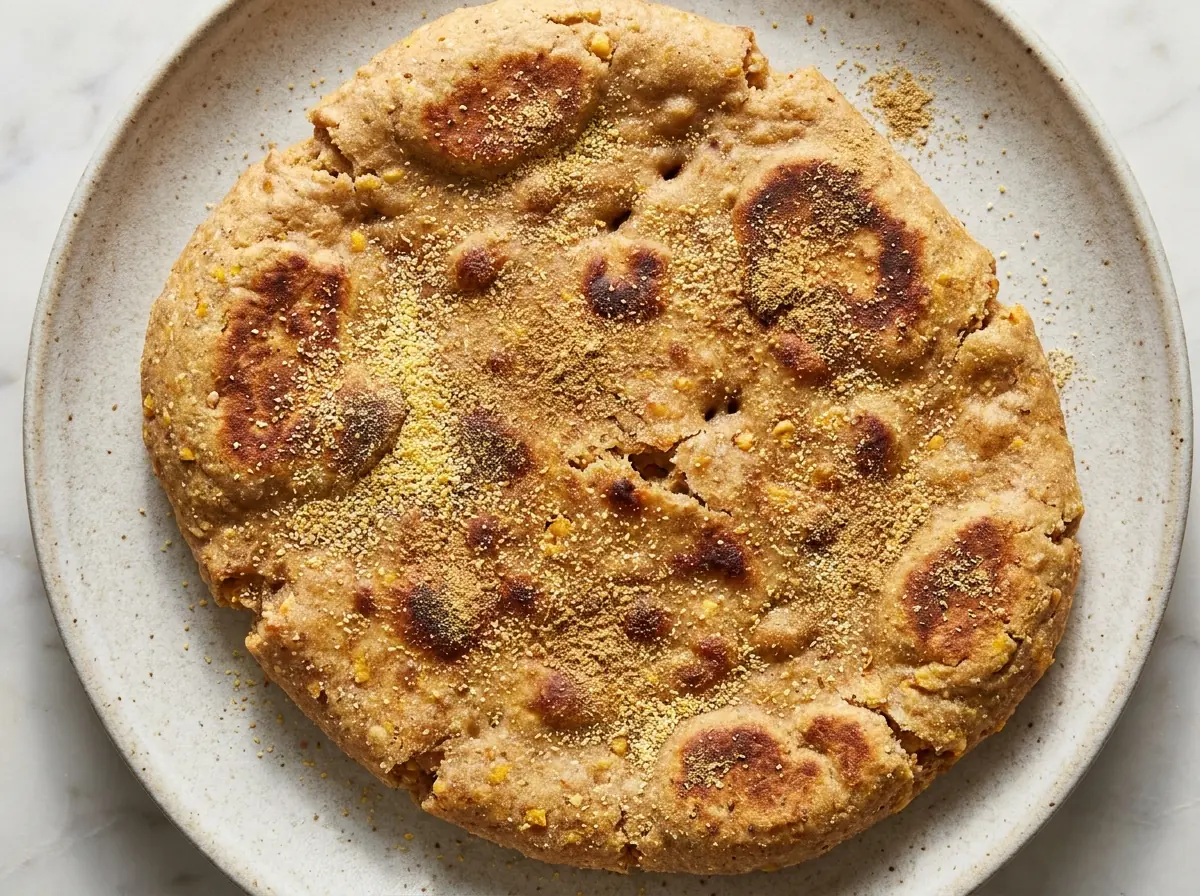
We bake Betaw the way the people of Upper Egypt have baked it since ancient times: a dough of cornmeal and fenugreek left to ferment, then flattened into rounds and baked in a traditional clay oven.
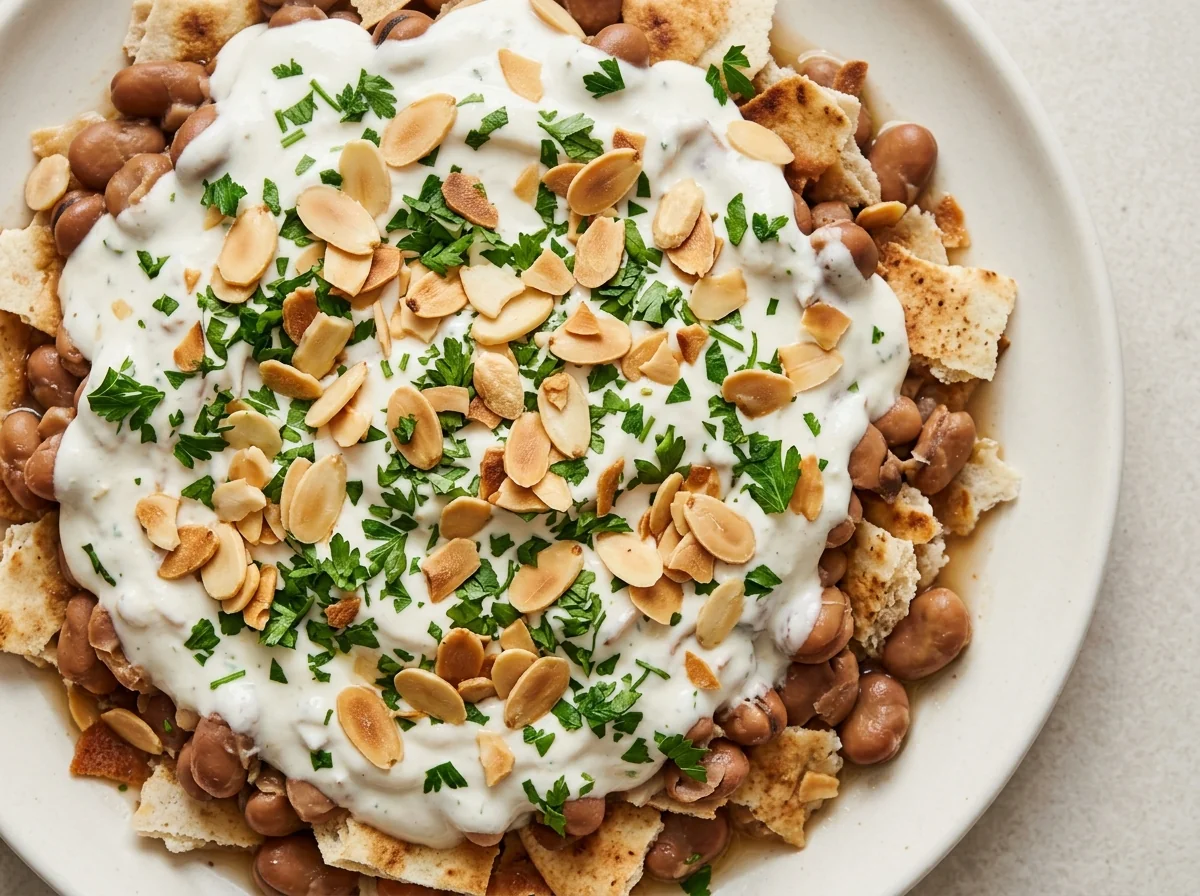
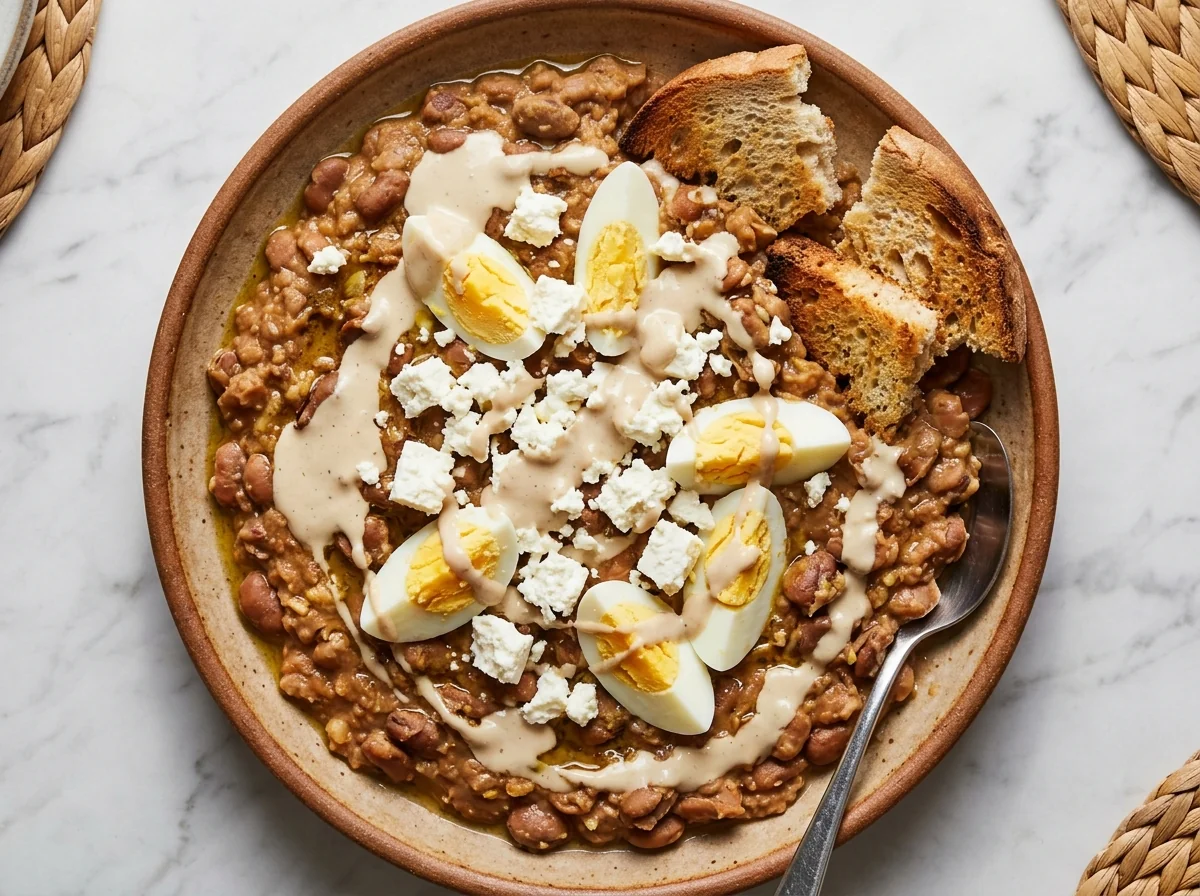
The warm aroma of fenugreek is its signature, and we serve it at breakfast with fresh curd cheese (qariish) and black honey (molasses), or dip it in a hot dish of fava beans.
Preparation Steps
Activating the yeast
Dissolve the yeast and sugar in half a cup of the warm water, and leave the mixture for ten minutes in a warm place until it froths and the yeast activates.
Mixing the flours
Mix the cornmeal with the wheat flour, ground fenugreek, and salt in a wide bowl, and make a well in the center of the mixture to pour the liquids into.
Kneading
Pour in the activated yeast and the rest of the warm water gradually, and knead until you get a soft, cohesive dough, for cornmeal absorbs water slowly so we add it in batches.
Proofing
Cover the dough with a cloth, and leave it in a warm place for about two hours until it doubles in size and bubbles appear on its surface.
Shaping
Divide the dough into palm-sized rounds, and flatten them with your fingertips on a tray greased with a little oil or dusted with cornmeal.
Baking
Bake the rounds in an oven preheated to two hundred and twenty degrees for about fifteen minutes until their tops brown and they firm up, and serve them warm with cheese or black honey (molasses).
Blood Sugar Impact
The glycemic index (GI) measures how quickly a food raises blood sugar, while the glycemic load (GL) measures how much a full serving raises it. Together they give the complete picture.
Glycemic Index
GI
74High
Low0–55Medium56–69High70+
A low value (≤55) means a gradual rise in blood sugar — the most suitable range for diabetes and insulin resistance.
Glycemic Load
GL
37High
Low0–10Medium11–19High20+
Glycemic load reflects the impact of the full serving. To lower it: take half a serving, or pair the recipe with a source of protein and fiber.
Nutritional Information
Per ServingMakes 6 servings · one serving is about 120 g of raw ingredients
Calories254 kcal13%of Daily Value*
Protein7 g14%of Daily Value*
Carbohydrates53 g19%of Daily Value*
Fat1 g1%of Daily Value*
Fiber3 g11%of Daily Value*
Sodium262 mg11%of Daily Value*
* Percent Daily Values are based on a 2,000-calorie diet per FDA food-label reference values — your daily needs may be higher or lower. Values are derived from the recipe's ingredients via the USDA database.
Troubleshooting
The most common problems when preparing Saeedi Betaw (Upper Egyptian Cornmeal and Fenugreek Flatbread), and how to fix them:
The Betaw is hard and dry
Add a little more kneading water, as cornmeal absorbs water heavily, and do not bake it too long at low heat.
The dough did not ferment or rise
Make sure the yeast is fresh and dissolve it in warm, not hot, water, and leave the dough in a warmer place for a longer time.
The fenugreek taste is strong and tends toward bitterness
Reduce the amount of fenugreek or soak it in water and drain it before adding, as this softens its sharpness.
Storage and Make-Ahead
Room temperature
Keep it in an airtight bag for one day, and reheat it on a griddle or in the oven before serving so it turns soft again.
Freezing
Freeze the baked rounds in airtight bags for up to a month, and reheat them directly without thawing.
Tested Ingredient Substitutions
Original Ingredient
Tested Substitute
Ratio
Flavor Difference
yellow cornmeal
white cornmeal or fine corn grits
same weight, 300 g
White corn is lighter in color and flavor
ground fenugreek
nigella seeds or fennel seeds
same amount, 10 g
Fenugreek is the authentic Upper Egyptian flavor, and substitutes change the character
white wheat flour
whole wheat flour
same weight, 100 g
Whole wheat increases the fiber and makes the texture denser
How Much Does It Make? Scaling Guide
Ingredient
Half amount
Full amount (base)
Double
Cornmeal
150 g
300 g
600 g
White wheat flour
50 g
100 g
200 g
Ground fenugreek
5 g
10 g
20 g
Instant yeast
3 g
5 g
10 g
Warm water
150 ml
300 ml
600 ml
Salt
2 g
4 g
8 g
EEINA Nutrition Tip
Let the dough ferment well until bubbles appear, for sufficient fermentation gives Betaw its soft texture and its light sour flavor, and bake it at high heat so it does not dry out.
Add This Recipe to Your Plan
The EEINA app saves your favorite recipes, calculates them from their real ingredients, and shows your daily numbers toward your goal. Try it free now.
Cornmeal and ground fenugreek set it apart, so it comes out dark in color with a warm, lightly sour flavor, and it is richer in fiber than white bread.
Can it be baked without a traditional clay oven?
Yes, bake it in any home oven at high heat, or cook it on a heavy griddle until both sides are done.
Why do we add wheat flour to the cornmeal?
Because cornmeal contains no gluten to hold the dough together, so we add wheat to give it elasticity and cohesion during shaping.