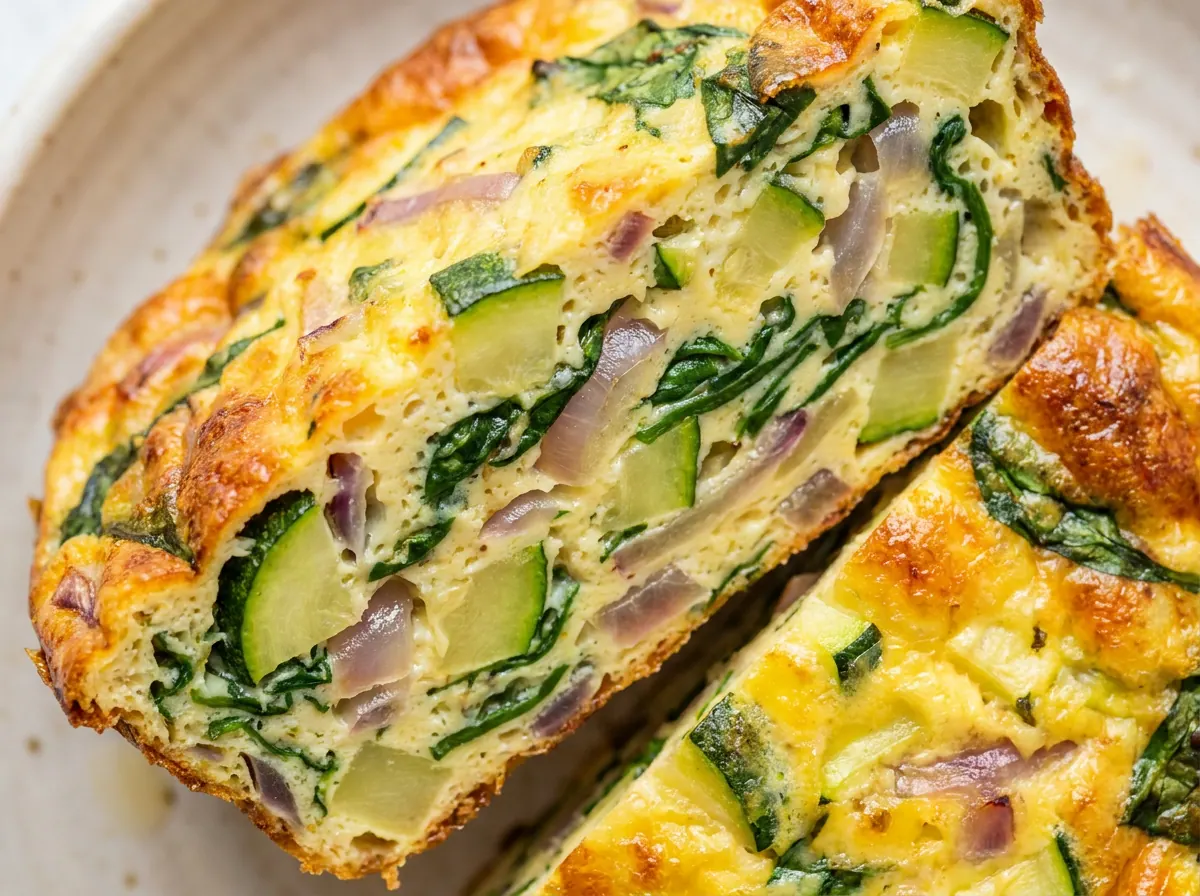
Eggah (also known in Lebanon as ijjeh) is the Levantine version of a frittata: a thick egg dish packed with vegetables and herbs baked in the oven rather than fried in oil. This courgette and spinach version is a popular breakfast dish, combining protein-rich eggs with leafy greens in a single piece that cuts into neat squares.
Baking it in the oven rather than frying significantly reduces the oil needed and gives a stable, firm texture that holds its shape well. Thoroughly squeezed courgette and properly sauteed spinach are the secret to the right texture: every drop of excess moisture is removed before baking so the eggah stays firm and never watery.
Preparation Steps
Preheat the oven
Preheat the oven to 180 degrees C and grease a medium baking dish with olive oil or line with baking paper.
Squeeze the courgette
Grate the courgette and place in a colander with a pinch of salt for 10 minutes, then squeeze firmly until all excess liquid is removed — this is essential to prevent the eggah from being watery.
Saute the vegetables
Heat a tablespoon of olive oil in a pan and saute the onion until softened, then add the spinach and cook until wilted and all moisture has evaporated. Leave the mixture to cool slightly.
Whisk the eggs and combine
Whisk the eggs in a large bowl with salt, pepper, and cumin, then add the squeezed courgette, the onion and spinach mixture, the chopped parsley and mint (and the cheese if using) and stir until everything is combined.
Pour into the dish
Pour the mixture into the prepared baking dish, smooth the surface, and drizzle the remaining olive oil over the top.
Bake
Bake in the preheated oven for approximately 20 to 25 minutes until the centre is set and the edges are golden.
Rest and serve
Leave the eggah to rest for five minutes before cutting into squares. Serve warm at breakfast with yoghurt or wholemeal bread.
Blood Sugar Impact
The glycemic index (GI) measures how quickly a food raises blood sugar, while the glycemic load (GL) measures how much a full serving raises it. Together they give the complete picture.
Glycemic Index
GI
8Low
Low0–55Medium56–69High70+
A low value (≤55) means a gradual rise in blood sugar — the most suitable range for diabetes and insulin resistance.
Glycemic Load
GL
0Low
Low0–10Medium11–19High20+
Glycemic load reflects the impact of the full serving. To lower it: take half a serving, or pair the recipe with a source of protein and fiber.
Nutritional Information
Per ServingMakes 6 servings · one serving is about 195 g of raw ingredients
Calories180 kcal9%of Daily Value*
Protein11 g22%of Daily Value*
Carbohydrates6 g2%of Daily Value*
Fat13 g17%of Daily Value*
Fiber2 g7%of Daily Value*
Sodium421 mg18%of Daily Value*
Potassium454 mg10%of Daily Value*
Phosphorus195 mg16%of Daily Value*
* Percent Daily Values are based on a 2,000-calorie diet per FDA food-label reference values — your daily needs may be higher or lower. Values are derived from the recipe's ingredients via the USDA database.
Troubleshooting
The most common problems when preparing Baked Vegetable Eggah, and how to fix them:
The eggah came out watery and did not set
The courgette was not squeezed properly, or the spinach was added raw without sauteing. Grated courgette releases a lot of water during baking, so it must be salted, left in a colander for 10 minutes, then squeezed firmly by hand until nothing drips out. Spinach also needs to be sauteed until wilted and all moisture has evaporated before being added to the mixture.
The centre was raw and the edges burned
The dish was too deep or the oven temperature was too high. A thick eggah needs a medium-depth baking dish so the centre cooks in line with the edges. If the edges are browning too fast before the centre sets, cover lightly with aluminium foil and continue baking at 180 degrees C until the centre is firm to a gentle press.
The eggah is dry and rubbery
It was overbaked or the temperature was too high. Eggs dry out quickly once set, so remove the eggah as soon as the centre is firm — do not leave it as a safety margin. The correct sign of doneness: the surface is firm and does not wobble, and a skewer inserted in the centre comes out clean. Five minutes of resting after removal will complete the cooking with residual heat.
The eggah is sticky and clings to the dish
The dish was not greased well enough or was not lined with baking paper. Brush the base and sides generously with olive oil, or line the dish with baking paper that overhangs the edges so the whole eggah can be lifted out cleanly after resting. Cut into squares only after resting, not straight from the oven.
The eggah looks pale with no colour on top
The rack was too low in the oven, or there was no oil on the surface. Place the dish in the upper third of the oven, and drizzle a tablespoon of olive oil over the top before baking — this helps achieve a golden colour. For extra colour: switch on the overhead grill for the last two minutes, watching closely.
The flavour is bland and needs more depth
The seasoning is insufficient or the herbs were not fresh. Eggs need generous salt, pepper, and a touch of cumin to bring out their flavour, and the fresh herbs (parsley and mint) add the distinctive depth of a Levantine eggah. A small amount of feta or halloumi gives saltiness and deeper flavour for those who enjoy it.
Storage and Make-Ahead
Refrigerator (4 degrees C)
Baked eggah: three to four days in an airtight container, following USDA recommendations for cooked egg dishes. Cut into squares and store in a single layer to prevent crushing.
Freezer (-18 degrees C)
Freezes well for up to one month. Wrap each square individually then seal in an airtight bag. Thaw overnight in the refrigerator before reheating.
Advance preparation
Vegetables: grate the courgette and squeeze dry, saute the spinach and onion, and keep refrigerated the evening before. Morning: whisk the eggs, combine with the prepared vegetables, and bake immediately — saving significant breakfast time.
Reheating
Reheat in the oven at 160 degrees C for a few minutes until warmed through, or in a covered pan over low heat. Avoid prolonged microwave heating as it dries out the eggs. Do not leave cooked eggah at room temperature for more than two hours.
Tested Ingredient Substitutions
Original Ingredient
Tested Substitute
Ratio
Flavor Difference
Grated courgette
Yellow courgette or grated carrot, squeezed dry
Same weight
Slightly sweeter flavour, different colour, also needs thorough squeezing
Fresh spinach
Chopped sauteed chard or beet greens
Same weight
Deeper, earthier flavour than spinach
Feta cheese
Low-fat curd cheese (quark)
Same quantity
Lower in salt and fat, reducing calories and sodium
White onion
Finely chopped spring onion
Same quantity
Milder and more delicate flavour, needs less time to saute
7 whole eggs
4 whole eggs and 4 egg whites
Lighter version
Lower cholesterol and fat, slightly lighter texture
How Much Does It Make? Scaling Guide
Number of servings
Eggs
Zucchini
Spinach
Olive oil
3 (half tray)
4 eggs
200 g
75 g
1 tbsp
6 (base)
7 eggs
400 g
150 g
2 tbsp
9 (large tray)
10 eggs
600 g
225 g
3 tbsp
12 (entertaining)
14 eggs
800 g
300 g
4 tbsp
EEINA Nutrition Tip
Squeezing the courgette is the secret of the texture: excess moisture is the enemy of a firm eggah. Squeeze the courgette until every drop is out, and saute the spinach until completely dry — this is the difference between an eggah that cuts into neat elegant squares and one that falls apart on the plate.
Add This Recipe to Your Plan
The EEINA app saves your favorite recipes, calculates them from their real ingredients, and shows your daily numbers toward your goal. Try it free now.
Yes, fry it in a pan with a little oil on both sides, but baking uses far less oil and gives a firmer, more even texture that cuts and holds its shape well.
Is this suitable for people with diabetes?
Excellent. GI 8 is very low and carbohydrates per serving are minimal, so the effect on blood sugar is negligible. An outstanding breakfast choice.
Is it suitable for weight management?
Yes. 180 calories per serving with high protein to support satiety. To reduce fat further, replace some of the whole eggs with egg whites (see the substitutions table).
What other vegetables can I add?
Coloured bell pepper, grated carrot, or chard all work well. Any vegetable that releases water must be squeezed or sauteed first to keep the eggah firm.