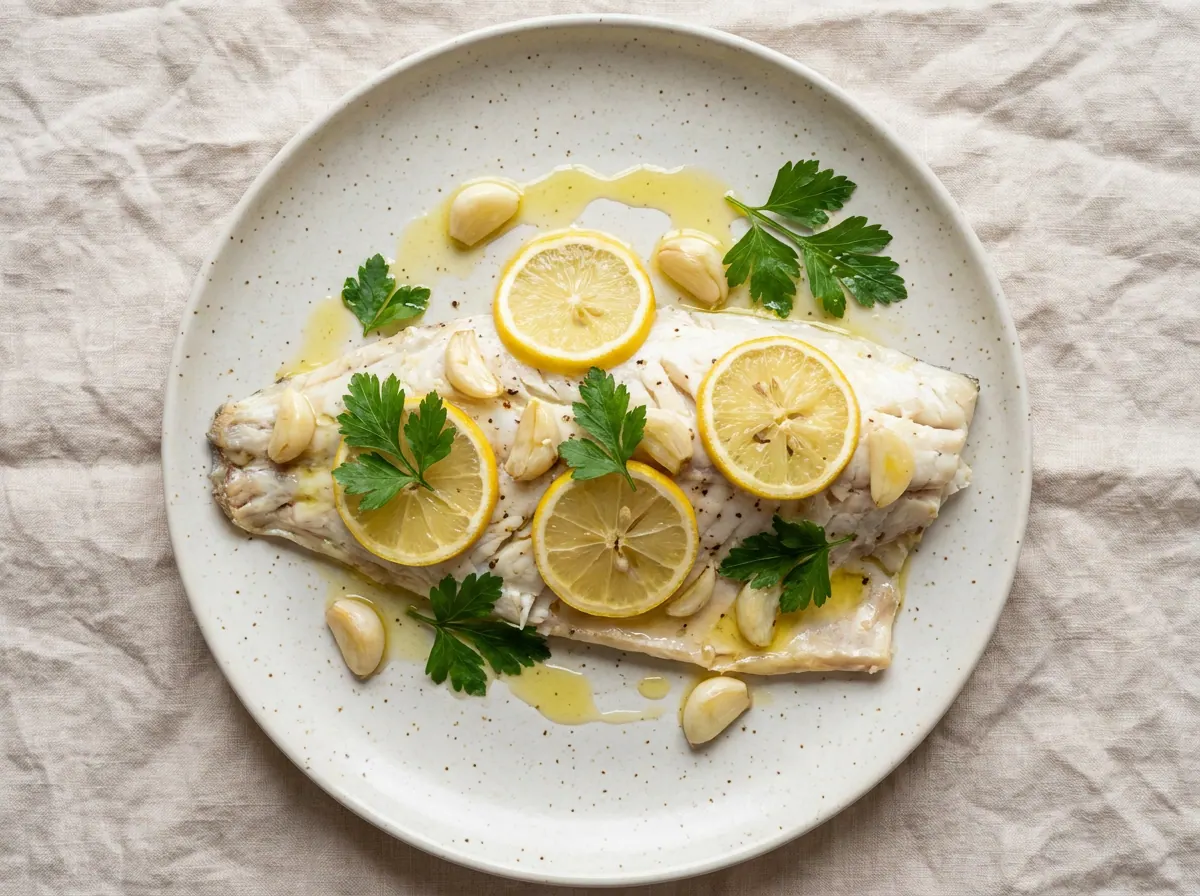
White fish fillet baked with fresh lemon juice and fragrant herbs. Zero carbohydrates, very high protein, very low GI. A light dish that suits diabetes, heart health, PCOS, and weight management.
Baking fish with lemon and herbs is one of the oldest and simplest cooking techniques found across Gulf and Mediterranean kitchens. The method preserves the natural flavour of the fish while the lemon acid tenderises the flesh gently.
Fresh thyme and rosemary add aromatic depth without a single extra calorie. This dish is essentially carbohydrate-free and has a glycaemic index of zero, making it ideal for anyone managing blood sugar. The olive oil provides heart-healthy monounsaturated fats, and the fish delivers concentrated high-quality protein with beneficial omega-3 fatty acids.
Preparation Steps
Prepare the marinade
Whisk together the lemon juice, lemon zest, crushed garlic, olive oil, thyme, rosemary, salt, and pepper in a bowl.
Marinate the fish
Pat the fish fillets dry, place them in a shallow dish, pour the marinade over them, and turn to coat on both sides. Marinate for 15 to 30 minutes in the refrigerator.
Preheat the oven
Preheat the oven to 200 degrees C and line a baking tray with parchment paper.
Bake
Place the fillets on the prepared tray and bake for 15 to 20 minutes until the fish flakes easily with a fork and the internal temperature reaches 63 degrees C.
Serve
Serve hot garnished with lemon slices and fresh herbs alongside steamed vegetables or a green salad.
Storage note
Do not leave the cooked fish at room temperature for more than two hours. Refrigerate in an airtight container and consume within two days.
Blood Sugar Impact
The glycemic index (GI) measures how quickly a food raises blood sugar, while the glycemic load (GL) measures how much a full serving raises it. Together they give the complete picture.
Glycemic Index
GI
12Low
Low0–55Medium56–69High70+
A low value (≤55) means a gradual rise in blood sugar — the most suitable range for diabetes and insulin resistance.
Glycemic Load
GL
0Low
Low0–10Medium11–19High20+
Glycemic load reflects the impact of the full serving. To lower it: take half a serving, or pair the recipe with a source of protein and fiber.
Nutritional Information
Per ServingMakes 4 servings · one serving is about 205 g of raw ingredients
Calories235 kcal12%of Daily Value*
Protein32 g64%of Daily Value*
Carbohydrates3 g1%of Daily Value*
Fat10 g13%of Daily Value*
Fiber0 g0%of Daily Value*
Sodium396 mg17%of Daily Value*
Potassium874 mg19%of Daily Value*
Phosphorus283 mg23%of Daily Value*
* Percent Daily Values are based on a 2,000-calorie diet per FDA food-label reference values — your daily needs may be higher or lower. Values are derived from the recipe's ingredients via the USDA database.
Troubleshooting
The most common problems when preparing Baked Lemon Herb Fish Fillet, and how to fix them:
The fish came out dry
Overbaked. Fish cooks quickly — 15 to 20 minutes at 200 degrees C is enough for fillets of normal thickness. Use a thermometer and remove as soon as it reaches 63 degrees C. The residual heat will continue cooking it slightly off the heat.
The fish sticks to the tray
The tray was not lined or oiled. Always use parchment paper or brush the tray with olive oil before placing the fish. The marinade also creates a barrier that prevents sticking.
The flavour is too sour
Too much lemon juice was used. Use the juice of two lemons for four fillets, no more. If the fish has already marinated too long in excess lemon, it will begin to cook the protein — 30 minutes is the maximum marinating time.
The herbs burned and turned bitter
Dried herbs burn faster than fresh ones at high temperatures. If using dried herbs, add them to the marinade and let the fish absorb the flavour, then wipe off excess before baking, or reduce the oven temperature slightly to 190 degrees C.
The garlic turned bitter
Garlic burns quickly. Make sure the fillets are placed in a single layer and the marinade does not pool underneath. Alternatively, use roasted garlic instead of raw for a milder, sweeter flavour.
The fish lacks depth of flavour
Insufficient marinating time or seasoning. Marinate for the full 30 minutes and season generously with salt — salt is essential for drawing out the natural flavour of the fish. A pinch of paprika or cumin can be added to the marinade for more complexity.
Storage and Make-Ahead
Refrigerator (4 degrees C)
Up to two days in an airtight container. Following USDA guidelines for cooked fish, which recommend consumption within one to two days.
Freezer (-18 degrees C)
Up to one month. Wrap each fillet individually in cling film then place in a freezer bag to prevent freezer burn. Thaw overnight in the refrigerator.
Advance preparation
The marinade can be made up to 24 hours ahead and kept refrigerated. Marinate the fish for no more than 30 minutes before baking to avoid the acid breaking down the texture.
Reheating
Reheat gently in the oven at 160 degrees C for 8 to 10 minutes, covered with foil to retain moisture. Avoid microwave reheating as it causes uneven heating and can dry out the fish.
Tested Ingredient Substitutions
Original Ingredient
Tested Substitute
Ratio
Flavor Difference
White fish (cod or tilapia)
Salmon fillet
Same weight
Higher in healthy fats and omega-3, richer flavour, slightly more calories
White fish (cod or tilapia)
Large prawns
Same weight
Reduce baking time to 8 to 10 minutes — prawns overcook very quickly
Fresh thyme and rosemary
Za'atar spice blend
1 tablespoon
A Gulf and Levantine flavour profile that pairs beautifully with lemon and fish
Olive oil
Avocado oil
Same quantity
Neutral flavour, high smoke point suitable for higher-temperature baking
Fresh lemon juice
Lime juice
Same quantity
Slightly sharper acidity, works well with fish and herbs
How Much Does It Make? Scaling Guide
Number of servings
Fish fillet
Fresh lemon juice
Fresh thyme and rosemary
Garlic
2 (individual × 2)
2 pieces (340 g)
1 tbsp
1.5 tbsp
1.5 cloves
4 (base)
4 pieces (680 g)
2 tbsp
3 tbsp
3 cloves
8 (large family)
8 pieces
4 tbsp
6 tbsp
6 cloves
12 (entertaining)
12 pieces
6 tbsp
9 tbsp
9 cloves
EEINA Nutrition Tip
One of the most blood-sugar-friendly dinners possible: zero carbohydrates, zero glycaemic load, and 32 g of protein per serving. Serve with roasted or steamed vegetables and avoid starchy sides. The lemon juice adds flavour without adding calories or raising blood sugar.
Add This Recipe to Your Plan
The EEINA app saves your favorite recipes, calculates them from their real ingredients, and shows your daily numbers toward your goal. Try it free now.
Yes. Thaw the fillets completely overnight in the refrigerator before marinating. Do not thaw at room temperature as this falls into the food safety danger zone. Pat them very dry before marinating — frozen fish releases more water on thawing, which can dilute the marinade and cause steaming instead of baking.
Is this suitable for people with diabetes?
It is one of the most suitable dinners for diabetes management. The dish contains zero carbohydrates and zero glycaemic load. The high protein content also helps stabilise blood sugar after the meal.
How do I know when the fish is cooked?
The most reliable method is a food thermometer — the internal temperature should reach 63 degrees C per USDA guidelines. If you do not have a thermometer: insert a fork into the thickest part and twist gently. If the flesh flakes apart easily and has turned from translucent to opaque white, it is cooked.
Which herbs can I use?
Thyme and rosemary are the classic combination with lemon and white fish, but the recipe adapts well to fresh dill, parsley, coriander, or a Gulf-inspired za'atar blend. Use what you can find in local Saudi markets — fresh herbs are available in all large supermarkets.