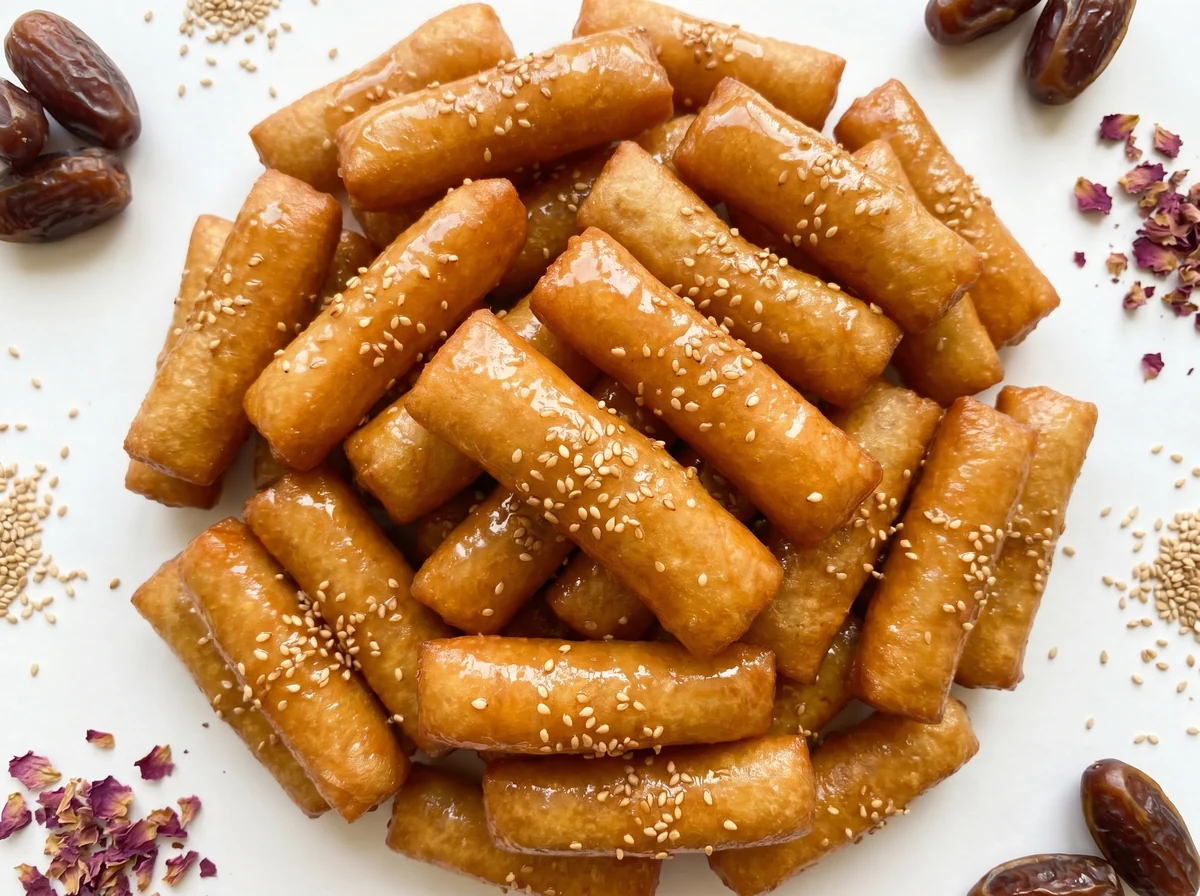
Syrup-soaked fried pastry — ridged semolina dough fingers fried until golden then dipped in sugar syrup, crisp on the outside and soft inside. A Ramadan and celebration sweet meant to be enjoyed in moderation. Contains gluten.
Assabe Zainab (fried dough fingers) is a beloved Arab fried pastry, popular across the Levant, Egypt, and the Gulf as a Ramadan, celebration, and hospitality sweet. The name — meaning Zainab's fingers — comes from the shape, with a traditional attribution to a woman named Zainab. The dough is semolina (and flour) shaped into ridged fingers (rolled over a grater or tool), fried until crisp, dipped in fragrant syrup, and garnished with pistachios or coconut.
The ridges are what set it apart — they increase the surface area for syrup absorption, making the fingers crisp outside and soft inside. Assabe Zainab belongs to the family of fried syrup sweets (alongside luqaimat, zalabia, and Levantine balah el sham). Its ridged, crisp, syrup-soaked fingers are a delightful treat — a symbol of Eastern syrup confectionery and the warmth of Ramadan tables.
Preparation Steps
Prepare the syrup and dough
Make the sugar syrup (sugar, water, lemon, and orange blossom water) and set aside to cool. Knead the semolina and flour with the ghee, salt, water, and yeast into a soft, cohesive dough and let it rest. Cold syrup on hot fried pastry is the golden rule (it keeps the fingers crisp). Make it first so it has time to cool.
Shape the ridged fingers
Take small pieces of dough and shape them into fingers, then roll them over the back of a grater, a fork, or a kubbeh board (to create ridges). The ridges are the signature of Assabe Zainab — they give the distinctive look and increase the surface area to absorb syrup. Press gently against the ridged tool.
Fry
Fry the fingers in oil over medium heat until golden all the way through and crisp (avoid high heat, which burns the outside while leaving the inside raw). Medium heat cooks the fingers through and browns them evenly. Drain on paper towels.
Dip in syrup
Dip the hot fingers into the cold syrup for a few moments (they will sizzle and absorb it), then lift them out. Hot into cold is what makes them absorb the syrup while staying crisp outside and soft inside. Do not soak them too long or they will become soggy.
Garnish
Sprinkle with crushed pistachios or desiccated coconut (they stick to the syrup). Garnishing gives a beautiful appearance and added flavour. Arrange on a serving plate once the syrup has been absorbed and set slightly.
Serve
Serve Assabe Zainab once the syrup has been absorbed (warm or at room temperature). These beloved Arab fried pastries — popular at Ramadan, celebrations, and for guests across the Levant, Egypt, and the Gulf — are crisp outside, soft inside, and drenched in fragrant syrup. They are a hallmark of Eastern syrup sweets and the generosity of Ramadan tables.
Blood Sugar Impact
The glycemic index (GI) measures how quickly a food raises blood sugar, while the glycemic load (GL) measures how much a full serving raises it. Together they give the complete picture.
Glycemic Index
GI
67Medium
Low0–55Medium56–69High70+
A low value (≤55) means a gradual rise in blood sugar — the most suitable range for diabetes and insulin resistance.
Glycemic Load
GL
17Medium
Low0–10Medium11–19High20+
Glycemic load reflects the impact of the full serving. To lower it: take half a serving, or pair the recipe with a source of protein and fiber.
Nutritional Information
Per ServingMakes 20 servings · one serving is about 55 g of raw ingredients
Calories208 kcal10%of Daily Value*
Protein2 g4%of Daily Value*
Carbohydrates26 g9%of Daily Value*
Fat11 g14%of Daily Value*
Fiber1 g4%of Daily Value*
Sodium301 mg13%of Daily Value*
* Percent Daily Values are based on a 2,000-calorie diet per FDA food-label reference values — your daily needs may be higher or lower. Values are derived from the recipe's ingredients via the USDA database.
Troubleshooting
The most common problems when preparing Assabe Zainab (fried dough fingers), and how to fix them:
Fingers are soft instead of crisp
Oil was not hot enough or too much syrup. Fry in hot (medium) oil until they colour and crisp up, and dip in cold syrup for just moments (no long soaking). Hot oil and a brief cold-syrup dip keep the crunch.
Absorbing too much oil
Oil was cold. Heat the oil well before frying (medium-hot) — cold oil causes the dough to soak up oil and become greasy. Drain on paper towels after frying. Or bake them instead (lighter).
Golden outside but raw inside
Oil was too hot. Fry over medium heat (not very high) so the fingers cook all the way through — thick pieces need time to cook inside. High heat burns the outside and leaves the inside raw.
Soggy from syrup
Soaked too long. Dip the fingers in syrup for just a moment then lift them out (enough to sweeten while staying crisp). Long soaking makes them wet. Quick dipping of hot into cold is the secret.
Falling apart in the oil
Dough was too soft or not properly formed. Knead a firm dough (not too soft) and let it rest. A firm dough holds its finger shape and stays together in the oil.
Storage and Make-Ahead
Room temperature
Store in an airtight container at room temperature for 3 to 4 days (the syrup acts as a preservative). They remain delicious and soften slightly. Best fresh on the same day (crispest). Great for preparing ahead for guests and Ramadan.
Freezer (before syrup)
Fry the fingers without syrup and freeze for up to one month, then reheat and dip in fresh syrup. This keeps them crispier than freezing them already dipped. Practical for preparing large Ramadan batches ahead of time.
Make-ahead
Prepare the dough and shape the fingers in advance (store chilled or frozen raw), then fry and dip fresh before serving. Alternatively, fry them, store, and dip in syrup on the day of serving. Practical for Ramadan.
Food safety
Fry the fingers until fully cooked, drain the oil, and store in a dry airtight container. Fried pastry dipped in syrup keeps well for days at room temperature in a sealed container away from moisture.
Tested Ingredient Substitutions
Original Ingredient
Tested Substitute
Ratio
Flavor Difference
Frying
Baking in the oven
—
Baking the fingers (brushed with a little oil) is lower in fat than frying (a healthier version), though less crispy. Frying is the traditional method and gives the best crunch.
Semolina and flour
Semolina only, or add some wholemeal
same amount
Semolina gives the crunch and texture; adding some wholemeal boosts fibre. The blend is traditional.
Drowning in syrup
Quick dip or less syrup
less
A quick dip (not drowning) reduces sugar and keeps the crunch. The syrup itself can be made slightly less sweet.
How Much Does It Make? Scaling Guide
Number of pieces
Semolina
Flour
Sugar syrup
10 (small)
½ cup
½ cup
¾ cup
20 (base)
1 cup
1 cup
1½ cups
40 (occasion)
2 cups
2 cups
3 cups
EEINA Nutrition Tip
Assabe Zainab is a Ramadan and celebration fried sweet combining dough, frying, and syrup — high in sugar, calories, and fat (especially from frying). Enjoy one or two pieces with moderation on special occasions (avoid eating a lot immediately after breaking a fast, as it spikes blood sugar quickly). To lighten it: fry in properly hot oil (absorbs less oil), drain on paper towels, dip briefly in moderate syrup (not drowning), or bake in the oven for a lighter version. People with diabetes should be cautious. It is a delightful syrup sweet — enjoy it moderately as part of a varied spread.
Add This Recipe to Your Plan
The EEINA app saves your favorite recipes, calculates them from their real ingredients, and shows your daily numbers toward your goal. Try it free now.
Assabe Zainab (fried dough fingers) is an Arab fried pastry dipped in syrup: ridged semolina dough fingers (rolled over a grater to create ridges) are fried until crisp, dipped in fragrant syrup, and garnished with pistachios or coconut. A Ramadan, celebration, and hospitality sweet popular across the Levant, Egypt, and the Gulf — crisp outside, soft inside, and part of the fried syrup sweet family.
Why ridge the fingers?
Ridging (rolling the dough over the back of a grater, a fork, or a kubbeh board) gives Assabe Zainab their distinctive look and increases surface area so they absorb more syrup and crisp up more beautifully. The ridges are both decorative and functional, and are what distinguish them from plain smooth fingers.
What is the difference between these and Levantine balah el sham?
Both are ridged fried dough sweets dipped in syrup, but balah el sham uses choux pastry (with eggs, it puffs up hollow), while Assabe Zainab uses semolina dough (denser, crisp and soft). Balah el sham is lighter and hollow; Assabe Zainab is denser and crunchier. Both are ridged and syrup-dipped — the dough is what differs.
Are Assabe Zainab healthy?
They are a Ramadan fried sweet — high in sugar (syrup), calories, and fat (frying). Enjoy one or two pieces with moderation on special occasions (not in large quantities immediately after breaking a fast). Fry in hot oil (absorbs less), dip briefly in moderate syrup, or bake for a lighter version. People with diabetes should be cautious. A delightful syrup sweet, enjoyed in moderation as part of a varied spread.
Sources: University of Sydney · Gulf GSO · Our methodology · Updated on