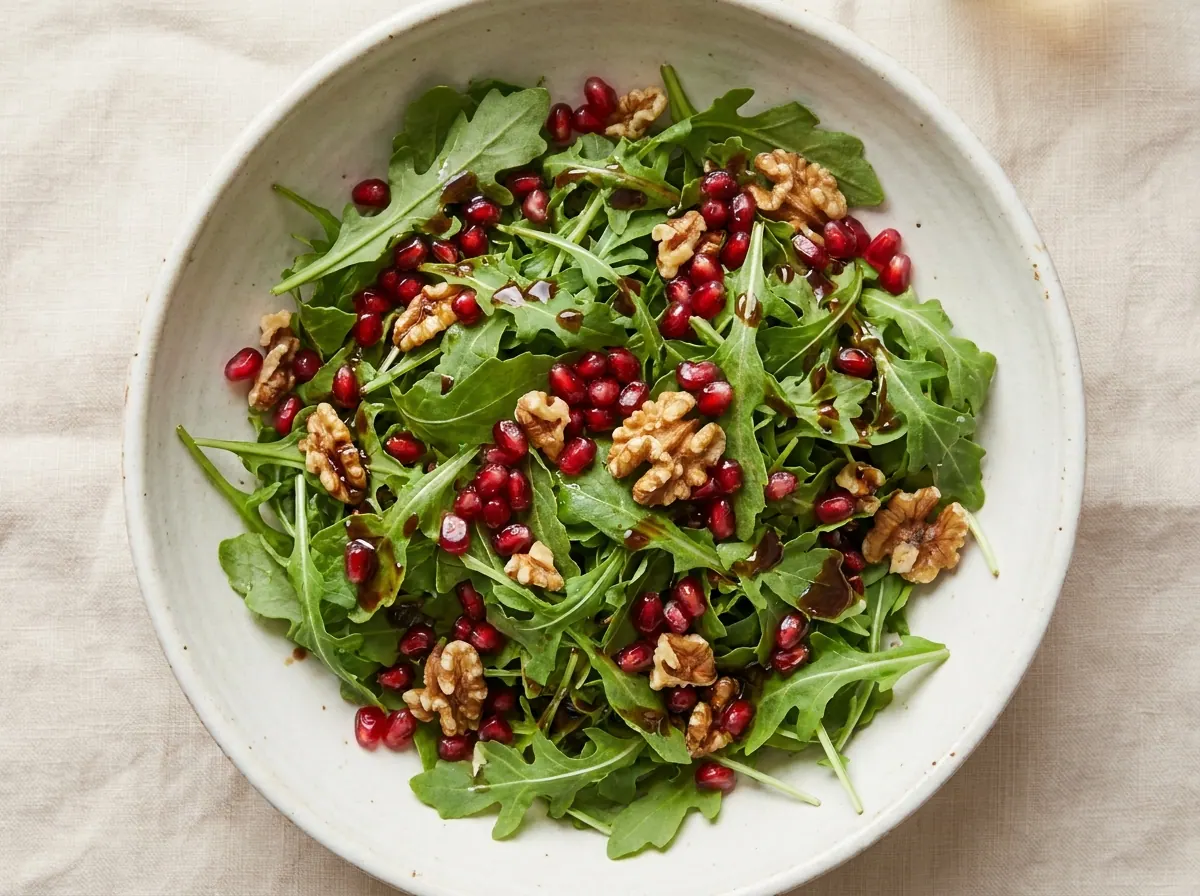
A vibrant, refreshing green salad with a very low glycemic impact (GI 43), rich in plant-based omega-3 from walnuts, pomegranate polyphenols, and vitamin K from arugula.
Arugula is a prized Levantine leaf with a pleasantly peppery bite, long served alongside grills and in cold salad platters across the Levant. This recipe brings it together with pomegranate seeds and pomegranate molasses — two pillars of Levantine cooking — balancing the sharpness with a gentle sweetness and refreshing acidity.
The nutritional value is remarkable for such a simple dish: arugula is almost starch-free, walnuts add plant-based omega-3 and heart-healthy fats, and pomegranate seeds bring polyphenols. The result is a salad with a near-zero blood sugar impact, perfect as a light side dish or a complete green meal.
Preparation Steps
Wash and dry the arugula
Wash the arugula thoroughly under cold running water, then dry it with a clean towel or salad spinner. Dry leaves absorb the dressing better and won't wilt quickly.
Toast the walnuts
Toast the chopped walnuts in a dry skillet over medium heat for 2 to 3 minutes, stirring constantly until fragrant. Transfer to a plate to cool. This optional step deepens the flavor.
Make the dressing
In a small bowl, whisk together the olive oil, pomegranate molasses, lemon juice, salt, and pepper until well combined.
Dress the arugula
Place the arugula in a wide serving bowl. Drizzle half the dressing over it and toss gently with your fingertips until the leaves are coated without being crushed.
Add pomegranate seeds and walnuts
Scatter the pomegranate seeds and toasted walnuts over the arugula.
Serve immediately
Drizzle the remaining dressing over the top and serve the salad right away to keep the arugula and walnuts crisp and the pomegranate seeds fresh.
Blood Sugar Impact
The glycemic index (GI) measures how quickly a food raises blood sugar, while the glycemic load (GL) measures how much a full serving raises it. Together they give the complete picture.
Glycemic Index
GI
43Low
Low0–55Medium56–69High70+
A low value (≤55) means a gradual rise in blood sugar — the most suitable range for diabetes and insulin resistance.
Glycemic Load
GL
6Low
Low0–10Medium11–19High20+
Glycemic load reflects the impact of the full serving. To lower it: take half a serving, or pair the recipe with a source of protein and fiber.
Nutritional Information
Per ServingMakes 2 servings · one serving is about 150 g of raw ingredients
Calories272 kcal14%of Daily Value*
Protein6 g12%of Daily Value*
Carbohydrates20 g7%of Daily Value*
Fat21 g27%of Daily Value*
Fiber5 g18%of Daily Value*
Sodium20 mg1%of Daily Value*
* Percent Daily Values are based on a 2,000-calorie diet per FDA food-label reference values — your daily needs may be higher or lower. Values are derived from the recipe's ingredients via the USDA database.
Troubleshooting
The most common problems when preparing Arugula Salad with Pomegranate and Walnuts, and how to fix them:
Arugula wilted and went limp within minutes
The leaves weren't dried well enough, or the dressing was added too early. The acid and salt in the dressing draw moisture from the leaves, causing wilting. Dry the arugula completely with a salad spinner or clean towel, and add the dressing only just before serving. Arugula is more delicate than lettuce and wilts faster — this dish doesn't benefit from pre-dressing.
Arugula tastes too bitter or sharp
This is arugula's natural character, intensified by maturity or hot weather. To mellow it: choose small, young leaves; mix with a little romaine lettuce or baby spinach; and increase the pomegranate molasses slightly to balance the sharpness. Soaking in ice-cold water for ten minutes and then drying also reduces the bite.
Walnuts are rubbery with no crunch
They weren't toasted, or they were toasted then stored in a humid environment and absorbed moisture. Toast the walnuts in a dry pan for 2 to 3 minutes until fragrant, then spread them on a flat plate to cool (not in a pile — trapped steam kills the crunch). Add them over the salad at the last moment.
Walnuts burned and turned bitter during toasting
The heat was too high or stirring was inconsistent. Walnuts contain oils that burn quickly. Use medium heat and stir continuously, watching for color and aroma rather than just timing. Remove from heat the moment they darken slightly and smell nutty — residual heat in the pan finishes the job.
The dressing is too thick and won't spread
Pomegranate molasses is naturally thick and the oil ratio may be low. Whisk the dressing well until emulsified, and add half a teaspoon of warm water or an extra splash of lemon juice to loosen the consistency until it flows easily over the leaves without pooling in one spot.
Pomegranate seeds are pale in color or taste bitter
The pomegranate is unripe or old. Choose a pomegranate that feels heavy in the hand with taut, un-wrinkled skin — a sign of full juiciness. If a good fresh pomegranate isn't available, thawed frozen pomegranate seeds work well as a substitute; drain the thaw liquid before scattering so it doesn't wet the leaves.
Storage and Make-Ahead
Refrigerator (4°C)
Dressed salad: eat the same day only. Arugula wilts within an hour or two after being dressed. Plain arugula: 2 to 3 days in the fridge, wrapped in a bag or paper towel to absorb moisture.
Freezer (-18°C)
Not suitable at all. Arugula and pomegranate seeds turn to a watery mush after thawing. Fresh leafy salads are never frozen.
Meal prep
Wash and dry the arugula up to 2 hours ahead; store in a paper bag in the fridge. Toast the walnuts hours ahead; keep in a dry, airtight container away from moisture. Dressing: make a day ahead in a covered jar; shake before using. Final assembly: just before serving only.
Serving
Served cold, never heated. Serve immediately after dressing to preserve crunch. Do not leave out of the fridge for more than 2 hours.
Tested Ingredient Substitutions
Original Ingredient
Tested Substitute
Ratio
Flavor Difference
Walnuts
Toasted pumpkin seeds
Same weight
Nut-free, lighter crunch, lower in omega-3 [2]
Arugula only
Arugula with baby spinach
Same total quantity
Milder bite, softer texture, ideal for those who find arugula too bitter
Pomegranate molasses
Honey with a splash of balsamic vinegar
Half the quantity
Brighter sweetness; loses the distinctive fruity acidity of pomegranate
Fresh pomegranate seeds
Thawed frozen pomegranate seeds, drained
Same weight
Very close result; color slightly duller and more liquid — drain well
Extra-virgin olive oil
Avocado oil
Same quantity
More neutral flavor, higher smoke point, similar monounsaturated fat profile
How Much Does It Make? Scaling Guide
Number of servings
Arugula
Pomegranate seeds
Walnuts
Pomegranate molasses
1 (individual)
60 g
50 g
20 g
0.5 tbsp
2 (base)
120 g
100 g
40 g
1 tbsp
4 (family)
240 g
200 g
80 g
2 tbsp
6 (entertaining)
360 g
300 g
120 g
3 tbsp
EEINA Nutrition Tip
Dressing at the last moment is the secret of this dish: arugula is a delicate leaf that wilts quickly when it contacts acid and salt. Keep all components separate until serving — the crunch and freshness are what set this salad apart from pre-dressed versions.
Add This Recipe to Your Plan
The EEINA app saves your favorite recipes, calculates them from their real ingredients, and shows your daily numbers toward your goal. Try it free now.
Yes, it's ideal. The GI is very low (15) and the glycemic load is only 6, with fiber and healthy fats that slow absorption of the small amount of sugar present. A generous portion is appropriate at any time.
Where can I find pomegranate molasses?
Available in spice shops, Levantine grocery stores, and the specialty aisle of larger supermarkets. Choose pure molasses with no added sugar for the best tart balance. If unavailable, mix honey with a splash of balsamic vinegar as a substitute.
Can I prepare it ahead of time for guests?
Prepare the components separately: wash and dry the arugula, toast the walnuts, and mix the dressing in a jar. Combine all three just before serving — early mixing wilts the leaves and kills the crunch.
What can I substitute for walnuts for someone with a nut allergy?
Toasted pumpkin or sunflower seeds are a safe, nut-free option that provide similar crunch and a pleasant roasted flavor, though with less omega-3 than walnuts.