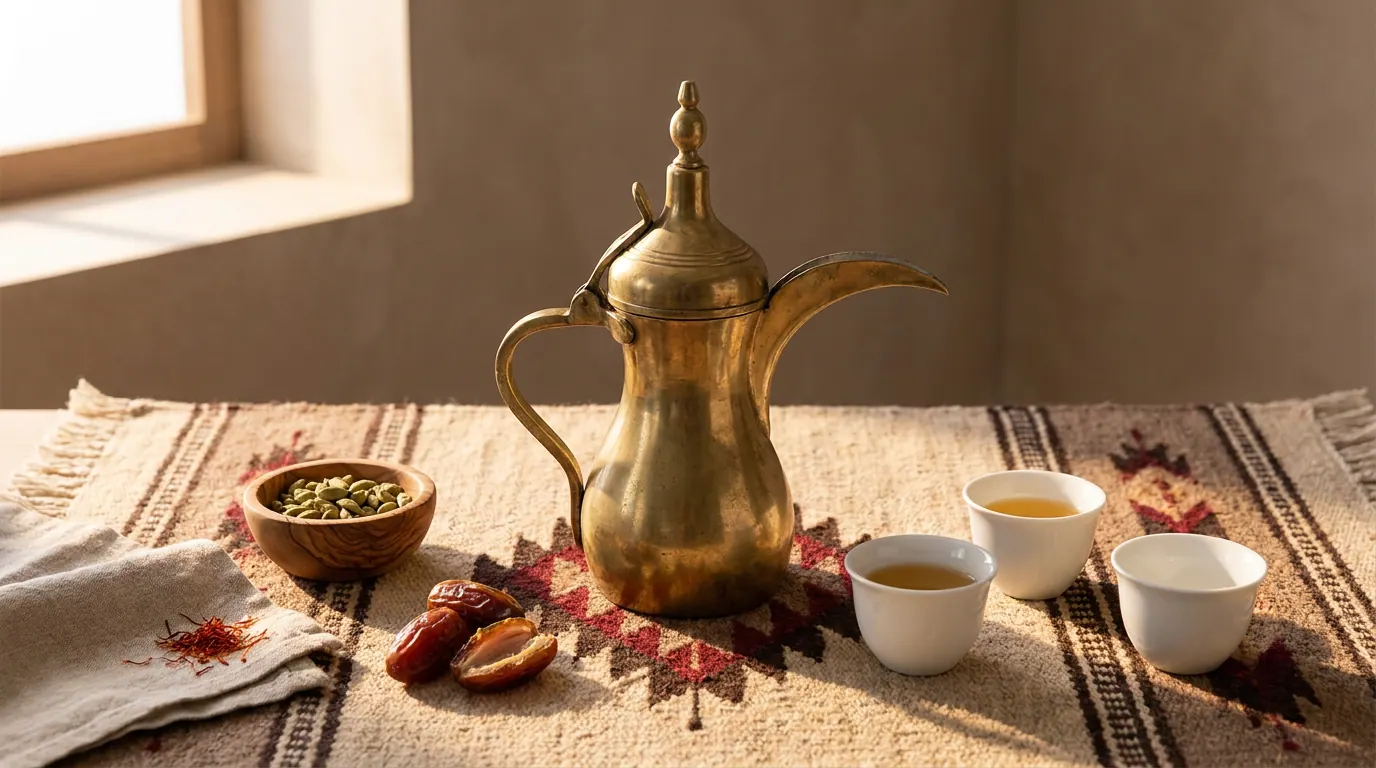
Arabic coffee is more than a beverage; it is a symbol of generosity and a pillar of social life in the Arabian Peninsula. Unlike dark Western roasts, authentic Saudi coffee is lightly roasted to a golden hue and infused with cardamom and saffron. Recognized by UNESCO as Intangible Cultural Heritage in 2015, it represents 1,200 years of tradition.
2015UNESCO Heritage
8 min readUpdated 2026-05-28Reviewed SFDA
MH
Dr. Mona Al-Harbi
SFDA-licensed Clinical Dietitian — medically reviewed this content.
SFDA Licensed12 years experience
Medical Disclaimer: The following content is a general educational reference based on peer-reviewed studies and classical medical heritage. It does not substitute professional medical advice. If you have a health condition, take chronic medications, or are pregnant or breastfeeding, consult your doctor before following any dietary recommendation.
Ingredient Profile
Scientific name
Coffea arabica
Roast level
Very light (blonde) — 170–190°C
Primary spices
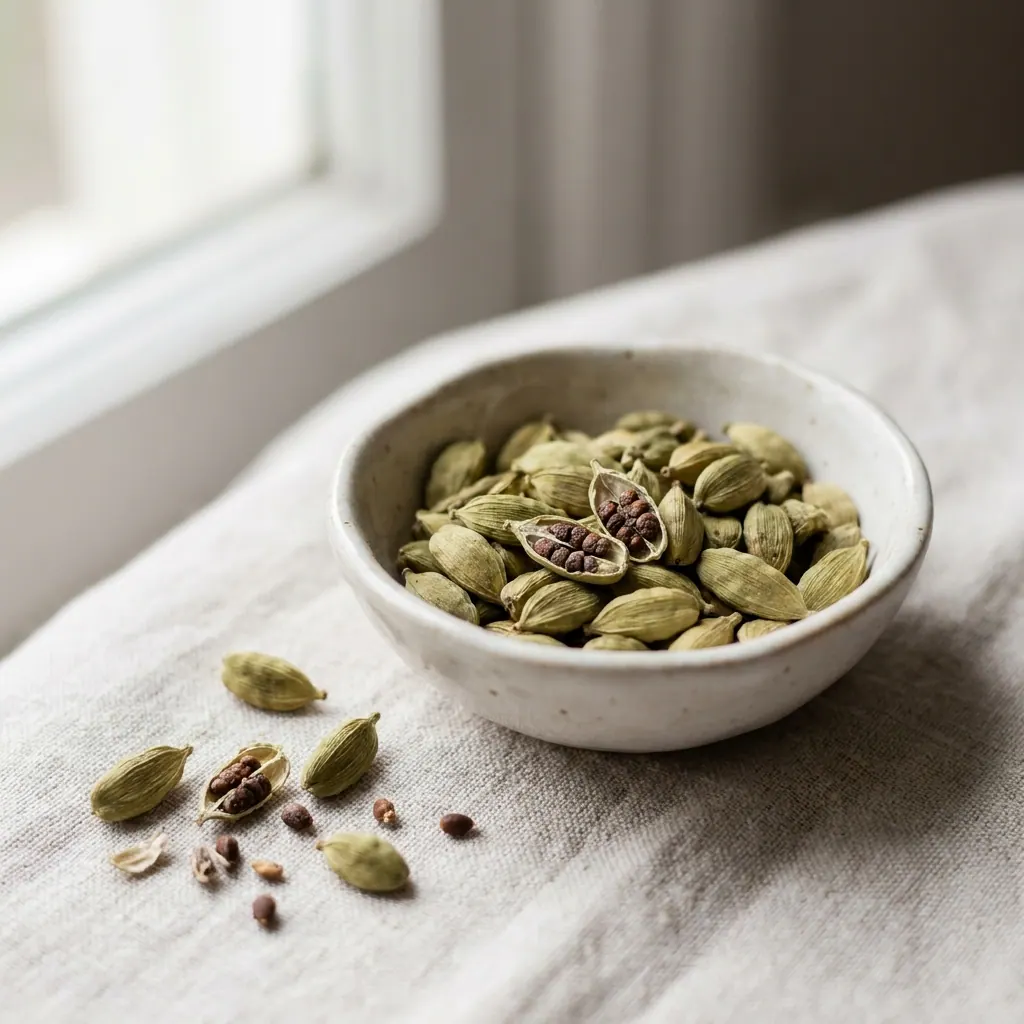
Green cardamom, saffron, cloves
Traditional vessel
Dallah (pot) & Finjan (small cup)
Saudi regions
Najdi (blonde), Hejazi (amber), Hassawi (spiced)
Caffeine content
25–40 mg per finjan (approx. 30ml)
Key benefit
High antioxidant content (Chlorogenic acid)
What Is Arabic Coffee?
Arabic coffee, known locally as Gahwa, is a traditional beverage prepared from lightly roasted coffee beans boiled with aromatic spices. Unlike Italian espresso or Turkish coffee, it is not filtered and is served in small, handleless cups called finjans. The color ranges from pale gold to amber, reflecting its light roasting process which preserves the beans' natural oils and health compounds.
In Saudi Arabia, Gahwa is the centerpiece of hospitality. It is served continuously to guests, always accompanied by dates to balance its mild bitterness. The preparation varies by region: Najdi coffee is very light and heavy on cardamom, while Hejazi coffee may include cloves and rose water.
The Science of Light Roast & Health
Antioxidant Power
High Chlorogenic Acid
Light roasting preserves up to 70% of chlorogenic acid, a potent antioxidant that is largely destroyed in dark roasts. This compound is linked to reduced inflammation and improved metabolic health.
Blood Sugar Control
Metabolic Support
Chlorogenic acid helps slow the absorption of glucose in the gut. When paired with dates (a low-to-medium GI fruit), Gahwa helps moderate the post-meal blood sugar spike.
Heart Health
Vascular Support
Regular, moderate consumption of Arabic coffee is associated with better vascular function and a lower risk of stroke, thanks to its high polyphenol content and the presence of cardamom.
Digestive Aid
Spice Synergy
The addition of cardamom and cloves isn't just for flavor; these spices are traditional digestive aids that help reduce bloating and stimulate metabolism after heavy meals.
The Caffeine Myth
Many assume Gahwa is highly caffeinated because it is "strong." In reality, a single finjan contains only 25–40 mg of caffeine, compared to 75 mg in an espresso. The slow, rhythmic sipping and the small cup size make it a balanced stimulant that can be enjoyed throughout the day.
Hospitality & Kitchen Rituals
The PourHalf-Full
Always fill the finjan only halfway. This is a sign of respect, inviting the guest to stay longer and enjoy multiple servings.
The PairingDates
Never serve Gahwa alone. Sukkary, Khalas, or Ajwa dates are the essential partners, providing natural sweetness to the spiced coffee.
The Right HandMandatory
Both serving and receiving the coffee must be done with the right hand. This is a fundamental rule of Saudi social etiquette.
The ShakeSignaling
To signal that you have had enough, gently tilt or shake your finjan from side to side before handing it back to the host.
Frequently Asked Questions
Why is Arabic coffee yellow or green?
The light color comes from the "blonde" roast. The beans are roasted briefly at lower temperatures, preserving their natural color and preventing the formation of dark, bitter compounds.
Is it safe for people with high blood pressure?
In moderation (3–5 finjans), it is generally well-tolerated. However, caffeine can cause a temporary spike in blood pressure. Consult your doctor if you have uncontrolled hypertension.
How should I store Gahwa beans?
Store whole beans in an airtight container away from light and heat. Grind them fresh for each pot to preserve the volatile oils of both the coffee and the cardamom.