What is Insulin Resistance
Insulin resistance is a condition where the body loses its normal response to the hormone insulin. Cells see insulin but do not respond to it, forcing the pancreas to produce larger and larger amounts of insulin to get sugar into the cells. Over time, the pancreas gets exhausted and fails, leading to prediabetes and eventually type 2 diabetes.
Insulin is a key that unlocks cell doors to let sugar in. In resistance, the locks gradually wear out, requiring much more force (more insulin keys) to work.
Resistance is not an "all or nothing" state, but a slow continuum extending over years. The body begins resistance long before sugar shows up on a morning fasting test. This time gap is exactly what you can leverage for prevention.
How Insulin Works Normally
When you eat a carbohydrate-rich meal, food is converted into glucose (sugar) which enters the bloodstream. The pancreas detects the rise and secretes insulin, which transports glucose from the blood into muscle, liver, and fat cells to be used for energy or stored. Within two hours, blood sugar returns to normal.
In resistance, this chain of events stops working smoothly. Cells ignore insulin, so sugar remains in the blood for longer periods. The pancreas responds by secreting more insulin (hyperinsulinemia) in a frantic attempt to open the doors. This excess itself worsens resistance and triggers abdominal fat storage and chronic inflammation.
Stages of Resistance
Insulin sensitivity loss is a slow process taking 5 to 15 years. Here are the four consecutive stages your body goes through:
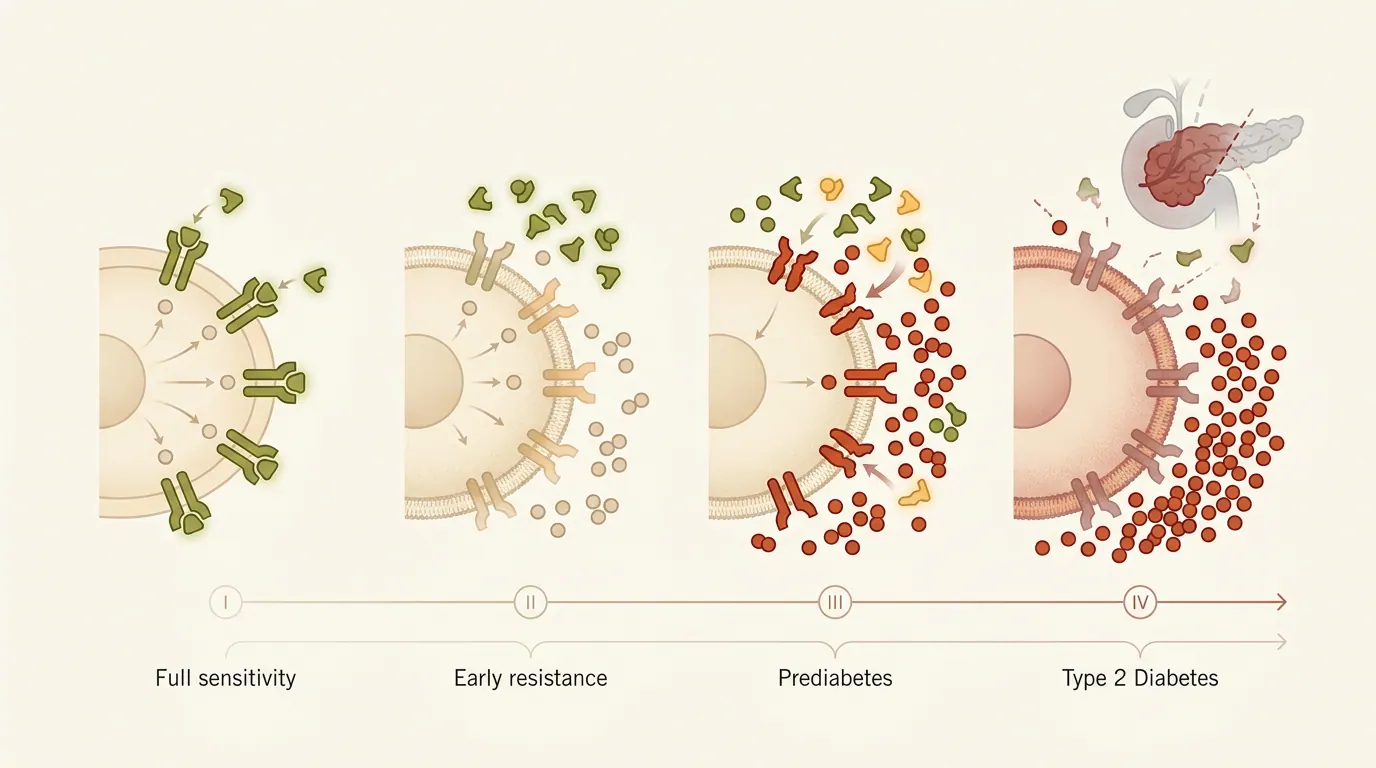
Stage 1 — Optimal Sensitivity
Cells respond to minimal amounts of insulin. Fasting blood sugar is under 90 mg/dL. HOMA-IR is under 1. No intervention is required.
Stage 2 — Early Resistance
Fasting blood sugar is still normal (under 100 mg/dL) but fasting insulin has begun to rise. HOMA-IR is between 1.5 and 2.5. Hidden without an insulin test.
Stage 3 — Prediabetes
Fasting glucose is 100–125 mg/dL. HbA1c is between 5.7% and 6.4%. HOMA-IR is above 2.5. Early intervention reverses the condition in 50% of cases.
Stage 4 — Type 2 Diabetes
Fasting glucose is above 126 mg/dL or HbA1c is above 6.5%. The pancreas loses its ability to produce enough insulin. Highly manageable, but complete remission is harder.
The first three stages are silent. No pain, no obvious symptoms, no alarms. Only one specific test catches them—and most Saudis never take it.
Saudi Statistics in Facts
According to the Saudi Diabetes Registry and MOH 2023, data reveals:
Source: Saudi Diabetes Registry 2023 · MOH National Survey 2022 · IDF MENA Atlas 2024.
Four out of ten Saudis have hidden insulin resistance. And nine out of ten of them do not know it.
HOMA-IR Calculator: Read Your Body's Sensitivity
HOMA-IR (Homeostatic Model Assessment of Insulin Resistance) is the gold standard for measuring resistance. It requires two numbers from a fasting blood test: fasting glucose and fasting insulin.
Thresholds according to ADA 2024 and the European Society of Endocrinology. The result is for guidance and supplements rather than replaces your physician's assessment.
Your Risk Factors: An 8-Step Self-Assessment
Resistance does not appear suddenly. Risk factors are well-known and can be monitored early. Check all that apply to you:
Warning Signs Your Body Sends You
Resistance is silent in standard tests, but the body sends signals. Most of us ignore them or attribute them to stress:
Darkened Neck & Armpits
A dark, velvety skin patch appearing behind the neck or under the armpits, worsening with weight. It is not dirt and scrubbing won't remove it. It is an early biological signal of hyperinsulinemia.
Abdominal Fat (Waistline)
Abdominal fat surrounding internal organs is far more dangerous than subcutaneous fat. It secretes inflammatory hormones that worsen resistance. Waist circumference is a more accurate marker than weight alone.
Post-Meal Fatigue
When insulin spikes excessively after a high-carbohydrate meal, blood sugar crashes suddenly, causing severe fatigue. Feeling the urge to sleep after a heavy Kabsa is due to insulin resistance, not just fullness.
Small Skin Tags
Small, soft, hanging skin pieces, common on the neck and under the breasts. 70% of those who have them show underlying insulin resistance. Do not pinch or cut them without medical advice.
Required Tests to Detect Resistance
Standard morning fasting glucose does not catch hidden resistance. Here are five diagnostic tests to complete the picture:
The Difference Between Resistance & Type 2 Diabetes
Many confuse the two conditions. The difference is fundamental:
The Pancreas Works at Maximum Capacity
The Pancreas Begins to Fail
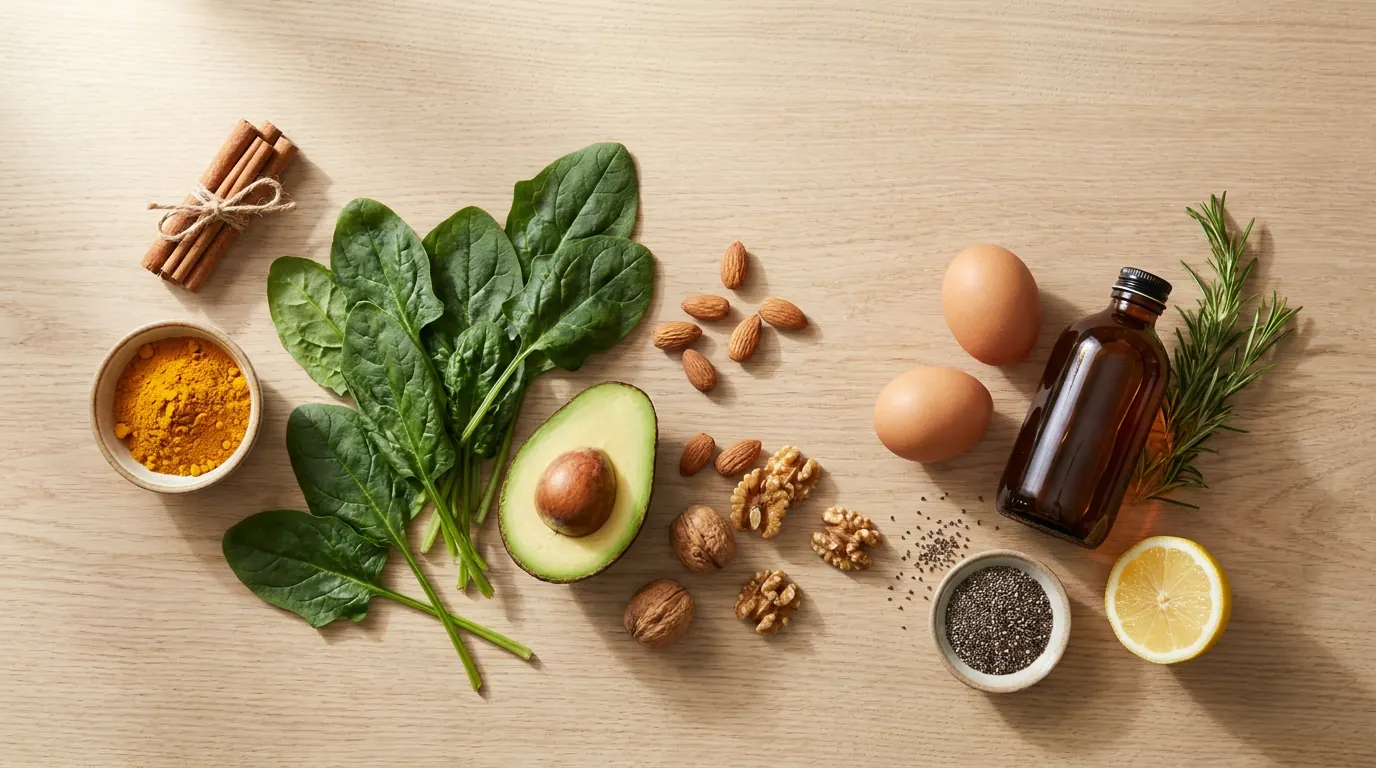
Seven Foods that Improve Insulin Sensitivity
Clinical research has proven the ability of these foods to reduce HOMA-IR by measurable percentages within 8 to 12 weeks:
Four Foods that Rapidly Worsen Resistance
You might be surprised to find that fat is not the primary driver, but rather hidden industrial sugar:
Exercise & Insulin Sensitivity
Exercise is the most powerful intervention to reverse resistance, and resistance training (strength) is stronger than cardio here. The reason: larger muscle mass means more active tissue consuming sugar with high sensitivity.
Medications: When Are They Necessary?
Medications are not the first line of defense in insulin resistance, but they protect many from progressing to diabetes:
Metformin
Works on three fronts: reduces liver sugar production, increases muscle sensitivity, and slows intestinal sugar absorption. Reduces HOMA-IR by 25% to 40%. Extremely safe and inexpensive. Common side effect: mild stomach upset in the first two weeks.
GLP-1 Injections — Ozempic & Mounjaro
Mimics an intestinal hormone that increases insulin sensitivity and suppresses appetite. Reduces HOMA-IR by 30% to 50% along with significant weight loss. Costly and requires a prescription. A powerful option for those with obesity and severe resistance.
Read the Visual Guide on GLP-1 & OzempicWhen Medication is Necessary
With prediabetes (HbA1c between 5.7% and 6.4%), or HOMA-IR above 3.0, or failure of lifestyle modification alone after 6 months. Never self-prescribe. Lifestyle first, medication second—and both together yield the absolute best outcomes.
Five Common Myths About Insulin Resistance
"If my fasting blood sugar is normal, I am fine"
"Thin people cannot get insulin resistance"
"Sugar is the only cause"
"Metformin is dangerous and causes kidney failure"
"Dates cause insulin resistance"
The EEINA Protocol to Reverse Resistance in 12 Weeks
A scientific plan based on ADA 2024 and the DPP Trial (Diabetes Prevention Program). Three integrated layers. Adherence reduces HOMA-IR by 20% to 35% clinically and reverses prediabetes in 58% of cases.
The protocol is based on the Diabetes Prevention Program (NIH 2002), Cochrane Reviews 2023, and Saudi Diabetes Society guidelines 2024.
Daily Sensitivity Habits
Four numerical goals every day.
Weekly Sensitivity Targets
Five tasks to repeat every week.
Measuring Impact After 12 Weeks
Measurable progress, not just impressions.
Adherence Rule: 50% of those who fully adhere to the first two layers completely reverse prediabetes. The other half delay diabetes onset by 10 years. There is zero loss.
FAQ
-
Yes in most cases. Modern studies (DPP 2002 + DiRECT 2018) prove that strict lifestyle modifications reverse resistance and prediabetes in 58% of cases within a year. Recovery is possible but requires serious commitment to nutrition, exercise, and sleep.
-
Ask your doctor for a "Fasting Insulin" test alongside fasting blood glucose. It is available in most labs in Riyadh, Jeddah, and Makkah. It costs between 80 and 120 SAR. Fast for 8 to 12 hours before the blood draw. Results are usually ready in one day.
-
3 to 5 dates daily consumed with protein and healthy fats do not cause resistance in healthy people. The glycemic index of dates is moderate (42-55), and their fiber content slows down absorption. Overindulging (10+ dates) or date syrup is the problem. For insulin resistant patients: limit to 2 dates.
-
Yes. A single night of short sleep (under 5 hours) reduces insulin sensitivity by 25% the following day. Chronic sleep deprivation elevates cortisol, which promotes visceral abdominal fat storage and worsens resistance. 7 to 8 hours of sleep is the most powerful free nutritional intervention.
-
If you notice a dark velvety ring on their neck, abdominal overweight, or unusual fatigue after eating in your child, request an HbA1c + fasting insulin test from their pediatrician. Type 2 diabetes is being diagnosed in Saudi children over 10 at alarming rates. Early intervention completely reverses this trajectory.
-
Yes, with conditions. Fasting for 14 to 16 hours daily (like Ramadan fasting) reduces HOMA-IR by 10% to 20% within 8 weeks. The condition is that your eating window meals must be rich in protein and fiber rather than refined carbohydrates and sweets. Breaking your fast with two dates followed by lentil soup is far better than an open buffet.
-
Usually not. A HOMA-IR between 2.0 and 2.9 indicates "mild resistance" which can be fully reversed by lifestyle changes within 6 months. Discuss with your doctor: if you have additional risk factors (PCOS, gestational diabetes, strong family history), they may suggest metformin as a preventive measure. The decision is highly individualized.
Seven Takeaways to Keep
- Resistance precedes diabetes by a decade. A 10-year silent window you can leverage for prevention.
- Fasting glucose is the last to rise. Request fasting insulin + HOMA-IR for early detection.
- Waistline is more accurate than the scale. Visceral abdominal fat is far more dangerous than total weight.
- A darkened neck is a signal, not dirt. Get tested immediately.
- Resistance training is stronger than cardio. Larger muscle mass consumes more sugar with higher sensitivity.
- Post-meal walking is incredibly potent. 10 minutes of walking after meals reduces glucose spikes by 20% to 30%.
- Sleep is a crucial nutritional intervention. A single short night drops insulin sensitivity by 25% the next day.
Start your next step with EEINA
Meal Plan to Break Resistance
Your plan is customized according to HOMA-IR. Protein first, soluble fiber, complex carbohydrates only.
Get Your Plan ←Insulin-Friendly Recipes
Brown rice Kabsa, egg & avocado breakfast, cinnamon-infused lentil soup.
Browse Recipes ←EEINA App
Track HOMA-IR, waistline, sleep, and post-meal walk reminders. Free.
Download App ←