What is Fatty Liver
Fatty liver is an abnormal accumulation of fat within liver cells, exceeding 5% of the liver's weight. It's a very common condition in Saudi society, linked to obesity, diabetes, insulin resistance, and high cholesterol. It starts silently with no symptoms but can progress to fibrosis and cirrhosis.
The liver is a 24-hour chemical factory. When fat builds up inside it, it loses its efficiency in detoxifying, producing proteins, and regulating blood sugar. The accumulation isn't just 'stored fat,' but a metabolic dysfunction.
The New Name MASLD: Why It Changed
In 2023, global liver associations (AASLD and EASL) changed the name from NAFLD to MASLD (Metabolic dysfunction-Associated Steatotic Liver Disease). The reason: The old name was "non-alcoholic," a negative descriptor. The new name identifies the true root cause — metabolic dysfunction.
The new nomenclature signifies that the disease is directly linked to insulin resistance and metabolic syndrome. Diagnosis requires the presence of fatty liver plus at least one metabolic factor (abdominal obesity, high blood pressure, diabetes, or high cholesterol).
Why Fat Accumulates in Your Liver
The liver receives fat from three sources, and dysfunction occurs when it fails to export it:
1 — Sugar and Fructose
Fructose, in particular (found in sugary drinks, sweets, and corn syrup), goes directly to the liver and is converted into triglycerides. Excess sugar exacerbates resistance, increasing accumulation.
2 — Abdominal Obesity
Visceral fat secretes free fatty acids that reach the liver via the portal vein. The larger the waist circumference, the greater the supply pressure.
3 — Insulin Resistance
Chronically high insulin levels tell the liver to store fat instead of burning it. A vicious cycle: resistance increases fat, and fat increases resistance.
4 — Lack of Physical Activity
Inactive muscles don't consume sugar, so it's directed to the liver to be converted into fat. Prolonged sitting is more dangerous than you think.

Saudi Arabia's Numbers with Facts
According to the Saudi Gastroenterology Association and recent studies from King Saud University and King Faisal Specialist Hospital:
Source: Saudi GI Association 2023 · KSU Liver Study 2024 · Global NAFLD Epidemiology Meta-analysis 2023.
Eighty-five percent of individuals with fatty liver in Saudi Arabia are unaware. This represents the largest awareness gap in Saudi medicine.
FIB-4 Calculator: Read Your Fibrosis Risk
FIB-4 (Fibrosis-4 Index) is the easiest non-invasive estimate of liver fibrosis risk. It requires four numbers from a routine blood test:
< 1.3
1.3 to 2.67
> 2.67
Thresholds according to AASLD 2024. The result is indicative and complements, not replaces, a full evaluation. FibroScan is the most accurate test.
Your Risk Factors: A Self-Check
Select all that apply:
Four Stages of Fatty Liver Progression
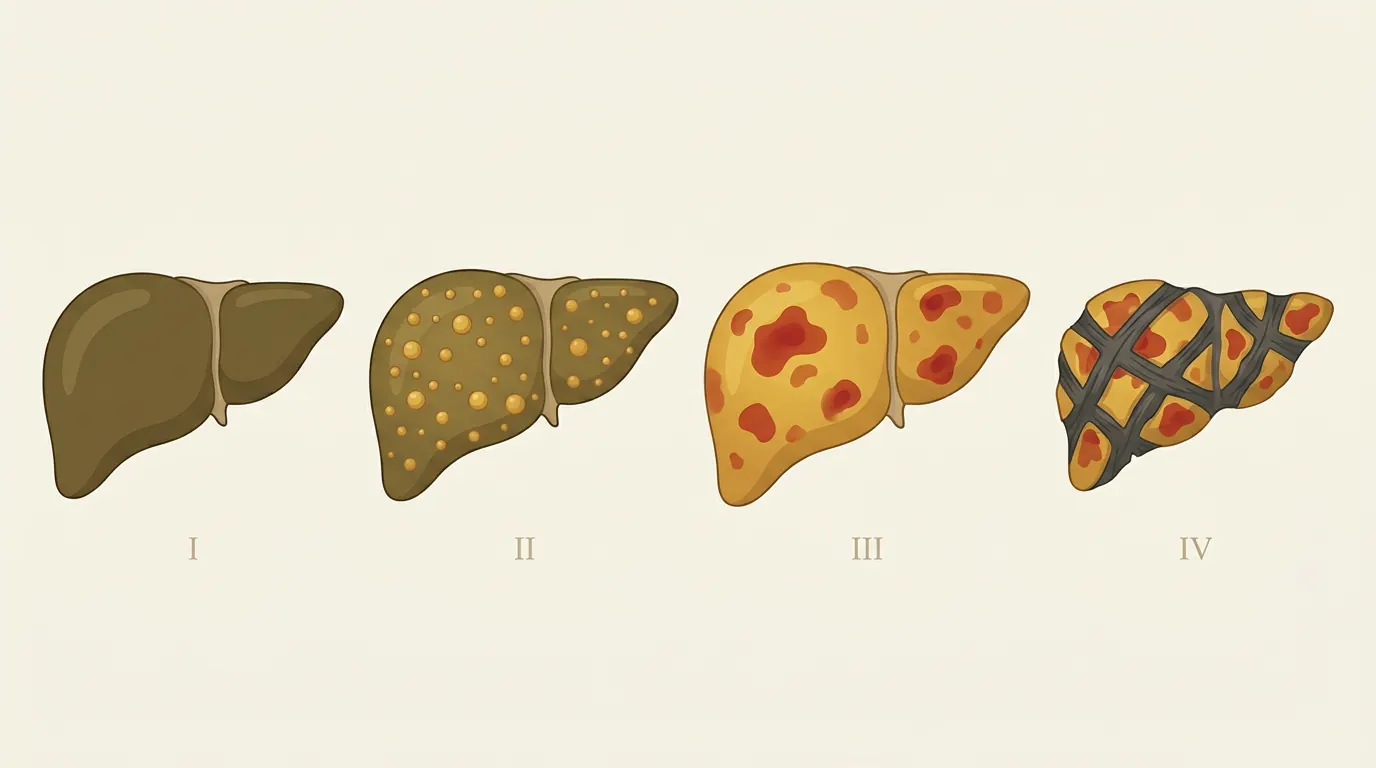
The disease is a spectrum. Progression is slow and takes decades, but it happens:
Stage 1 — Simple Steatosis
Most affected individuals are here. No symptoms, liver enzymes may be normal. Fully reversible with 7-10% weight loss.
Stage 2 — MASH (Inflammation)
Fat triggers chronic inflammation that damages cells. Enzymes rise. Still reversible with a strict lifestyle.
Stage 3 — Fibrosis
Damaged cells are replaced by fibrous tissue. The liver begins to lose function. Partial reversal is possible, but permanent damage accumulates.
Stage 4 — Cirrhosis
Irreversible widespread damage. Liver cancer risk is 10x higher. Transplant may be the only option. The only prevention: intervention in the first two stages.
The liver can rebuild itself if you remove the cause — but only up to a point of no return. That point is Stage 3.
Essential Diagnostic Tests
Tests range from inexpensive to specialized:
Silent Warning Signs
Fatty liver is silent in 90% of cases. However, your body might send subtle signals:
Unexplained Morning Fatigue
A tired liver doesn't detoxify efficiently overnight, leading to silent toxin buildup. It's not laziness, but dysfunction.
Brown Skin Patches
Metabolic disturbances in the liver reflect on the skin. Darkening of the neck is a sign of metabolic syndrome.
Sudden Abdominal Weight Gain
A compromised liver stores more fat in the body. The abdomen is the first to be affected.
Mild Discomfort in the Right Abdomen
When the liver enlarges, it presses on its surrounding capsule. Not sharp pain, but a mild heaviness that is often ignored.
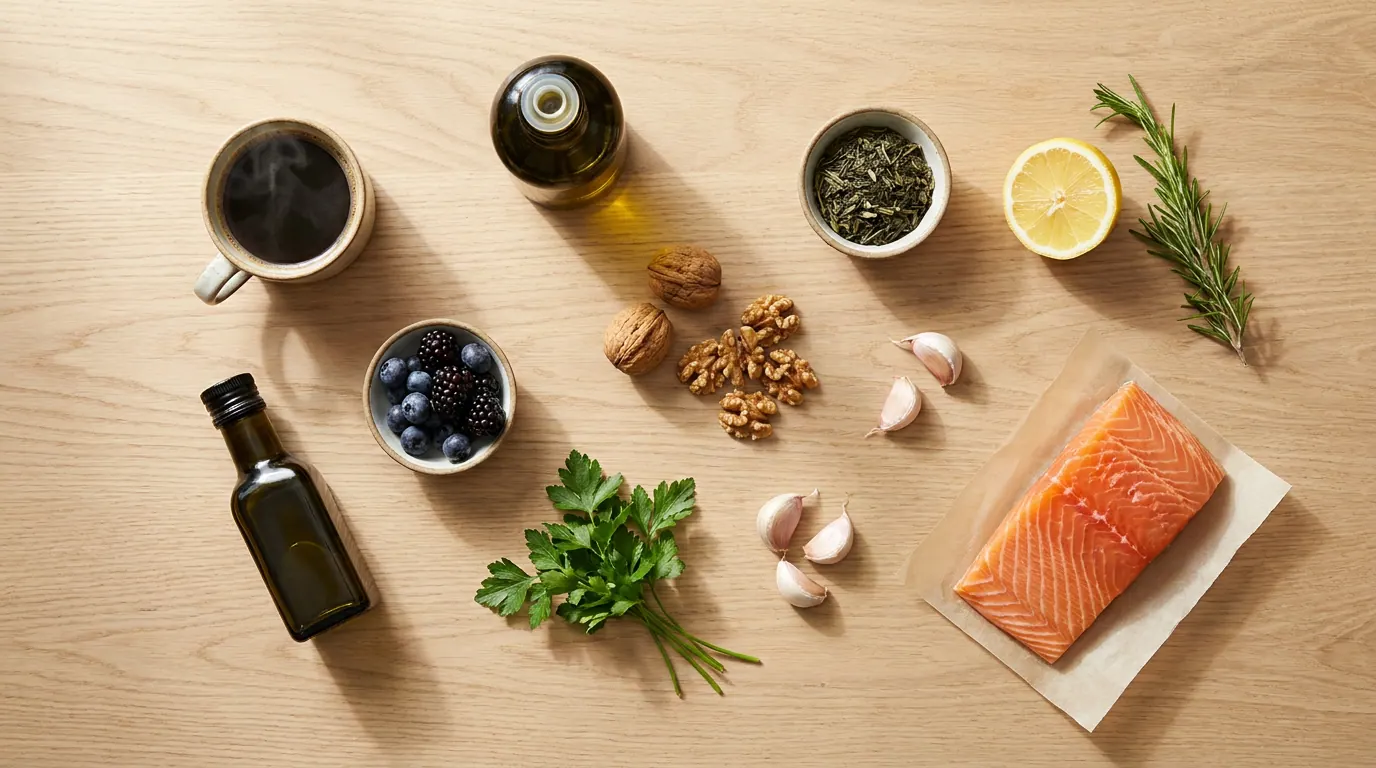
Seven Foods That Reverse Fatty Liver
These foods have proven ability to reduce liver fat and FIB-4 scores within 12 weeks:
Four Foods That Rapidly Worsen Fatty Liver
This list might surprise you. Sugar, not fat, is the primary driver:
Exercise and HIIT
Exercise reduces liver fat even without weight loss. Different types of exercise have varying effects:
New Medications for Fatty Liver
As of 2024, there was no approved medication. The FDA has approved a new drug that ushers in a new era of treatment:
Resmetirom (Rezdiffra)
Targets thyroid hormone receptors in the liver, reducing fat and fibrosis. Expensive (~$3500/month), only for advanced MASH cases.
GLP-1 Injections
Reduce liver fat by 20% to 35% with weight loss. A strong option for patients with both diabetes and fatty liver. A full article is in the blog.
High-Dose Vitamin E
Reduces liver inflammation in MASH patients without diabetes. Only under medical supervision — high doses have risks.
Metformin & SGLT-2 Inhibitors
Metformin improves insulin resistance, reducing fat flow to the liver. SGLT-2 Inhibitors are a newer class that reduces liver fat by 15% to 20% in addition to lowering blood sugar. Powerful options for diabetic patients with fatty liver.Read the Encyclopedia on Insulin Resistance
Five Common Myths
"Fatty liver isn't dangerous"
"Thin people don't get it"
"Oil causes fatty liver"
"Normal liver enzymes mean I'm fine"
"Supplements detoxify the liver"
EEINA's 12-Week Fatty Liver Reversal Protocol
A scientific plan based on AASLD 2024 + Mediterranean Liver Trial 2023. Three tiers. Adherence can reduce liver fat by 20% to 40% and reverse MASH in 45% of cases.
The protocol is based on AASLD Guidelines 2024 and Cochrane Liver Reviews 2023.
Liver Protection Habits
Four numerical goals every day.
Weekly Liver Commitments
Five tasks to repeat each week.
Measure Impact After 12 Weeks
A measurable result, not just an impression.
Golden Rule: Losing 7% of body weight reverses fatty liver in 70% of cases. You don't need a miracle cure, you need to reduce.
Frequently Asked Questions
- Yes, in the first two stages. Losing 7% to 10% of body weight within 6 months can completely reverse MASLD and MASH. Advanced fibrosis (Stage 3) is partially reversible, but cirrhosis is permanent.
- Between SAR 600 and SAR 900 in the private sector. It is available in many hospitals in Riyadh, Jeddah, and Khobar. The test is safe, painless, and takes 10 minutes. Results are immediate.
- Studies on coffee's protective effects have focused on filtered coffee (drip, espresso). Brewed Arabic coffee may contain protective polyphenols, but also other compounds that can raise cholesterol. Moderate consumption of 2 to 3 cups daily is safe.
- Yes. A 16-hour daily fast (similar to Ramadan fasting) reduces liver fat by 15% to 25% within 8 weeks, even without significant weight loss. The secret lies in activating autophagy (cellular self-cleaning).
- 18% of Saudi youth have fatty liver. If your child is overweight or consumes many sugary drinks, request ALT and AST tests and discuss it with their pediatrician during the annual visit. Early prevention can avoid decades of problems.
- No. Eggs in moderation (one to three per day) do not harm the liver. In fact, they contain choline, which helps export fat from the liver. Choline deficiency is common in diets lacking eggs.
- No. Resmetirom (Rezdiffra) is approved only for MASH with moderate fibrosis (F2 to F3) in patients who have failed lifestyle interventions. It is very expensive and has side effects. Lifestyle changes come first; medication is for advanced cases.
Seven Points to Remember
- One in five Saudis is affected. Most are unaware. The liver is silent.
- Sugar — not fat — is the biggest driver. Especially artificial fructose.
- Request FIB-4 from your routine blood test. It's free and detects risk early.
- Coffee is medicine. Three cups daily reduce risk by 25% to 40%.
- HIIT is most potent. 20 minutes twice a week is sufficient.
- Losing 7% of body weight reverses the condition. You don't need a miracle, you need to reduce.
- Cirrhosis is irreversible. Intervention is only effective in the first two stages.