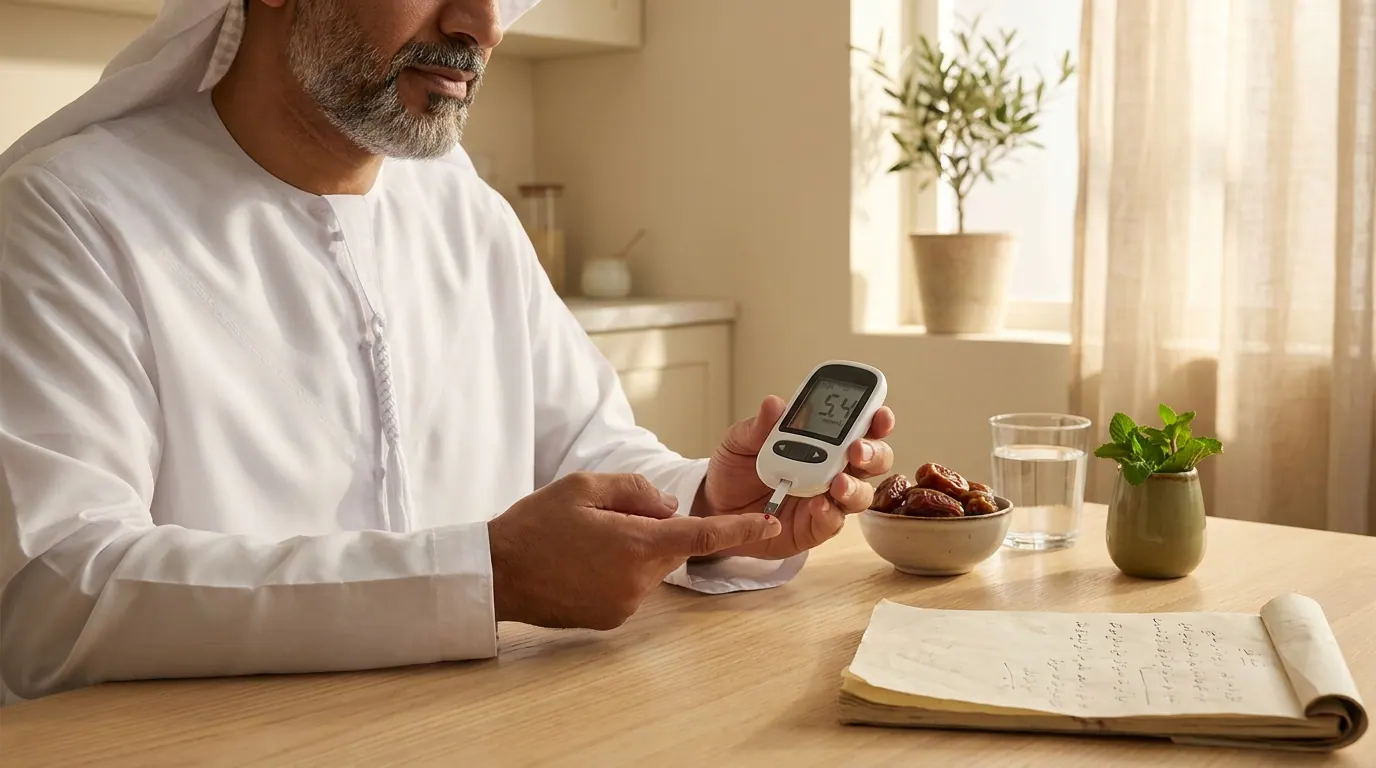
Gout strikes suddenly like a needle prick in the big toe in the early hours of the night, waking you from deep sleep, unable to bear the weight of a blanket. Five percent of Saudis are affected, and the disease has tripled in the last decade. The cause isn't just Kabsa — it's a comprehensive metabolic disorder that stores sharp crystals in your joints. This article reveals the root cause and offers an action plan.
12 minute readPublished May 28, 2026Reviewed by: EEINA team
Scroll down to discover ↓
00The Paradox
The culprit isn't just Kabsa. The truth lies in a liver that fails to excrete uric acid.
For centuries, we've blamed food. But modern science (Lancet 2023) is more precise: two-thirds of the uric acid in your body is produced by your own cells, the remaining third from food. Gout isn't a disease of 'overeating,' it's a disease of 'under-excretion' — the kidneys can't keep up with its removal.
5%
Of Saudi adults have gout. 40% of men over 50.
3x
Disease growth in Saudi Arabia over the last decade. Cause: Sugary drinks & processed meats.
70%
Of sufferers have full metabolic syndrome. Gout is just the tip of the iceberg.
Your big toe isn't screaming from Kabsa's fat. It's screaming from a metabolic imbalance that started in your liver and kidneys years ago.
What is Gout
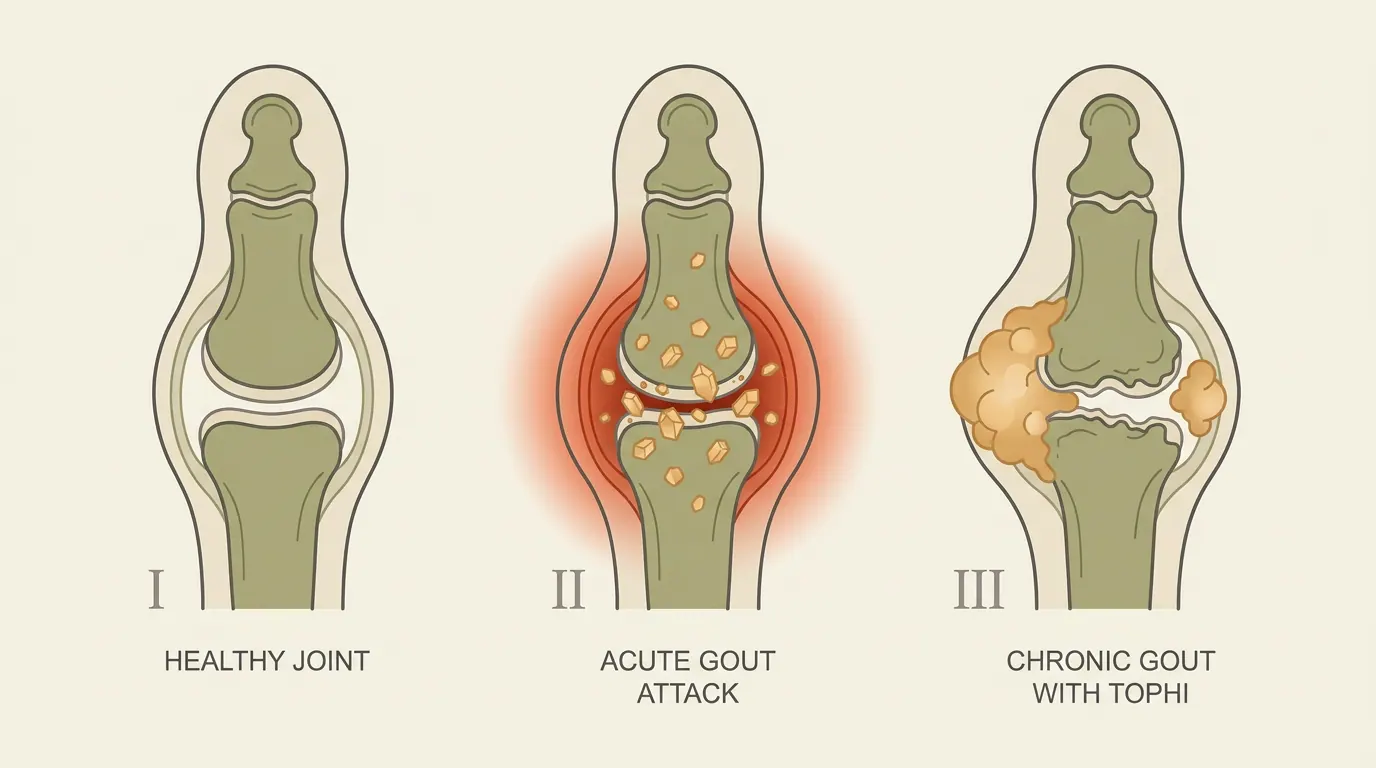
Gout is a type of arthritis that occurs when uric acid builds up in the blood, forming needle-like crystals that deposit in the joints. These crystals trigger the immune system, which attacks them violently, causing acute inflammation — pain described as 'the worst pain of life' in many patient experiences.
Gout progression in the big toe joint · Needle-like uric acid crystals
The Fundamental Rule
Gout isn't a 'passing ache' that resolves with painkillers. It's a signal that your liver is producing excess acid, and your kidneys aren't excreting it. Ignoring the first attack opens the door to years of illness.
How Uric Acid Forms
Uric acid is a natural byproduct of the breakdown of a substance called purine. Purines are found in all body cells and also in certain foods. The liver converts purines into uric acid, which the kidneys then excrete in urine. In healthy individuals, this balance is maintained automatically.
The problem arises in two scenarios: overproduction (the liver makes more than necessary due to metabolic syndrome or excess fructose) or under-excretion (the kidneys don't eliminate it efficiently due to dehydration, obesity, or impaired kidney function). Ninety percent of Saudi patients fall into the second category — under-excretion, not overproduction.
Why the Big Toe is the First Victim
The big toe, specifically, experiences more than half of initial gout attacks. The reason is simple science: lower temperature. The big toe is the coldest part of the body (furthest from the heart), and uric acid crystallizes faster in the cold. This is also why attacks often occur at night — body temperature drops by 1 degree Celsius during sleep.
When the pain in your big toe wakes you at 3 AM, know that crystals have been forming for two hours. It's not a coincidence — it's heat biology.
Saudi Arabia's Numbers, Factually
According to the Saudi Society of Rheumatology and recent studies from King Saud University:
Gout Prevalence & Complications in Saudi Arabia
Adults Overall
5%
Men Over 50
40%
With Metabolic Syndrome
70%
With Hypertension or Diabetes
65%
Properly Treated
30%
Source: Saudi Society of Rheumatology 2023 · KSU Gout Study 2024 · ACR Global Atlas 2024.
Seventy percent of gout patients have obesity, hypertension, or diabetes, conditions not always linked to gout. Treating only the attack misses the big picture.
Uric Acid Checker
A simple blood test reveals the risk before the first attack:
Enter your blood uric acid level
A simple blood test — available at all labs
mg/dL
Threshold differs by sex
NormalBelow 6
Slightly Elevated6 to 7
High7 to 9
CriticalAbove 9
Thresholds per ACR 2024. The optimal range for gout patients is below 6 mg/dL — below the crystallization threshold.
Your Risk Factors — A Self-Check
Check the boxes that apply to you:
Gout Risk Factors
The Acute Attack — How to Recognize It
The classic attack has an unmistakable signature:
Nighttime Onset
Early hours of the night
Eighty percent of attacks start between 2 AM and 5 AM. Reason: Body temperature drop at night accelerates uric acid crystallization.
Single Joint Involvement
Big toe in 70%
The joint becomes swollen, red, hot, and unbearable to touch. The weight of a blanket causes pain. An attack in the big toe is called Podagra.
Peak in 24 Hours
Then subsides within 7 to 10 days
Pain rapidly increases to its peak within a day, then gradually subsides. Even without treatment, the attack ends — but the crystals remain.
Trigger 24 Hours Prior
Heavy meal or dehydration
Most attacks occur 24 hours after a heavy meat meal, a sugary drink, a Ramadan iftar with Kabsa, or a day of severe dehydration.
Necessary Tests
Tests & Their Significance
Serum Uric Acid
First & Most Important · SAR 80
Kidney Function (Creatinine + eGFR)
The primary suspect
Joint Fluid Aspiration
Gold standard · Confirms crystals
Ultrasound or DECT
Detects silent deposits
Lipid Panel + HbA1c
Metabolic syndrome screening
Gout & Kabsa — The Full Truth
The popular name 'Kabsa disease' is half true and half misleading. The purines in meat raise uric acid, but the biggest driver in modern Saudi Kabsa isn't the meat — it's two other factors:
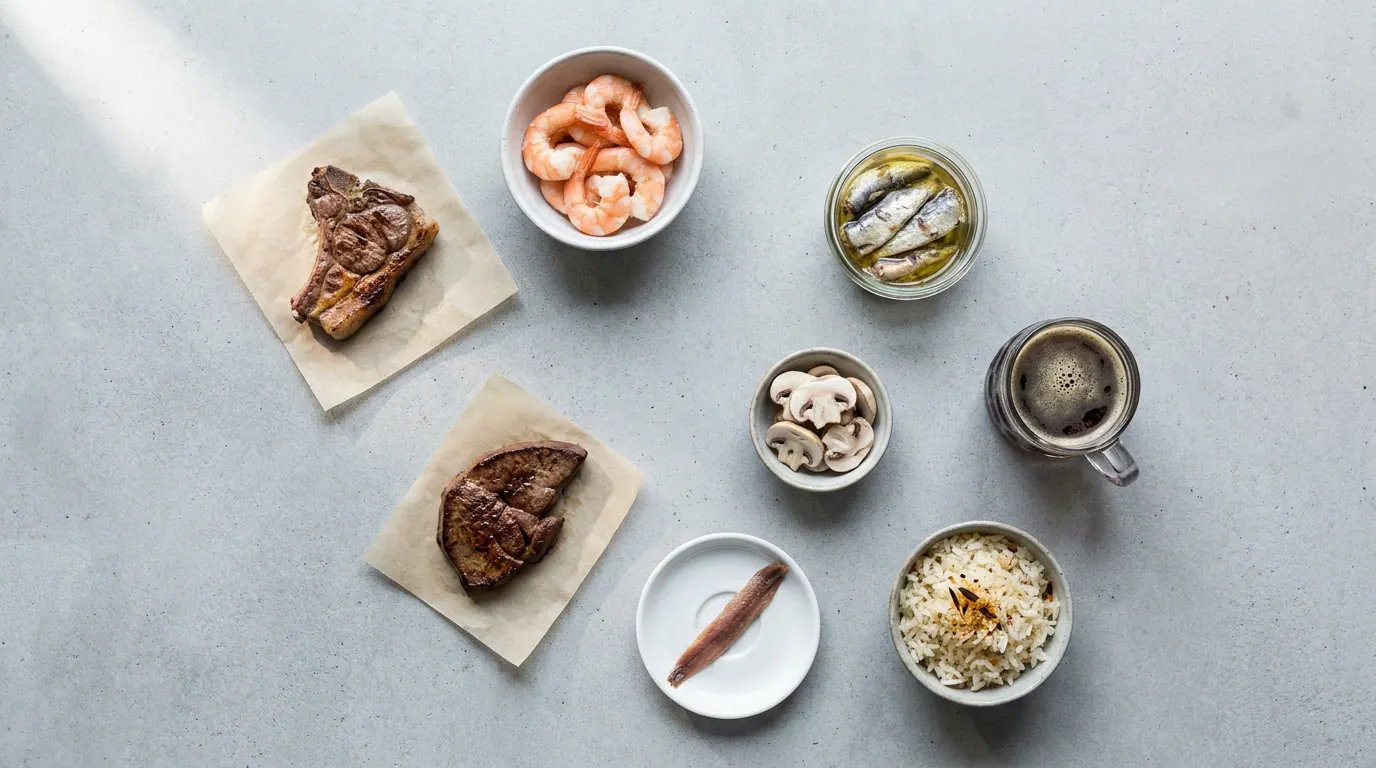
High Purine Foods · Significantly raise uric acid
The Biggest Culprit
Fructose in Beverages
The Shocking Truth: A daily can of Pepsi raises gout risk more than a steak. Fructose is directly converted to uric acid in the liver. The sugar in Kabsa and subsequent desserts is the root, not just the meat.
Second Factor
Abdominal Obesity
The Truth: Abdominal fat increases insulin resistance, and high insulin reduces uric acid excretion by the kidneys. Losing 7% of body weight reduces attacks by 40%.
Third Factor
Chronic Dehydration
The Truth: Dehydration concentrates uric acid in the blood. Saudis drink an average of 1 liter daily — half the requirement. Drinking 2.5 to 3 liters freely significantly reduces attacks.
Fourth Factor
Red & Seafood Meats
The Truth: Lamb, goat, liver, sardines, anchovies, and shrimp are all high in purines. However, they are a third cause, not the first. Moderation (twice a week) is key, not complete avoidance.
The smart equation: Kabsa once a week + adequate water + no sugary drinks = safe. Kabsa daily + Pepsi + dehydration = disaster.
The Metabolic Link
Gout rarely comes alone. 70% of patients have full metabolic syndrome:
High Blood Pressure
70% of patients
High uric acid damages artery lining and contributes to raising blood pressure. Conversely, hypertension diuretics (HCTZ) raise uric acid.
Type 2 Diabetes
40% of patients
Insulin resistance reduces uric acid excretion. Gout may be the first sign of hidden pre-diabetes.
Fatty Liver
60% co-occurrence
Fatty liver overproduces uric acid. Treating one often improves the other spontaneously.
Kidney Stones
15% of patients
Excess uric acid can directly form kidney stones. Severe flank pain + gout = request a kidney ultrasound.
These foods rapidly raise uric acid. Reduce them, don't eliminate them completely (except during an attack):
Effect of Foods on Uric Acid (2 Weeks)
Sugary Drinks (Sodas & Juices)
15-25% Increase
Liver & Offal
Highest Purine Content Ever
Sardines, Anchovies, Mackerel
Small fish, high purine
Shrimp & Shellfish
High seafood
Red Meats (Lamb & Goat)
Moderate purine
High-Fructose Corn Syrup
The biggest hidden driver
Alcohol (Especially Beer)
Increases production & reduces excretion
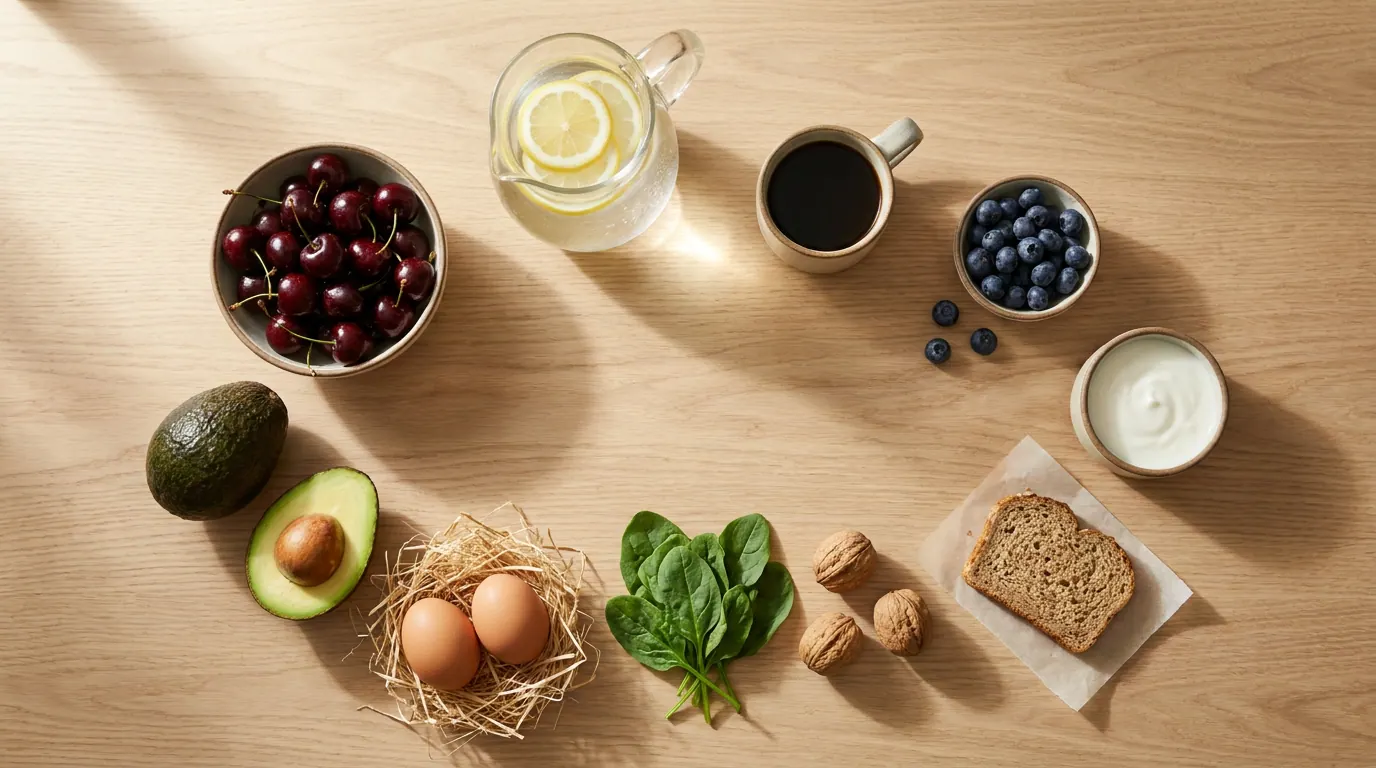
Seven Safe & Beneficial Foods
These foods lower uric acid or protect you from attacks:
Seven Clinically Proven Foods for Lowering Uric Acid
Effect of Protective Foods (4 Weeks)
Cherries (Especially Tart)
15% Reduction + 35% Fewer Attacks
Water (2.5 to 3 Liters Daily)
Increases Excretion by 40%
Coffee (3 Cups Daily)
10-15% Reduction
Vitamin C (500 mg Daily)
8-12% Reduction
Low-Fat Dairy
25% Fewer Attacks
Whole Eggs (Breakfast)
Low-purine protein
Fresh Vegetables & Fruits
Fiber + Antioxidants
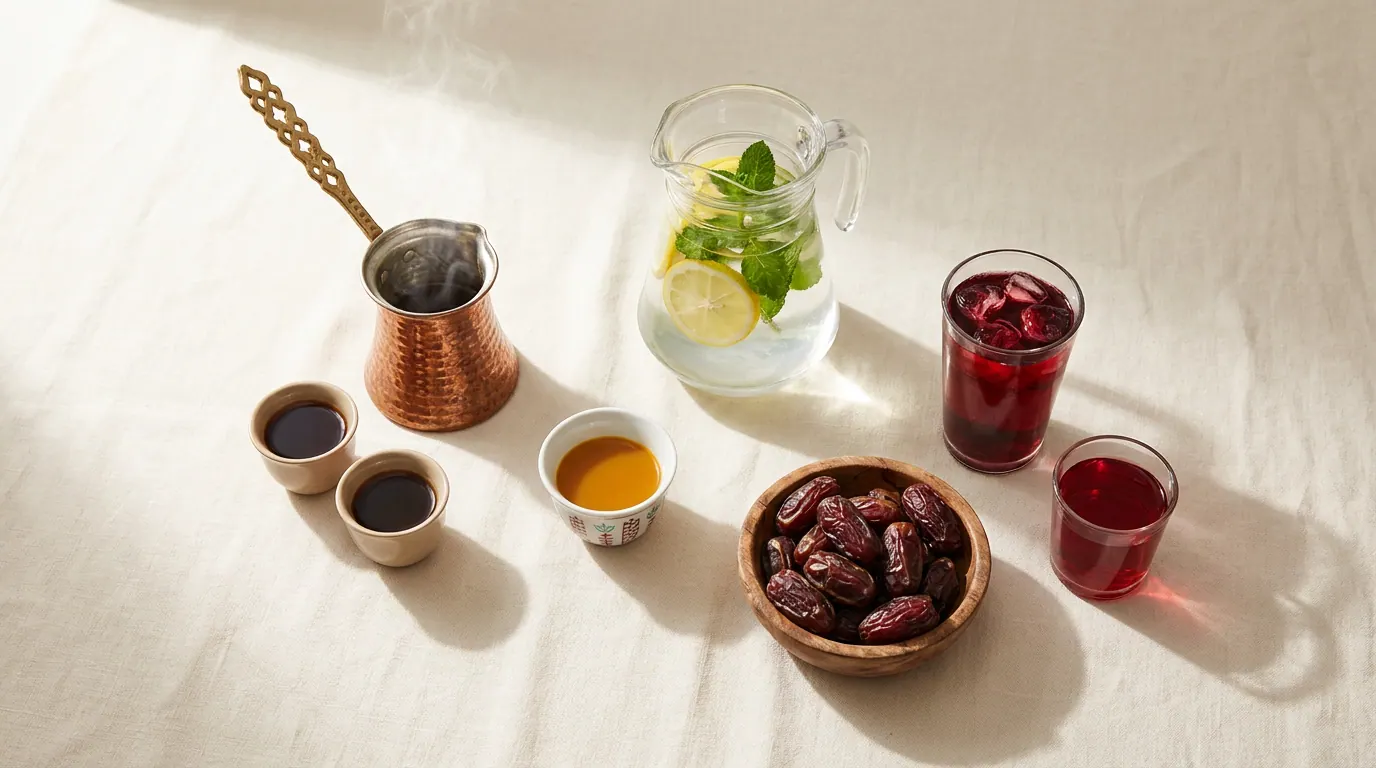
Traditional Saudi Beverages · Safe and beneficial alternatives for gout
Medications — For Attacks & Prevention
Two different treatments: one for acute attacks, another for lowering uric acid afterward:
Colchicine (For Attacks)
1.2 mg then 0.6 mg within an hour
Best for acute attacks within the first 12 to 24 hours. Rapidly reduces inflammation. Common side effect: gastrointestinal upset. Stop if diarrhea occurs.
NSAIDs (Naproxen, Ibuprofen)
500 mg twice daily for 5 days
Alternative or adjunct to Colchicine for attacks. Use caution with hypertension or kidney issues. Do not use Aspirin — it raises uric acid.
Allopurinol (Prevention)
300 mg daily
Reduces uric acid production. Long-term treatment for those with 2+ attacks annually. Start with a low dose (100 mg) and increase gradually. Goal: uric acid below 6 mg/dL.
Febuxostat (Alternative)
40 to 80 mg daily
More potent than Allopurinol. An option for those who can't tolerate it. Costly, with a cardiac warning — prescribed only for resistant cases.
Five Common Myths
Myth
"Gout is a disease of the wealthy"
Truth: Historically, yes, but with the proliferation of sugary drinks and fast food, gout has become a disease for everyone. 5% of Saudis across all socioeconomic strata are affected.
Myth
"One Kabsa is enough to cause an attack"
Truth: A single Kabsa is safe for most individuals. An attack requires chronic accumulation. The problem is daily Kabsa, not weekly.
Myth
"If the attack ends, gout is over"
Truth: Crystals remain dormant in the joint. The second attack occurs in 60% of cases within a year, and in 78% within two years. Treatment is preventive, not just for the attack.
Myth
"Tomatoes and lentils are forbidden"
Truth: Recent studies (BMJ 2023) have shown that vegetables and legumes, even those high in purines, do not raise gout risk. The old rule is wrong. Enjoy them.
Myth
"Alcohol is allowed in small quantities"
Truth: Any amount of alcohol raises uric acid. Beer is the worst (contains high purines). There is no 'safe quantity' of alcohol for gout.
EEINA's 12-Week Gout Control Protocol
A scientific plan based on ACR 2024 and Arthritis & Rheumatology 2023 cherry studies. Three tiers. Adherence reduces attacks by 60% to 80%.
The protocol is based on ACR Gout Guidelines 2024, EULAR 2023, and Cherry Trial studies.
1
Daily Tier
Daily Urate-Lowering Habits
Four numerical goals every day.
2.5 to 3 Liters Water
Increases uric acid excretion by 40%
Zero Sugary Drinks
Sodas, juices, energy drinks
10 Cherries
In season or 30 ml concentrated juice
3 Cups Coffee
Reduces uric acid production
2
Weekly Tier
Weekly Commitments
Five tasks to repeat weekly.
Kabsa Once a Week
Instead of daily
150 Minutes Walking
Reduces weight & insulin resistance
2 Legume Days
Lentils & chickpeas instead of meat
Zero Liver & Offal
Highest purine content ever
1 Cup Low-Fat Yogurt
Before bed daily
3
Seasonal Tier
Measure Impact After 12 Weeks
Measurable results.
Re-test Uric Acid
Goal: Below 6 mg/dL
Count Attacks
Expected: 60% Reduction
Kidney Function Test
Creatinine + eGFR
Visit Rheumatologist
Adjust Allopurinol if needed
Golden Rule: Water is the most potent free medicine for gout. Two and a half liters daily does more than you think.
No. Kabsa once a week in moderate portions is safe for most patients. The problem is daily consumption + the sugary drink afterward. Drink a liter of water before and a glass of water every 15 minutes during the meal.
Usually yes. Allopurinol treats a chronic metabolic defect, not a temporary condition. Discontinuing it will cause uric acid levels to rebound within 4 weeks. However, weight loss and lifestyle improvements may allow for dose reduction under your doctor's supervision.
No. Recent studies (BMJ 2023) have shown that vegetables and legumes, even those high in purines, do not increase gout attacks. Saudis have consumed them for centuries safely. Concern about them is outdated and incorrect.
Age 40 for men, age 50 for women. Earlier if you have a family history, obesity, hypertension, or a previous attack. The test costs SAR 80 and can reveal risk years before the first attack.
In untreated cases over years, yes. High uric acid can form stones and damage the kidney's filtering units (nephrons). Early control of uric acid (below 6 mg/dL) completely protects the kidneys.
Vinegar is safe, but there's no conclusive evidence of its efficacy for gout. Honey is concentrated sugar and raises uric acid. Cherries, water, and coffee are the clinically proven 'natural' remedies. Avoid excessive honey.
Extensive walking + heat + dehydration are three strong triggers. A month before Hajj, ensure your Allopurinol is optimized with your doctor, carry Colchicine as a backup, and drink 4 liters of water daily during the rituals. Avoid heavy meats at Iftar.
Key Takeaways
Seven Points to Remember
Gout is not just a Kabsa disease. It's a comprehensive metabolic disorder involving the liver and kidneys.
Sugary drinks are more dangerous than meat. Fructose is the hidden driver.
Big toe at night. 70% of initial attacks. Cause: Cold.
Tart cherries reduce attacks by 35%. Ten cherries daily.
2.5 to 3 liters of water daily. The most potent free medicine.
Allopurinol is usually lifelong. Discontinuation causes rapid uric acid rebound.
Gout is the tip of the iceberg. 70% have metabolic syndrome. Check your liver and blood pressure.