What is the Thyroid Gland
The thyroid is a small, butterfly-shaped gland located at the front of your neck, just below the Adam's apple. Weighing no more than 30 grams, it's the body's primary metabolic regulator. It secretes hormones that travel through the bloodstream to every cell, telling it how fast to work and how much energy to use.
The thyroid doesn't work for itself; it works for every cell in your body. When it malfunctions, metabolic rate, body temperature, heart rate, digestion, sleep, mood, and hair all suffer. This is why its symptoms are scattered, and diagnosis is often delayed.
How the Thyroid Works (T3, T4 & TSH)
The hormonal cascade begins in the brain, not the thyroid. The hypothalamus signals the pituitary gland, which then releases Thyroid-Stimulating Hormone (TSH). TSH stimulates the thyroid gland to produce two hormones: T4 (inactive, stored in the blood) and T3 (active, performs the actual work in cells).
The logical equation: When thyroid hormones are low, TSH rises (the brain shouts, "Produce more!"). When hormones are high, TSH drops (the brain calms down). Therefore, TSH is the first and most crucial test—it tells us what the thyroid is thinking from the brain's perspective.
Hypo vs. Hyperthyroidism — How to Tell the Difference
The two conditions have completely opposite symptoms. Know the difference:
The thyroid works slowly
The thyroid works overtime
The smart rule: If everything in your body feels "slow"—thinking, digestion, pulse, calorie burn—suspect hypothyroidism. If everything feels "sped up"—suspect hyperthyroidism.
Saudi Arabia's Numbers, Factually
According to the Saudi Society of Endocrinology and recent studies from King Saud University:
Source: Saudi Society of Endocrinology 2023 · KSU Thyroid Study 2024 · ATA Global Atlas 2024.
Four out of ten Saudis with thyroid dysfunction remain undiagnosed. Symptoms are often attributed to stress, Ramadan, or depression.
TSH Checker — Understand Your Lab Results
TSH alone isn't always enough. Enter your recent lab value:
<0.1
0.1 - 0.4
0.4 - 4.0
4.0 - 10
>10
Thresholds per ATA Guidelines 2024. Result is indicative and requires confirmation with Free T4 and antibody tests for final diagnosis.
Your Risk Factors — An 8-Step Self-Check
Select all that apply:
Comprehensive Thyroid Tests
TSH alone isn't sufficient in all cases. These are the complete tests and their significance:
Hashimoto's — The Most Common Autoimmune Hypothyroidism
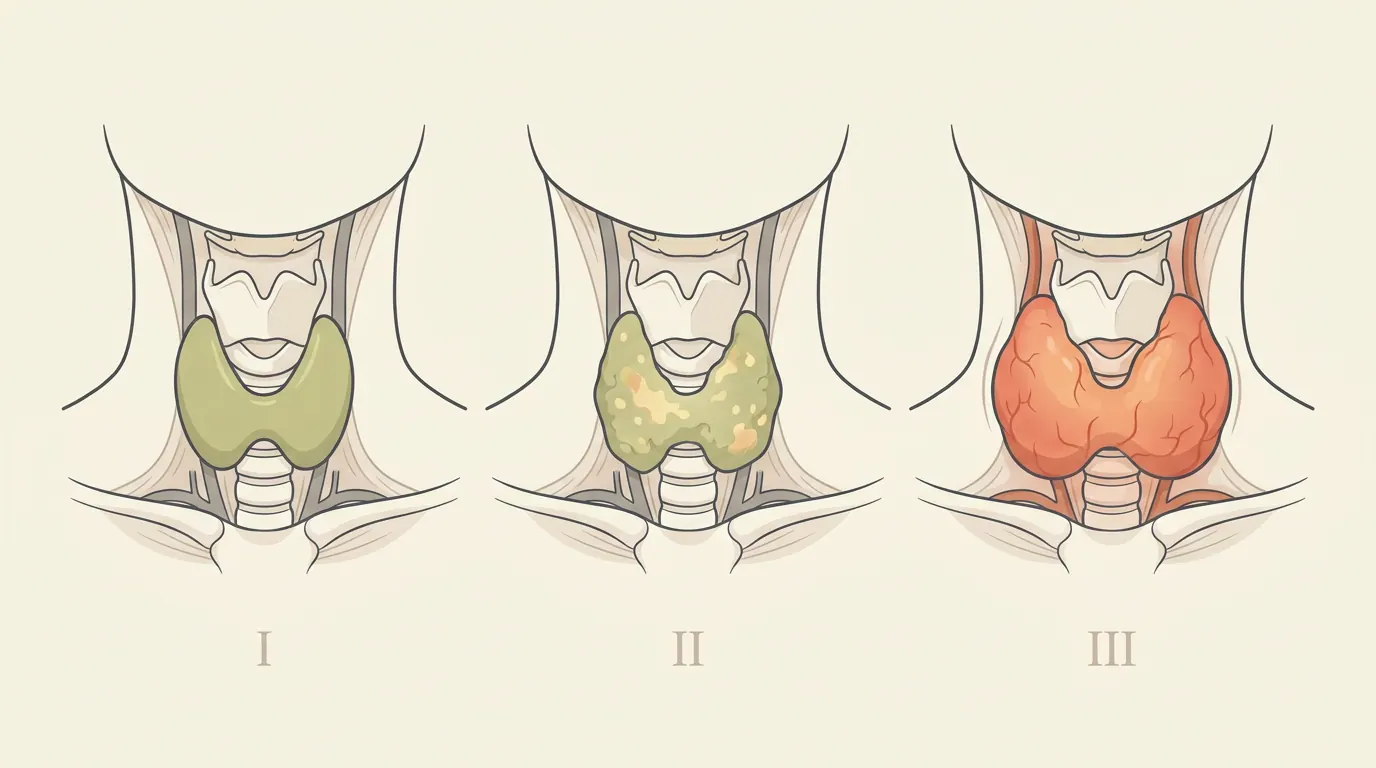
An autoimmune condition where the immune system mistakenly attacks the thyroid gland, causing it to gradually lose its ability to produce hormones. It's the leading cause of hypothyroidism worldwide and in Saudi Arabia. Women are affected 7 times more often than men.
Stage 1 — Antibodies Only
Antibodies have started, but the thyroid is still compensating. Often asymptomatic. Early dietary intervention (selenium + sleep + reducing inflammation) may delay the disease for years.
Stage 2 — Subclinical Hypothyroidism
The thyroid is struggling. Symptoms are mild and fluctuating. Prompt intervention can partially reverse the condition in 30% of cases.
Stage 3 — Overt Hypothyroidism
The thyroid has failed. Classic symptoms are present. Levothyroxine is necessary for life, with dosage adjustments.
Stage 4 — Long-Term Complications
Untreated hypothyroidism for years increases cholesterol, weakens the heart, exacerbates depression, and raises thyroid cancer risk. Prevention through early diagnosis.
Graves' Disease — The Most Common Hyperthyroidism
Another autoimmune condition, but the opposite. Antibodies (TRAb) stimulate the thyroid instead of attacking it, causing it to overproduce hormones. The result: a body in constant overdrive.
Palpitations & Rapid Pulse
The heart races without exertion. Often mistaken for anxiety attacks.
Exophthalmos (Bulging Eyes)
Inflammation of tissues behind the eyes pushes the eyeballs forward. Requires prompt specialist intervention.
Weight Loss Despite Eating
Losing 5-10 kg in months despite increased appetite. The exact opposite of hypothyroidism.
Tremors & Sweating
The body is in a state of alert. Often mistaken for stress or excessive coffee intake.
The Link with PCOS & Insulin Resistance
Thyroid dysfunction and PCOS frequently co-occur. Hypothyroidism exacerbates insulin resistance, and high insulin levels worsen Hashimoto's. It's a vicious cycle. Every woman with PCOS should have her thyroid checked, and vice versa.
Read the Complete PCOS Encyclopedia Read About Insulin Resistance7 Foods That Support Your Thyroid
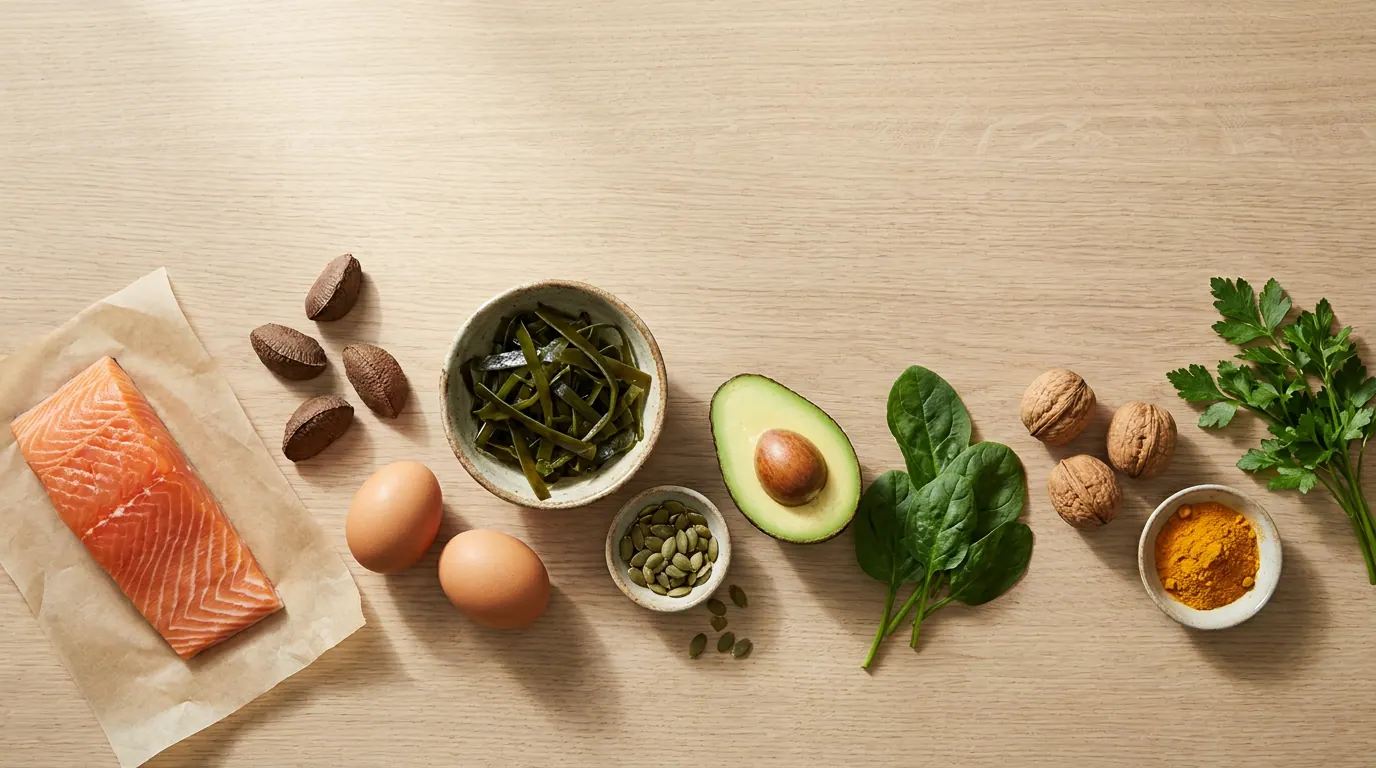
A healthy thyroid requires specific minerals. These are the most important foods:
Iodine & Selenium — Tricky Friends
Iodine is essential for thyroid hormone production. However, it's not a cure-all. Excess iodine can worsen Hashimoto's. Deficiency causes thyroid enlargement (goiter):
Iodine in Mild Hypothyroidism
Excess Worsens Hashimoto's
Medications — Levothyroxine & Methimazole
Medications are essential in most cases. Don't fear them—they replace a hormone your body naturally produces:
Levothyroxine (Eltroxin)
Synthetic T4 hormone identical to the natural one. Taken in the morning on an empty stomach, 30 minutes before breakfast. Do not take with coffee, iron, or calcium. Safe for life.
Methimazole (Tapazole)
Blocks thyroid hormone production. First-line treatment for Graves'. Duration is 12-18 months; 50% of patients enter remission. Rare side effect: low white blood cell count.
Radioactive Iodine (RAI)
An oral dose that destroys the thyroid gland in a controlled manner. A definitive treatment for Graves', but usually leads to permanent hypothyroidism requiring Levothyroxine.
Surgery (Thyroidectomy)
Partial or total removal. For large nodules, cancer, or severe Graves'. Leads to permanent hypothyroidism requiring lifelong treatment.
Thyroid & Pregnancy
The most critical stage for thyroid management. Every microgram matters:
Pre-Pregnancy
The target TSH is below 2.5 before conception. Untreated hypothyroidism can cause miscarriage, fetal intellectual disability, and infertility.
During Pregnancy
The fetus's demand for maternal hormones increases the required dosage. Check TSH every 4 weeks in the first trimester. 250 mcg of iodine daily is essential.
Postpartum
5-10% of women develop postpartum thyroiditis in the first 6 months. It's often temporary but can be the start of permanent Hashimoto's. Check TSH after 6 months.
Breastfeeding
Levothyroxine is completely safe during breastfeeding. Methimazole is safe at low doses. Consult your doctor for dosage adjustments.
5 Common Myths Debunked
"Levothyroxine causes weight gain"
"Iodine cures all thyroid problems"
"Stress causes all thyroid issues"
"Health issues disappear if I stick to medication"
"If TSH is normal, my thyroid is fine"
EEINA's 12-Week Balanced Thyroid Protocol
A science-backed plan based on ATA Guidelines 2024 and selenium studies in Hashimoto's. Three layers. Adherence can improve symptoms by 40-60%, with or without medication.
Protocol based on ATA Practice Guidelines 2024 & Journal of Autoimmunity 2023.
Daily Thyroid Support Habits
Four numerical goals every day.
Weekly Thyroid Support Commitments
Five tasks to repeat weekly.
Measure Impact After 12 Weeks
Measurable results, not just impressions.
Golden Rule: Selenium, Vitamin D, and stress reduction lower antibodies by 40% in 3 months. Medication replaces hormones, but lifestyle stops inflammation.
Frequently Asked Questions
- No. Symptom improvement means the medication is working, not that the thyroid is cured. Stopping abruptly can bring back symptoms within weeks and, rarely but dangerously, cause a "myxedema coma." Levothyroxine is lifelong for most individuals.
- By age 35 at the latest for women, and 40 for men. Get tested earlier if you have a family history, symptoms, are pregnant, or have recently given birth. The test (TSH only) is simple and inexpensive.
- Yes, but with a time gap. Coffee reduces Levothyroxine absorption by 30%. Take the medication in the morning with water, wait at least an hour, then have coffee and breakfast. This gap ensures medication effectiveness.
- In moderate amounts, they are perfectly safe. The fear of "goitrogens" is exaggerated. You'd need to eat about 400 grams of raw cruciferous vegetables daily for them to have an impact. Cooking neutralizes 90% of the effect. Don't deprive yourself of healthy vegetables.
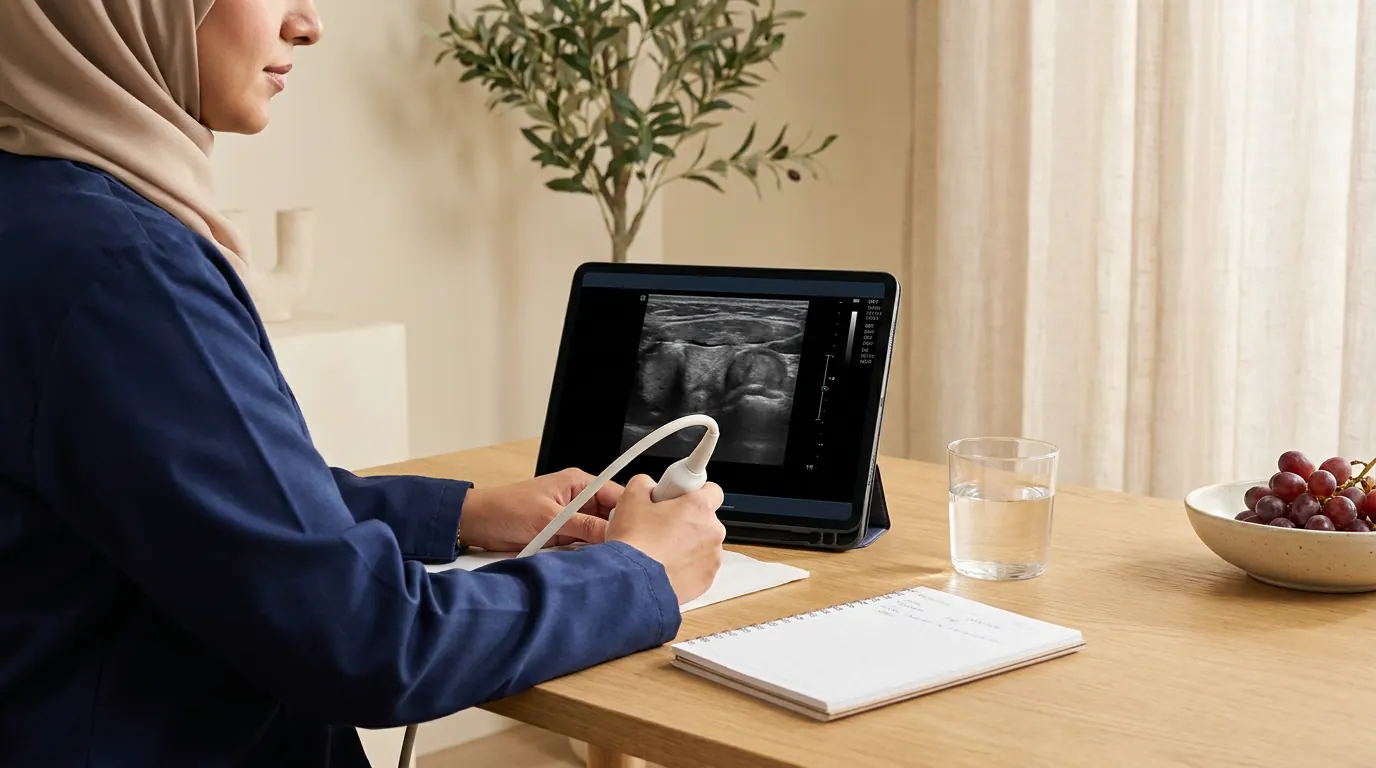
- Request a thyroid ultrasound and TSH immediately. Swelling could be due to iodine deficiency (rare), Hashimoto's, or nodules. Most nodules are benign, but 5% are cancerous. Early diagnosis changes everything.
- There is no clinical evidence that cupping or herbs cure thyroid conditions. Some herbs (like Ashwagandha) may mildly support hormonal balance, but they are not a substitute for Levothyroxine. Do not stop conventional medication.
- 95% of them are benign. Ultrasound classifies them using the TIRADS system. Nodules larger than 1 cm or with suspicious features require a Fine Needle Aspiration (FNA) biopsy. Annual ultrasound follow-up is sufficient for small, benign nodules.
7 Points to Remember
- TSH is the first and most important test. It's inexpensive and can change the diagnosis.
- Hashimoto's is the most common cause of hypothyroidism. Request Anti-TPO along with TSH.
- Two Brazil nuts daily. The simplest source of complete selenium.
- Levothyroxine in the morning on an empty stomach. Wait an hour before coffee.
- Iodine is not a cure-all. Excess can worsen Hashimoto's.
- Pregnancy requires TSH < 2.5. Test before and during pregnancy.
- Selenium and Vitamin D reduce antibodies by 40%. In 3 months.
Start Your Next Step with EEINA
Thyroid-Support Meal Plan
Calculated selenium, iodine, and zinc. Salmon, eggs, and Brazil nuts.
Get Your Plan →Thyroid-Friendly Recipes
Grilled Salmon with Herbs, Lentil Turmeric Soup, Egg & Avocado Breakfast.
Browse Recipes →EEINA App
Levothyroxine reminders, TSH tracking, and morning coffee timing.
Download Now →