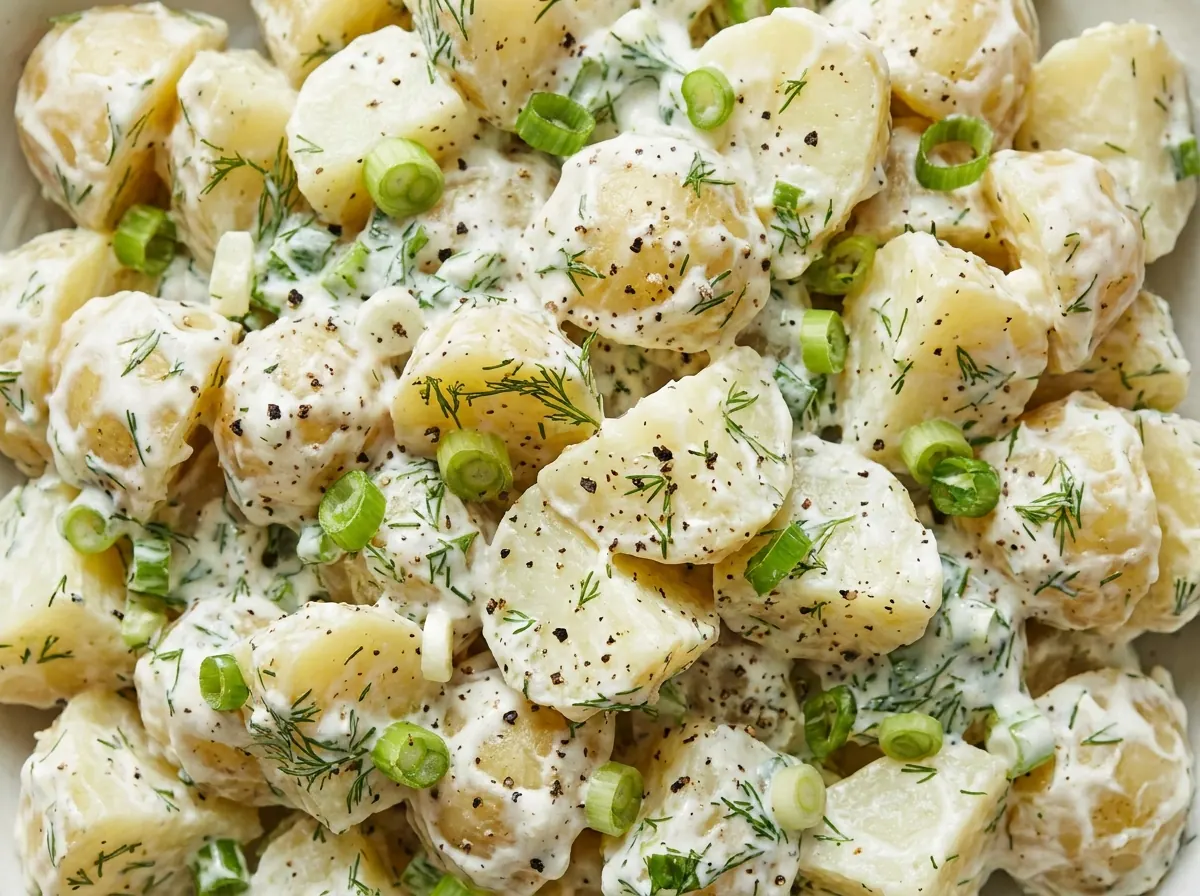
Potato salad with a Greek yogurt and herb dressing instead of mayonnaise. Lighter and higher in protein, and chilling the potatoes raises the resistant starch and lowers the glycemic effect.
Classic potato salad is delicious, but the mayonnaise dressing weighs it down with fat and calories. This light version replaces the mayonnaise with a dressing of Greek yogurt, lemon, and fresh herbs, so it stays creamy in texture but lighter on the stomach and higher in protein.
The idea is close to the Greek tzatziki sauce: tangy yogurt, acidity from lemon, and a green flavour from dill, parsley, and chives. Most importantly, it is served cold, and cooling the potatoes after boiling turns part of their starch into resistant starch, which lowers their effect on blood sugar.
Preparation Steps
Boil the potatoes
Wash the potatoes and boil them in their skins in salted water until tender to a fork without crumbling (about 12 to 15 minutes for medium cubes). Do not over-boil them so they do not turn to mush.
Cool and cut
Drain the potatoes and leave them to cool a little, then peel them if we wish and cut them into even cubes. Cooling the potatoes after boiling raises the resistant starch and lowers the glycemic effect.
Mix the dressing
In a small bowl, mix the Greek yogurt with the olive oil, lemon juice, mustard, salt, and pepper until the dressing comes together.
Add the herbs
Add the dill, parsley, chives, and spring onion to the dressing and stir.
Combine the potatoes
Pour the dressing over the lukewarm potatoes and fold gently until the cubes are coated without breaking. Tossing the potatoes while lukewarm helps them absorb the flavour.
Chill before serving
Cover the salad and chill it in the refrigerator at least an hour before serving. Chilling improves the flavour and boosts the formation of resistant starch.
Adjust the flavour
Taste and adjust the salt and the acidity before serving, and garnish with more fresh herbs.
Blood Sugar Impact
The glycemic index (GI) measures how quickly a food raises blood sugar, while the glycemic load (GL) measures how much a full serving raises it. Together they give the complete picture.
Glycemic Index
GI
68Medium
Low0–55Medium56–69High70+
A low value (≤55) means a gradual rise in blood sugar — the most suitable range for diabetes and insulin resistance.
Glycemic Load
GL
18Medium
Low0–10Medium11–19High20+
Glycemic load reflects the impact of the full serving. To lower it: take half a serving, or pair the recipe with a source of protein and fiber.
Nutritional Information
Per ServingMakes 4 servings · one serving is about 240 g of raw ingredients
Calories208 kcal10%of Daily Value*
Protein8 g16%of Daily Value*
Carbohydrates30 g11%of Daily Value*
Fat6 g8%of Daily Value*
Fiber4 g14%of Daily Value*
Sodium337 mg15%of Daily Value*
Potassium800 mg17%of Daily Value*
Phosphorus166 mg13%of Daily Value*
* Percent Daily Values are based on a 2,000-calorie diet per FDA food-label reference values — your daily needs may be higher or lower. Values are derived from the recipe's ingredients via the USDA database.
Troubleshooting
The most common problems when preparing Yogurt Potato Salad, and how to fix them:
The potatoes broke down and turned to mush
You over-boiled them, or used a floury variety that breaks apart easily. Choose waxy potatoes (Yukon Gold or red), as they keep their shape. Boil them in their skins and cube them after cooling, not before, and test doneness with a knife tip: it comes out easily without the piece crumbling.
The dressing is watery and does not cling to the potatoes
The yogurt is thin or released water, or the potatoes were hot and melted the dressing. Use thick strained Greek yogurt, and leave the potatoes to cool until lukewarm before adding the dressing. If it stays runny, strain two spoons of the yogurt water before mixing.
The taste is bland with not enough acidity
The lemon is too little, or it was added hot so it lost its sharpness. Add half a spoon of cold fresh lemon juice right before serving, and a teaspoon of Dijon mustard gives a tangy depth. Always taste after chilling, as cold mutes the flavour a little.
The herbs darkened after hours in the refrigerator
The herbs were chopped too early and oxidised, or mixed with the acid from the start. Chop the dill, parsley, and chives near serving time, and keep half of them to garnish the dish cold at the moment of serving to preserve its green colour.
The salad does not have enough creamy texture
The yogurt ratio is low against the amount of potatoes. The rule from experience: about a cup of Greek yogurt for each 600 g of potatoes. If we want a richer texture without adding fat, add an extra spoon of yogurt, not a spoon of mayonnaise.
The taste is salty after chilling
Salt comes through more in cold dishes. Salt moderately before chilling, then adjust the salt after an hour in the refrigerator and right before serving. If the salt is too much, add a spoon of yogurt and a sprinkle of lemon to restore the balance.
Storage and Make-Ahead
Refrigerator (4°)
The ready salad: three days in an airtight container. The flavour improves on the first day after the dressing melds. Toss it before serving, as some liquid may float to the surface after storage.
Freezer (-18°)
Completely unsuitable. The yogurt separates and the potatoes turn sandy in texture after thawing. This is a fresh salad eaten within its days.
Advance preparation
The boiled potatoes: boiled and cooled a day ahead and kept in the refrigerator (this increases the resistant starch). The dressing: mixed hours ahead and kept separate. The herbs: chopped near serving time to preserve their colour.
Serving
A cold dish served straight from the refrigerator. It is not left out more than two hours since it contains dairy, and less in hot weather.
Tested Ingredient Substitutions
Original Ingredient
Tested Substitute
Ratio
Flavor Difference
Greek yogurt
Thick plant yogurt (coconut or soy)
Same amount
Dairy-free, a similar texture, a less tangy flavour
Dijon mustard
Extra lemon juice
Add half a spoon of juice
Clearer acidity, loses the sharp depth of mustard
Fresh dill
Fresh mint, chopped
Same amount
A different refreshing flavour, closer to tzatziki
Chives
Extra spring onion
An extra stalk
A little sharper, a clearer onion flavour
Waxy potatoes
Boiled and cooled sweet potatoes
Same weight
Sweeter, an orange colour, higher fibre
How Much Does It Make? Scaling Guide
Number of servings
potatoes
Greek yogurt
Lemon juice
Herbs
2 (individual × 2)
300 g
0.5 cup
1 tbsp
2.5 tbsp
4 (base)
600 g
1 cup
1.5 tbsp
5 tbsp
8 (large family)
1.2 kg
2 cups
3 tbsp
10 tbsp
12 (entertaining)
1.8 kg
3 cups
4.5 tbsp
15 tbsp
EEINA Nutrition Tip
Cold potatoes are the secret to this dish being light: potatoes are starchy by nature, but boiling then cooling them turns part of their starch into resistant starch that lessens its effect on blood sugar. We always make it a cold salad, and pair it with a protein source and leafy vegetables to complete the meal.
Add This Recipe to Your Plan
The EEINA app saves your favorite recipes, calculates them from their real ingredients, and shows your daily numbers toward your goal. Try it free now.
In moderation. The potato is starchy, but serving it cold with the yogurt and acidity places the recipe in the medium range (GI ~56). Stick to a moderate portion and pair it with protein and vegetables, and consult your doctor.
Why Greek yogurt specifically?
Because it is strained, thick in texture, and high in protein, so it gives the creaminess of mayonnaise with about half the calories and roughly double the protein, with a gentle tanginess like tzatziki.
Do I peel the potatoes?
The peel is optional. Leaving it adds fibre and a rustic texture, especially with red or thin-skinned Yukon Gold potatoes. Peel them if you prefer the smooth texture.
Do I prepare it a day ahead?
Yes, in fact it is preferred. The flavour improves after hours of chilling, and boiling and cooling the potatoes in advance increases the resistant starch. We add the fresh herbs at the moment of serving.
Sources: USDA · University of Sydney · Gulf GSO · Our methodology · Updated on