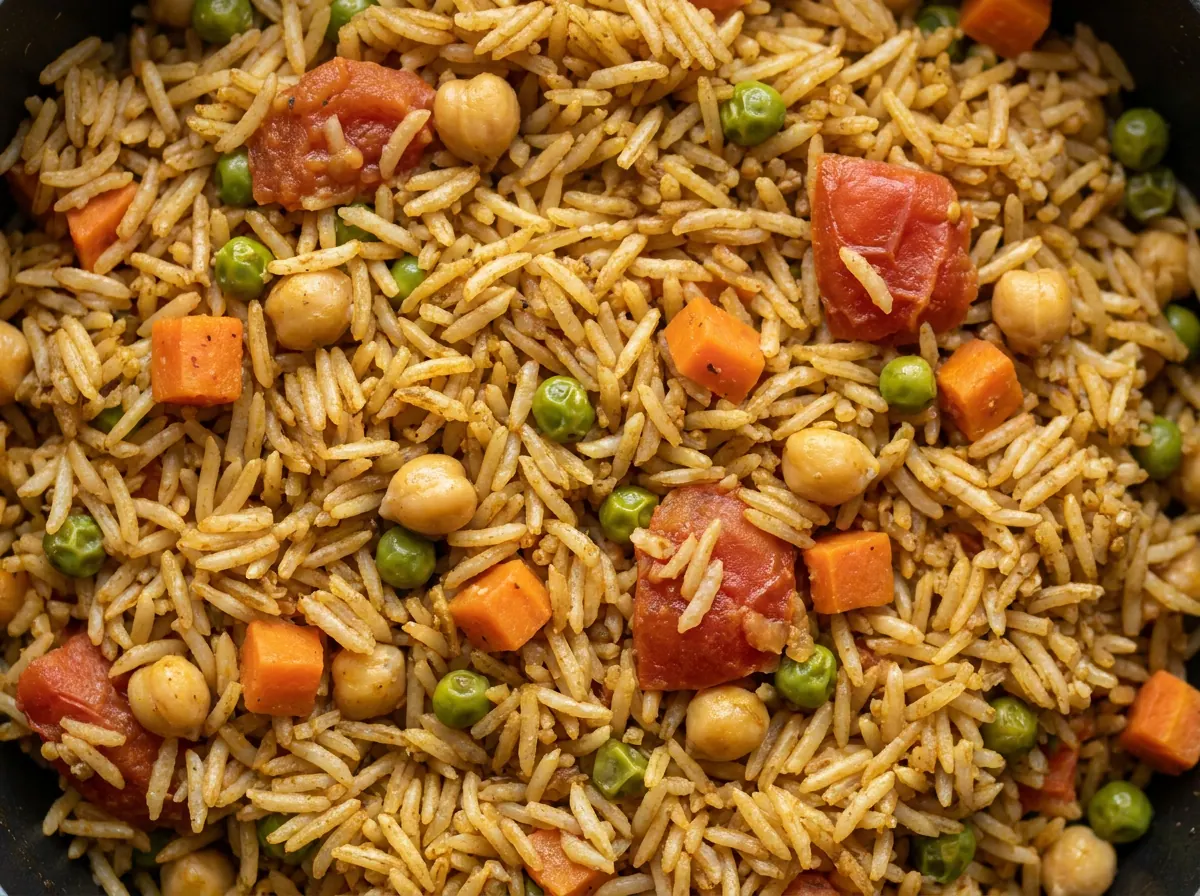
Vegetable Kabsa (Saudi spiced rice dish) — Vegan Version
A documented vegan adaptation of Kabsa (Saudi spiced rice dish), with vegetables and chickpeas replacing the meat. A rice-dominated starchy dish with GI 62.
Kabsa (Saudi spiced rice dish) is the Saudi national dish and the most cooked meal on Gulf tables. Originally spiced rice with meat or chicken, the vegan version is a well-documented variation: meat is removed, replaced by seasonal vegetables and chickpeas which partially compensate for the protein.
This is not an invented recipe — it is published on Sayidaty Kitchen and Cookpad with established English equivalents. The spices — cardamom, cinnamon, cumin, and loomi (dried black lime) — remain the soul of the dish, making it Kabsa rather than plain rice.
Preparation Steps
Soak the rice
Rinse the basmati rice under cold running water until the water runs clear, then soak in cold water for 30 minutes and drain well. Soaking elongates the grains and ensures even cooking; rinsing prevents clumping.
Sauté the onion and firm vegetables
Heat three tablespoons of vegetable oil in a wide heavy-bottomed pot. Sauté the chopped onion until wilted and golden, then add three cloves of minced garlic, the diced carrot, and the chopped bell pepper. Stir for 2 minutes until fragrant.
Add the tomatoes and spices
Add the grated tomatoes and tomato paste and stir over medium heat until the mixture thickens and the raw tomato flavour disappears. Add one and a half tablespoons of Kabsa spice blend and the two pierced loomi (dried black lime) so their tart flavour seeps out. Season with salt to taste. Browning the paste well deepens the colour and flavour of the dish.
Add the tender vegetables and chickpeas
Add the chopped zucchini, half cup green peas, and cup of cooked chickpeas. Gently stir for one minute until the vegetables are coated in the spices without breaking apart.
Add the water and rice
Pour in three cups of boiling water for the two cups of rice. Bring the mixture to a boil, then add the drained rice and spread it evenly over the surface without pressing it down.
Cook on low heat
Cover the pot with a tight-fitting lid and reduce to the lowest heat. Cook for 15 to 18 minutes until the rice has absorbed the water and is fully cooked. Do not stir the rice during cooking — stirring releases starch and makes it gummy.
Rest and serve
Turn off the heat and leave the Kabsa covered for 5 to 10 minutes so the grains firm up. Gently fluff with a fork and serve hot, garnished with vegetables.
Blood Sugar Impact
The glycemic index (GI) measures how quickly a food raises blood sugar, while the glycemic load (GL) measures how much a full serving raises it. Together they give the complete picture.
Glycemic Index
GI
63Medium
Low0–55Medium56–69High70+
A low value (≤55) means a gradual rise in blood sugar — the most suitable range for diabetes and insulin resistance.
Glycemic Load
GL
57High
Low0–10Medium11–19High20+
Glycemic load reflects the impact of the full serving. To lower it: take half a serving, or pair the recipe with a source of protein and fiber.
Nutritional Information
Per ServingMakes 4 servings · one serving is about 365 g of raw ingredients
Calories574 kcal29%of Daily Value*
Protein14 g28%of Daily Value*
Carbohydrates100 g36%of Daily Value*
Fat13 g17%of Daily Value*
Fiber9 g32%of Daily Value*
Sodium175 mg8%of Daily Value*
Potassium620 mg13%of Daily Value*
Phosphorus231 mg18%of Daily Value*
* Percent Daily Values are based on a 2,000-calorie diet per FDA food-label reference values — your daily needs may be higher or lower. Values are derived from the recipe's ingredients via the USDA database.
Troubleshooting
The most common problems when preparing Vegetable Kabsa (Saudi spiced rice dish) — Vegan Version, and how to fix them:
Rice is sticky and clumped
The rice was not soaked or rinsed to remove excess starch, or too much water was used. Rinse until the water runs clear, soak for half an hour, and maintain a ratio of about 1.5 cups water per cup of basmati. Do not stir the rice during cooking — stirring releases starch and makes it gummy.
Rice is raw on top but cooked at the bottom
Heat too high so the water evaporated before the top cooked, or the lid was not tight. Reduce to the lowest heat after adding the rice and seal the lid. If the top is still raw after the time is up, drizzle 2 tablespoons of hot water on the surface, cover, and leave for 5 minutes over very low heat.
Bottom burned and stuck
Too little oil, uneven heat, or not using a heavy-bottomed pot. Use a wide heavy-bottomed pot and spread the rice evenly without pressing. Some cooks intentionally create a crispy bottom layer, but to avoid burning, remove the pot from the heat as soon as the time is up.
Bland flavour with no Kabsa character
Not enough spices, or the loomi (dried black lime) were forgotten — they provide the distinctive tartness. Add another tablespoon of Kabsa spice blend, add two pierced loomi so their flavour seeps in, and make sure the tomato paste is browned well before adding water.
Vegetables disintegrated and disappeared into the rice
Tender vegetables were added too early with the carrot. Add carrot and bell pepper in the sauté because they can take the heat, but leave zucchini and peas until just before the water so they cook with the rice without dissolving.
Kabsa is dry after cooking
Not enough water or the pot was left uncovered while steam escaped. Keep to the water ratio and maintain a tight lid throughout cooking and the resting period. At serving, a drizzle of hot water and a gentle fork fluff restore moisture without mashing the grains.
Storage and Make-Ahead
Refrigerator (4°C)
Cooked Kabsa: 3-4 days in an airtight container, per general USDA guidelines for cooked rice and cooked dishes [1]. Cool within 2 hours of cooking — cooked rice left at room temperature is susceptible to bacterial growth.
Freezer (-18°C)
Freezes well for up to 1 month in an airtight container. Vegetables may soften slightly after thawing but the rice holds its texture. Thaw in the fridge overnight.
Meal prep
Vegetables: cut and refrigerate up to a day ahead. Chickpeas: cook, drain, and cool up to 2 days ahead. Rice: soak only 30 minutes before cooking — do not soak for hours.
Reheating
Drizzle 2 tablespoons of water over the Kabsa before reheating to restore moisture, and heat covered until the centre exceeds 74°C [1]. Do not leave outside the fridge for more than 2 hours.
Tested Ingredient Substitutions
Original Ingredient
Tested Substitute
Ratio
Flavor Difference
white basmati rice
brown basmati rice
same amount, longer cooking time
higher fibre and lower glycaemic impact, nuttier flavour
chickpeas
white beans or black-eyed peas
same amount
similar protein and fibre, milder flavour
ready-made Kabsa spice blend
home blend (cardamom, cinnamon, cumin, coriander, turmeric, cloves)
same amount
more control; avoids potential gluten and nut contamination
loomi (dried black lime)
lemon zest and a splash of lemon juice
2 loomi = about half a lemon
brighter acidity, less of the subtle smoky bitterness
vegetable oil
olive oil or a lighter sauté
2 spoons instead of 3
fewer calories, deeper flavour with olive oil
How Much Does It Make? Scaling Guide
Number of servings
Basmati rice
chickpeas
Boiling water
Kabsa spice blend
2 (half recipe)
1 cup
0.5 cup
1.5 cups
1 tbsp
4 (base)
2 cups
1 cup
3 cups
1.5 tbsp
8 (large family)
4 cups
2 cups
6 cups
3 tbsp
12 (entertaining)
6 cups
3 cups
9 cups
4.5 tbsp
EEINA Nutrition Tip
Balance this starchy dish: this is a delicious Kabsa but it is rice-based and its glycaemic load is high for a full serving. Make half the plate vegetables and salad, keep the rice to a third rather than two-thirds, and you can enjoy the flavour while maintaining stable blood sugar after the meal.
Add This Recipe to Your Plan
The EEINA app saves your favorite recipes, calculates them from their real ingredients, and shows your daily numbers toward your goal. Try it free now.
Is vegetable Kabsa an authentic dish or an invention?
A documented vegan adaptation of an established dish, not an invented recipe. Kabsa (Saudi spiced rice dish) is the Saudi national dish, and the vegan version is published on Sayidaty Kitchen and Cookpad with established English equivalents.
Is it suitable for people with diabetes?
A starchy dish with GI 62 (moderate) and a high glycaemic load per full serving. Eat a smaller portion, increase the vegetables, pair it with salad and protein, and monitor your readings. Brown rice reduces the impact.
How do I raise the protein?
Chickpeas provide plant protein and complement the rice in amino acids. For more: increase the chickpeas or add white beans, or serve alongside yogurt or a legume salad.
What is the secret of Kabsa's distinctive flavour?
The loomi (dried black lime) and Kabsa spices (cardamom, cinnamon, cumin). Pierce the loomi so the flavour seeps in, and brown the tomato paste well before adding water.
Sources: USDA · University of Sydney · Gulf GSO · Our methodology · Updated on