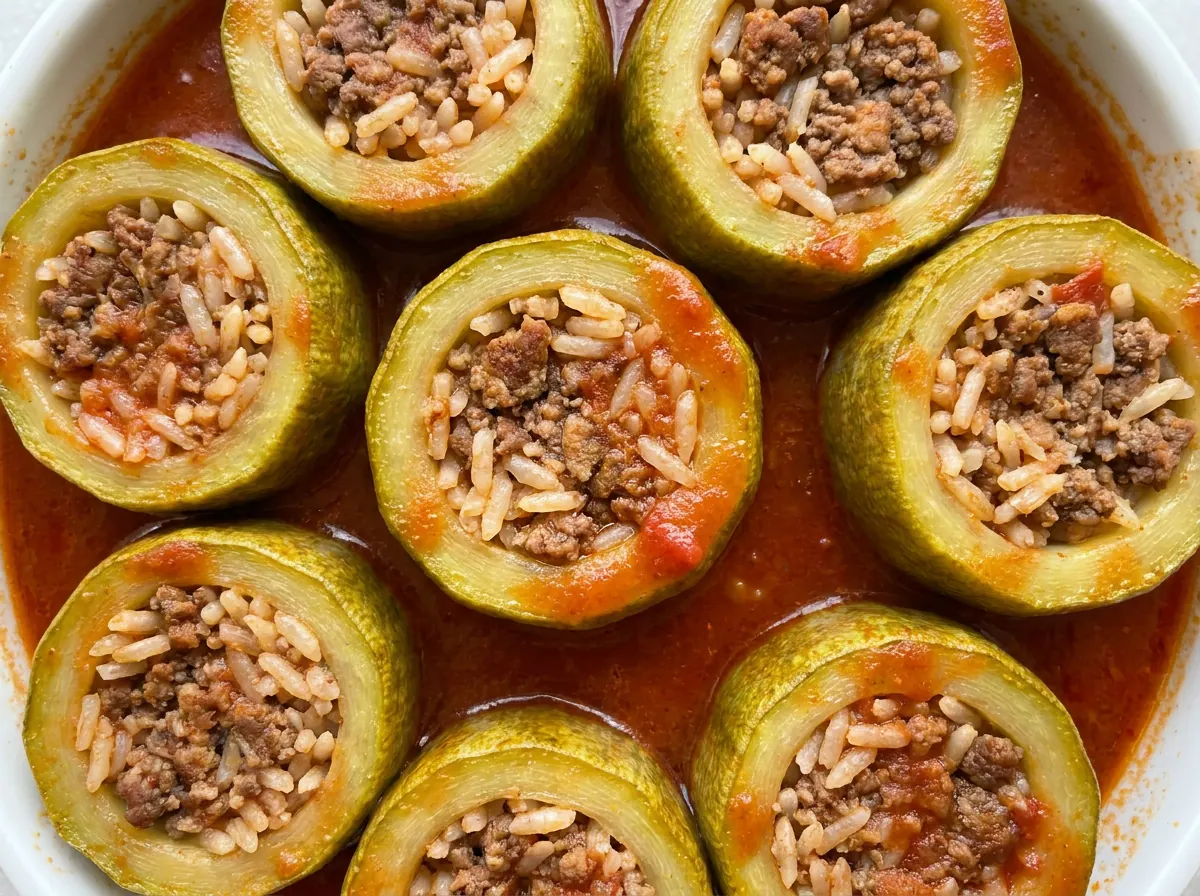
A traditional Levantine stuffed zucchini dish — small zucchini cored and filled with rice and ground meat, cooked in tomato sauce. GI 58 for a composite meal, rich in protein, with zucchini being very low in carbohydrates.
Stuffed zucchini is an ancient Levantine dish on the tables of Syria, Lebanon, Jordan, and Palestine, occupying as honoured a place at feasts and occasions as it does at the everyday family table. Small light-coloured zucchini are carefully cored, then filled with a mix of rice and meat, and slowly cooked in tomato sauce until they absorb its flavour.
Its nutritional advantage is that the zucchini itself is very low in carbohydrates (about 3.1 g per 100 g), so the dish's bulk comes from a light vegetable rather than a starch. The modest amount of rice per piece, combined with the protein and fat from the meat and the acidity of the tomatoes, makes its effect on blood sugar gentler than a plain rice dish of the same volume.
Preparation Steps
Prepare the zucchini
Wash the zucchini and trim the ends, then carefully core out the flesh with a coring tool, leaving a thin but intact wall without piercing the base.
Make the filling
Combine the soaked rice with the raw ground beef, onion, garlic, baharat, salt, and one tablespoon of oil in a bowl. Mix well.
Stuff the zucchini
Fill each zucchini only three-quarters full — do not pack — because the rice expands during cooking, and leave space near the opening.
Make the sauce
Fry the tomato paste in the bottom of the pot with one tablespoon of oil for a minute, then add the tomato juice, the remaining garlic, baharat, and salt, and bring to a gentle boil.
Arrange and cover
Arrange the stuffed zucchini snugly and horizontally in the pot, then pour in the sauce until it almost covers them.
Cook
Bring to a boil over medium heat, then reduce the heat, cover the pot, and cook for 30 to 45 minutes until the zucchini is tender, the rice is cooked, and the sauce has been absorbed.
Serve
Serve hot with plain yogurt or flatbread, as is traditional in the Levant.
Blood Sugar Impact
The glycemic index (GI) measures how quickly a food raises blood sugar, while the glycemic load (GL) measures how much a full serving raises it. Together they give the complete picture.
Glycemic Index
GI
58Medium
Low0–55Medium56–69High70+
A low value (≤55) means a gradual rise in blood sugar — the most suitable range for diabetes and insulin resistance.
Glycemic Load
GL
30High
Low0–10Medium11–19High20+
Glycemic load reflects the impact of the full serving. To lower it: take half a serving, or pair the recipe with a source of protein and fiber.
Nutritional Information
Per ServingMakes 4 servings · one serving is about 545 g of raw ingredients
Calories400 kcal20%of Daily Value*
Protein19 g38%of Daily Value*
Carbohydrates57 g21%of Daily Value*
Fat10 g13%of Daily Value*
Fiber5 g18%of Daily Value*
Sodium362 mg16%of Daily Value*
Potassium1135 mg24%of Daily Value*
Phosphorus295 mg24%of Daily Value*
* Percent Daily Values are based on a 2,000-calorie diet per FDA food-label reference values — your daily needs may be higher or lower. Values are derived from the recipe's ingredients via the USDA database.
Troubleshooting
The most common problems when preparing Levantine Stuffed Zucchini in Tomato Sauce, and how to fix them:
The zucchini cracked and the filling spilled into the sauce
The wall was thinned too much during coring, or the piece was filled all the way so the expanding rice tore it. Leave a wall about half a centimetre thick and fill only three-quarters of the way. When arranging in the pot, pack them snugly and horizontally so they support each other and do not shift during simmering.
The rice did not cook and remained raw inside the zucchini
The sauce did not cover the pieces, or the heat was raised too early before the rice had absorbed its liquid. Make sure the sauce nearly covers the zucchini and cook over gentle covered heat for the full time. If the liquid runs out and the rice is still firm, add half a cup of hot water or tomato juice and continue for another ten minutes.
The dish is watery and the sauce is too thin
Too much tomato juice was used, or the lid was lifted too early so less steam escaped than needed. In the last ten minutes, remove the lid and let the sauce thicken over medium heat. The tomato paste at the start helps achieve a deeper colour and consistency — do not exceed two tablespoons or it will overwhelm the flavour.
The filling is compact like a lump, not fluffy
The filling was packed in by force, leaving no room for the rice to expand. Fill gently and without pressing, leaving a quarter of the piece empty. Mixing the raw rice evenly with the meat before stuffing ensures uniform distribution and even cooking.
The zucchini tastes bland
Too few spices, or salt was added only to the sauce and not the filling. Distribute salt and baharat in both the filling and the sauce. The acidity of the tomatoes and the garlic in the sauce are the backbone of the Levantine flavour — a small extra pinch of baharat near the end of cooking refreshes the dish.
The zucchini dissolved and turned into soft mush
Cooking time was too long, or the zucchini were large and soft rather than small and firm. Choose small, firm, light-coloured zucchini; test for doneness after 30 minutes by piercing with a skewer — when it slides in easily, they are ready. Do not let it boil vigorously; a strong boil breaks down the walls.
Storage and Make-Ahead
Refrigerator (4°C)
Cooked stuffed zucchini: three days in an airtight container with its sauce. The flavour improves the next day as the flavours meld. Reheat gently on the stove or in the microwave until the centre of each piece is fully hot.
Freezer (-18°C)
Freezes well for up to two months in an airtight container with a little sauce. The zucchini may soften slightly after thawing but the flavour holds. Thaw overnight in the refrigerator, then reheat.
Advance preparation
Coring the zucchini: up to one day ahead; store the cored pieces in a bag in the refrigerator. Filling: mix up to two hours ahead and keep covered in the refrigerator (raw meat must stay refrigerated). Stuffing and cooking: best done at serving time for the best texture.
Food safety
The stuffing contains ground meat, so the centre must reach 71°C during cooking and 74°C when reheating [6]. Do not leave out of the refrigerator for more than two hours after cooking.
Tested Ingredient Substitutions
Original Ingredient
Tested Substitute
Ratio
Flavor Difference
lean ground beef
skinless ground chicken
same quantity
Lower in fat, lighter flavour, needs slightly bolder spicing
white rice
brown rice, soaked longer
same quantity
Higher fibre and lower glycemic load; needs a little extra cooking time
Thicker skin, deeper flavour; eggplant absorbs more oil
How Much Does It Make? Scaling Guide
Servings
Zucchini
Rice
Ground meat
Tomato juice
2 (light)
4 pieces
½ cup
125 g
1½ cups
4 (base recipe)
8 pieces
1 cup
250 g
3 cups
6 (family)
12 pieces
1½ cups
375 g
4½ cups
8 (feast)
16 pieces
2 cups
500 g
6 cups
EEINA Nutrition Tip
The rice portion size is the key: the zucchini itself is blood-sugar-friendly; the effect comes from the rice in the filling. For those monitoring blood sugar, two to three pieces with a green salad keeps the glycemic load in the moderate zone and provides lasting satiety from the protein and fibre.
Add This Recipe to Your Plan
The EEINA app saves your favorite recipes, calculates them from their real ingredients, and shows your daily numbers toward your goal. Try it free now.
No — stuff it raw after soaking it in warm water. It cooks inside the zucchini as it absorbs the tomato sauce, and that is the secret of its Levantine flavour.
Is this suitable for people with diabetes?
Yes, in moderation. The zucchini is low in carbohydrates, but the rice raises the glycemic load. Two to three pieces with a green salad is a balanced choice, and brown rice lowers the load further.
How do I core the zucchini without piercing the base?
Use the coring tool with gentle circular motions from the open end, keeping the base thick. Leave a wall about half a centimetre thick so it holds up during cooking without tearing.
Can I make it without meat?
Yes — substitute the meat with mashed Hummus or bulgur with onion and baharat (see the substitutions table). It becomes a fully vegetarian filling with a pleasant earthy flavour.