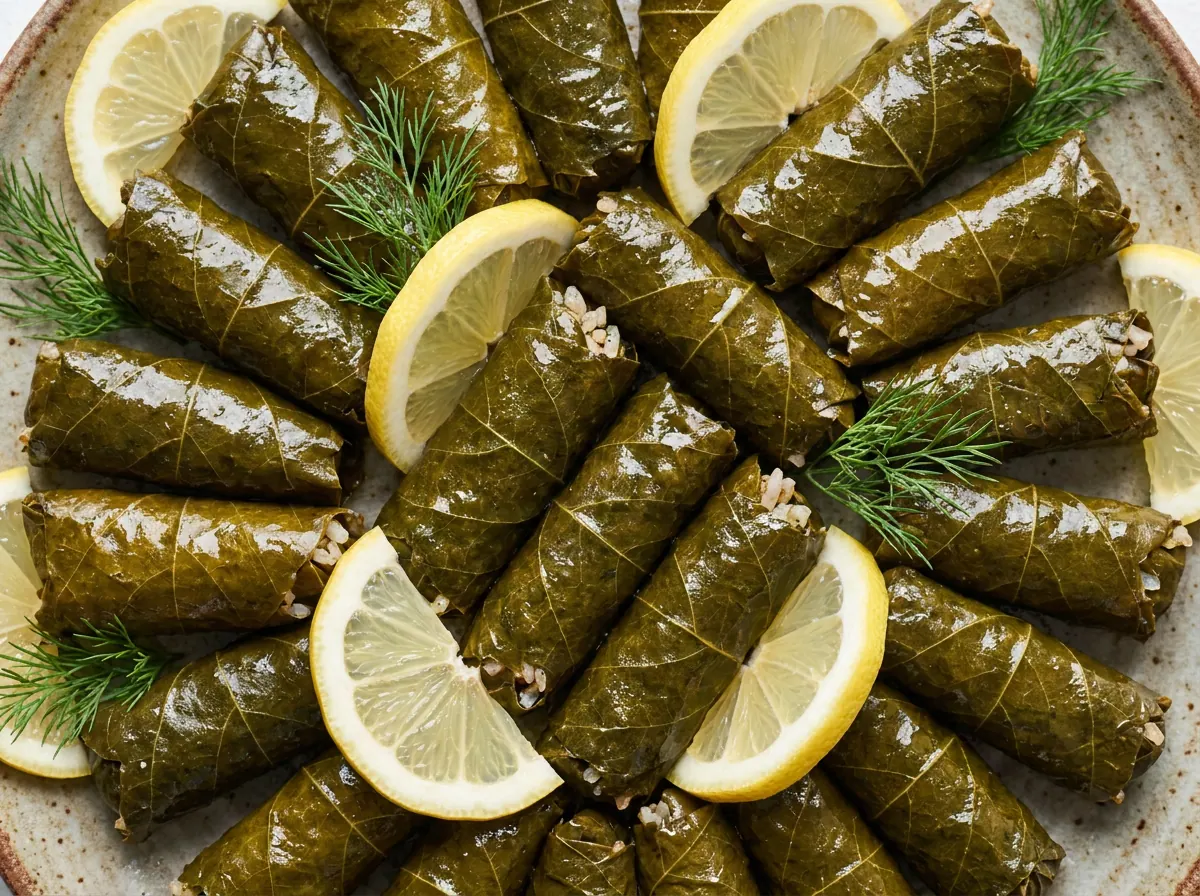
The well-known Levantine vegetarian grape leaves called "yalanji": grape leaves rolled around a filling of rice, herbs, and tomato, cooked with lemon and olive oil and served warm or cold. Estimated GI 64.
Stuffed grape leaves with rice, in their vegetarian version, are known in the Levant as "yalanji," and sometimes "grape leaves in oil," to distinguish them from the meat version. Grape leaves are rolled around a filling of rice, herbs, and tomato, then slowly cooked in lemon and olive oil, and served warm or cold.
It is a dish documented across the Levantine and Lebanese kitchens. The secret of yalanji lies in the balance of acidity and oil: the lemon gives freshness, and the olive oil gives the silky texture. It is one of the few dishes whose flavor improves after chilling, so it is often prepared the day before for guests.
Preparation Steps
Prepare the leaves
Soak the fresh grape leaves in boiling water for one to two minutes until they soften, then drain them, or rinse the canned ones well to remove the excess salt.
Make the filling
Mix the washed rice with the onion, tomato, parsley, mint, half the olive oil, a quarter of the lemon juice, the salt, and the spices.
Roll
Lay out each leaf with its rough side up, place a small spoonful of filling near the base, fold in the two sides, then roll it tightly like a thin finger without over-tightening, because the rice expands.
Layer the pot
Line the bottom of the pot with torn leaves or slices of potato or tomato to prevent sticking, then arrange the rolls tightly in compact layers.
Add the liquid and weigh them down
Pour the remaining olive oil and lemon juice over the rolls, then add boiling water until it almost covers them, and place a heavy inverted plate over them to hold them in place.
Cook
Cover the pot and cook over low heat for forty to fifty minutes until the rice is done and the rolls have absorbed the liquid and become soft and glossy.
Rest and serve
Let them rest in the pot for fifteen minutes, then turn them out onto a serving plate. They are served warm or cold with lemon slices, and their flavor improves after chilling overnight.
Blood Sugar Impact
The glycemic index (GI) measures how quickly a food raises blood sugar, while the glycemic load (GL) measures how much a full serving raises it. Together they give the complete picture.
Glycemic Index
GI
64Medium
Low0–55Medium56–69High70+
A low value (≤55) means a gradual rise in blood sugar — the most suitable range for diabetes and insulin resistance.
Glycemic Load
GL
33High
Low0–10Medium11–19High20+
Glycemic load reflects the impact of the full serving. To lower it: take half a serving, or pair the recipe with a source of protein and fiber.
Nutritional Information
Per ServingMakes 6 servings · one serving is about 220 g of raw ingredients
Calories401 kcal20%of Daily Value*
Protein5 g10%of Daily Value*
Carbohydrates54 g20%of Daily Value*
Fat19 g24%of Daily Value*
Fiber3 g11%of Daily Value*
Sodium467 mg20%of Daily Value*
Potassium380 mg8%of Daily Value*
Phosphorus99 mg8%of Daily Value*
* Percent Daily Values are based on a 2,000-calorie diet per FDA food-label reference values — your daily needs may be higher or lower. Values are derived from the recipe's ingredients via the USDA database.
Troubleshooting
The most common problems when preparing Stuffed Grape Leaves with Rice (Yalanji), and how to fix them:
The rolls fell apart during cooking
Too much filling was put in the leaf, or it was rolled loosely, or it was not packed tightly in the pot. Place only a small spoonful of filling near the base of the leaf, fold the two sides first, then roll tightly but moderately. Pack the rolls closely in layers that support one another, and place the heavy inverted plate over them to keep them from floating and shifting.
The rice stayed raw and hard
The liquid was not enough, or the heat rose so the water evaporated before the rice was done. The liquid should almost cover the rolls, and the heat should be low the whole time. If the leaves are done but the rice is still hard, add half a cup of boiling water and continue cooking for ten more minutes over low heat with the lid on.
The rolls came apart when turned out onto the plate
They were turned out while very hot, before resting. Leave them in the pot for fifteen minutes after turning off the heat so they firm up and the rice settles. Then place the serving plate over the pot and flip both together in one confident motion, as resting before flipping makes the difference.
The taste is too salty
The canned leaves are preserved in a concentrated brine and were not rinsed enough. Rinse the canned ones under running water and soak them in cold water for ten minutes before use, and reduce the salt added to the filling. Fresh boiled leaves do not carry this problem.
The taste is flat with no acidity
There is too little lemon, or it was all added at the start so part of it evaporated. Distribute the lemon juice between the filling and the liquid, and keep the juice of an extra lemon to drizzle over the rolls after cooking and just before serving. Fresh acidity is the soul of yalanji.
The bottom layer stuck and burned
The bottom of the pot was not lined. Always line the bottom with torn grape leaves or slices of tomato or potato, as this layer protects the rolls from direct heat. Use a heavy-bottomed pot, and keep a steady low heat for the whole cooking time.
Storage and Make-Ahead
Fridge (4°C)
Cooked rolls: three to four days in an airtight container. Their flavor improves the next day, so they are one of the dishes made ahead on purpose. Raw rolls: one day rolled and ready, cooked fresh.
Freezer (-18°C)
Cooked, chilled rolls can be frozen for a month in an airtight container. Thaw them in the fridge overnight, then reheat gently with a little water and lemon. The texture softens slightly after thawing.
Make ahead
The filling: mix it an hour ahead and keep it covered in the fridge. Rolling: you can roll the rolls and arrange them in the pot in the evening, then cook them in the morning. Best for guests: cook them the day before and chill them overnight, so they are served cold at the peak of their flavor.
Serving
Served warm or cold as desired, with lemon slices and a drizzle of olive oil. Do not leave them out of the fridge for more than two hours per food safety rules.
Tested Ingredient Substitutions
Original Ingredient
Tested Substitute
Ratio
Flavor Difference
Fresh grape leaves
Canned grape leaves with the salt removed
same count
More readily available, needs good rinsing to reduce the saltiness
Short-grain Egyptian rice
Washed basmati rice
same amount
Longer, less sticky grains, with a slightly more fragrant flavor
Parsley and mint
More parsley with a little dill
same total amount
A deeper, fresher herb flavor
Lemon juice
Pomegranate molasses with less lemon
two spoons of molasses instead of a quarter of the lemon
Deeper acidity and a darker color, with light sweetness
Fresh tomato
Tomato paste thinned with water
two spoons per tomato
A clearer red color and less water in the filling
How Much Does It Make? Scaling Guide
Number of servings
Grape leaves
Rice
Tomatoes
Lemon juice
3 (half recipe)
~22 leaves
0.75 cup
Piece
0.25 cup
6 (base)
40–45 leaves
1.5 cups
2
0.5 cup
9 (large family)
~65 leaves
2.25 cups
3
0.75 cup
12 (entertaining)
~90 leaves
3 cups
4
1 cup
EEINA Nutrition Tip
Olive oil is a blessing within limits: yalanji gets its silky texture and its heart-healthy monounsaturated fats from olive oil, and this is a genuine nutritional value within the Mediterranean pattern. But oil is calorie-dense, so a moderate portion is the key to benefiting without excess. And for those with blood pressure concerns: rinse the canned leaves well and adjust the added salt.
Add This Recipe to Your Plan
The EEINA app saves your favorite recipes, calculates them from their real ingredients, and shows your daily numbers toward your goal. Try it free now.
What is the difference between yalanji and grape leaves with meat?
Yalanji is vegetarian, its filling is rice, herbs, and tomato, and it is cooked in olive oil and lemon and served warm or cold. Grape leaves with meat have a filling of rice and ground meat, and are usually served hot.
Should I use fresh or canned leaves?
Both work. Fresh ones are boiled for one to two minutes to soften. Canned ones are more readily available but salty, so we rinse them well and soak them in cold water before use.
Is yalanji suitable for people with diabetes?
Its glycemic load is low (10) despite containing rice, thanks to the olive oil, lemon, and fiber. A moderate portion is suitable, and it is best paired with a salad or yogurt for more balance.
Why do I put a heavy plate over the rolls?
The inverted plate holds the rolls in place so they do not float or shift during boiling, so they stay packed and tight and cook evenly without falling apart.
Sources: USDA · University of Sydney · Gulf GSO · Our methodology · Updated on