Southern asida is one of the pillars of the heritage tables of Asir, Jazan, and Al-Baha.
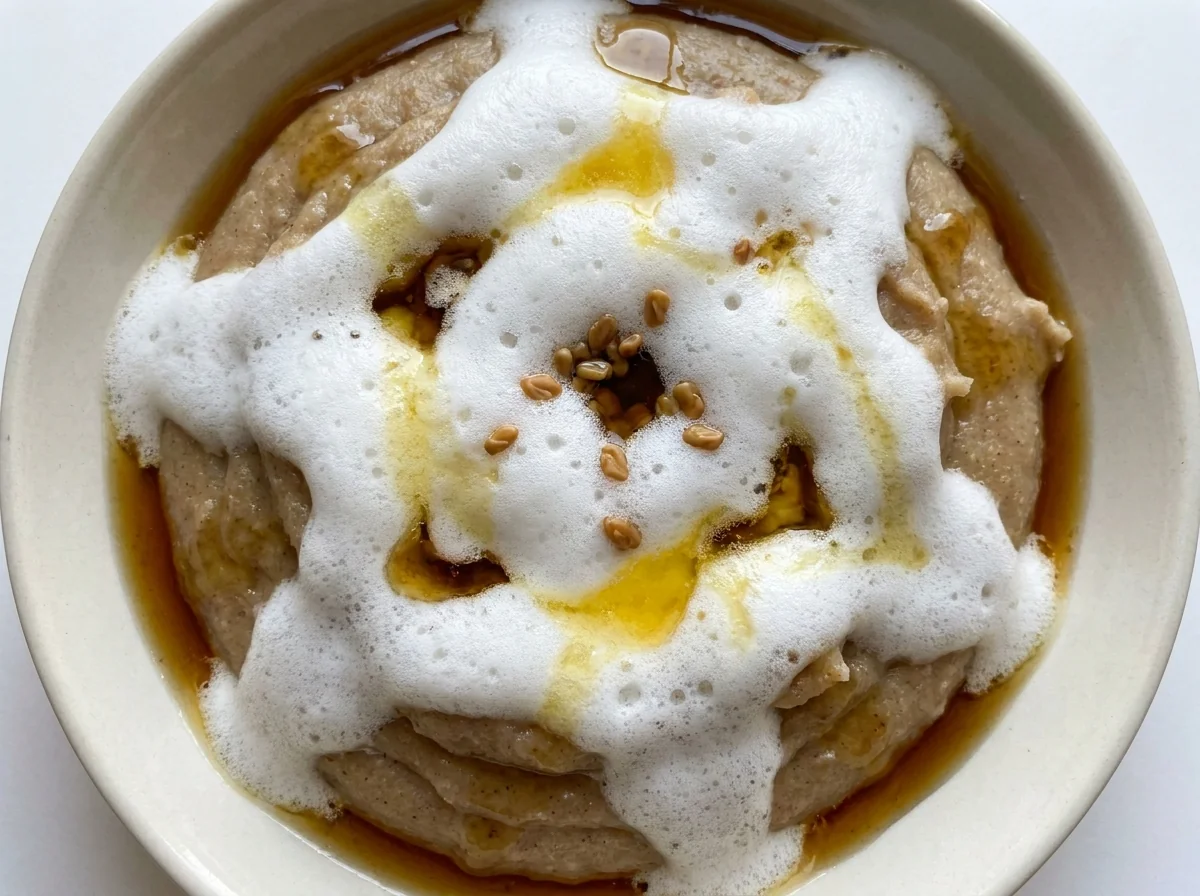
A wheat dough finished, domed, and drizzled with ghee and honey, set apart from its Gulf sisters by the crown of whipped fenugreek as a white foam over it, as documented in folk cooking pages.
Preparation Steps
Whip the soaked fenugreek. The crown of the asida
Drain the fenugreek soaked from its night and whip it in the blender or with a whisk with the cold water for a few minutes until it rises into a fluffy white foam like cream. This foam is the 'whipped fenugreek' that distinguishes southern asida and cuts its richness, and the long soak is what tames its bitterness.
Cook the asida dough
In a thick pot, boil the water with the salt, then add the wheat flour all at once and stir immediately with a strong wooden spoon, or with an asida whisk for anyone who inherited one. Continuous vigorous stirring for five minutes until a cohesive smooth dough comes together with no raw lump.
Finish it on trapped heat
Lower the heat to its lowest and cover the pot for ten minutes, stir once midway, so the heart of the flour cooks and the asida gains its desired elasticity that shines under the spoon.
Dome and hollow the ghee pool
Turn the hot asida into a deep plate and shape it into a dome with the back of a wet spoon, hollow a well in its top and fill it with melted local ghee, and draw the honey around it. The pool at the top is its southern form known to every home.
Crown with the whipped fenugreek and serve
Crown the dome with the white fenugreek foam and serve right away hot. The eater scoops from its edge a bite that gathers dough, ghee, honey, and foam in every scoop, in the way of the tables of Asir and its neighbors.
Blood Sugar Impact
The glycemic index (GI) measures how quickly a food raises blood sugar, while the glycemic load (GL) measures how much a full serving raises it. Together they give the complete picture.
Glycemic Index
GI
54Low
Low0–55Medium56–69High70+
A low value (≤55) means a gradual rise in blood sugar — the most suitable range for diabetes and insulin resistance.
Glycemic Load
GL
28High
Low0–10Medium11–19High20+
Glycemic load reflects the impact of the full serving. To lower it: take half a serving, or pair the recipe with a source of protein and fiber.
Nutritional Information
Per ServingMakes 4 servings · one serving is about 310 g of raw ingredients
Calories424 kcal21%of Daily Value*
Protein10 g20%of Daily Value*
Carbohydrates59 g21%of Daily Value*
Fat17 g22%of Daily Value*
Fiber8 g29%of Daily Value*
Sodium296 mg13%of Daily Value*
* Percent Daily Values are based on a 2,000-calorie diet per FDA food-label reference values — your daily needs may be higher or lower. Values are derived from the recipe's ingredients via the USDA database.
Troubleshooting
The most common problems when preparing Southern Asida with Fenugreek, and how to fix them:
The asida is lumpy with raw lumps
The flour was added gradually without resolve or the stirring slacked. All at once and a merciless arm for five minutes. This is the whole craft of asida.
The fenugreek did not rise into foam
A short soak or warm whipping water. A full night and cold iced water, and it foams like egg white.
The asida set before serving
The asida waits for the ghee, the table does not wait for it. It is turned out, drizzled, and served in five minutes, and if it sets, two spoons of hot water under the lid restore its elasticity.
The fenugreek taste is bitter and pungent
Insufficient soak or too much quantity. Fifteen grams well-soaked scent it without making it bitter.
Storage and Make-Ahead
Right away
Hot with its pool. Asida is a child of its hour.
In the fridge
Two days without the drizzle. Reheat by steam or a little hot water and drizzle fresh.
Not suited to freezing
Its doughy texture collapses on thawing.
Tested Ingredient Substitutions
Original Ingredient
Tested Substitute
Ratio
Flavor Difference
Honey
Date molasses
1:1
The south's second time-honored drizzle
Wheat flour
White corn flour
1:1
Southern corn asida, another legitimate face
Whipped fenugreek
Omit it
~
It returns to an ordinary asida. The crown is the difference
Local ghee
Melted butter
1:1
Milder in aroma, and local ghee is the soul of the dish
How Much Does It Make? Scaling Guide
Ingredient
4 servings
2 servings
8 servings
Wheat flour
250 g
125 g
500 g
Ghee
60 g
30 g
120 g
Fenugreek
15 g
8 g
30 g
EEINA Nutrition Tip
Soak the fenugreek a full night and change its water once. The long soak draws out its bitterness and releases its gel that rises with whipping; one-hour fenugreek is bitter and does not foam however you whip it.
Add This Recipe to Your Plan
The EEINA app saves your favorite recipes, calculates them from their real ingredients, and shows your daily numbers toward your goal. Try it free now.
The Gulf one is often white flour drizzled with ghee and honey or molasses and eaten smooth; the southern one is whole wheat with a dome, a pool, and a crown of whipped fenugreek. The wheat and the fenugreek are the defining lines.
Why fenugreek specifically on top?
The southern heritage pairs fenugreek and honey in its dishes. Its foam cuts the richness of the ghee and adds its distinctive aroma, and it is a documented habit in Asir asida.
Is it eaten by spoon or by hand?
Traditionally a hand-bite from the edge of the communal plate toward the pool, and the spoon takes nothing from its reward.
How do I lighten its drizzle for someone watching their weight?
The pool is symbolic: a spoon of ghee and two spoons of honey for the whole plate are enough for the ritual and the taste, and whole wheat fills on its own.