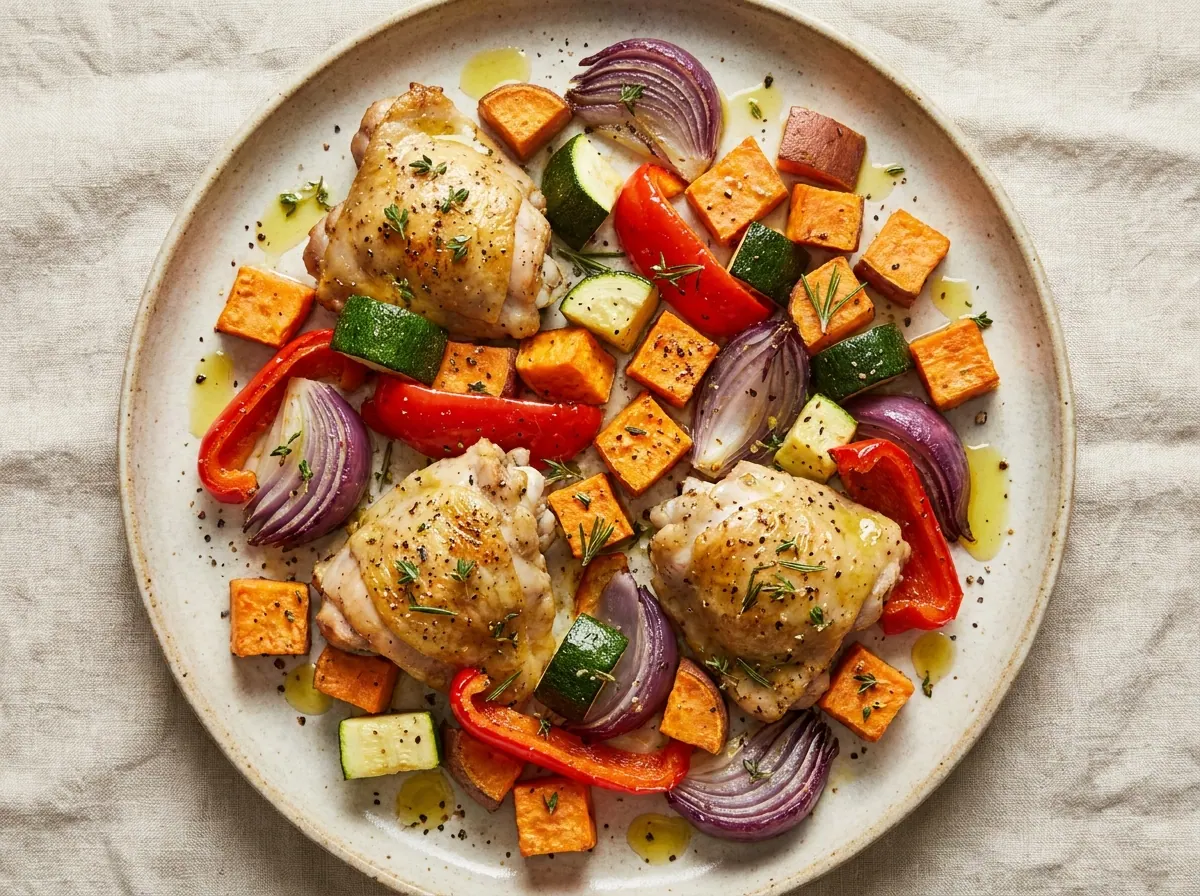
A balanced one-pan meal of chicken and roasted vegetables with sweet potato. GI 49, high in protein, fiber, and vitamin A, suitable for diabetes, heart health, and weight management.
The single sheet pan is a cooking philosophy before it is a recipe: everything on one tray, into the oven once, and out as a complete balanced meal. Lean protein from the chicken, colorful vegetables, and slow carbohydrates from the sweet potato, with no skillet and no pile of pots waiting to be washed.
The secret is in the timing of the vegetables, not the complexity of the marinade. The sweet potato needs more time so it goes in first and alone, then the chicken and the fast-cooking vegetables follow. That way every component comes out at its peak: sweet potato tender inside with golden edges, juicy chicken, and vegetables that keep their crunch and color.
Preparation Steps
Preheat the oven
Preheat the oven to 200 degrees Celsius (top and bottom heat) and line a large baking tray with parchment paper.
Roast the sweet potato
In a large bowl, mix the sweet potato with half the oil, the garlic, the herbs, and the salt, then spread it on the tray and roast it alone for 12 to 15 minutes, since it needs more time than the rest of the vegetables.
Season the chicken
Season the chicken with the remaining oil, garlic, lemon juice, herbs, and black pepper, and leave it to absorb the marinade while the sweet potato roasts.
Add the chicken and vegetables
Take out the tray, turn the sweet potato, then arrange the chicken pieces, zucchini, bell pepper, and onion around it in a single layer without piling so everything browns evenly.
Roast until cooked through
Return the tray to the oven and roast for 22 to 25 minutes until the chicken is cooked through and the edges of the vegetables brown, turning them once halfway through.
Check for doneness
Make sure the internal temperature of the chicken has reached 74 degrees Celsius (165 Fahrenheit) at the thickest part using a food thermometer before removing it, per USDA FSIS guidelines for poultry.
Rest and serve
Leave the tray to rest for 5 minutes, then sprinkle over fresh lemon juice and serve it hot, divided across 4 plates.
Blood Sugar Impact
The glycemic index (GI) measures how quickly a food raises blood sugar, while the glycemic load (GL) measures how much a full serving raises it. Together they give the complete picture.
Glycemic Index
GI
49Low
Low0–55Medium56–69High70+
A low value (≤55) means a gradual rise in blood sugar — the most suitable range for diabetes and insulin resistance.
Glycemic Load
GL
12Medium
Low0–10Medium11–19High20+
Glycemic load reflects the impact of the full serving. To lower it: take half a serving, or pair the recipe with a source of protein and fiber.
Nutritional Information
Per ServingMakes 4 servings · one serving is about 420 g of raw ingredients
Calories404 kcal20%of Daily Value*
Protein33 g66%of Daily Value*
Carbohydrates29 g11%of Daily Value*
Fat17 g22%of Daily Value*
Fiber5 g18%of Daily Value*
Sodium401 mg17%of Daily Value*
Potassium1029 mg22%of Daily Value*
Phosphorus364 mg29%of Daily Value*
* Percent Daily Values are based on a 2,000-calorie diet per FDA food-label reference values — your daily needs may be higher or lower. Values are derived from the recipe's ingredients via the USDA database.
Troubleshooting
The most common problems when preparing Sheet Pan Chicken with Vegetables, and how to fix them:
The vegetables overcooked while the sweet potato was still raw
You added all the components at once at the start. Dense sweet potato needs more time than the fast-cooking zucchini and pepper. The fix: roast the sweet potato alone for 12 to 15 minutes first, then add the chicken and the other vegetables to join it at the right time.
The vegetables came out soft and watery with no browning
The tray was crowded, so the evaporated water trapped the vegetables in their own steam instead of letting them brown. Spread the components in a single layer with space between them, and use a larger tray or two trays when doubling the quantity. Crowding is the enemy of browning.
The chicken dried out and became tough
The chicken went past the safe doneness temperature, or thin chicken breast was used and left too long. Chicken breast cooks faster than thighs, so remove it the moment it reaches 74 degrees Celsius. Thighs are more forgiving and stay juicy, so they are the better choice for the sheet pan.
The bottom of the tray burned and the top did not brown
The tray was too close to the lower heating element. Place the rack in the center, and use parchment paper to protect the base. If you want more browning on top in the final minutes, switch on the top grill (broiler) for two minutes with constant watching.
The flavor is bland despite the herbs
The salt was added after cooking so it stayed on the surface, or the marinade did not touch the components well. Mix the components with the oil, salt, and herbs before roasting so every piece is coated. A squeeze of fresh lemon at the end lifts all the flavors and balances the richness of the oil.
The chicken is sticky on the outside with no crispness
The chicken was wet when it went into the oven, or the oven had not reached its temperature yet. Pat the chicken pieces dry with paper towel before seasoning, and make sure the oven reached 200 degrees before putting in the tray. High heat from the start is the secret of a golden surface.
Storage and Make-Ahead
Refrigerator (4°C)
The cooked dish: three to four days in an airtight container, per USDA recommendations for cooked poultry leftovers. Rapid cooling: refrigerate the dish within two hours of cooking (USDA danger zone rule).
Freezer (-18°C)
The chicken freezes well for up to two to three months. Roasted vegetables soften in texture after thawing, so it is best to freeze the chicken alone and prepare fresh vegetables at serving.
Advance preparation
Cutting the vegetables: a day ahead, kept in airtight containers in the refrigerator. Marinating the chicken: a full night ahead, the flavor deepens in the refrigerator (no more than two days raw). The marinade: mixed and kept in a cup, shaken before use.
Reheating
Reheat in the oven at 170 degrees for ten minutes to restore the crisp edges, better than the microwave which softens the vegetables. Make sure the chicken is fully hot again before serving.
Tested Ingredient Substitutions
Original Ingredient
Tested Substitute
Ratio
Flavor Difference
Chicken thighs
Chicken breast
same weight
Less fat and higher protein, but dries out faster, so remove it the moment it reaches 74 degrees
Sweet potato
Butternut squash cubes
same weight
Fewer carbohydrates and higher fiber, a slightly sweeter flavor
Olive oil
Avocado oil
same amount
A higher smoke point for intense roasting, a more neutral flavor
Zucchini
Eggplant cubes
same weight
Absorbs more oil, a softer texture, a deeper flavor
Bell pepper
Broccoli or cauliflower
same weight
More crunch, deliciously browned edges, high vitamin C
How Much Does It Make? Scaling Guide
Number of servings
Chicken
Sweet potato
Vegetables
Olive oil
2 (individual × 2)
300 g
200 g
250 g
1.5 tbsp
4 (base)
600 g
400 g
500 g
3 tbsp
6 (family)
900 g
600 g
750 g
4.5 tbsp
8 (entertaining · 2 trays)
1200 g
800 g
1 kg
6 tbsp
EEINA Nutrition Tip
Timing, not the marinade: the secret of a successful sheet pan is arranging the components by their cooking time, not the amount of spices. Start with the sweet potato alone, and add the chicken and fast-cooking vegetables later. That way every component comes out at its peak, with no burning and no rawness.
Add This Recipe to Your Plan
The EEINA app saves your favorite recipes, calculates them from their real ingredients, and shows your daily numbers toward your goal. Try it free now.
Yes. The glycemic index of 49 sits at the upper edge of the low range, and the glycemic load of 12 is medium-low, with high protein and fiber that slow the sugar rise. For a lower load, reduce the sweet potato and increase the non-starchy vegetables.
Should I use thighs or chicken breast?
Thighs are more forgiving and stay juicy in the oven, and breast is leaner and higher in protein but dries out faster. Both work, and both must reach 74 degrees Celsius internally.
How long does it keep in the refrigerator?
Three to four days in an airtight container, per USDA recommendations for cooked poultry leftovers. Reheat in the oven to restore the crunch.
Why does the sweet potato go into the oven before the rest?
Because it is denser and slower to cook than the zucchini and pepper. If it went in with them it would stay raw inside while the thin vegetables burn. Cooking in two stages ensures even doneness.