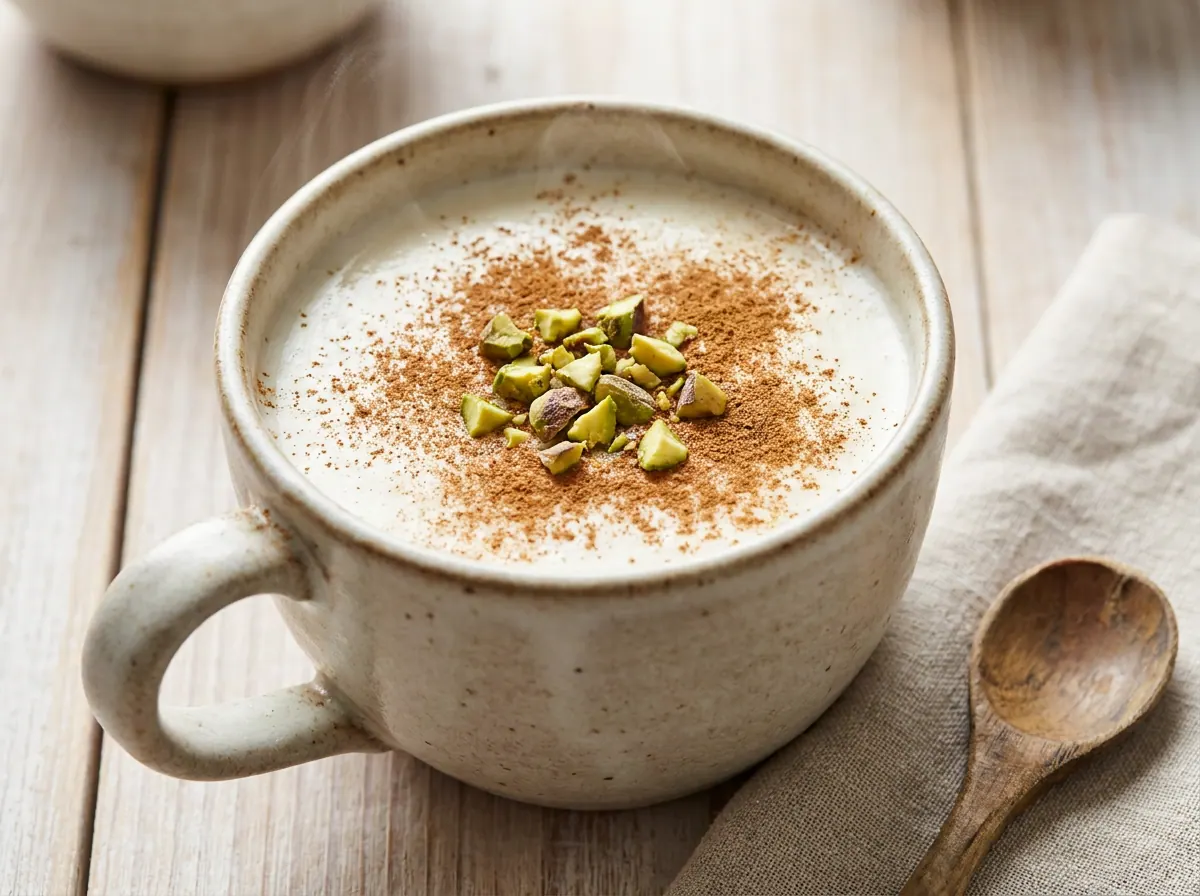
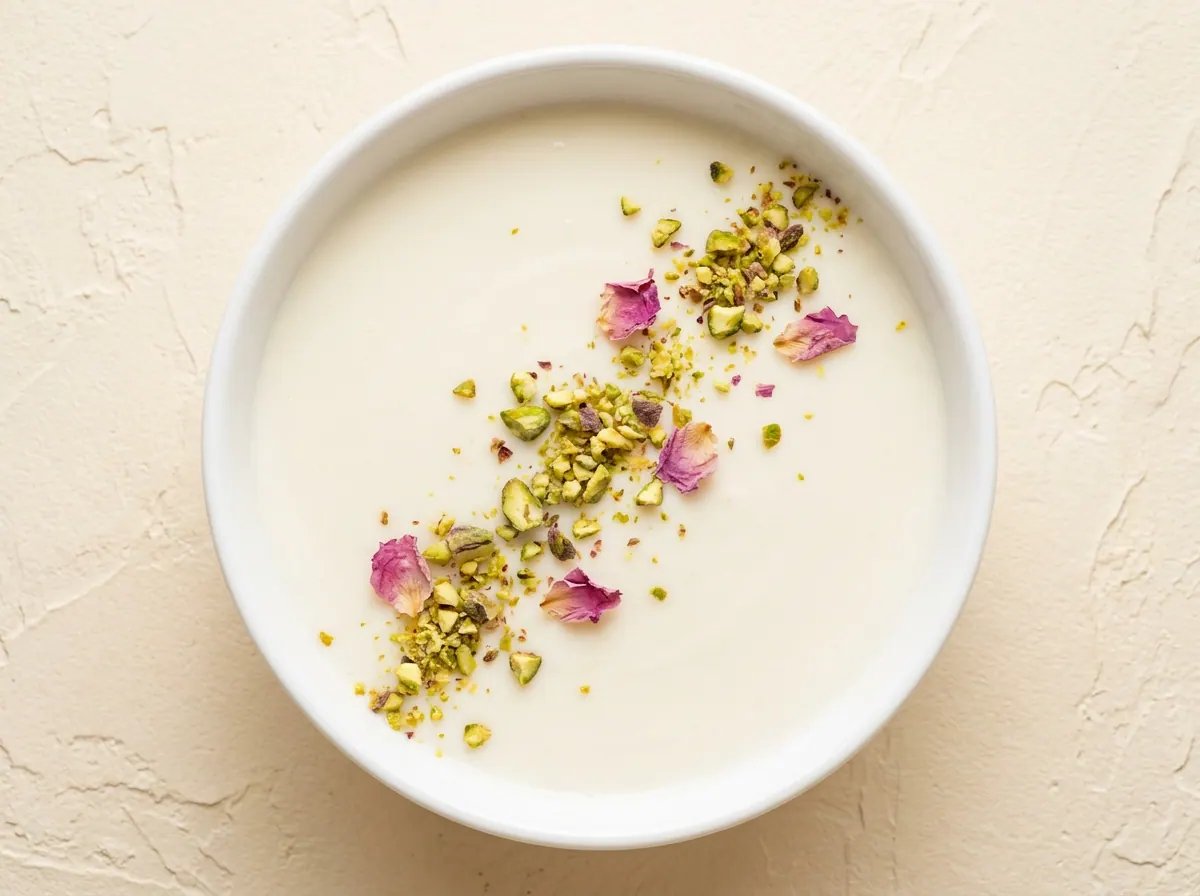
A warm winter drink documented since the Ottoman era: milk thickened with Sahlab powder, sweetened and flavored with rose water, and garnished with cinnamon and pistachios. A frankly sweetened drink, Low GI 55.
Sources: USDA · SFDA · Sydney University · our methodology · Updated on
The Story Behind This Drink
Sahlab is a warm winter drink, based on milk thickened with Sahlab powder extracted from wild orchid tubers. It's sweetened, flavored with rose water, and garnished with cinnamon and nuts. It spread from Anatolia and the Levant since the Ottoman era, later inspiring the European drink 'saloop'.
Its creamy texture comes from the natural starch in Sahlab powder. It's common today to substitute it with cornstarch due to the rarity and cost of authentic powder. It's a naturally sweet drink, served warm on cold winter nights.
Preparation Steps
Dissolve Sahlab
Dissolve the Sahlab powder (or cornstarch) in a quarter cup of cold milk thoroughly until no lumps remain.
2 min
Heat Milk
Heat the remaining milk with sugar in a pot over medium heat until it almost boils, stirring constantly.
3 min
Add Mixture
Gradually add the dissolved Sahlab mixture to the hot milk while stirring continuously.
1 min
Thicken
Continue stirring over low heat until the drink thickens and becomes creamy.
5 min
Flavor with Rose Water
Remove from heat and stir in the rose water.
1 min
Pour and Garnish
Pour into a serving cup and garnish with cinnamon, chopped nuts (and shredded coconut if desired).
1 min
Serve
Serve warm immediately, as its consistency thickens further as it cools.
Immediately
Blood Sugar Impact
The Glycemic Index (GI) measures how quickly blood sugar rises after consumption, and the Glycemic Load (GL) measures the magnitude of that rise per serving. Both readings provide a precise picture, and Sahlab is a sweetened drink for which we honestly state its values.
Glycemic Index
GI
55Low
Low0–55Medium56–69High70+
The value falls at the low end of the range (≤55) and is an estimation, not a direct measurement. The milk matrix slows absorption, but the added sugar and thickening starch raise the response, keeping the drink sweetened and requiring attention.
Glycemic Load
GL
17Medium
Low0–10Medium11–19High20+
A Glycemic Load of 17 falls into the medium range, calculated from approximately 31g of carbohydrates per cup (milk lactose + added sugar + starch). For a lower GL: reduce sugar or substitute with a sweetener, and monitor cup size.
Nutritional Information
Per ServingUSDA + University of Sydney Calculation
Calories280 kcal
Protein8 g
Carbohydrates31 g
Total Sugars24 g
Fat8 g
Calcium290 mg
Troubleshooting
The most common issues encountered when preparing Sahlab for the first time, and their simple solutions. The following solutions are based on common Levantine kitchen experience.
Lumpy starch formed in the drink
The Sahlab powder or starch was added directly to hot milk, causing it to clump from the heat before dispersing. Rule: First, dissolve the powder in very cold milk until it becomes a smooth liquid, then gradually add it to the hot milk while stirring continuously. If lumps still form: strain the drink through a fine sieve and return it to the heat with stirring.
The drink did not thicken and remained liquid
Insufficient starch, or it was removed from heat before it had enough time. Sahlab thickens gradually with stirring over low heat for about five minutes. If it remains liquid: dissolve an additional half teaspoon of cornstarch in two tablespoons of cold milk and add it while stirring until it reaches a creamy consistency. Remember, it thickens more as it cools.
A skin formed on the surface
The milk was left undisturbed without stirring, causing its surface protein to dry and form a skin. Stir continuously during heating, and cover the cup with a small plate if you plan to serve it after a few minutes. The skin is safe to eat but alters the texture; it can be removed with a spoon before serving.
The rose water flavor is overpowering and bitter
Too much rose water was added, or it was added during boiling, causing its delicate aroma to evaporate and leaving bitterness. Rule: Use only half a teaspoon per cup, and add it immediately after removing the pot from the heat, not during boiling. Rose water is a concentrated essence; a little goes a long way.
The drink is too sweet
Sahlab is naturally a sweet drink, but excessive sugar can overpower the flavors of milk and rose water. Start with one tablespoon of sugar per cup and taste before adding more. To reduce the glycemic load: substitute some or all of the sugar with a suitable sweetener, as a light sweetness enhances the rose water's aroma more.
Storage and Make-Ahead
Refrigerator (4°C / 40°F)
Prepared Sahlab: Up to 2 days in an airtight container. It thickens considerably when chilled. Reheat gently over low heat with a splash of milk and stirring until the consistency softens.
Dry Powder: Store in an airtight container away from moisture for many months.
Freezer (-18°C / 0°F)
Not recommended. Starchy milk-based drinks tend to separate and become grainy after thawing. Sahlab is a drink best enjoyed fresh, prepared in single-serving quantities.
Make-Ahead
Dry Mix: Combine Sahlab powder with sugar in a container, ready for instant use.
Nuts: Chop them in advance and store in an airtight container.
Cooking: Best prepared just before serving, as the texture is optimal when warm and fresh.
Serving
A drink best served warm immediately. Do not leave it at room temperature for more than two hours due to its milk content. Garnish with cinnamon and nuts just before serving to maintain their crunchiness.
Tested Ingredient Substitutions
Note: Sahlab is naturally a thickened milk drink. The substitutions below maintain its spirit and texture, suitable for those seeking a lactose-free or lower-sugar option. The drink is not intended to be transformed into a fundamentally different concoction.
Original Ingredient
Tested Substitute
Ratio
Flavor Difference
Authentic Sahlab Powder
Cornstarch
Same amount
Identical creamy texture, neutral flavor; it's the common substitute due to the rarity of authentic powder.
Whole Milk
Lactose-Free Milk
Same amount
Very similar taste, suitable for lactose-intolerant individuals.
Whole Milk
Plant-Based Milk (Almond or Oat)
Same amount
Lighter, with a noticeable almond or oat flavor. Lower in fat and calcium compared to cow's milk.
White Sugar
Low-Calorie Sweetener
According to sweetener's ratio
Reduces calories and glycemic load, suitable for sugar monitoring.
Rose Water
Orange Blossom Water
Same amount
Orange blossom aroma instead of rose, a common alternative Levantine flavor.
How Much Does It Make? Scaling Guide
Sahlab is best prepared in single-serving quantities for optimal texture. The consistent rule for scaling is: one tablespoon of powder and one tablespoon of sugar per cup of milk, with increased stirring for larger quantities to prevent lumps.
Number of Cups
Milk
Sahlab Powder
Sugar
Rose Water
1 (Base)
1 cup
1 tbsp
1 tbsp
1/2 tsp
2
2 cups
2 tbsp
2 tbsp
1 tsp
4 (Family)
4 cups
4 tbsp
4 tbsp
2 tsp
6 (Serving Guests)
6 cups
6 tbsp
6 tbsp
1 tbsp
For larger quantities: Keep the heat low and stir constantly, as larger batches take slightly longer to thicken and are more prone to lumps. Serve immediately before it cools and solidifies.
EEINA Nutrition Tip
A Sweetened Drink, So Watch the Sugar: Sahlab is delicious and warming in winter, but it contains added sugar, lactose, and starch. One cup in the evening can be acceptable within a balanced plan. For diabetics, it's best to reduce sugar or substitute it with a sweetener and monitor cup size. Consult your specialist if your blood sugar is uncontrolled.
Add This Drink to Your Plan
The EEINA app saves your favorite recipes, builds a smart shopping list, and tailors your plan to your goals. Start free, no credit card.
What is the difference between authentic Sahlab powder and cornstarch?
Authentic powder is derived from wild orchid tubers, is rare and expensive, and provides a distinct texture and aroma. Cornstarch is a common substitute that offers the same creamy texture with a neutral flavor, and it is the most frequently used today.
Is Sahlab suitable for diabetics?
It is a sweetened drink with starch and added sugar, with a low GI of 55 and a GL of 17. It can be consumed in moderation by reducing sugar or substituting it with a sweetener, and by monitoring cup size. Consult your specialist if your blood sugar is not well-controlled.
How long does prepared Sahlab keep?
Up to 2 days in the refrigerator in an airtight container. It thickens significantly when chilled; reheat it with a splash of milk and stirring until the consistency softens. It is not suitable for freezing.
Can it be prepared with plant-based milk?
Yes, with almond or oat milk for those who are lactose intolerant. It will be lighter with an almond or oat flavor, and lower in fat and calcium compared to cow's milk.