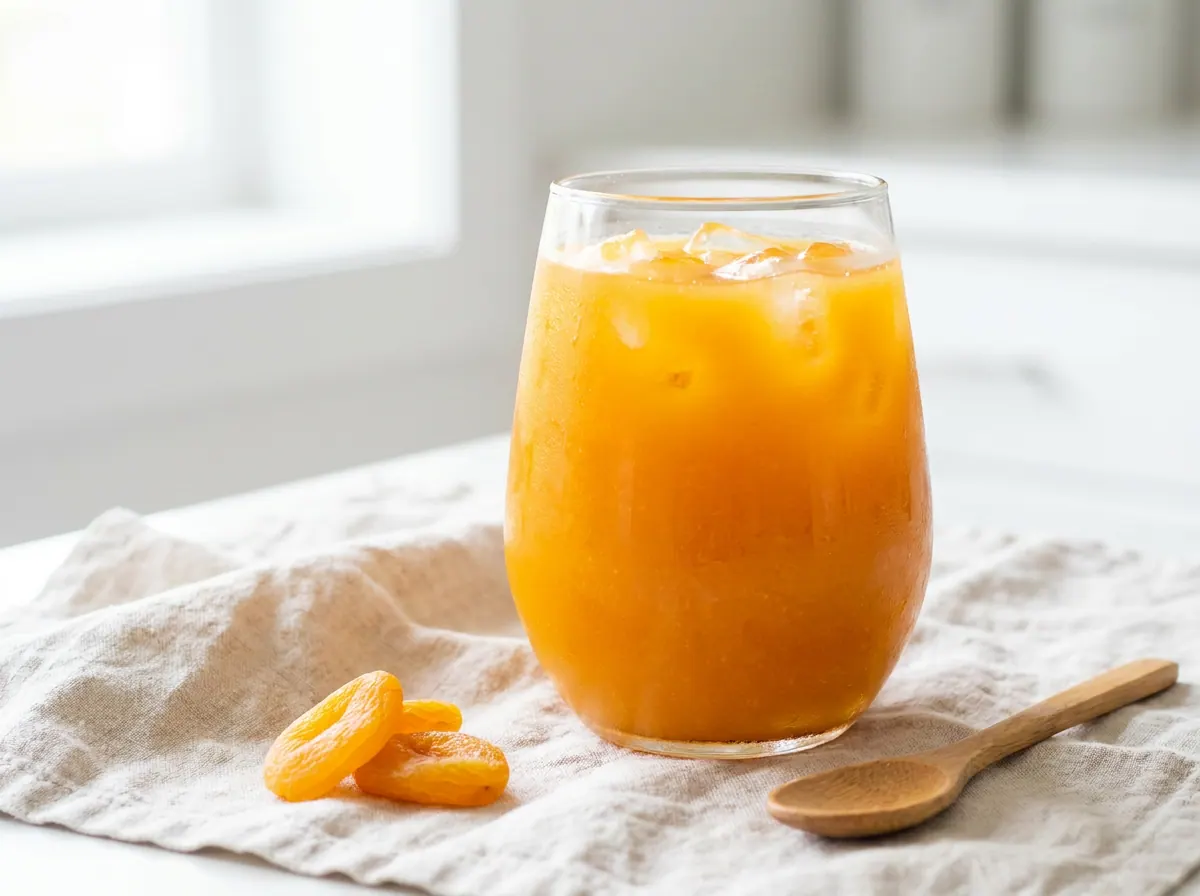
The traditional Levantine Qamar al-Din drink made from dried apricot paste — one of the most celebrated Ramadan drinks in the Levant and the Gulf. GI 35, rich in vitamin A and potassium.
Qamar al-Din is a venerable Levantine drink originating from the Ghouta of Damascus. It is made from dried apricot paste spread into thin, shiny sheets, soaked in water until dissolved to yield a thick, golden-coloured drink.
It is one of the most celebrated Ramadan drinks in the Levant and the Gulf, served cold at Iftar because its natural sweetness and colour revive the spirit after a long day of fasting. Its fundamental sweetness comes from the concentrated fruit sugar of the apricot itself — concentrated by drying — not from added sugar.
Preparation Steps
Cut the sheets
Cut the Qamar al-Din sheets into small pieces with a knife to make them easier to dissolve.
Soak
Place the pieces in a deep bowl and pour the warm water over them until submerged.
Wait until softened
Leave them to soak for at least one hour, or overnight in the refrigerator for a richer consistency, until the pieces are soft and broken down.
Mash and blend
Mash the mixture thoroughly or blend in a blender until smooth and uniform.
Strain
Pass the drink through a fine-mesh strainer to remove any undissolved lumps.
Sweeten
Add sugar gradually while tasting, and rely on the natural sweetness of the apricot — add as little as possible.
Add fragrance
Add the rose water or orange blossom water and stir.
Serve
Serve cold with ice and garnish with nuts if desired.
Blood Sugar Impact
The glycemic index (GI) measures how quickly a food raises blood sugar, while the glycemic load (GL) measures how much a full serving raises it. Together they give the complete picture.
Glycemic Index
GI
35Low
Low0–55Medium56–69High70+
A low value (≤55) means a gradual rise in blood sugar — the most suitable range for diabetes and insulin resistance.
Glycemic Load
GL
12Medium
Low0–10Medium11–19High20+
Glycemic load reflects the impact of the full serving. To lower it: take half a serving, or pair the recipe with a source of protein and fiber.
Nutritional Information
Per ServingMakes 1 servings · one serving is about 415 g of raw ingredients
Calories163 kcal8%of Daily Value*
Protein1 g2%of Daily Value*
Carbohydrates34 g12%of Daily Value*
Fat3 g4%of Daily Value*
Fiber1 g4%of Daily Value*
Sodium7 mg0%of Daily Value*
Potassium558 mg12%of Daily Value*
Phosphorus54 mg4%of Daily Value*
* Percent Daily Values are based on a 2,000-calorie diet per FDA food-label reference values — your daily needs may be higher or lower. Values are derived from the recipe's ingredients via the USDA database.
Troubleshooting
The most common problems when preparing Apricot Leather Drink, and how to fix them:
Sheets did not dissolve and lumps remain
Soaking time was too short or the water was cold. Dried apricot paste needs warm water and at least one hour to soften and break down. If lumps remain after an hour: cut them smaller, add a quarter cup of extra warm water, leave for another half hour then mash. Overnight soaking in the refrigerator gives the smoothest result.
Drink is very thick — almost a paste
Too little water relative to the paste. Qamar al-Din should be a drinkable liquid, not a thick spread. Add warm water gradually, a quarter cup at a time, blending until you reach your preferred consistency — and remember it thickens a little further after chilling.
Drink is watery with no body
Too much water. To fix it: add an extra piece of soaked, mashed paste, or leave the drink uncovered in the refrigerator for an hour to firm up slightly. Next time: stick to 11/2 cups water for every 45 grams of paste.
Taste is overly sour
The apricot variety used in the paste is naturally sour, or the quantity is too concentrated. Rely on the apricot's sweetness first; if it remains sour, add sugar gradually — one teaspoon at a time — tasting after each addition. A pinch of rose water softens the sourness and balances the flavour without extra sugar.
Drink is full of lumps
Insufficient blending or the straining step was skipped. Blend the mixture in a standing blender until completely smooth, then pass through a fine-mesh sieve, pressing what remains against the mesh with the back of a spoon to extract as much pulp as possible before discarding the undissolved peel.
Drink lost its floral aroma
Rose water was added too early and evaporated, or too little was used. Rose water and orange blossom water should be added right before serving with the cold drink — heat and time strip their fragrance. Start with half a teaspoon and increase cautiously, as too much makes the flavour soapy.
Storage and Make-Ahead
Refrigerator (4°C)
The prepared drink keeps for three days in a sealed pitcher. It thickens slightly — thin with cold water at serving time. Before adding rose water: store it plain and flavour each cup right before serving.
Freezer (−18°C)
Suitable for freezing for up to one month in an airtight container, or poured into ice cube trays for Qamar al-Din cubes. Thaw in the refrigerator and stir well before serving as it may separate slightly.
Meal prep
For overnight soaking: soak the paste in warm water in the evening and leave it covered in the refrigerator; it is ready to blend in the morning with a richer consistency. Ramadan batch: prepare a plain pitcher without rose water and flavour each cup right before Iftar.
Serving
Served cold with ice. Do not leave it outside the refrigerator for more than two hours, especially in summer heat. Stir before pouring as the pulp tends to settle to the bottom.
Tested Ingredient Substitutions
Original Ingredient
Tested Substitute
Ratio
Flavor Difference
Added sugar
Omit entirely and rely on the apricot's natural sweetness
Zero added sugar
Less sweet and lighter glycaemic load — the apricot flavour is more pronounced.
Added sugar
Natural honey
Half the sugar quantity
A warm honeyed flavour — sweeter at a smaller quantity.
Rose water
Orange blossom water
Same pinch
A lighter citrus fragrance — more refreshing than rose.
Plain water
A quarter of the water replaced with cold milk
A quarter of the quantity as milk
A richer consistency and lighter colour — approaches a fruit-and-milk drink.
Pine nuts for garnish
Crushed pistachios
Same quantity
Distinctive green colour and crunch — suited to entertaining.
How Much Does It Make? Scaling Guide
Number of cups
Qamar al-din sheets
Warm water
Sugar (optional)
Rose water
1 (individual)
45 g
1.5 cups
1 tsp
1 pinch
4 (base)
180 g
6 cups
4 tsp
0.5 tbsp
8 (family)
360 g
12 cups
2.5 tbsp
1 tbsp
12 (entertaining)
540 g
18 cups
4 tbsp
1.5 tbsp
EEINA Nutrition Tip
Rely on the sweetness of the apricot rather than added sugar: Qamar al-Din is a naturally concentrated sweet drink, and its glycaemic load is moderate even without any added sugar. For the fasting person watching blood sugar: serve it as a small cup within the Iftar meal rather than on an empty stomach, reduce or omit the added sugar — the apricot is sweet enough on its own.
Add This Recipe to Your Plan
The EEINA app saves your favorite recipes, calculates them from their real ingredients, and shows your daily numbers toward your goal. Try it free now.
A traditional Levantine drink originating from the Ghouta of Damascus, made from dried apricot paste spread into sheets. One of the most celebrated Ramadan drinks in the Levant and the Gulf.
Is it suitable for people with diabetes?
It is a sugar-concentrated drink — its glycaemic load is moderate (~17) even without added sugar. Have a small cup within a meal, reduce or omit added sugar, and do not drink it on an empty stomach.
Do I need added sugar?
Usually not. Qamar al-Din's fundamental sweetness comes from apricot sugar concentrated by drying. Taste first and add sugar gradually only if needed.
Why the warning about sulphites?
Dried apricots are usually treated with sulphur dioxide as a preservative — this is important for people with asthma or sulphite sensitivity. Check the product label.