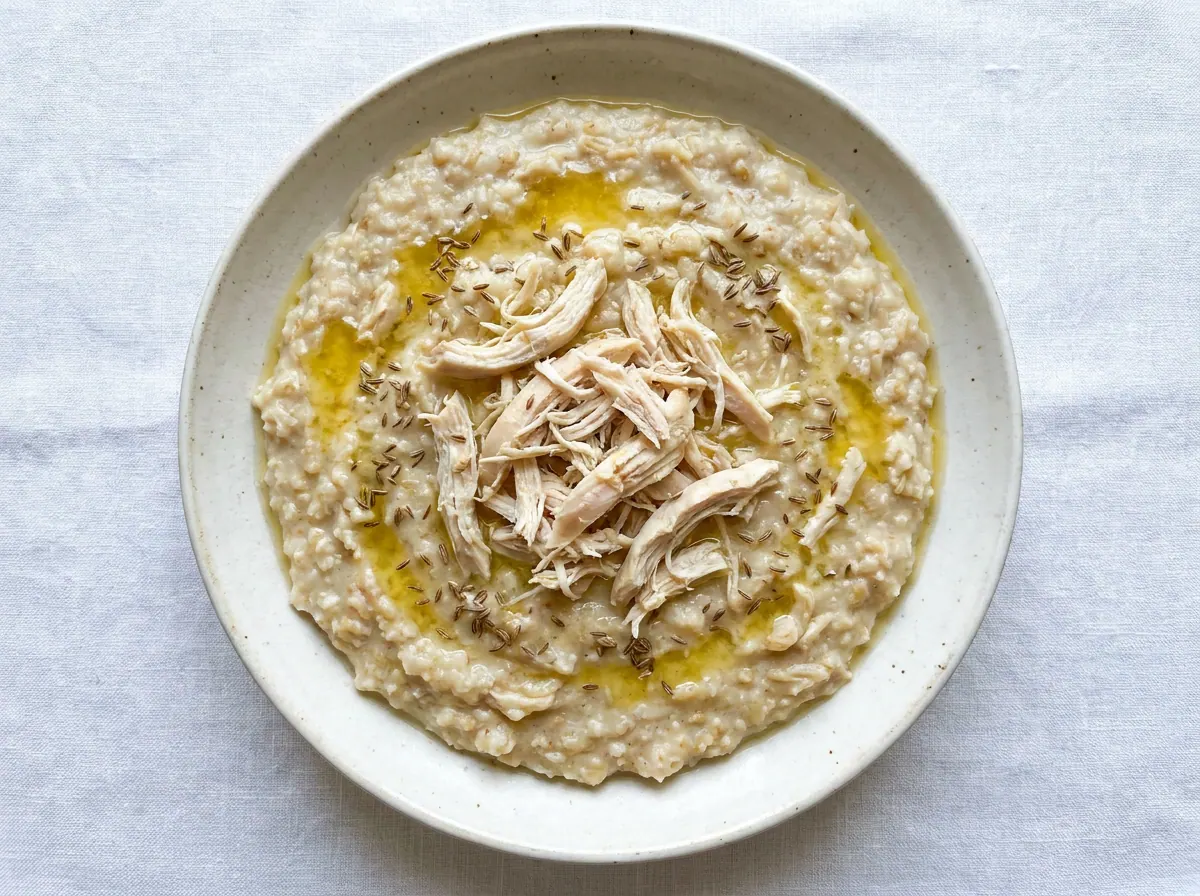
Arsia is a traditional Omani dish from the same family as Hareesh (wheat and meat porridge), built on whole wheat berries slow-cooked and mashed with chicken or meat until they reach a smooth, savory-porridge consistency. The name is tied to wedding banquets and festive occasions, where it is prepared in large quantities and drowned in ghee before serving.
Our lighter version preserves the heritage while reducing the load: whole wheat berries replace white rice to raise fiber, the chicken is skinless, and ghee is limited to one teaspoon per serving instead of flooding the dish. The result is a warm, satisfying dish rich in protein and fiber, and gentler on blood sugar than the traditional white-rice version.
Preparation Steps
Soak the wheat
Soak the whole wheat berries in cold water overnight, then drain. This shortens cooking time and produces a creamy texture.
Simmer the chicken
Place the skinless chicken in a pot with the water, cardamom, cinnamon, peppercorns, and cloves. Bring to a boil, skim off any foam, then cook on low heat for about 40 minutes until cooked through.
Shred the chicken
Lift out the chicken and strain the broth. Remove the bones and shred the meat. Reserve the broth for cooking the wheat.
Cook the wheat
Add the soaked wheat berries to the strained broth along with the chopped onion. Cook over a low medium heat, stirring occasionally, until completely tender (1 to 11/2 hours). Add hot water as needed.
Add the vegetables
Add the diced carrot and zucchini in the last 20 minutes so they stay intact and boost the fiber content.
Mash the Arsia
Return the shredded meat to the pot, then mash the mixture with a whisk or spoon until it resembles a smooth savory porridge. This mashing is the secret of Arsia.
Season and serve
Adjust salt and ladle into bowls. Drizzle one teaspoon of ghee per serving rather than drowning the dish in fat as in the traditional version.
Pair it
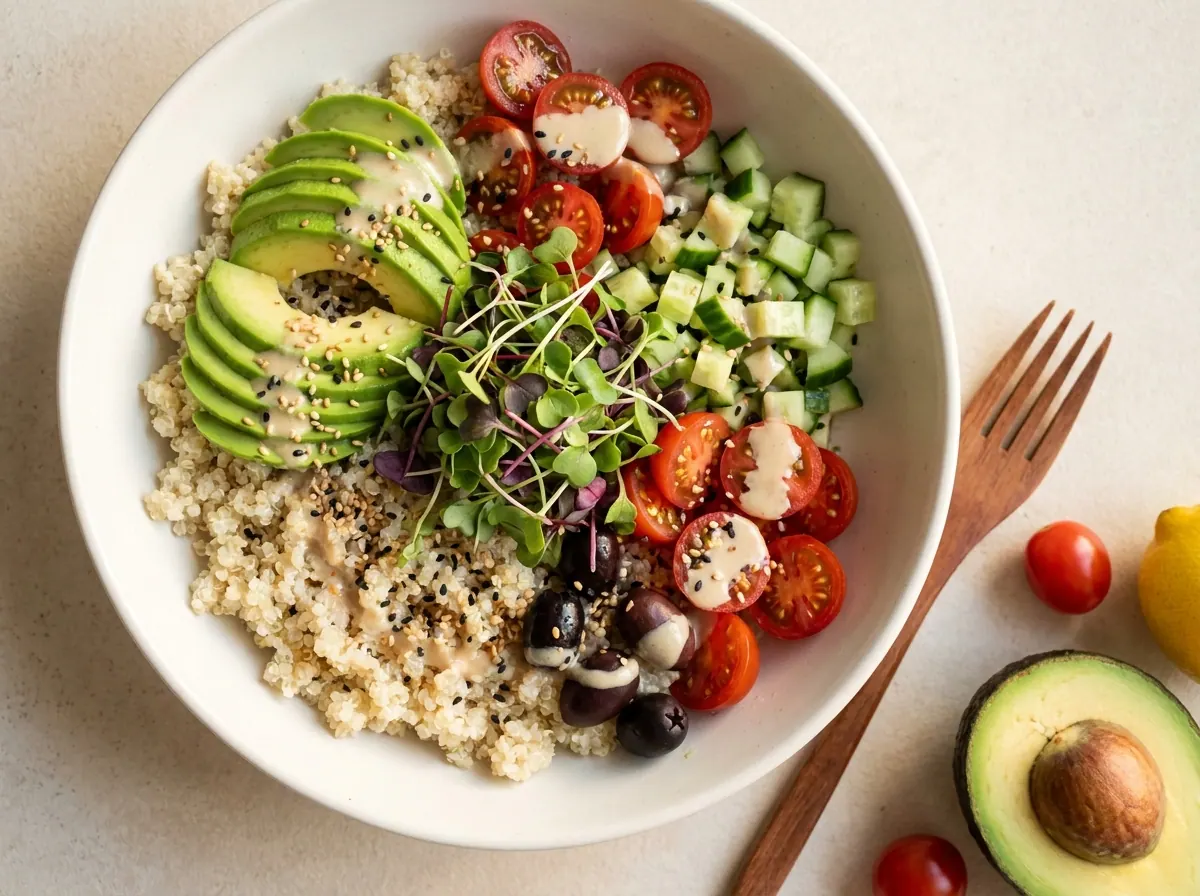
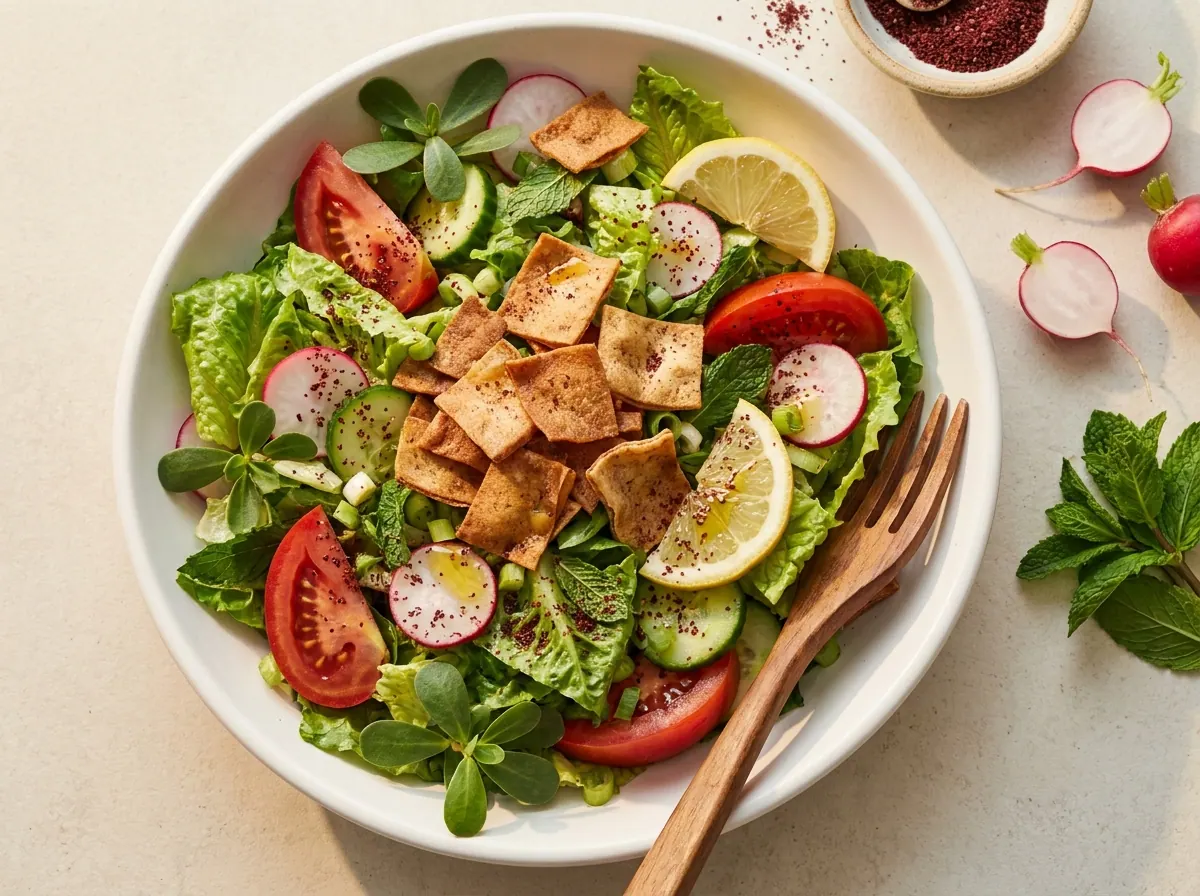
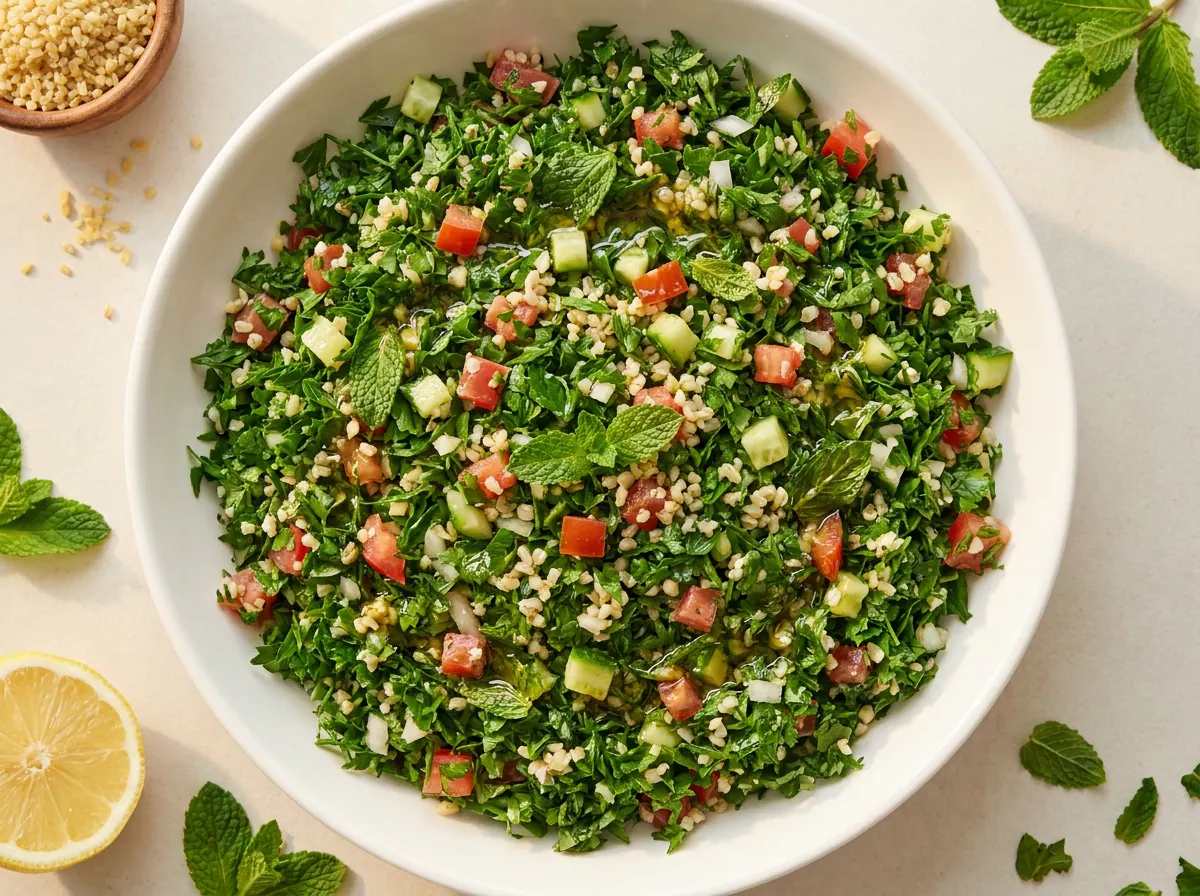
Serve warm alongside a green salad or roasted vegetables to increase fiber and lower the glycemic load of the meal.
Blood Sugar Impact
The glycemic index (GI) measures how quickly a food raises blood sugar, while the glycemic load (GL) measures how much a full serving raises it. Together they give the complete picture.
Glycemic Index
GI
43Low
Low0–55Medium56–69High70+
A low value (≤55) means a gradual rise in blood sugar — the most suitable range for diabetes and insulin resistance.
Glycemic Load
GL
11Medium
Low0–10Medium11–19High20+
Glycemic load reflects the impact of the full serving. To lower it: take half a serving, or pair the recipe with a source of protein and fiber.
Nutritional Information
Per ServingMakes 6 servings
Calories418 kcal21%of Daily Value*
Protein35 g70%of Daily Value*
Carbohydrates32 g12%of Daily Value*
Fat16 g21%of Daily Value*
Fiber6 g21%of Daily Value*
Sodium549 mg24%of Daily Value*
Potassium508 mg11%of Daily Value*
Phosphorus392 mg31%of Daily Value*
* Percent Daily Values are based on a 2,000-calorie diet per FDA food-label reference values — your daily needs may be higher or lower. Values are derived from the recipe's ingredients via the USDA database.
Troubleshooting
The most common problems when preparing Omani Arsia with Chicken, and how to fix them:
The wheat stayed hard and never reached a porridge consistency
The wheat was not soaked long enough, or cooking time was too short. Whole wheat berries need overnight soaking then 1 to 11/2 hours on low heat. If still firm: add 1/2 cup hot water at a time and extend cooking with stirring until completely tender before mashing — mashing does not work on half-cooked grains.
The Arsia is dry or too stiff
Water evaporated quickly over high heat, or there was not enough broth. Arsia cooks on very low heat; the right consistency flows slowly off a spoon. To fix: gradually add hot broth or hot water and mash again. Note that the mixture thickens slightly after serving as it cools, so leave it slightly looser in the pot.
The flavor is bland despite the spices
Spices are correct but salt was added too early and distributed unevenly, or the broth was thin. Cook the chicken in the broth with cardamom, cinnamon, cloves, and pepper from the start so the wheat absorbs the flavor. Adjust salt at the end after mashing, then taste. A drizzle of warm ghee just before serving lifts the flavor without drowning the dish in fat.
The vegetables disintegrated and disappeared into the mixture
The carrot and zucchini were added too early alongside the wheat and cooked too long. Add them only in the last 20 minutes, cut into medium pieces, so they stay intact and contribute texture, fiber, and color. If you want them more visible, leave some unmasked and stir in after mashing the wheat.
A layer of foam and fat appears on top of the broth
This foam is natural and comes from the chicken during the first boil. Skim it off with a spoon in the first five minutes of boiling before lowering the heat — this gives a cleaner broth and cleaner flavor. Do not let it boil vigorously for long; a rolling boil clouds the broth and breaks up the meat prematurely.
Storage and Make-Ahead
Refrigerator (4°C)
Cooked Arsia keeps for three days in an airtight container. The texture thickens in the cold, so reheat with a little water or broth. Let it cool before refrigerating, and do not leave it out for more than two hours per the food-safety danger-zone rule.
Freezer (-18°C)
Freezes well for up to one month in an airtight container. Mashed-wheat dishes tolerate freezing because of their dense texture. Thaw overnight in the refrigerator, then reheat with a little water.
Advance prep
Soaking wheat: overnight before cooking; drain and keep covered in the refrigerator. Poaching and shredding the chicken: one day ahead; store the meat and broth separately in the refrigerator. Final cooking and mashing: the day of serving — the creamy texture is best fresh.
Serving
Serve warm. Reheat over low heat with continuous stirring and a little water until the creamy consistency returns. Reheated cooked chicken should reach 74°C internally per USDA guidance.
Tested Ingredient Substitutions
Original Ingredient
Tested Substitute
Ratio
Flavor Difference
Whole wheat berries
Whole brown rice
Same weight approximately
Gluten-free; softer and less dense texture than wheat; shorter cooking time
Skinless chicken
Lean lamb
Same weight
Deeper flavor and slightly richer; requires longer cooking time to become tender
Ghee
Extra-virgin olive oil
Same amount
Lighter; less traditional flavor; monounsaturated fats better for heart health
Carrot and zucchini
Pumpkin or butternut squash, diced
Same weight
Sweeter and warmer color; dissolves faster so add in the last 15 minutes
Water
Low-sodium chicken broth
Same amount
Richer, deeper flavor; reduce added salt accordingly
How Much Does It Make? Scaling Guide
Number of servings
Wheat berries
Chicken
Water
Cardamom pods
3 (half recipe)
120 g
350 g
5 cups
3
6 (base)
240 g
700 g
10 cups
6
12 (large family)
480 g
1400 g
20 cups
12
18 (banquet)
720 g
2100 g
30 cups
18
EEINA Nutrition Tip
Whole wheat berries are the secret of this lighter version: swapping white rice for wheat berries raises fiber and slows the sugar spike, but remember that extended mashing raises the GI above what intact grains would show. The biggest health gain here comes from removing the chicken skin, cutting back on ghee, and pairing the dish with a green salad.
Add This Recipe to Your Plan
The EEINA app saves your favorite recipes, calculates them from their real ingredients, and shows your daily numbers toward your goal. Try it free now.
This wheat-berry version is gentler on blood sugar than the traditional white-rice version — GI 50 and glycemic load 14 are medium. Eat a moderate portion paired with a green salad and protein, and monitor your own readings.
What is the difference between Arsia and Hareesh (wheat and meat porridge)?
Both use mashed wheat cooked with meat or chicken, and the differences are regional — in texture, spicing, and mashing technique. Omani Arsia is associated with wedding banquets and festive occasions.
Can I make this in a pressure cooker?
Yes, a pressure cooker greatly shortens the time needed to soften the wheat after soaking. Cook the chicken and wheat under pressure until tender, then open the pot and mash over low heat to adjust consistency.
Why wheat berries instead of rice?
Whole wheat berries retain the bran and germ, raising fiber and slowing starch absorption compared with milled white rice — which lowers the glycemic load of the meal.
Sources: USDA · University of Sydney · Gulf GSO · Our methodology · Updated on