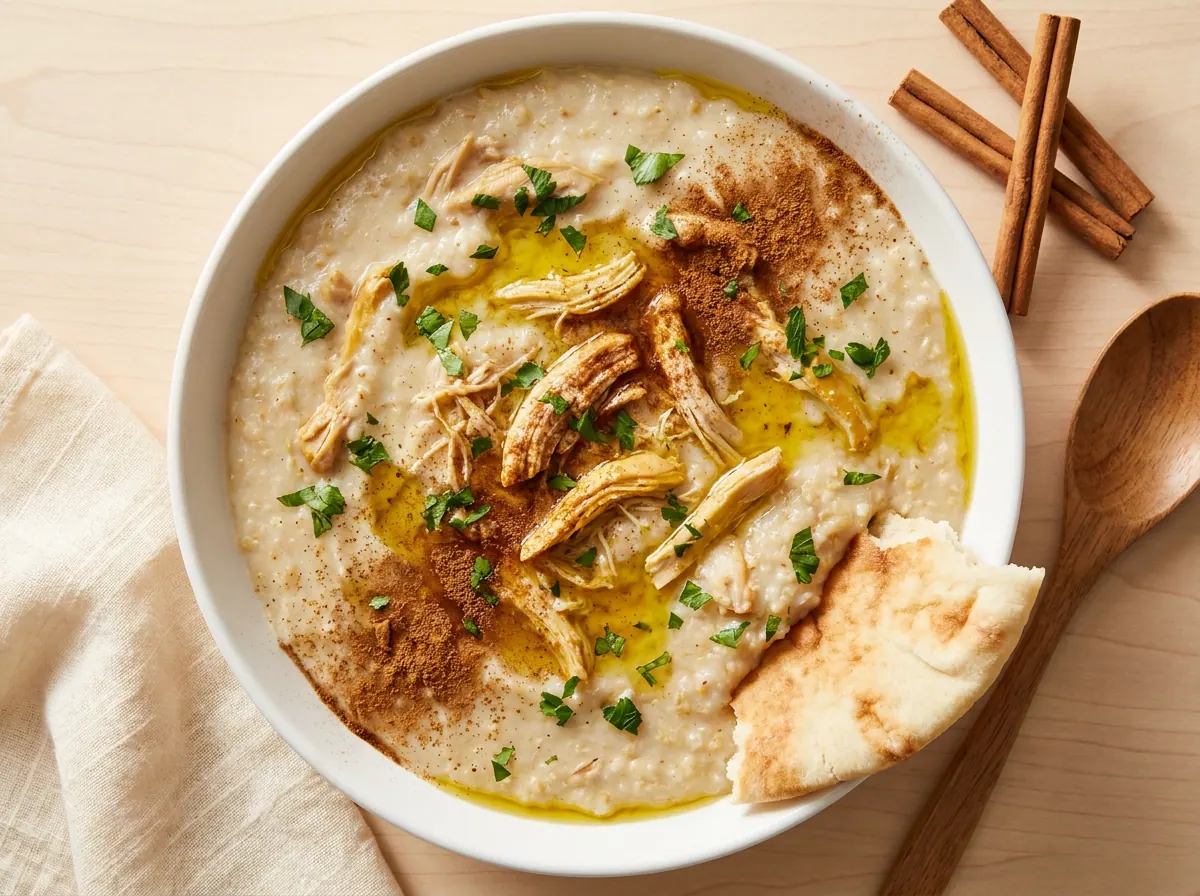
Hareesh (wheat and meat porridge) is a timeless Ramadan dish — whole wheat slow-cooked with chicken and pounded to a creamy porridge. 6 g fibre, GI 41, keeps you full for 5 hours. Perfect for Suhoor (pre-dawn Ramadan meal).
Hareesh (wheat and meat porridge) is one of the oldest dishes of the Arabian Peninsula — mentioned in 10th-century manuscripts. It is cherished across the UAE, Kuwait, and Saudi Arabia, especially during Ramadan.
Its nutritional profile is unique: whole wheat delivers fibre and B vitamins, and the slow cook breaks down the protein for easy absorption. Ideal after exercise or as Suhoor.
Preparation Steps
Soak the wheat
Soak the hareesh wheat in cold water overnight (about eight hours), then drain in the morning.
Simmer the ingredients
Place the wheat, chicken, water, and spices in a pot. Bring to the boil, then reduce the heat and cook for 45 minutes, stirring occasionally.
Remove the chicken
Lift out the chicken and shred it into small pieces with your fingers, then return it to the pot.
Pound to a porridge
Pound the mixture with a hand masher — not a blender — until it becomes thick and creamy. This step is the secret of Hareesh.
Serve
Pour the Hareesh hot into a deep bowl, garnish with a sprinkle of cinnamon and a drizzle of warm ghee, and a little sugar for those who enjoy the sweet-savoury Emirati style.
Blood Sugar Impact
The glycemic index (GI) measures how quickly a food raises blood sugar, while the glycemic load (GL) measures how much a full serving raises it. Together they give the complete picture.
Glycemic Index
GI
41Low
Low0–55Medium56–69High70+
A low value (≤55) means a gradual rise in blood sugar — the most suitable range for diabetes and insulin resistance.
Glycemic Load
GL
8Low
Low0–10Medium11–19High20+
Glycemic load reflects the impact of the full serving. To lower it: take half a serving, or pair the recipe with a source of protein and fiber.
Nutritional Information
Per ServingMakes 6 servings · one serving is about 265 g of raw ingredients
Calories280 kcal14%of Daily Value*
Protein21 g42%of Daily Value*
Carbohydrates23 g8%of Daily Value*
Fat12 g15%of Daily Value*
Fiber4 g14%of Daily Value*
Sodium567 mg25%of Daily Value*
Potassium265 mg6%of Daily Value*
Phosphorus259 mg21%of Daily Value*
* Percent Daily Values are based on a 2,000-calorie diet per FDA food-label reference values — your daily needs may be higher or lower. Values are derived from the recipe's ingredients via the USDA database.
Troubleshooting
The most common problems when preparing Chicken Hareesh (wheat and meat porridge), and how to fix them:
Wheat remained grainy and did not break down
Not enough cooking time, or the wheat was not soaked. Hareesh wheat needs overnight soaking in cold water, then long slow cooking (2–3 hours) with constant stirring. Short on time? Use a pressure cooker (45 minutes after reaching full pressure).
Hareesh will not come together and stays lumpy
Not pounded with the right tool. Traditional Hareesh is pounded with a wooden masher or large wooden spoon for a long time over low heat until it becomes a cohesive, sticky paste. An electric blender works but loses the traditional feel.
Chicken is dry with separated fibres
The chicken was cooked separately and ground into the hareesh. The traditional method: cook the chicken in the same water as the wheat until fully done (internal temperature 74°C per USDA poultry safety guidelines [1]), then lift it out, remove the bones, and return it to the pot to be pounded together with the wheat.
Taste is flat with no Gulf character
The ghee is missing, or cardamom was not added. Authentic Hareesh is served with a drizzle of local ghee (not hydrogenated) over the top before serving, and a sprinkle of ground cardamom with cinnamon. These additions are the difference between a good Hareesh and an outstanding one.
Hareesh dried out while resting in the pot
Left uncovered or heat continued underneath. Hareesh dries quickly when it cools. If waiting: cover tightly and leave over the lowest possible heat, or lift off and cover, then add a quarter cup of hot water before serving and stir through.
Chicken flavour is strong and overpowering
Too much chicken relative to the wheat. The balanced ratio is 500 g chicken per 11/2 cups wheat. If there is too much chicken: add more wheat and hot water, or set half the chicken aside to use in another meal.
Storage and Make-Ahead
Refrigerator (4°C)
Cooked Hareesh: three days in an airtight container after cooling to room temperature. Uncooked soaked wheat: maximum two days in the soaking water.
Freezer (-18°C)
Hareesh: two months in a freezer container. Thaw overnight in the refrigerator, reheat with a quarter cup of hot water added to restore the texture. Individual portions: in small containers for daily single-serving reheats.
Prep ahead
Soak the wheat: one full night before cooking. Poach the chicken: up to two hours ahead, kept in its broth. Final cooking: Hareesh is a same-day dish — serve hot with fresh ghee drizzled over.
Reheating
Over low heat in a pot with a quarter cup of hot water, stirring constantly. Do not leave it for more than two hours after reheating outside the refrigerator per USDA guidelines [2].
Tested Ingredient Substitutions
Original Ingredient
Tested Substitute
Ratio
Flavor Difference
Whole hareesh wheat
Fine jareesh (cracked wheat)
Same quantity
Shorter cook time, similar flavour, slightly smoother texture
Chicken breast
Local lamb, cut into small pieces
Same weight
The classic lamb Hareesh — deeper flavour and higher fat
Local ghee
Natural cow's butter
Same quantity
Creamy texture, less Gulf character but more neutral
Cardamom and cinnamon
Finely ground mastic (mastika)
A very small pinch
A distinctive Hejazi and East Asian-influenced flavour
All chicken
Half chicken, half red lentils
Half the weight for each, plus 1 cup lentils
Complete protein by combining legumes and grains, reduced fat
How Much Does It Make? Scaling Guide
Number of servings
Wheat
Chicken
Water
Cooking time
2 (individual × 2)
0.5 cup
250 g
2.5 cups
1.5 hours
4 (base)
1.5 cups
500 g
6 cups
2 hours
8 (large family)
3 cups
1 kg
12 cups
2.5 hours
12 (entertaining)
4.5 cups
1.5 kg
18 cups
3 hours in a large pot
EEINA Nutrition Tip
The secret to that creamy texture: do not use an electric blender, which makes it rubbery and strange. A hand masher and a little patience give a perfect result. The wheat releases its starch gradually.
Add This Recipe to Your Plan
The EEINA app saves your favorite recipes, calculates them from their real ingredients, and shows your daily numbers toward your goal. Try it free now.