Aleppan Muhammara (Roasted Red Pepper and Walnut Dip)
Authentic Aleppan muhammara made with roasted red peppers, walnuts, and pomegranate molasses. A Levantine dip rich in healthy fats and antioxidants, with a GI of 40.
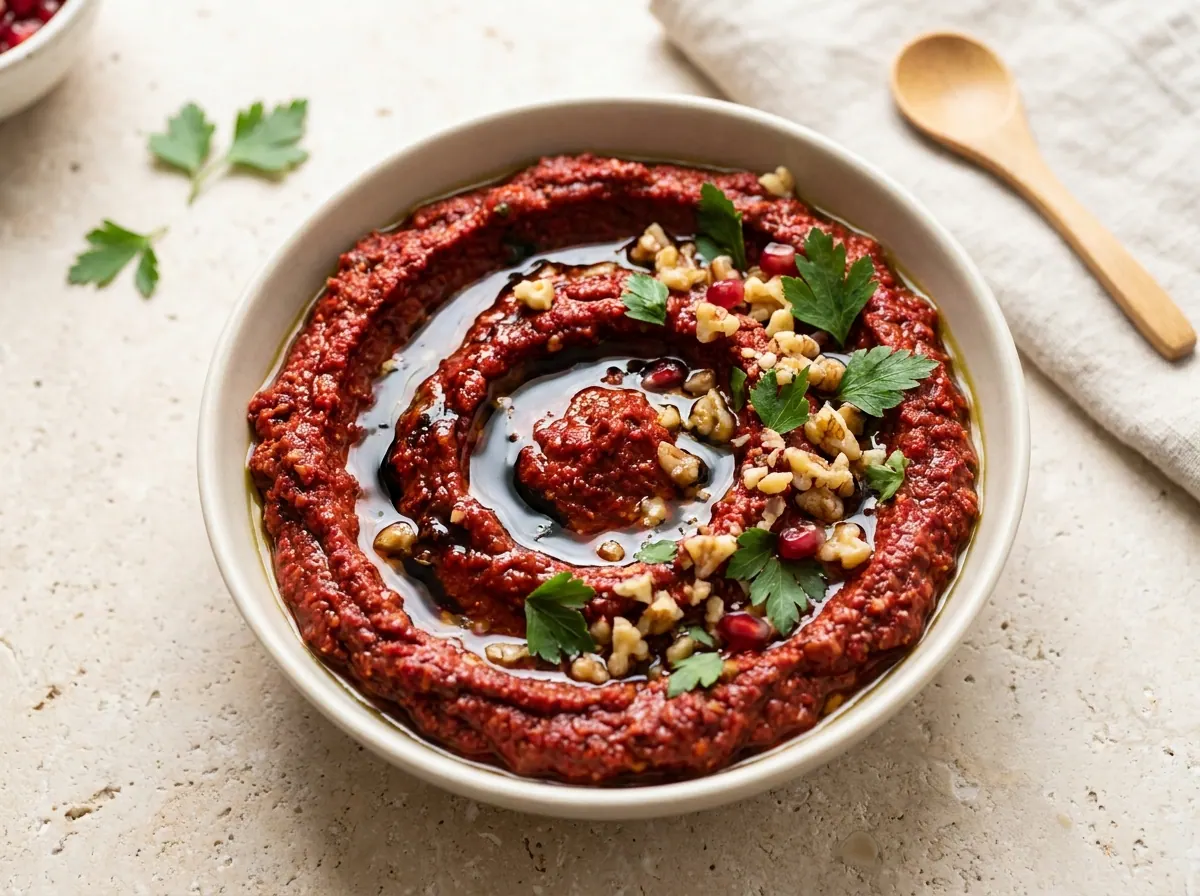
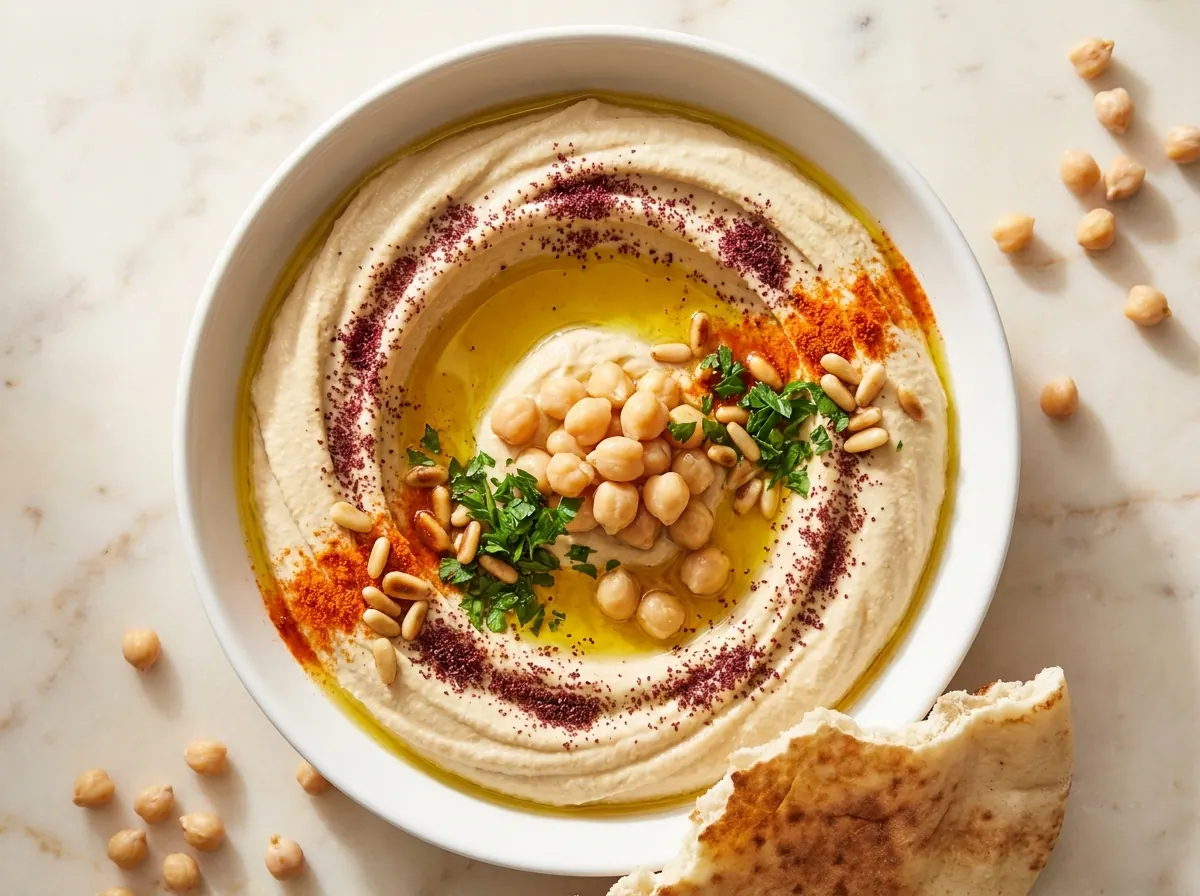
Muhammara is an ancient Aleppan dip that was born in the Syrian city of Aleppo; its name derives from the deep red color given to it by the roasted peppers and pomegranate molasses. Today it graces tables throughout the Levant, served cold with bread alongside Hummus and Mutabbal (smoky eggplant dip).
The secret of muhammara lies in balance: the red pepper provides sweetness and color, the walnuts give a creamy, fatty body, and the pomegranate molasses adds deep tartness. The result is a dish whose calories mostly come from healthy fats — walnut and olive oil — low in available carbohydrates, and rich in vitamin C and antioxidants.
Preparation Steps
Roast the red peppers
Roast the red peppers until the skin blackens, then peel them, remove the seeds, and mash them lightly.
Toast the walnuts
Toast the walnuts over low heat until fragrant, then chop them coarsely.
Blend the base
In a food processor, combine the roasted peppers, walnuts, breadcrumbs, cumin, and red pepper flakes, and pulse until blended.
Add the acidic flavors
Add the tomato paste, pomegranate molasses, and lemon juice, and blend until the mixture is homogeneous and relatively smooth.
Add the oil gradually
Add the salt, then drizzle in the olive oil gradually while blending until a thick, rich paste forms.
Shape and garnish
Transfer the muhammara to a serving plate, smooth the surface with the back of a spoon, and create a well in the center.
Chill and serve
Garnish with a drizzle of olive oil, chopped walnuts (and optionally parsley), and refrigerate before serving so the flavors meld.
Blood Sugar Impact
The glycemic index (GI) measures how quickly a food raises blood sugar, while the glycemic load (GL) measures how much a full serving raises it. Together they give the complete picture.
Glycemic Index
GI
40Low
Low0–55Medium56–69High70+
A low value (≤55) means a gradual rise in blood sugar — the most suitable range for diabetes and insulin resistance.
Glycemic Load
GL
2Low
Low0–10Medium11–19High20+
Glycemic load reflects the impact of the full serving. To lower it: take half a serving, or pair the recipe with a source of protein and fiber.
Nutritional Information
Per ServingMakes 10 servings · one serving is about 60 g of raw ingredients
Calories110 kcal6%of Daily Value*
Protein1 g2%of Daily Value*
Carbohydrates7 g3%of Daily Value*
Fat9 g12%of Daily Value*
Fiber1 g4%of Daily Value*
Sodium21 mg1%of Daily Value*
* Percent Daily Values are based on a 2,000-calorie diet per FDA food-label reference values — your daily needs may be higher or lower. Values are derived from the recipe's ingredients via the USDA database.
Troubleshooting
The most common problems when preparing Aleppan Muhammara (Roasted Red Pepper and Walnut Dip), and how to fix them:
The muhammara turned out watery and not cohesive
The roasted pepper was not drained of its water, or too much lemon juice was added. After roasting and peeling, the pepper holds a lot of moisture — drain it in a colander for ten minutes and press gently before blending. The correct consistency is thick enough to hold on the back of a spoon. If still watery, add one or two extra tablespoons of breadcrumbs to absorb the moisture.
The taste is too sour
Pomegranate molasses is concentrated and varies by brand — some are much more acidic. Start with one tablespoon and taste before adding the second. If it has turned too sour, balance it with a pinch of sugar or a tablespoon of sweeter pomegranate molasses, and add an extra quarter cup of ground walnuts to soften the sharpness and restore the creamy texture.
The color of the muhammara is pale, not deep red
The peppers were not roasted enough, or the pomegranate molasses is too little. The deep red is the signature of muhammara and comes from roasting the peppers until the skin is completely black, as well as from the tomato paste and pomegranate molasses. For a deeper color, add an extra teaspoon of Aleppo pepper flakes, which tend toward a dark crimson.
The texture is too coarse and not smooth
The walnuts were chopped too coarsely and the blending was short. Authentic muhammara has a lightly textured consistency but is cohesive, not smooth like cream. For more smoothness, blend longer, or reserve a few coarsely chopped walnuts for the top garnish and blend the rest smoother.
The muhammara is overly oily on the surface
The olive oil was added all at once and separated. The correct technique is to add the oil gradually while blending continuously so it incorporates into the paste, as with mayonnaise. If it separates, blend again with a tablespoon of breadcrumbs, which help emulsify the oil back into the mixture.
The flavor is flat with no depth
The cumin was not toasted, or the pepper flakes are too few. Toasting the ground cumin in a dry pan for one minute releases its aromatic oils and doubles its flavor. Aleppo pepper flakes give a gentle warmth and depth — they are an essential, not optional, ingredient in authentic Aleppan muhammara.
Storage and Make-Ahead
Refrigerator (4°C)
Muhammara keeps for five days in a tightly sealed container. Its flavor actually improves the next day as the ingredients meld. A thin layer of olive oil on the surface keeps it longer and prevents the top from drying.
Freezer (-18°C)
It tolerates freezing for one month in a sealed container, since most of it is fat and fats are not much affected by freezing. Thaw overnight in the refrigerator and stir before serving.
Advance prep
Roasted peppers: roast and peel two days in advance; store refrigerated in a container. Toasted walnuts: toast one week in advance; store in a dry container away from moisture. Final blending: one hour before serving is enough for the flavors to meld.
Serving
Serve cold or at room temperature — do not heat it. Remove from the refrigerator half an hour before serving so the full flavor comes back. Do not leave it out of the refrigerator for more than two hours.
Tested Ingredient Substitutions
Original Ingredient
Tested Substitute
Ratio
Flavor Difference
Whole-wheat breadcrumbs
Gluten-free breadcrumbs
same amount
Gluten-free; similar texture, neutral flavor.
Walnuts
Toasted hazelnuts, coarsely chopped
same amount
Sweeter, less bitter; similar creamy texture.
Pomegranate molasses
Sweet pomegranate molasses plus a squeeze of lemon
Faster to prepare, less smoky flavor, needs thorough draining.
Aleppo pepper flakes
Sweet paprika plus a pinch of hot pepper
same amount
Similar red color, milder heat, slightly less complex flavor.
How Much Does It Make? Scaling Guide
Number of servings
Red pepper
Walnuts
Pomegranate molasses
Olive oil
5 (small plate)
1.5
0.75 cup
1 tbsp
3 tbsp
10 (base)
3
1.5 cups
2 tbsp
6 tbsp
20 (entertaining)
6
3 cups
4 tbsp
12 tbsp
30 (banquet)
9
4.5 cups
6 tbsp
1.33 cups
EEINA Nutrition Tip
Muhammara is healthy fat, not empty fat: most of its calories come from walnuts and olive oil, both sources of unsaturated fats and plant omega-3 that support heart health. Serve it with fresh vegetables instead of bread to keep the glycemic load low, and a moderate serving is enough because it is naturally satisfying.
Add This Recipe to Your Plan
The EEINA app saves your favorite recipes, calculates them from their real ingredients, and shows your daily numbers toward your goal. Try it free now.
Where can I find pomegranate molasses and Aleppo pepper?
From spice shops and Levantine grocery stores. Pomegranate molasses is available in most large supermarkets, and Aleppo pepper flakes in spice shops. If you cannot find Aleppo pepper, use sweet paprika with a pinch of hot pepper.
Is it suitable for people with diabetes?
Yes — GI 40 and glycemic load 2 are very low. Most of it is healthy fats and fiber, so its effect on blood sugar is gradual. Serve it with fresh vegetables instead of bread for an even lower load.
How long does it keep?
Five days in the refrigerator in a sealed container, and the flavor actually improves the next day. It tolerates freezing for a month because most of it is fat.
Is muhammara vegan?
Yes, fully vegan. All its ingredients are plant-based: peppers, walnuts, olive oil, pomegranate molasses, and spices — no animal products of any kind.
Sources: USDA · University of Sydney · Gulf GSO · Harvard · Our methodology · Updated on