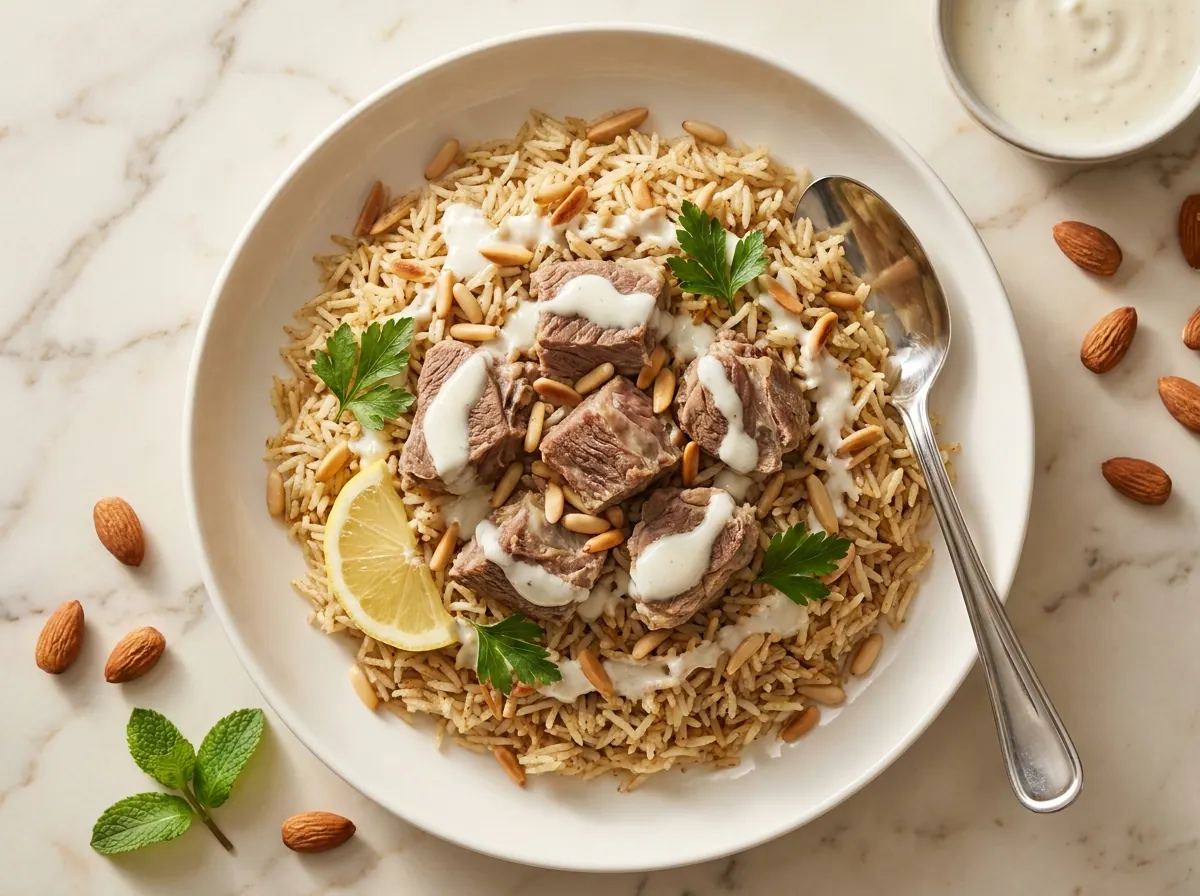
Traditional Jordanian mansaf in a version light on the ghee (2 tablespoons instead of half a cup). The same original jameed flavor, -200 calories/serving. 42 g of high-quality protein.
Mansaf is Jordan's national dish. Its name comes from 'nasf' = scatter, because the meat is scattered over the rice and bread.
Jameed (dried yogurt) gives the unique flavor not found in any other dish. Our version reduces the ghee by 75% and uses lamb free of fat. The original jameed stays — because it is the soul of the dish and has no substitute.
Preparation Steps
Soak the jameed and liquefy it
Soak the jameed in two cups of lukewarm water for two hours until it softens, then liquefy it in the blender until it becomes smooth like thick yogurt with no clumps.
Boil the meat
Boil the meat pieces with the pierced black limes, the cinnamon stick, and a pinch of salt in the water for about thirty-five minutes until tender, skimming off the floating foam, then take it out, keep it warm, and reserve the broth.
Cook the rice
In the meat broth, add the two tablespoons of ghee and the basmati rice, cover the pot completely, and cook it over low heat for about eighteen minutes until it absorbs the broth and its grains are cooked.
Cook the jameed sauce
In a separate pot, heat the liquefied jameed over very low heat with constant stirring in one direction, as continuous stirring keeps it from clumping and splitting. Let it simmer gently for ten minutes until it thickens a little.
Moisten the shrak bread
Lay the two sheets of shrak bread in the serving tray, and drizzle a little jameed sauce over them so they absorb it and soften, as this is the authentic Jordanian base for mansaf.
Assemble the mansaf and serve it
Spread the rice over the bread, arrange the meat on top, then douse everything with the remaining hot jameed sauce, and garnish with the toasted pine nuts and parsley. Serve it hot, and it is traditionally eaten by hand or with a spoon.
Blood Sugar Impact
The glycemic index (GI) measures how quickly a food raises blood sugar, while the glycemic load (GL) measures how much a full serving raises it. Together they give the complete picture.
Glycemic Index
GI
70High
Low0–55Medium56–69High70+
A low value (≤55) means a gradual rise in blood sugar — the most suitable range for diabetes and insulin resistance.
Glycemic Load
GL
46High
Low0–10Medium11–19High20+
Glycemic load reflects the impact of the full serving. To lower it: take half a serving, or pair the recipe with a source of protein and fiber.
Nutritional Information
Per ServingMakes 5 servings · one serving is about 470 g of raw ingredients
Calories728 kcal36%of Daily Value*
Protein36 g72%of Daily Value*
Carbohydrates66 g24%of Daily Value*
Fat36 g46%of Daily Value*
Fiber1 g4%of Daily Value*
Sodium729 mg32%of Daily Value*
* Percent Daily Values are based on a 2,000-calorie diet per FDA food-label reference values — your daily needs may be higher or lower. Values are derived from the recipe's ingredients via the USDA database.
Troubleshooting
The most common problems when preparing Light Mansaf with Jameed, and how to fix them:
The jameed (dried yogurt) clumped and did not dissolve
The jameed was placed in cold water, or was not mashed before dissolving. The correct method: soak the dried jameed in lukewarm water for at least two hours, then mash it with your hands until it becomes a smooth paste. Strain it through a fine sieve before adding it to the pot to get rid of any solid lumps.
The jameed sauce split and gathered into lumps
The jameed was boiled over high heat. Jameed is dried milk protein; it needs very low heat and constant stirring in the same direction (a full hour) to become creamy in texture without splitting. Jordanian grandmothers say 'mansaf loves one hand, patience, and one direction.'
The meat is tough and did not cook
The cooking time is insufficient, or the cut is unsuitable. Local lamb for mansaf needs two hours over low heat in the jameed to reach the required tenderness. According to USDA, fully cooked meat is safe at 71°C at the deepest point [1]. Choose the leg or shoulder, and avoid thin cuts free of fat.
The rice is gummy and stuck to the bottom
Mansaf is served on the thinner shrak bread, and the rice is cooked separately with the broth from the meat. If the rice is overcooked: lift it off the heat immediately, spread it in a wide tray to breathe and lose the steam, and it regains some of its fluffiness.
The taste is bland with no Jordanian soul
The jameed was not seasoned with cinnamon and cardamom. Authentic mansaf needs two cinnamon sticks and three cardamom pods added to the meat's boiling water from the start. These spices give the familiar depth and remove any strong smell in the meat.
The mansaf loses its sheen and cools quickly at serving
The serving plate is cold. The Hejazi-Jordanian tradition: warm the serving plate in the oven 10 minutes before serving on low heat. Place the shrak bread at the bottom, then the rice, then the meat, then the almonds and pine nuts, and pour the jameed broth just before serving.
Storage and Make-Ahead
Fridge (4°C)
The meat in jameed broth: three days in an airtight container. The rice separately: four days, keeping its texture better.
Freezer (-18°C)
The meat with the broth: two months in a freezer container. Thaw it overnight in the fridge. Soaked jameed: not suitable, its texture spoils. Prepare it fresh before serving.
Make ahead
Soaking the jameed: at least two hours before cooking. The meat marinade: the night before. Toasting the almonds and pine nuts: an hour before serving in a dry pan.
Reheating
In a pot over low heat with constant stirring, or in a medium oven covered. Do not leave it out of the fridge for more than two hours after reheating [2].
Tested Ingredient Substitutions
Original Ingredient
Tested Substitute
Ratio
Flavor Difference
Dried jameed
Thick Greek yogurt
two cups of yogurt ≈ 150 g jameed
Smoother texture, lighter flavor, shorter preparation time
Local lamb
Whole chicken
same weight
Lighter in fat, less bedouin flavor, more suitable for a diet
Shrak bread
Saudi tamees bread
same amount
A little thinner, a similar flavor, easier to find in Saudi Arabia
Almonds and pine nuts
Pistachios
same amount
Finer for entertaining, green in color, a sweeter flavor
Local ghee
Extra-virgin olive oil
same amount
Monounsaturated fats instead of saturated, a lighter flavor
How Much Does It Make? Scaling Guide
Number of servings
Lamb
Jameed
Rice
Bread
2 (individual × 2)
400 g
100 g
1 cup
1 shrak loaf
4 (base)
1 kg
200 g
2 cups
2 flatbreads
8 (large family)
2 kg
400 g
4 cups
4 flatbreads
12 (entertaining)
3 kg
600 g
6 cups
6 flatbreads
EEINA Nutrition Tip
Traditional Jordanian eating: it is eaten with the right hand — you form a ball of rice and meat with your fingers, dip it in the jameed, and eat it. The jameed causes dry mouth — drink a glass of buttermilk (rayeb) on the side.
Add This Recipe to Your Plan
The EEINA app saves your favorite recipes, calculates them from their real ingredients, and shows your daily numbers toward your goal. Try it free now.