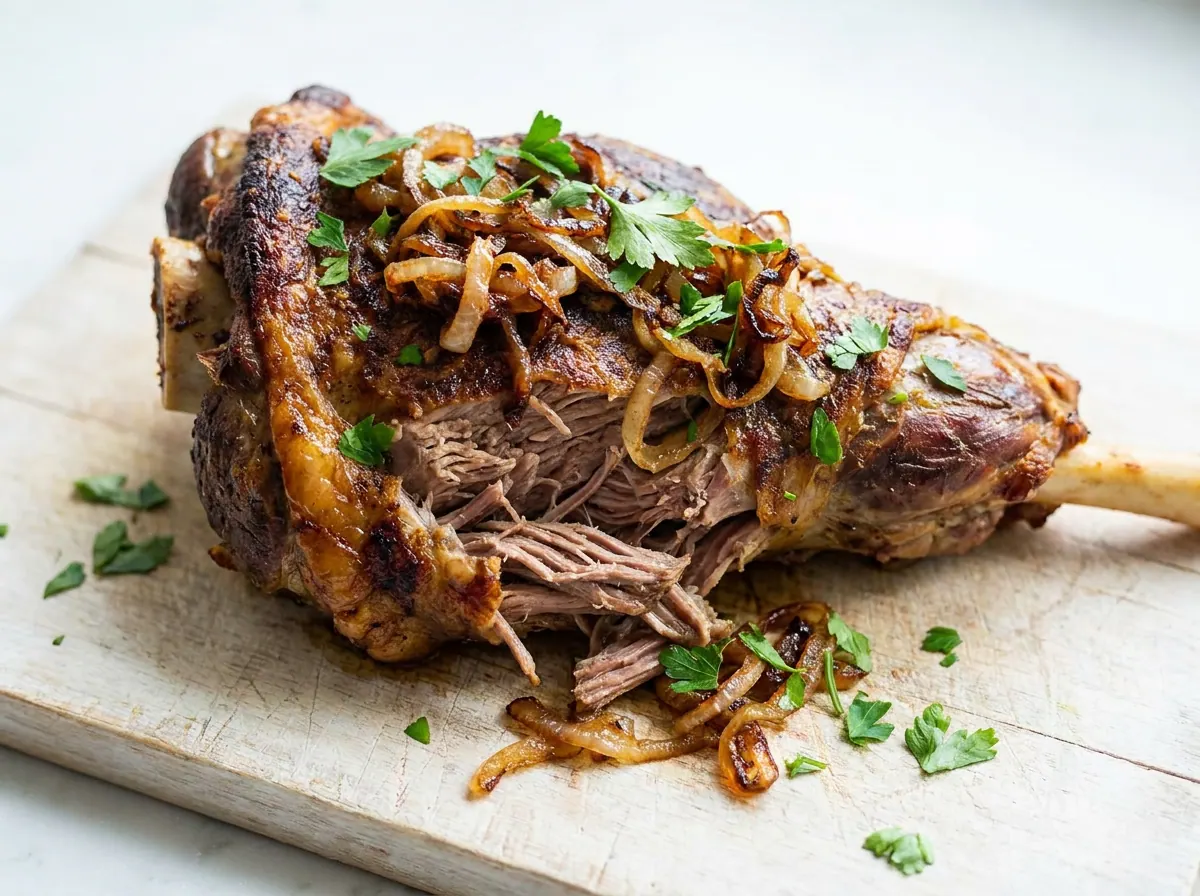
Bone-in lamb seasoned with warm Arabic spices and slow-roasted in a tandoor without water. A traditional Asiri-Yemeni dish, GI 58 controlled by rice portion, high in protein.
Haneeth is a documented heritage dish from the Asir region of Saudi Arabia and the Shabwa and Hadhramaut areas of Yemen. Its secret lies in the technique, not the ingredients: bone-in lamb is marinated with warm Arabic spices, then slow-roasted in a dry earthen tandoor without adding any water or broth — it cooks in its own steam while absorbing a gentle smoky flavor.
Nutritionally, haneeth itself is almost carbohydrate-free, making it a concentrated source of protein, iron, zinc, and vitamin B12. The glycemic value of the meal comes from the accompanying basmati rice portion, so controlling the rice quantity and adding a green salad keeps the glycemic load moderate.
Preparation Steps
Marinate the lamb
Rub the lamb pieces with the haneeth spice blend, crushed garlic, and salt. Massage thoroughly and refrigerate for 4 hours to overnight.
Heat the tandoor
Heat the tandoor or a very hot oven until the heat is intense. Prepare a metal rack to lift the meat off the base of the vessel, away from direct flame.
Arrange the lamb
Lay the lamb pieces on the rack over a bed of sliced onion, cardamom, cinnamon, cloves, bay leaves, and loomi (dried black lime) — without adding any water or broth.
Seal tightly
Seal the tandoor or vessel tightly with clay or dough in the traditional method, or with a tight lid and aluminum foil, to trap the lamb's own steam.
Slow-cook
Cook slowly over gentle ember heat for 3 to 5 hours until the lamb is completely tender, falling off the bone, and infused with a gentle smoky flavor.
Strain the juices
Lift the lamb carefully and strain any accumulated juices, skimming off floating fat if present, to keep the protein light.
Serve
Serve the haneeth hot with a small portion of basmati rice and a fresh green salad to lower the glycemic load of the meal.
Blood Sugar Impact
The glycemic index (GI) measures how quickly a food raises blood sugar, while the glycemic load (GL) measures how much a full serving raises it. Together they give the complete picture.
Glycemic Index
GI
37Low
Low0–55Medium56–69High70+
A low value (≤55) means a gradual rise in blood sugar — the most suitable range for diabetes and insulin resistance.
Glycemic Load
GL
3Low
Low0–10Medium11–19High20+
Glycemic load reflects the impact of the full serving. To lower it: take half a serving, or pair the recipe with a source of protein and fiber.
Nutritional Information
Per ServingMakes 6 servings · one serving is about 280 g of raw ingredients
Calories363 kcal18%of Daily Value*
Protein30 g60%of Daily Value*
Carbohydrates10 g4%of Daily Value*
Fat23 g29%of Daily Value*
Fiber1 g4%of Daily Value*
Sodium871 mg38%of Daily Value*
Potassium589 mg13%of Daily Value*
Phosphorus300 mg24%of Daily Value*
* Percent Daily Values are based on a 2,000-calorie diet per FDA food-label reference values — your daily needs may be higher or lower. Values are derived from the recipe's ingredients via the USDA database.
Troubleshooting
The most common problems when preparing Haneeth (Slow-Roasted Lamb), and how to fix them:
The meat came out dry and firm, not falling off the bone
The heat was too high or the cooking time too short. Haneeth relies on gentle, prolonged heat to slowly dissolve connective tissue. Lower the heat to gentle embers and extend cooking to four or five hours. Bone-in cuts (shoulder or neck) suit it better than boneless — the collagen around the bone keeps the meat moist.
Water collected at the base and the dish turned braised rather than roasted
Water or broth was added, or the meat was touching the base directly. Haneeth is cooked completely dry in its own steam — add no liquid at all. Lift the meat on a metal rack to separate it from the base, so steam surrounds it without the meat sitting in liquid. Any collected liquid is strained at serving.
The smoky flavor is faint and the dish lacks depth
The seal was not tight and steam escaped, or the bed of onion and whole spices under the meat was missing. Seal tightly with a lid and aluminum foil to trap all steam, and arrange the onion, cardamom, cinnamon, cloves, bay leaves, and loomi (dried black lime) directly under the meat so their aromas rise with it during cooking.
A slight bitterness in the meat
The loomi (dried black lime) were pierced too deeply or too many were used — the peel releases bitterness during long cooking. Use only two lightly pierced pieces per this quantity, and remove them before serving if cooking has exceeded four hours.
The dish is too fatty
Rendered fat accumulated and was not removed. After lifting the meat, let the juices settle for a few minutes then skim the floating fat layer with a spoon. Choosing leaner cuts and trimming visible fat before marinating reduces richness without sacrificing tenderness.
The accompanying rice pushed the meal outside my plan
The rice portion was too large. Haneeth itself is low in carbohydrates — nearly all the glycemic load comes from the rice. Reduce the rice to half a cup cooked and fill the rest of the plate with green salad. This lowers the glycemic load while the protein keeps you full.
Storage and Make-Ahead
Refrigerator (4°C)
Cooked lamb: three to four days in a sealed container per USDA recommendation for cooked meat leftovers [1]. Raw marinated lamb: keeps in the refrigerator one to two days before cooking.
Freezer (−18°C)
Cooked lamb freezes for up to two to three months in a sealed container. Thaw in the refrigerator, not on the counter, and heat through to the center before serving.
Advance preparation
Marinate: marinate the lamb the night before for deeper spice penetration. Accompanying rice: cook fresh on serving day. Reheating: wrap the lamb with a splash of its juices in a gentle oven so it does not dry out.
Food safety
Lamb is safe when its internal temperature reaches at least 71°C [1]. Do not leave cooked meat unrefrigerated for more than two hours — long slow cooking does not replace rapid cooling of leftovers.
Tested Ingredient Substitutions
Original Ingredient
Tested Substitute
Ratio
Flavor Difference
Lamb shoulder or neck
Lamb shanks (bone-in)
same weight
More tender and collagen-rich — needs slightly longer cooking time.
Earthen tandoor
Home oven on low heat with a rack and tight lid
same method
Lighter smoky flavor; result is very close with a tight seal.
White basmati rice
Brown basmati rice
same amount
Higher fiber and lower glycemic load; firmer texture.
Loomi (dried black lime)
Fresh lemon zest
zest of half a lemon
Brighter acidity and less bitterness — loses the distinctive dried depth.
Ready-made haneeth spice blend
Home blend (cumin, coriander, black pepper, turmeric)
same amount
Cleaner flavor and control over salt and additives — requires fresh grinding.
How Much Does It Make? Scaling Guide
Number of servings
Bone-in lamb
Onion
Haneeth spice blend
Black lime
3 (small meal)
600 g
Piece
1 tbsp
Piece
6 (base)
1.2 kg
2
2 tbsp
2
12 (large family)
2.4 kg
4
4 tbsp
4
20 (entertaining)
4 kg
7
7 tbsp
6
EEINA Nutrition Tip
Haneeth is pure protein — the rice is what determines the meal's impact on blood sugar. The haneeth itself is low in carbohydrates and highly satisfying. If you keep the rice portion to half a cup and add a green salad, this becomes a balanced dish that suits diabetics within a moderate plan.
Add This Recipe to Your Plan
The EEINA app saves your favorite recipes, calculates them from their real ingredients, and shows your daily numbers toward your goal. Try it free now.
A heritage dish from the Asir region of Saudi Arabia and the Shabwa and Hadhramaut areas of Yemen, traditionally roasted in a dry earthen tandoor.
What is the difference between haneeth and Mandi (Yemeni-Saudi smoked meat and rice)?
Both are cooked in a tandoor, but haneeth is roasted by ember heat without direct smoke, while Mandi (Yemeni-Saudi smoked meat and rice) acquires its flavor from smoke during cooking. Both methods are dry — no added water.
Is it suitable for diabetics?
Yes, within a moderate plan. Haneeth itself is low in carbohydrates, so control the small rice portion and add a green salad — the glycemic load stays moderate (≈16).
Can it be made in a home oven?
Yes. Lift the lamb on a rack over a bed of onion and spices, seal tightly with a lid and aluminum foil, and cook on low heat for several hours. The result is very close, with a slightly lighter smoky flavor.
Sources: USDA · University of Sydney · Gulf GSO · Our methodology · Updated on