A wheat dough ferments a full night, gaining a pleasant sourness and lightness, and is baked into discs on the griddle in the morning. It is the foundation of more than one bread in Jizani cuisine, as its people's recipes document.
Preparation Steps
Knead the 'khamir' the night before
In a bowl mix the two flours, the small amount of yeast, the salt, and the fenugreek, then add the warm milk and knead a loose, semi-liquid dough like a thick pancake batter. Cover it and leave it to ferment a full night at room temperature. This long, sour fermentation is the 'khamir' that gives the bread its name, and it is the foundation of Jizan cuisine as its households pass it down.
Activate the dough in the morning
In the morning you will find the dough has risen and its bubbles breathe with a pleasant sour smell like that of old country dough. Fold it once, quietly, gathering it without expelling all its air.
Bake discs on the griddle
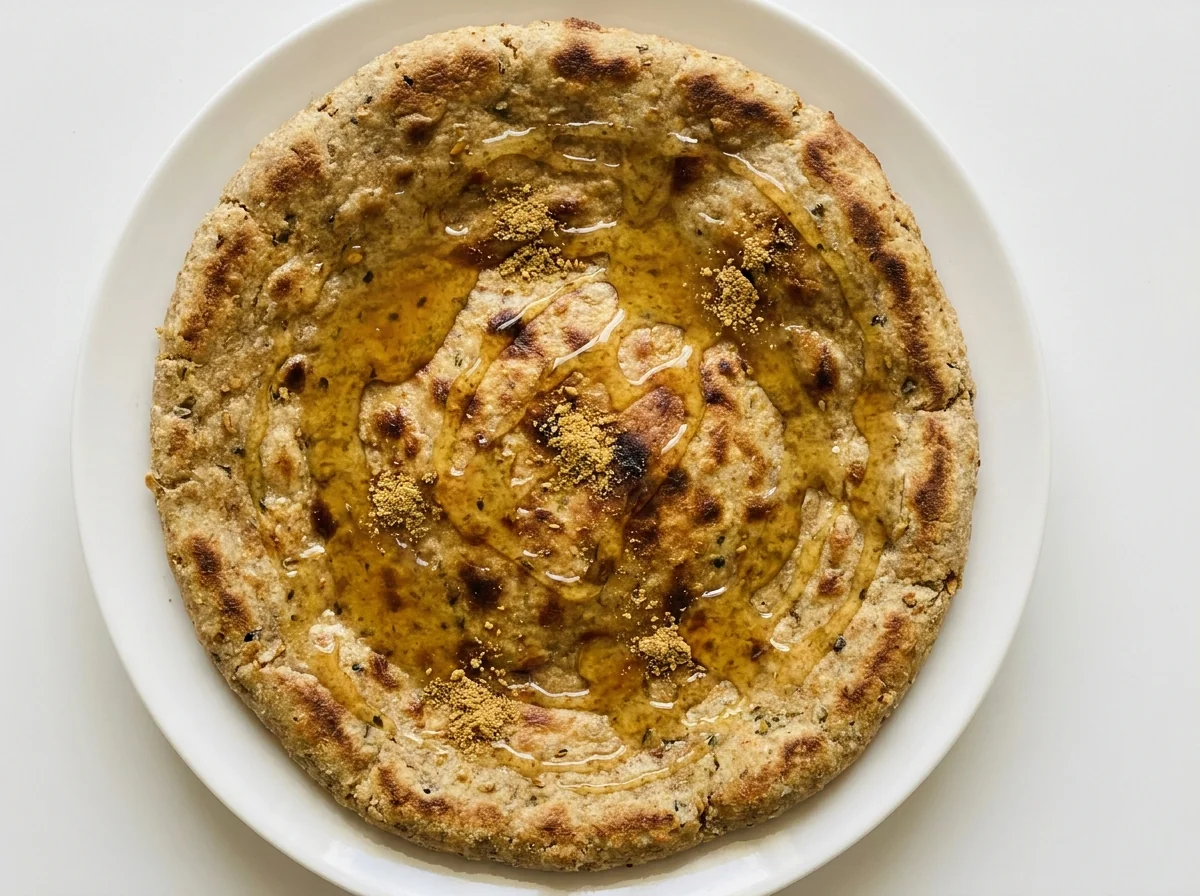
Heat a saj griddle or a thick skillet over medium heat with a smear of ghee, pour a ladleful of batter and spread it into a disc with the back of the ladle. Bake it for three minutes until bubbles appear on its face and its edges dry, then flip it for two minutes. It comes out spongy and soft with a beloved light sourness.
Repeat and cover
Bake the rest of the batter into discs and stack them under a cotton towel that keeps them soft and warm with steam.
Serve it southern-style
It is eaten warm drizzled with honey and ghee, or alongside yogurt and cheese, the breakfast of Jizan households that begins its preparation the night before.
Blood Sugar Impact
The glycemic index (GI) measures how quickly a food raises blood sugar, while the glycemic load (GL) measures how much a full serving raises it. Together they give the complete picture.
Glycemic Index
GI
60Medium
Low0–55Medium56–69High70+
A low value (≤55) means a gradual rise in blood sugar — the most suitable range for diabetes and insulin resistance.
Glycemic Load
GL
28High
Low0–10Medium11–19High20+
Glycemic load reflects the impact of the full serving. To lower it: take half a serving, or pair the recipe with a source of protein and fiber.
Nutritional Information
Per ServingMakes 6 servings · one serving is about 120 g of raw ingredients
Calories287 kcal14%of Daily Value*
Protein10 g20%of Daily Value*
Carbohydrates53 g19%of Daily Value*
Fat4 g5%of Daily Value*
Fiber6 g21%of Daily Value*
Sodium261 mg11%of Daily Value*
* Percent Daily Values are based on a 2,000-calorie diet per FDA food-label reference values — your daily needs may be higher or lower. Values are derived from the recipe's ingredients via the USDA database.
Troubleshooting
The most common problems when preparing Jizani Khamir Bread, and how to fix them:
The dough did not bubble in the morning
A cold kitchen or dead yeast. In winter we put it in an off oven with its light on, and we test the yeast beforehand in water with sugar.
The bread came out more sour than liked
Fermentation that exceeded its night in a hot room. In summer six to eight hours suffice, or a night in the refrigerator.
The disc stuck to the griddle
A lukewarm griddle or a missing smear of ghee. Heat it well and wipe it between every two discs.
It came out rubbery and heavy
We folded the dough roughly in the morning and expelled its air. One quiet fold gathers it and keeps its bubbles alive.
Storage and Make-Ahead
Warm
Under the towel for the hours of its morning.
At room temperature
A day in an airtight bag. Revived on the griddle for half a minute.
In the freezer
Baked discs for a month. Reheated from frozen on a hot griddle.
Tested Ingredient Substitutions
Original Ingredient
Tested Substitute
Ratio
Flavor Difference
The accompanying corn flour
All white flour with the whole wheat
1:1
Corn is a more venerable Jizani touch
Milk in the dough
Warm water
1:1
A lighter sourness and a close softness
Honey and ghee for serving
Labneh and white cheese
~
The savory face for its breakfast
The griddle
Oven at 220 with a preheated tray
~
Thicker discs with a slightly different character
How Much Does It Make? Scaling Guide
Ingredient
~12 discs
~6 discs
~24 discs
Whole-wheat flour
300 g
150 g
600 g
Milk
280 ml
140 ml
560 ml
Yeast
4 g
2 g
8 g
EEINA Nutrition Tip
The full night is the recipe. Little yeast and a long time make the sourness and flavor that a lot of yeast in an hour cannot. And if the dough sours more than your taste likes, reduce the fermentation hours to six, not the yeast.
Add This Recipe to Your Plan
The EEINA app saves your favorite recipes, calculates them from their real ingredients, and shows your daily numbers toward your goal. Try it free now.
Both are from the family of fermented doughs, but lahooh is thinner, poured as a liquid and baked on one side, perforated; while khamir is thicker, flipped on both sides into a spongy disc. Neighbors in the south, each with its own form.
Why is it described as gentler on digestion than rushed bread?
Long fermentation breaks down part of the wheat's sugars and proteins before eating, which is what makes fermented country doughs gentler on many stomachs than same-hour bread.
Do I start the dough in the morning for tomorrow's breakfast?
That is actually its correct rhythm: a few minutes of kneading in the evening and fresh discs at dawn, a heritage breakfast with the effort spread out.
What is it served with for a balanced breakfast?
Two discs with honey and ghee for the sweet face, or with yogurt and cheese for the savory, and with a boiled egg the morning's protein is complete.