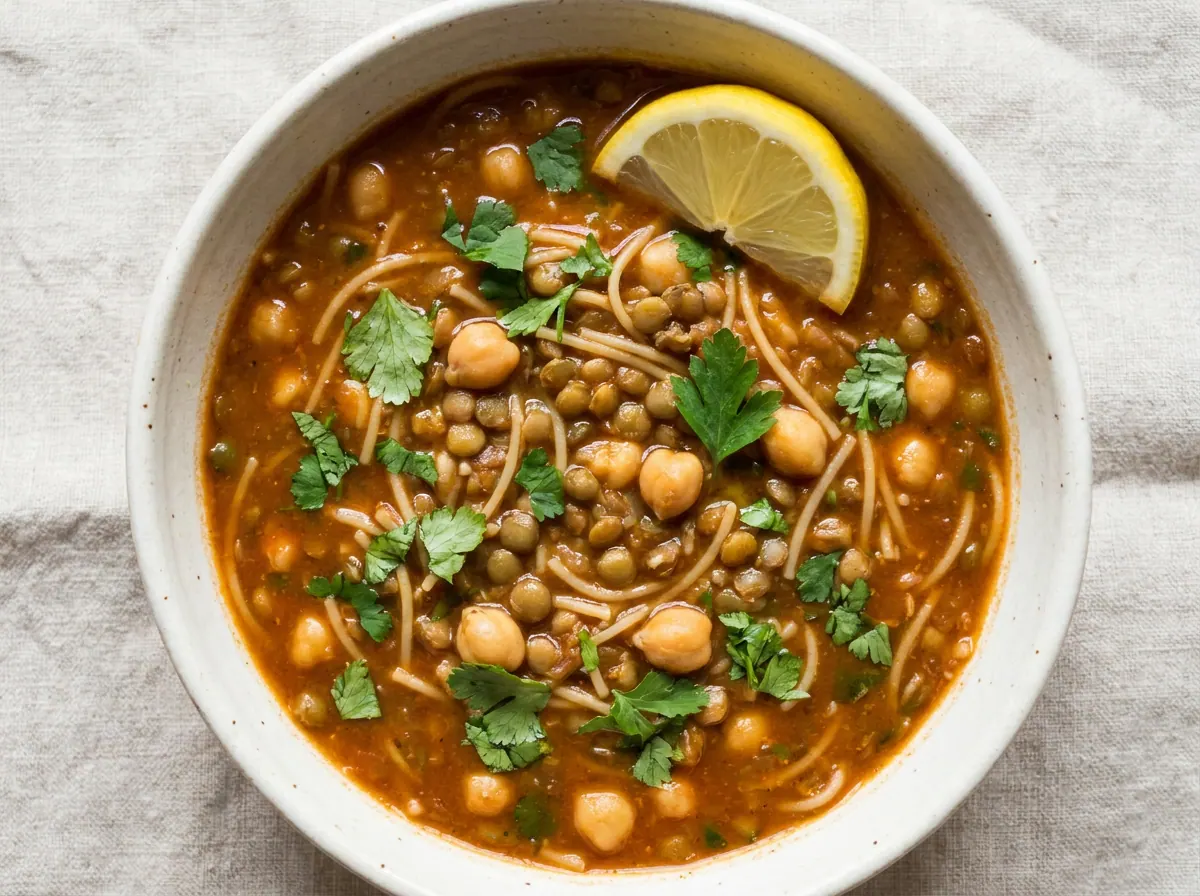
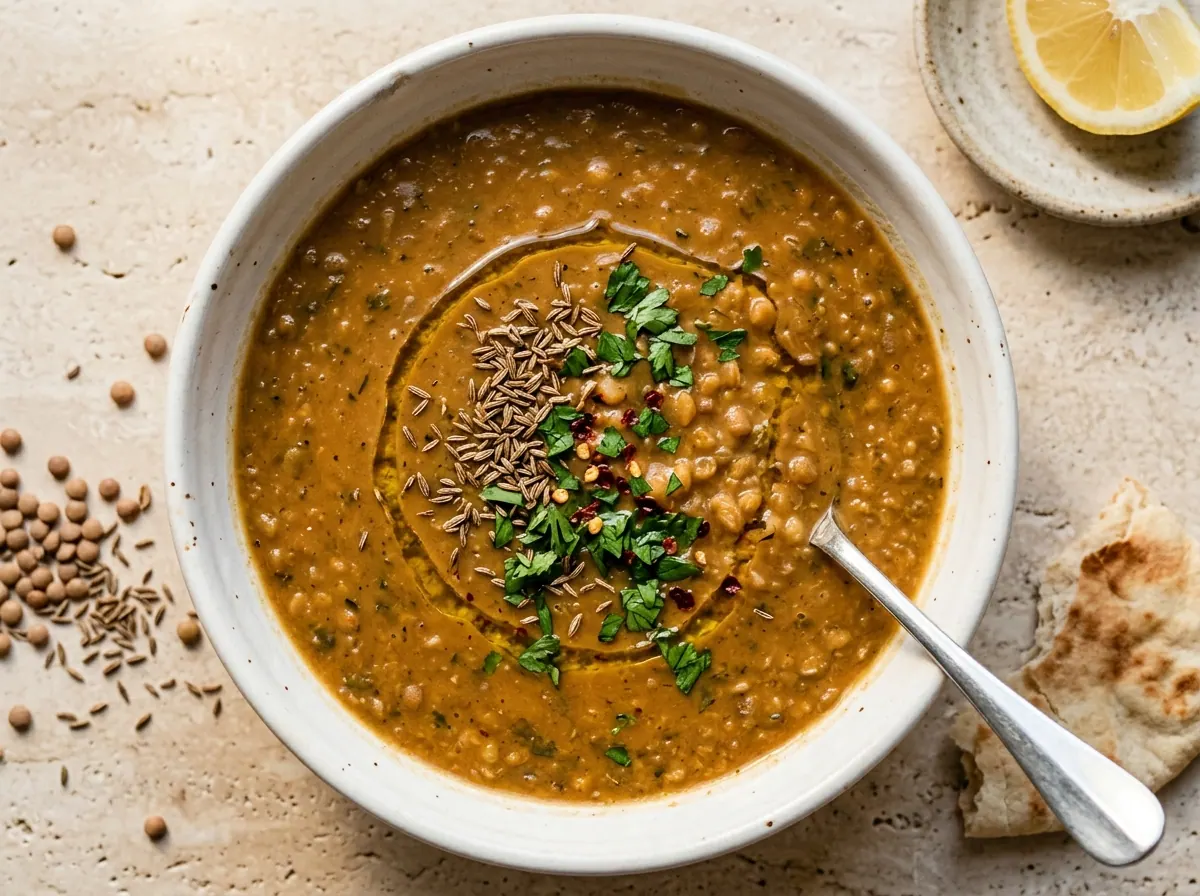
A light Moroccan lentil and vegetable Harira — a warm, nourishing soup rich in lentils, chickpeas, and vegetables. GI 29, high in fibre and plant protein.
Harira is an ancient Moroccan soup, firmly linked in the heart to the Iftar table in Ramadan, where it is served hot with lemon wedges and dates in the common practice of Moroccan cooking. Its foundation is legumes — lentils and chickpeas — together with fresh tomatoes and vibrant green herbs.
This is a light version: the vermicelli quantity is very small (just three tablespoons), and the fat is minimal (one tablespoon of olive oil spread over six servings). The result is a filling soup high in fibre and plant protein that remains low in glycemic index and suited to a daily table, not only a Ramadan one.
Preparation Steps
Sweat the vegetables
Heat the olive oil in a pot and sweat the onion and celery over medium heat until softened (about 5 minutes).
Add the spices
Add the spices (turmeric, ginger, cinnamon, and black pepper) and stir for one minute until their fragrance blooms.
Reduce the tomatoes
Add the grated tomatoes and let them reduce for 5 minutes until slightly thickened.
Cook the lentils
Add the lentils and the water or vegetable stock, raise the heat to the boil then reduce it and simmer gently for about 25 minutes until the lentils are cooked.
Add the chickpeas and herbs
Add the cooked chickpeas and half the coriander and parsley, and leave for a further 10 minutes.
Add the vermicelli
Add the broken vermicelli (the small quantity) and leave for 5 to 7 minutes until it is cooked through.
Finish
Turn off the heat and add the remaining fresh coriander and parsley, then adjust the salt to taste.
Serve
Serve hot. From the common practice of Moroccan cooking, Harira is traditionally served with lemon wedges and dates at the Iftar table during Ramadan.
Blood Sugar Impact
The glycemic index (GI) measures how quickly a food raises blood sugar, while the glycemic load (GL) measures how much a full serving raises it. Together they give the complete picture.
Glycemic Index
GI
29Low
Low0–55Medium56–69High70+
A low value (≤55) means a gradual rise in blood sugar — the most suitable range for diabetes and insulin resistance.
Glycemic Load
GL
8Low
Low0–10Medium11–19High20+
Glycemic load reflects the impact of the full serving. To lower it: take half a serving, or pair the recipe with a source of protein and fiber.
Nutritional Information
Per ServingMakes 6 servings · one serving is about 545 g of raw ingredients
Calories226 kcal11%of Daily Value*
Protein12 g24%of Daily Value*
Carbohydrates37 g13%of Daily Value*
Fat4 g5%of Daily Value*
Fiber8 g29%of Daily Value*
Sodium90 mg4%of Daily Value*
* Percent Daily Values are based on a 2,000-calorie diet per FDA food-label reference values — your daily needs may be higher or lower. Values are derived from the recipe's ingredients via the USDA database.
Troubleshooting
The most common problems when preparing Harira (Moroccan Lentil and Vegetable Soup), and how to fix them:
The Harira is too thick and doughy
Too much vermicelli, or the lentils absorbed all the water. This is a light version — it contains only three tablespoons of vermicelli, no more. To fix immediately: add one or two cups of hot water or stock and stir over low heat until the soupy consistency returns. Remember that Harira thickens further as it cools a little.
The lentils stayed hard and did not cook through
The tomatoes or salt were added too early — the acidity of tomatoes and the saltiness of stock slow the softening of legumes. Add the lentils with the water first and let them simmer until tender before adjusting the salt; delay the salt until the end of cooking. If they are still firm: extend the gentle simmer for a further ten minutes with a little hot water.
Flat flavour with no depth
The spices were not toasted, or all the fresh herbs were added early and lost their flavour in the boiling. Toast the turmeric, ginger, cinnamon, and black pepper in the oil for one minute before the tomatoes until they bloom, and reserve half the coriander and parsley to add after the heat is off — fresh herbs give their depth uncooked.
The Harira is pale, not a warm red
Too little tomato, or the tomatoes were not reduced properly. Let the grated tomatoes reduce for five minutes over medium heat until thickened and concentrated in colour before adding the liquid. Turmeric also contributes the warm golden colour, so do not skip it.
A layer of foam on the surface during the boil
Natural foam from the starchy protein of the legumes. Skim it off with a spoon in the first few minutes of boiling until the soup clears — this improves the texture and appearance without affecting the flavour. Rinsing the lentils well before cooking reduces it.
Storage and Make-Ahead
Refrigerator (4°C)
Cooked Harira: three to four days in a tightly sealed container. It thickens on chilling, so add a little water when reheating. Let it cool before refrigerating, and do not leave it out for more than two hours.
Freezer (-18°C)
Freezes well for up to three months; it is best frozen before adding the vermicelli as it breaks apart after thawing. Add the vermicelli when reheating.
Advance preparation
Prepare the base: cook the soup with lentils, chickpeas, and tomatoes in advance and refrigerate. At serving: reheat, add the vermicelli, and stir in the fresh herbs just minutes before serving so their fragrance and colour are preserved.
Reheating
Over low heat with stirring, adding hot water or stock to restore the soupy consistency. Make sure it comes to a full boil before serving. Avoid reheating more than once.
Tested Ingredient Substitutions
Original Ingredient
Tested Substitute
Ratio
Flavor Difference
Vermicelli (wheat)
Gluten-free rice vermicelli
Same quantity
Gluten-free; slightly softer texture
Brown lentils
Split red lentils
Same quantity
Cook faster and break down more, giving a smoother soup
Cooked chickpeas
Cooked white beans
Same quantity
Creamier texture; milder flavour
Celery
Small finely diced courgette
Same quantity
Milder flavour; suitable for those who avoid celery
Water
Vegetable stock
Same quantity
Greater depth of flavour; watch the salt level of the stock
How Much Does It Make? Scaling Guide
Number of servings
Lentils
chickpeas
Tomatoes
Water/broth
3 (half recipe)
0.5 cup
0.5 cup
2
1 liter
6 (base)
1 cup
1 cup
4
2 liters
12 (large family)
2 cups
2 cups
8
4 liters
18 (entertaining)
3 cups
3 cups
12
6 liters
EEINA Nutrition Tip
Legumes are the hero of this soup: the lentils and chickpeas together deliver soluble fibre and plant protein, slowing the absorption of sugar and prolonging fullness. Keeping the vermicelli minimal and the salt moderate makes Harira a suitable choice for both diabetics and heart health alike.
Add This Recipe to Your Plan
The EEINA app saves your favorite recipes, calculates them from their real ingredients, and shows your daily numbers toward your goal. Try it free now.
Yes, in this light version. The estimated glycemic index is low (35) and the fibre is high (9 g per serving), which supports a gradual rise in blood sugar. Keep the vermicelli minimal as the recipe states.
What is the difference between this version and traditional Harira?
Traditional Moroccan Harira often contains meat, flour (the tadwira thickener), and a larger quantity of vermicelli. This is a light vegetable version: no meat, minimal vermicelli, and less fat — making it lighter and higher in fibre.
How do I make it gluten-free?
Omit the vermicelli or replace it with gluten-free rice vermicelli (see the substitutions table). The remaining ingredients are naturally gluten-free.
Can I freeze it?
Yes, for up to three months. It is best frozen before adding the vermicelli as it breaks apart after thawing; add fresh vermicelli when reheating.
Sources: USDA · University of Sydney · Gulf GSO · Our methodology · Updated on