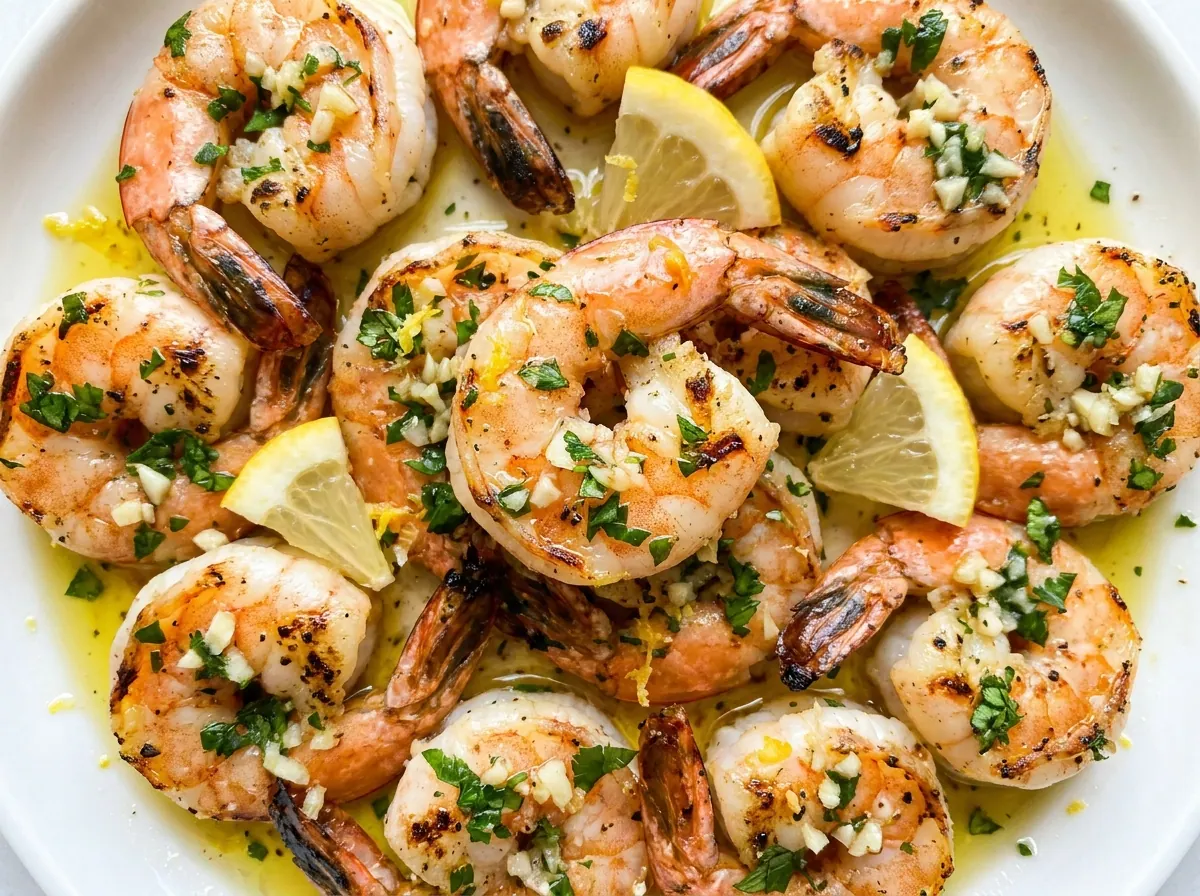
Grilled shrimp with garlic and lemon, Gulf style. A carbohydrate-free seafood protein, GI zero, rich in omega-3 and selenium, ready in twenty-five minutes.
Shrimp is one of the staple seafoods of Saudi coastal cooking, from Jeddah on the Red Sea coast to the Eastern Province on the Gulf. Grilling it with garlic, lemon, and olive oil is a common Gulf method that balances the simplicity of the ingredients with depth of flavor, and it is a recipe documented on well-known Arab cooking sites such as Sayidaty's Kitchen and Mawdoo3.
The secret of the dish is not in the marinade alone but in the short grilling time. Shrimp needs only a few minutes, so overcooking turns it from a juicy, tender bite into a tough, rubbery piece. Here a delicious taste meets a clean seafood protein free of carbohydrates.
Preparation Steps
Clean the shrimp
Peel the shrimp, leaving the tail on if you like, and remove the black vein from the back, then wash it and drain it well of water.
Prepare the marinade
Mix the chopped garlic, lemon juice, olive oil, paprika, cumin, salt, and black pepper in a bowl.
Marinate
Season the shrimp with the mixture and toss it until every piece is coated, then leave it to marinate in the fridge for 15 to 30 minutes. Do not exceed an hour so it does not break down from the acidity of the lemon.
Heat the grill
Heat the grill or a ridged pan over medium-high heat until it is very hot.
Grill
Grill the shrimp for two to three minutes per side only, until the color turns an opaque pink and the flesh is firm.
Check for doneness
The shrimp must reach a safe internal temperature of 63 degrees Celsius and become opaque, pearly, and firm. Do not overcook so it does not toughen.
Serve
Lift the shrimp off immediately, sprinkle it with the fresh cilantro and an extra squeeze of lemon, and serve it hot.
Blood Sugar Impact
The glycemic index (GI) measures how quickly a food raises blood sugar, while the glycemic load (GL) measures how much a full serving raises it. Together they give the complete picture.
Glycemic Index
GI
9Low
Low0–55Medium56–69High70+
A low value (≤55) means a gradual rise in blood sugar — the most suitable range for diabetes and insulin resistance.
Glycemic Load
GL
0Low
Low0–10Medium11–19High20+
Glycemic load reflects the impact of the full serving. To lower it: take half a serving, or pair the recipe with a source of protein and fiber.
Nutritional Information
Per ServingMakes 3 servings · one serving is about 195 g of raw ingredients
Calories235 kcal12%of Daily Value*
Protein34 g68%of Daily Value*
Carbohydrates3 g1%of Daily Value*
Fat10 g13%of Daily Value*
Fiber0 g0%of Daily Value*
Sodium329 mg14%of Daily Value*
Potassium484 mg10%of Daily Value*
Phosphorus366 mg29%of Daily Value*
* Percent Daily Values are based on a 2,000-calorie diet per FDA food-label reference values — your daily needs may be higher or lower. Values are derived from the recipe's ingredients via the USDA database.
Troubleshooting
The most common problems when preparing Garlic Grilled Shrimp, and how to fix them:
The shrimp came out tough and rubbery
This is the most common problem, and its cause is overcooking. Shrimp is a delicate flesh that cooks in only a few minutes, so every extra second over the heat tightens its tissues and forces out its juices. The rule: two to three minutes per side over high heat, then lift it off as soon as its color turns opaque pink and it curls into a C shape. If it curls tightly into an O shape it has dried out too much.
The shrimp broke down and turned mushy before grilling
You left it in the lemon marinade too long. The acidity of the lemon chemically 'cooks' the surface of the shrimp like ceviche, so if the marinating exceeds an hour its texture turns into a soft, crumbly paste. Stick to 15 to 30 minutes of marinating, and never exceed an hour.
The shrimp stuck to the grill and tore
The grill was not hot enough, or the shrimp was moved too early. Heat the surface until it is very hot before adding, and brush it with a little oil. Place the shrimp and leave it without moving until a seared surface forms, at which point it releases from the metal easily on its own.
The garlic burned and gave bitterness
The chopped garlic in the marinade burns quickly over high heat. Wipe the excess garlic off the surface of the shrimp before putting it on the grill, and let the rest soak into the flesh. Or add half the amount of garlic right after grilling, mixed with the cilantro, so it gives a fresh flavor without burning.
The shrimp is watery and will not brown
It was not drained well after washing, or it was thawed and had water in it. Dry the shrimp well with a paper towel before seasoning, since a wet surface generates steam that prevents browning and boils the shrimp instead of grilling it. Thawed shrimp needs more drying.
How do I know it is done without cutting it
The visual cue: the color turns from translucent gray to opaque pearly pink, and the body curls. The more precise safety cue: an internal temperature of 63 degrees Celsius with a food thermometer. When in doubt, cut one piece down the middle, as fully cooked flesh is opaque throughout, not translucent at the center.
Storage and Make-Ahead
Refrigerator (4°C)
Grilled shrimp: two days at most in an airtight container. Reheat it gently and quickly so it does not toughen further. Raw marinated shrimp: grill it the same day, and do not leave it in the acidic marinade for more than an hour.
Freezer (-18°C)
Raw unmarinated shrimp freezes for up to three months. Grilled shrimp loses its texture on thawing and turns tough, so it is best eaten fresh. Do not refreeze shrimp that has already been thawed.
Make ahead
Cleaning the shrimp: hours ahead, kept covered in the fridge on ice. The marinade: prepared ahead and kept in the fridge, but added to the shrimp only half an hour at most before grilling. The final grilling: right before serving, as shrimp is most delicious freshly hot.
Food safety
Shrimp is a fast-spoiling food. Do not leave it out of the fridge for more than two hours (or one hour in hot weather above 32 degrees), per the USDA danger-zone rule.
Tested Ingredient Substitutions
Original Ingredient
Tested Substitute
Ratio
Flavor Difference
Shrimp
Scallops or squid cut into rings
Same weight
A different texture, shorter grilling time for scallops, stays GI zero
Lemon juice
Lime juice or apple cider vinegar
Same amount
A sharper acidity with lime, smoother with the vinegar
Sweet paprika
Smoked paprika
Same amount
A smoky depth resembling the taste of charcoal without a charcoal grill
Fresh cilantro
Chopped parsley
Same amount
A smoother, milder flavor for those who do not like cilantro
Olive oil
A little melted butter
Half the amount
A richer flavor, but it raises the saturated fat slightly
How Much Does It Make? Scaling Guide
Number of servings
Shrimp
Garlic
Lemon juice
Olive oil
2 (light)
330 g
3 cloves
2 tbsp
1.5 tbsp
3 (base)
500 g
4–5 cloves
3 tbsp
2 tbsp
6 (entertaining)
1 kg
9–10 cloves
6 tbsp
4 tbsp
10 (banquet)
1.5 kg
14 cloves
9 tbsp
6 tbsp
EEINA Nutrition Tip
Shrimp is naturally rich in cholesterol (about 160 to 180 mg per serving), but it is low in saturated fat. Recent studies indicate a limited effect on blood cholesterol in most healthy people, and moderation remains the advice for those with high cholesterol. In return, shrimp offers plenty of omega-3, selenium, and vitamin B12.
Add This Recipe to Your Plan
The EEINA app saves your favorite recipes, calculates them from their real ingredients, and shows your daily numbers toward your goal. Try it free now.
Yes, ideal. Shrimp is completely free of carbohydrates, with a GI and GL of zero, so it does not raise blood sugar. And it is rich in protein, which supports fullness.
What about the cholesterol in shrimp?
Shrimp is rich in cholesterol but low in saturated fat, and its effect on blood cholesterol is limited in most healthy people. Moderation is advised for those with high cholesterol.
How do I know the shrimp is done?
Its color turns opaque pink and it curls into a C shape, and its internal temperature reaches 63 degrees Celsius. Overcooking makes it tough.
Can I use frozen shrimp?
Yes, thaw it slowly in the fridge then dry it well with a paper towel before seasoning so it browns instead of boiling.