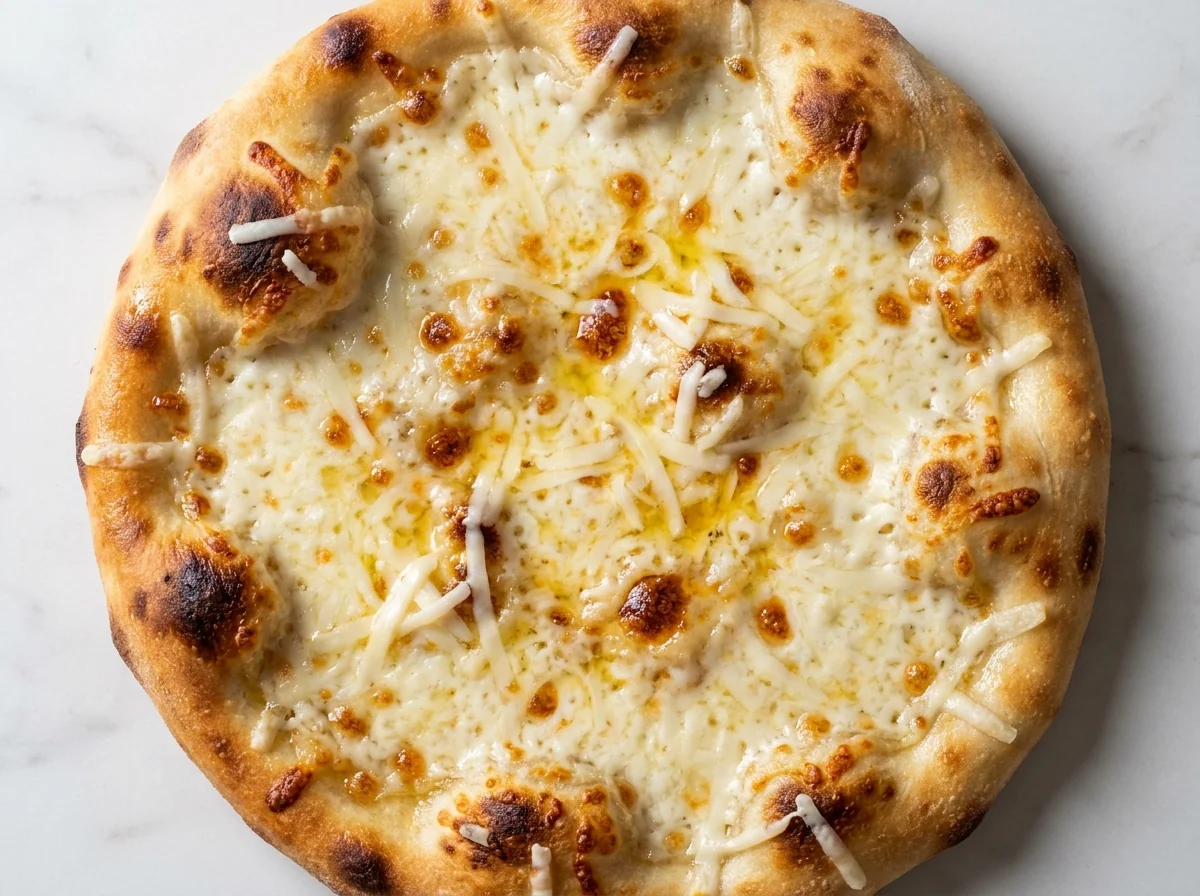
Manakish are the companion of our warm mornings; we take them hot out of the oven and fold them with a cup of tea or mint, and cheese manakish is among the most beloved by children.
Preparation Steps
Activate the dough
Dissolve the yeast and sugar in the warm water and leave it for five minutes until it foams; the appearance of foam shows that the yeast is active and good.
Knead
Add the flour, salt, and oil and knead until a soft, smooth, non-sticky dough forms. The dough is ready when it pulls away from the bowl's wall and springs back when pressed.
Proof
Cover the dough and leave it in a warm place for about an hour until it doubles in size. Doubling is the sign of a complete first proof.
Prepare the cheese
Mix the akkawi and mozzarella. If the akkawi is very salty, soak it in cold water for ten minutes and drain it, as this balances the saltiness before baking.
Roll and shape
Divide the dough into balls and roll them into discs half a centimeter thick, and spread the cheese over the top leaving a small border. Press the surface with your fingertips so the cheese holds.
Bake
Bake at 230 degrees Celsius for 10 to 12 minutes until the cheese melts and turns golden and the edges are firm. They are ready when the cheese is fully melted and the edges are browned.
Blood Sugar Impact
The glycemic index (GI) measures how quickly a food raises blood sugar, while the glycemic load (GL) measures how much a full serving raises it. Together they give the complete picture.
Glycemic Index
GI
72High
Low0–55Medium56–69High70+
A low value (≤55) means a gradual rise in blood sugar — the most suitable range for diabetes and insulin resistance.
Glycemic Load
GL
56High
Low0–10Medium11–19High20+
Glycemic load reflects the impact of the full serving. To lower it: take half a serving, or pair the recipe with a source of protein and fiber.
Nutritional Information
Per ServingMakes 3 servings · one serving is about 255 g of raw ingredients
Calories707 kcal35%of Daily Value*
Protein29 g58%of Daily Value*
Carbohydrates81 g29%of Daily Value*
Fat29 g37%of Daily Value*
Fiber3 g11%of Daily Value*
Sodium982 mg43%of Daily Value*
Potassium276 mg6%of Daily Value*
Phosphorus430 mg34%of Daily Value*
* Percent Daily Values are based on a 2,000-calorie diet per FDA food-label reference values — your daily needs may be higher or lower. Values are derived from the recipe's ingredients via the USDA database.
Troubleshooting
The most common problems when preparing Cheese Manakish, and how to fix them:
The dough does not rise
Make sure the water is warm, not hot, for very hot water kills the yeast and prevents rising.
The cheese dries out and burns
Lower the rack a little or shorten the baking time, as long direct heat dries the cheese before the dough is done.
The bottom is undercooked
Bake on a lower rack or on a preheated tray so the heat reaches the bottom quickly.
The taste is too salty
Soak the akkawi in water before use and reduce the salt added to the dough.
Storage and Make-Ahead
Refrigerator
Keep the baked manakish in a sealed bag for up to three days, and reheat them in the oven or a skillet to restore the texture.
Freezer
Freeze the baked manakish after they cool completely in bags, and reheat them from frozen straight in the oven.
Tested Ingredient Substitutions
Original Ingredient
Tested Substitute
Ratio
Flavor Difference
Akkawi cheese
Mozzarella cheese only
1 to 1
A calmer flavor, higher melt, and less saltiness.
White flour
Partly whole wheat flour
Up to half the amount
Raises the fiber with a slightly denser texture.
Instant yeast
Active dry yeast
1 to 1
Dissolve it first in the warm water before adding.
Mozzarella cheese
Desalted Nabulsi cheese
1 to 1
An available Levantine alternative with a distinctive taste.
How Much Does It Make? Scaling Guide
Ingredient
2 servings
4 servings (base)
8 servings
White flour
150 g
300 g
600 g
Warm water
90 ml
180 ml
360 ml
Instant yeast
3 g
5 g
10 g
Grated akkawi
75 g
150 g
300 g
Grated mozzarella
50 g
100 g
200 g
EEINA Nutrition Tip
Baking manakish in the home oven lets you control the amount of oil and cheese compared with the store-bought ones. Cheese is a source of protein and calcium, but it is salty by nature, so the sodium in manakish is medium, and it helps to balance it by soaking the salty cheese before baking.
Add This Recipe to Your Plan
The EEINA app saves your favorite recipes, calculates them from their real ingredients, and shows your daily numbers toward your goal. Try it free now.