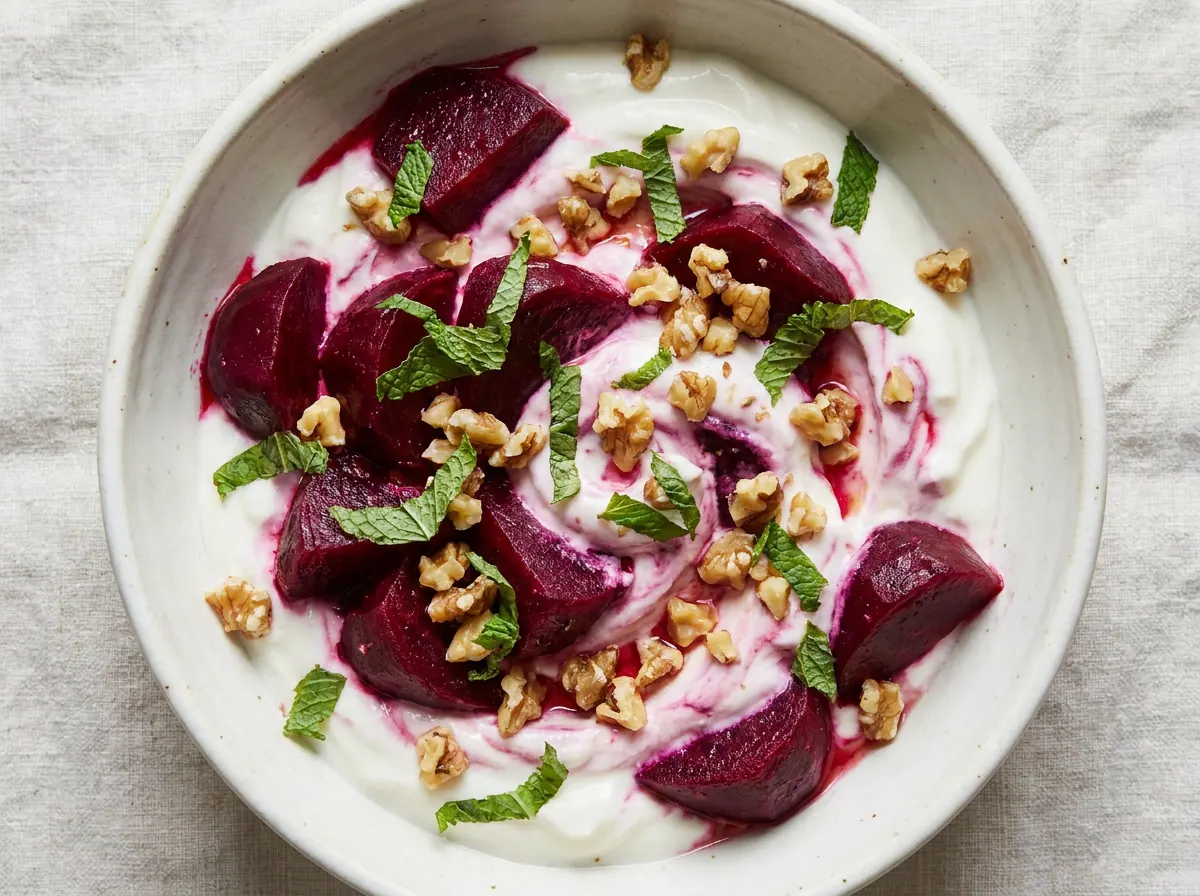
A cold Levantine salad of boiled beet in a garlic-mint yogurt base with toasted walnuts and olive oil. GI 49, rich in dietary nitrates and plant-based omega-3.
Beet-yogurt salad is a simple Levantine dish that combines the sweetness of boiled beet with the tang of yogurt and the kick of garlic, on the classic Levantine sauce base: yogurt, garlic, lemon, and salt. The pink color the yogurt takes on when the beet is folded in is part of the dish's beauty, not a flaw.
The nutritional value behind its simplicity is striking: beet is one of the richest sources of dietary nitrates, yogurt adds calcium and protein at low calories, and walnuts are the one nut rich in plant-based alpha-linolenic acid. These fats, along with fiber, slow carbohydrate absorption and keep the glycemic load low.
Preparation Steps
Prepare the beet
Boil the beet in its skin in water that covers it until tender (40 to 50 minutes for a medium beet), or use ready-cooked beet. Leave to cool then peel and cut into small cubes.
Whisk the yogurt
Whisk the low-fat yogurt in a bowl until smooth and uniform.
Season the sauce
Add the crushed garlic, lemon juice, and salt to the yogurt and mix well — this is the classic Levantine sauce base.
Fold in the beet
Gently fold the beet cubes into the yogurt mixture until coated. The color will graduate to a light pink — this is natural.
Toast the walnuts
Toast the walnuts in a dry pan over low heat for 2 minutes until fragrant, then crush into rough pieces.
Garnish and serve
Spread the salad on a serving plate, scatter the toasted walnuts and chopped mint on top, and finish with a drizzle of extra-virgin olive oil just before serving. Serve cold as a starter or snack.
Blood Sugar Impact
The glycemic index (GI) measures how quickly a food raises blood sugar, while the glycemic load (GL) measures how much a full serving raises it. Together they give the complete picture.
Glycemic Index
GI
49Low
Low0–55Medium56–69High70+
A low value (≤55) means a gradual rise in blood sugar — the most suitable range for diabetes and insulin resistance.
Glycemic Load
GL
6Low
Low0–10Medium11–19High20+
Glycemic load reflects the impact of the full serving. To lower it: take half a serving, or pair the recipe with a source of protein and fiber.
Nutritional Information
Per ServingMakes 4 servings · one serving is about 200 g of raw ingredients
Calories202 kcal10%of Daily Value*
Protein7 g14%of Daily Value*
Carbohydrates16 g6%of Daily Value*
Fat14 g18%of Daily Value*
Fiber4 g14%of Daily Value*
Sodium260 mg11%of Daily Value*
* Percent Daily Values are based on a 2,000-calorie diet per FDA food-label reference values — your daily needs may be higher or lower. Values are derived from the recipe's ingredients via the USDA database.
Troubleshooting
The most common problems when preparing Levantine Beet, Yogurt, and Walnut Salad, and how to fix them:
Sauce turned watery after folding
Boiled beet retains surface moisture, or the yogurt is thin. For an immediate fix: drain the beet cubes on kitchen paper for 2 minutes before folding. Next time, use slightly strained yogurt (light Greek) — it is thicker and holds together with the beet without becoming runny.
Color became very dark and stained the whole dish
The beet was folded in too early and left too long with the yogurt, releasing its full pigment. Pink is desirable; dark comes from too long. Fold the beet into the yogurt only 10 minutes before serving, or layer the yogurt at the bottom and the beet on top and mix at the table.
Garlic flavor is raw and too sharp
Too much raw garlic or crushed coarsely, leaving pungent pieces. Start with one clove, crushed very finely with a pinch of salt (the salt breaks down its sharpness), and taste before adding the second. For a gentler flavor, soak the crushed garlic in lemon juice for 5 minutes before mixing into the yogurt.
Walnuts lost their crunch and turned soft
The walnuts were added too early and absorbed moisture from the yogurt. Scatter the walnuts over the dish just at serving time, not before. If you prepared the dish in advance for guests, keep the toasted walnuts in a separate dry container and add at the last moment.
Flavor tastes flat and unbalanced
Not enough acidity, or the salt is too light. Add half a teaspoon of extra lemon juice and a pinch of salt — yogurt needs acid and salt to bring it out. Fresh mint also lifts the flavor, so do not replace it with dried mint, which loses its aroma. Taste after each addition and do not add everything at once.
Beet remained firm and not tender
Not boiled long enough. A medium beet needs 40 to 50 minutes in water that covers it until a knife slides in easily. To speed it up, cut it in half after 20 minutes of boiling, or use ready-cooked packaged beet, which is a reliable option that saves all the time.
Storage and Make-Ahead
Refrigerator (4°C)
The mixed salad: two days maximum in an airtight container. The pink color deepens with time but it remains safe to eat. Walnuts: add only at serving time to stay crunchy — store in a separate dry container.
Freezer (-18°C)
Not suitable at all. The yogurt separates and turns grainy after thawing, and the beet loses its texture. This is a fresh cold dish.
Meal prep
Boiling and dicing the beet: a day ahead, stored in an airtight container in the refrigerator. The yogurt sauce: a few hours ahead, stored covered in the refrigerator and stirred before using. The final fold: only 10 minutes before serving, with the walnuts at the very last moment.
Serving
A cold dish — do not heat. Serve straight from the refrigerator as a starter or snack. Do not leave outside the refrigerator for more than two hours to protect the yogurt's safety.
Tested Ingredient Substitutions
Original Ingredient
Tested Substitute
Ratio
Flavor Difference
Walnuts
Toasted pumpkin seeds
Same weight
Free of tree nuts, similar crunch, lighter flavor
Low-fat yogurt
Light Greek yogurt
Same amount
Thicker and firmer, more defined tang, higher protein
Fresh mint
Finely chopped fresh dill
Same amount
A different herb flavor that suits beet, less refreshing
Lemon juice
Apple cider vinegar
Half the amount
Deeper, less sharp acidity — lends a slightly darker color
Raw garlic
Mashed roasted garlic
Double the number of cloves
Sweeter and gentler with no sharpness — suits those who dislike raw garlic
How Much Does It Make? Scaling Guide
Number of servings
Boiled beetroot
Yogurt
Walnuts
Garlic
2 (individual × 2)
200 g
150 g
20 g
1 clove
4 (base)
400 g
300 g
40 g
2 cloves
8 (large family)
800 g
600 g
80 g
4 cloves
12 (entertaining)
1200 g
900 g
120 g
6 cloves
EEINA Nutrition Tip
Fats and fiber are the secret of the low glycemic load: although beet has a moderate glycemic index, the yogurt base, walnut fats, and olive oil all slow the absorption of its sugar. This makes the dish a suitable option for diabetics and those watching their blood pressure, as long as portion size is respected.
Add This Recipe to Your Plan
The EEINA app saves your favorite recipes, calculates them from their real ingredients, and shows your daily numbers toward your goal. Try it free now.
Yes — packaged cooked beet is a reliable option that saves time. Drain it well from its packing liquid before dicing, and check the label as some varieties contain added salt.
Is it suitable for diabetics?
Yes, in a moderate portion. The glycemic load is low (GL 7) because the yogurt, fats, and fiber all slow the absorption of the beet's sugar. Stick to the portion size and pair it with a balanced main dish.
Why does the dish turn pink?
The betalain pigment in beet transfers to the yogurt when folded in. The color is completely natural and harmless, and deepens the longer it is mixed.
Can it be made lactose-free?
Yes — use plain unsweetened plant-based yogurt (such as natural coconut yogurt). The texture will differ slightly but the seasoning works just as well with the beet.