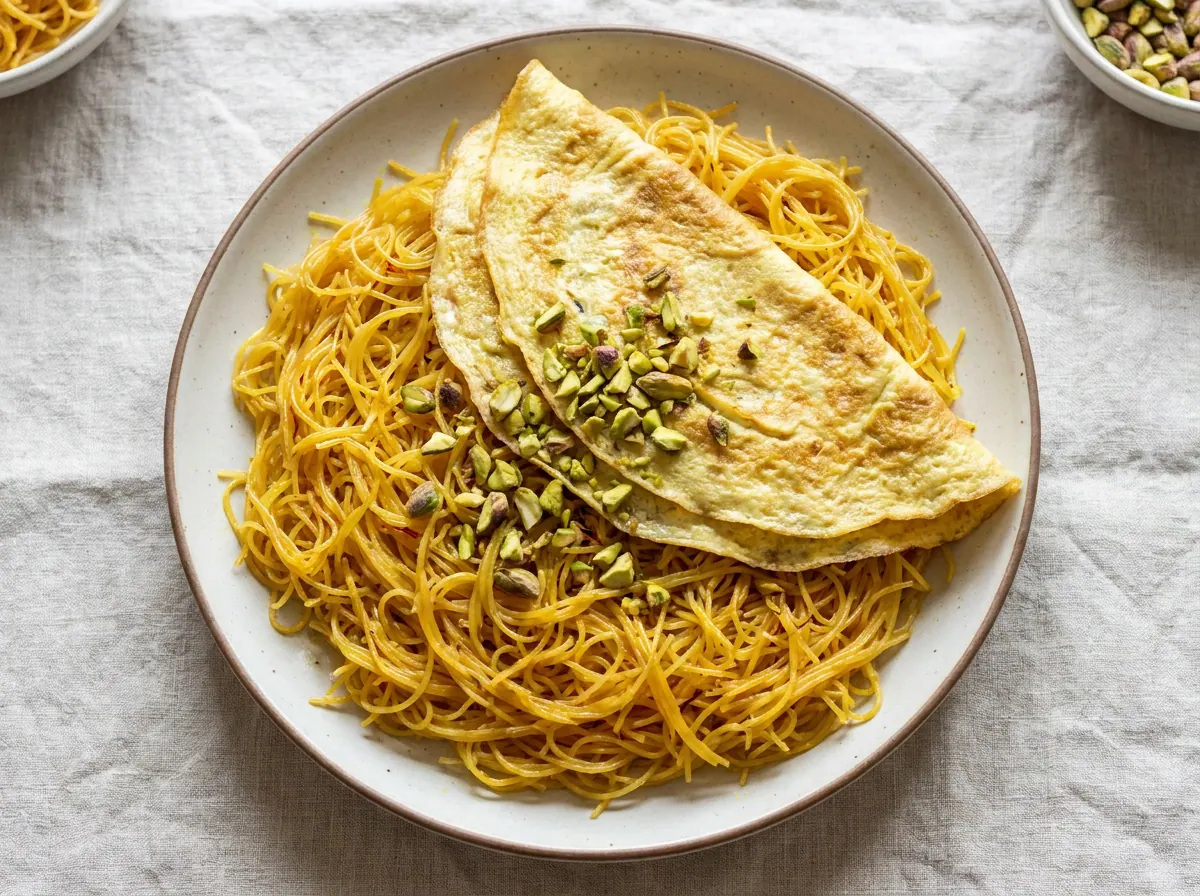
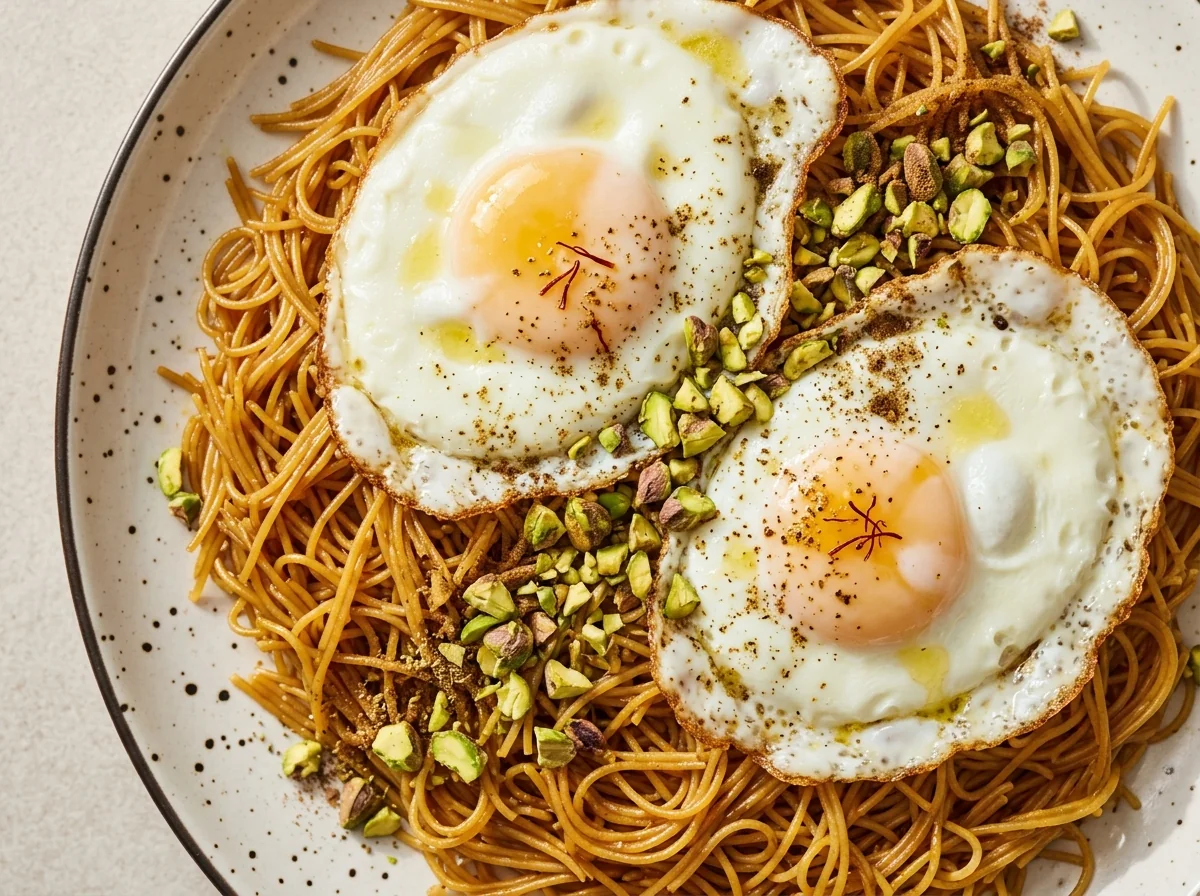
An iconic traditional Gulf breakfast. Sweet vermicelli perfumed with cardamom, saffron, and rose water, topped with egg. A sweet dish with a high glycaemic load, with a lighter version using whole wheat and reduced sugar.
Balaleet is an iconic traditional Gulf breakfast present on the tables of the UAE, Kuwait, Bahrain, Qatar, and Saudi Arabia. Thin vermicelli sweetened with cardamom, saffron, and rose water, topped with an egg or a thin omelette combining sweet and savoury in a single dish.
It is a constant presence at Eid and Ramadan tables. The Michelin Guide documented it among the iconic Emirati breakfast dishes, and TasteAtlas describes it as a traditional breakfast from the UAE. Despite all this heritage, Balaleet is a sweet dish rich in added sugar and ghee — we present it honestly and include a lighter version for those monitoring blood sugar.
Preparation Steps
Soak the saffron
Soak the saffron threads in warm rose water for a few minutes until the colour and aroma bloom.
Boil the vermicelli
Boil the vermicelli in lightly salted boiling water for two to three minutes only, until just softened but not fully cooked, then drain thoroughly.
Coat the vermicelli in ghee
In the same pot, melt the ghee or butter over medium heat, return the drained vermicelli, and stir gently so every strand is coated in the fat.
Sweeten and perfume
Add the sugar, ground cardamom, and the saffron-rose water infusion. Stir gently until the sugar dissolves and the flavours are evenly combined, about two to three minutes.
Steam over low heat
Cover the pot over very low heat for several minutes to allow the texture to absorb the flavours and soften completely. Stir gently occasionally to prevent sticking.
Prepare the egg
In a separate pan, fry the egg as a thin omelette or as scrambled egg seasoned with a pinch of salt and cardamom, to balance the protein against the sweetness of the vermicelli.
Assemble
Pour the sweetened vermicelli into the serving dish and top with the egg layer or omelette.
Serve
Serve warm at breakfast. On Eid, boiled chickpeas and black-eyed peas are sometimes served alongside.
Blood Sugar Impact
The glycemic index (GI) measures how quickly a food raises blood sugar, while the glycemic load (GL) measures how much a full serving raises it. Together they give the complete picture.
Glycemic Index
GI
56Medium
Low0–55Medium56–69High70+
A low value (≤55) means a gradual rise in blood sugar — the most suitable range for diabetes and insulin resistance.
Glycemic Load
GL
41High
Low0–10Medium11–19High20+
Glycemic load reflects the impact of the full serving. To lower it: take half a serving, or pair the recipe with a source of protein and fiber.
Nutritional Information
Per ServingMakes 4 servings · one serving is about 165 g of raw ingredients
Calories548 kcal27%of Daily Value*
Protein14 g28%of Daily Value*
Carbohydrates76 g28%of Daily Value*
Fat21 g27%of Daily Value*
Fiber2 g7%of Daily Value*
Sodium75 mg3%of Daily Value*
Potassium210 mg4%of Daily Value*
Phosphorus218 mg17%of Daily Value*
* Percent Daily Values are based on a 2,000-calorie diet per FDA food-label reference values — your daily needs may be higher or lower. Values are derived from the recipe's ingredients via the USDA database.
Troubleshooting
The most common problems when preparing Balaleet — Saffron Vermicelli with Egg, and how to fix them:
The vermicelli became stodgy and clumped
Overcooked or not properly drained. Thin vermicelli needs only two to three minutes in boiling water until just softened but not fully cooked, then drain immediately. Fully cooking it in water makes it stick and clump — the final cooking happens later over low heat with the ghee.
The colour is pale with no saffron yellow
The saffron was not soaked, the quantity was too little, or the threads were old and had lost their colour. Soak the threads in warm rose water for a few minutes before adding, and rub them between your fingertips to release the pigment. Do not substitute turmeric — its taste and colour are completely different.
The dish is too sweet
The quantity of sugar in the traditional recipe is naturally high. Start with half the amount (60 g) and taste before adding more — you can always add sweetness, not reduce it. The salty egg on top balances the sweetness, and part of the sugar can be replaced with date paste for natural sweetness.
The rose water flavour is overpowering and perfume-like
Too much rose water was added, or a concentrated variety was used. Two tablespoons is sufficient for four servings, and it should be added with the saffron infusion rather than on its own. If the flavour is already overpowering, add a little more plain boiled vermicelli to dilute the concentration.
The egg on top dried out and browned
The heat was too high or the frying time was too long. The top omelette cooks over medium-low heat until the white is just set and the centre stays soft — it is a thin layer and needs very little time. Remove it as soon as it is set and place it immediately over the warm vermicelli.
The ghee floated and separated from the vermicelli
The quantity of ghee was more than the vermicelli needed, or it was not stirred to coat. Four tablespoons is sufficient for 250 g of vermicelli. Stir the drained vermicelli in the ghee until every strand is fully coated before adding the sugar. To reduce the fat, reduce the ghee to three tablespoons without the dish drying out.
Storage and Make-Ahead
Refrigerator (4 degrees C)
Sweetened vermicelli: two to three days in an airtight container. Reheat over low heat with a splash of water or rose water to restore softness. Egg: prepare fresh at serving time — do not store cooked egg with the vermicelli.
Freezer (-18 degrees C)
Sweetened vermicelli alone: up to one month in an airtight container. Thaw overnight in the refrigerator then reheat with a little ghee. Add the fresh egg after reheating.
Advance preparation
Saffron infusion: one hour ahead in the rose water deepens the colour. Sweetened vermicelli: cook the evening before Eid and reheat in the morning. Egg: fry only in the last moment before serving.
Serving
Serve warm — not very hot and not cold. For Eid: prepare the vermicelli in the serving dish and leave the egg to the last moment to keep it soft. Do not leave egg at room temperature for more than two hours.
Tested Ingredient Substitutions
Original Ingredient
Tested Substitute
Ratio
Flavor Difference
Refined white vermicelli
Whole-wheat vermicelli
Same quantity
Higher fibre, lower glycaemic index (whole-wheat vermicelli around GI 40), slightly deeper flavour
More pronounced colour and aroma. Do not substitute with turmeric — the taste is completely different
How Much Does It Make? Scaling Guide
Number of servings
Vermicelli
Sugar
Ghee
Eggs
2 (light breakfast)
125 g
60 g
2 tbsp
2
4 (base)
250 g
120 g
4 tbsp
4
8 (family)
500 g
240 g
8 tbsp
8
12 (Eid table)
750 g
360 g
12 tbsp
12
EEINA Nutrition Tip
A celebratory dish with a mindful portion: Balaleet is a sweet dish rich in sugar and ghee and has a very high glycaemic load. There is nothing wrong with it on the Eid table in a small portion, but for those monitoring blood sugar I recommend the lighter version with whole-wheat vermicelli and half the sugar, with the egg on top which slows the glycaemic response and increases satiety.
Add This Recipe to Your Plan
The EEINA app saves your favorite recipes, calculates them from their real ingredients, and shows your daily numbers toward your goal. Try it free now.
Both together. The vermicelli is sweetened with sugar, cardamom, and saffron, then topped with a savoury egg or thin omelette, combining sweet and savoury in one dish — and that is the secret of its distinctive character.
Is it suitable for people with diabetes?
The traditional recipe has a very high glycaemic load, so it should be eaten in a very small portion only. The lighter version with whole-wheat vermicelli and half the sugar or date paste, with the egg for protein balance, is more appropriate.
Where does Balaleet originally come from?
A traditional Gulf breakfast present across the UAE, Kuwait, Bahrain, Qatar, and Saudi Arabia, documented by the Michelin Guide and TasteAtlas among the iconic Emirati breakfast dishes.
How do I reduce the sweetness without losing its character?
Start with half the quantity of sugar and taste, or replace part of it with date paste. The savoury egg on top naturally balances the sweetness.