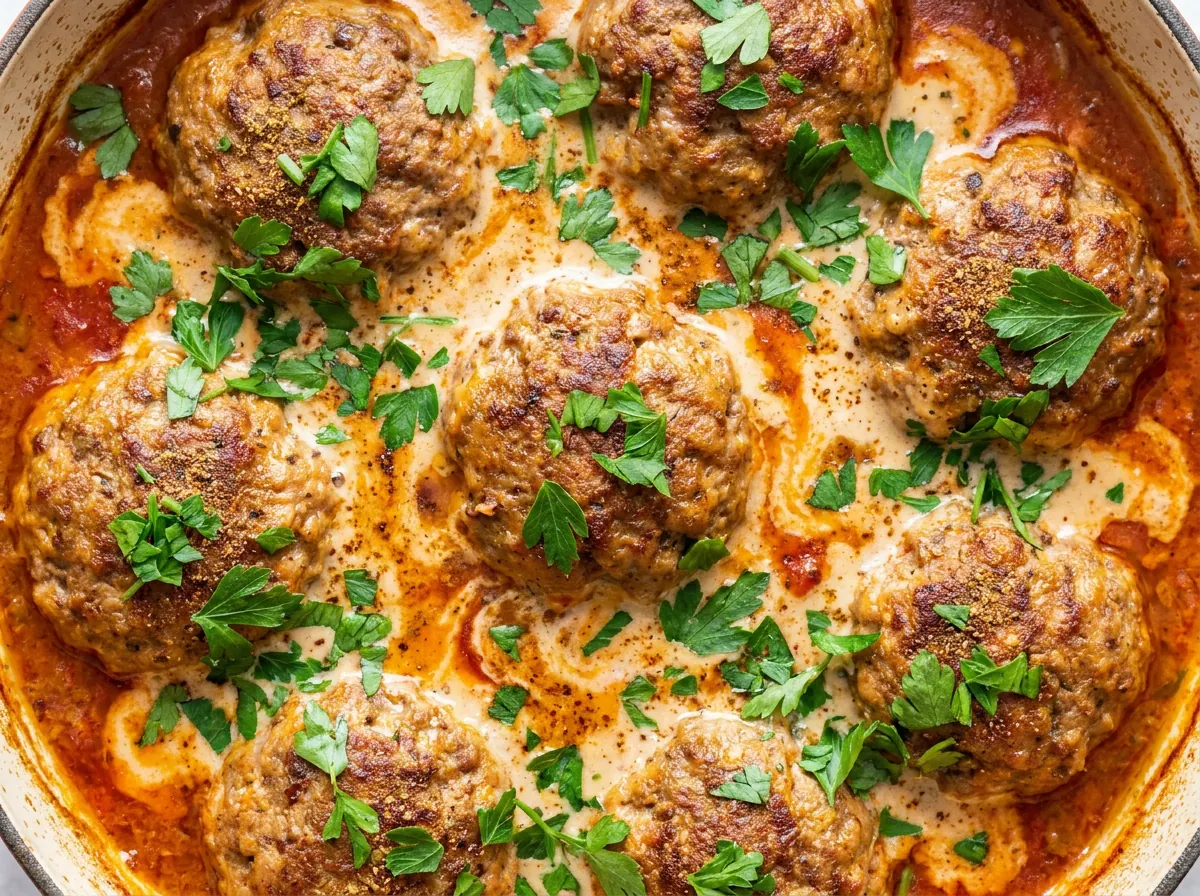
Baked kofta in tahini sauce — a Levantine classic of spiced ground meat baked in a creamy lemon-garlic tahini sauce. Protein-rich, GI 6 very low, negligible glycaemic load.
Baked kofta in tahini sauce — known across the Levant as kofta bi al-sayniyya — is one of the most deeply rooted dishes of Syrian, Lebanese, Jordanian, and Palestinian kitchens. A base of spiced ground meat is topped with sliced tomatoes, then blanketed in a tahini-lemon-garlic sauce before the dish finishes in the oven.
The secret of this dish is that it is almost entirely free of starchy carbohydrates — it is mostly protein from the meat and healthy fat from the tahini. Tahini, a sesame paste, is one of the richest plant-based sources of calcium, and it gives the sauce its creamy texture and distinctive flavour without raising the glycaemic load.
Preparation Steps
Prepare the kofta mixture
Combine the ground beef with the grated onion, parsley, spices, and salt and mix well until the mixture binds together, then spread it evenly in a greased baking dish in a layer about 1.5 cm thick.
First bake
Preheat the oven to 200 degrees C and bake the kofta for about 15 minutes until it changes colour and some fat and liquid are released, then discard the excess liquid.
Add the tomatoes
Arrange the tomato slices evenly over the kofta.
Make the tahini sauce
Whisk the tahini with the lemon juice and crushed garlic, then add water gradually until you have a smooth, creamy sauce.
Pour the sauce
Pour the tahini sauce over the kofta and tomatoes to cover completely.
Second bake
Return the dish to the oven and bake for an additional 10 to 15 minutes until the meat is fully cooked through, the tahini has set, and the surface is golden.
Serve
Serve hot with white rice or bread. For those managing blood sugar, serving with a green salad instead of starchy sides keeps the meal glycaemically balanced.
Blood Sugar Impact
The glycemic index (GI) measures how quickly a food raises blood sugar, while the glycemic load (GL) measures how much a full serving raises it. Together they give the complete picture.
Glycemic Index
GI
6Low
Low0–55Medium56–69High70+
A low value (≤55) means a gradual rise in blood sugar — the most suitable range for diabetes and insulin resistance.
Glycemic Load
GL
0Low
Low0–10Medium11–19High20+
Glycemic load reflects the impact of the full serving. To lower it: take half a serving, or pair the recipe with a source of protein and fiber.
Nutritional Information
Per ServingMakes 4 servings · one serving is about 270 g of raw ingredients
Calories558 kcal28%of Daily Value*
Protein34 g68%of Daily Value*
Carbohydrates12 g4%of Daily Value*
Fat42 g54%of Daily Value*
Fiber4 g14%of Daily Value*
Sodium699 mg30%of Daily Value*
Potassium748 mg16%of Daily Value*
Phosphorus519 mg42%of Daily Value*
* Percent Daily Values are based on a 2,000-calorie diet per FDA food-label reference values — your daily needs may be higher or lower. Values are derived from the recipe's ingredients via the USDA database.
Troubleshooting
The most common problems when preparing Baked Kofta in Tahini Sauce, and how to fix them:
The tahini sauce clumped and turned paste-like
This is the nature of tahini — it seizes when it first meets acid before dissolving in water. Add warm water gradually, one tablespoon at a time, while whisking continuously, and the sauce will become liquid and creamy after a few moments. Do not add all the water at once.
The tahini cracked and became grainy on top of the kofta after baking
The oven was too hot or the baking time was too long. Tahini separates its oils at very high sustained heat. Bake the second stage at no more than 200 degrees C and watch the dish: remove it as soon as the surface turns golden — doneness is reached in 10 to 15 minutes, no more.
The kofta came out dry and crumbly
The meat was too lean or the layer was spread too thin. The right ratio is 90% lean to 10% fat so it stays moist and cohesive. Spread it at 1.5 cm thickness — a thinner layer dries out quickly. The tahini sauce that covers it in the second stage restores moisture.
The dish filled with liquid and fat during baking
This is expected in the first stage, as the meat releases its water and fat. That is why the recipe asks you to discard the excess liquid before adding the tomatoes and tahini. If it is left in, the tahini will float on top and not set. Tilt the dish carefully or use a slotted spoon to remove it.
The kofta flavour was flat with no depth
The spices were too little or the onion was not grated. Grated onion melts into the meat, giving it more moisture and a deeper flavour than chopped onion. Distribute one and a half teaspoons of mixed spices (cumin, black pepper, and a touch of cinnamon) with adequate salt — cumin and cinnamon are the signature of Levantine kofta seasoning.
The sauce was too acidic
Too much lemon juice relative to the tahini. The balanced ratio is a quarter cup lemon juice to half a cup tahini. If it tastes sharp: add an extra tablespoon of tahini and a pinch of salt and whisk — the tahini will break the edge of the acidity and restore the creamy balance.
Storage and Make-Ahead
Refrigerator (4 degrees C)
Cooked kofta: three days in an airtight container. Following the general USDA guideline of three to four days for cooked refrigerated foods. Reheat until the internal temperature reaches 74 degrees C before serving.
Freezer (-18 degrees C)
Cooked meat freezes well for up to two months, but the tahini sauce may separate slightly on thawing. For best results: freeze the kofta alone before adding the tahini, and make the sauce fresh when serving.
Advance preparation
Kofta mixture: season it, spread it in the dish, and keep it covered in the fridge for up to 12 hours before baking. Tahini sauce: whisk and refrigerate for two days — thin with a little water before use.
Serving
A hot dish served directly from the oven. Do not leave it at room temperature for more than two hours (danger zone rule). Reheat leftovers to 74 degrees C.
Tested Ingredient Substitutions
Original Ingredient
Tested Substitute
Ratio
Flavor Difference
Ground beef
Ground lamb
Same quantity
The traditional version in some Levantine kitchens — richer flavour and slightly higher fat
Ground beef
Ground chicken or turkey
Same quantity
Lower in fat and calories, milder flavour that benefits from extra spices
Lemon juice
Soaked dried loomi (dried black lime) water
Same quantity
Deeper acidity with a distinctive Gulf touch
Parsley
Fresh coriander, finely chopped
Same quantity
Sharper, more aromatic flavour
Fresh tomatoes
Diluted concentrated tomato paste
2 tablespoons
Deeper colour and more intense flavour, less liquid in the dish
How Much Does It Make? Scaling Guide
Number of servings
Ground meat
Tahini
Lemon juice
Tomatoes
2 (pair)
300 g
0.25 cup
2 tbsp
1
4 (base)
600 g
0.5 cup
0.25 cup
2
8 (large family)
1200 g
1 cup
0.5 cup
4
12 (entertaining)
1800 g
1.5 cups
0.75 cup
6
EEINA Nutrition Tip
A blood-sugar-friendly dish: kofta in tahini is one of the rare dishes that combines high protein, healthy fat, and negligible carbohydrates — its glycaemic load is as low as it gets. For those managing diabetes: serve it with a green salad instead of rice to keep the whole meal glycaemically low.
Add This Recipe to Your Plan
The EEINA app saves your favorite recipes, calculates them from their real ingredients, and shows your daily numbers toward your goal. Try it free now.
Very suitable. The dish is protein-rich and low in carbohydrates, with a GI of 6 and a negligible glycaemic load. Serve with a green salad instead of rice to keep the whole meal glycaemically balanced.
What is the difference between kofta bi al-sayniyya and kofta bi tahini?
They are two names for the same dish across the Levant: seasoned ground meat spread in a tray, covered with tomatoes and tahini sauce, and baked. The name differs by country.
How do I stop the tahini from clumping?
Add warm water gradually while whisking continuously. The tahini seizes first when it meets the lemon, then fully dissolves with the water and becomes liquid and creamy.
Can I use lamb?
Yes — it is the traditional version in some Levantine kitchens. The flavour is richer and the fat content is slightly higher, so the calorie count will be a little above the beef version.
Sources: USDA · University of Sydney · Gulf GSO · Our methodology · Updated on