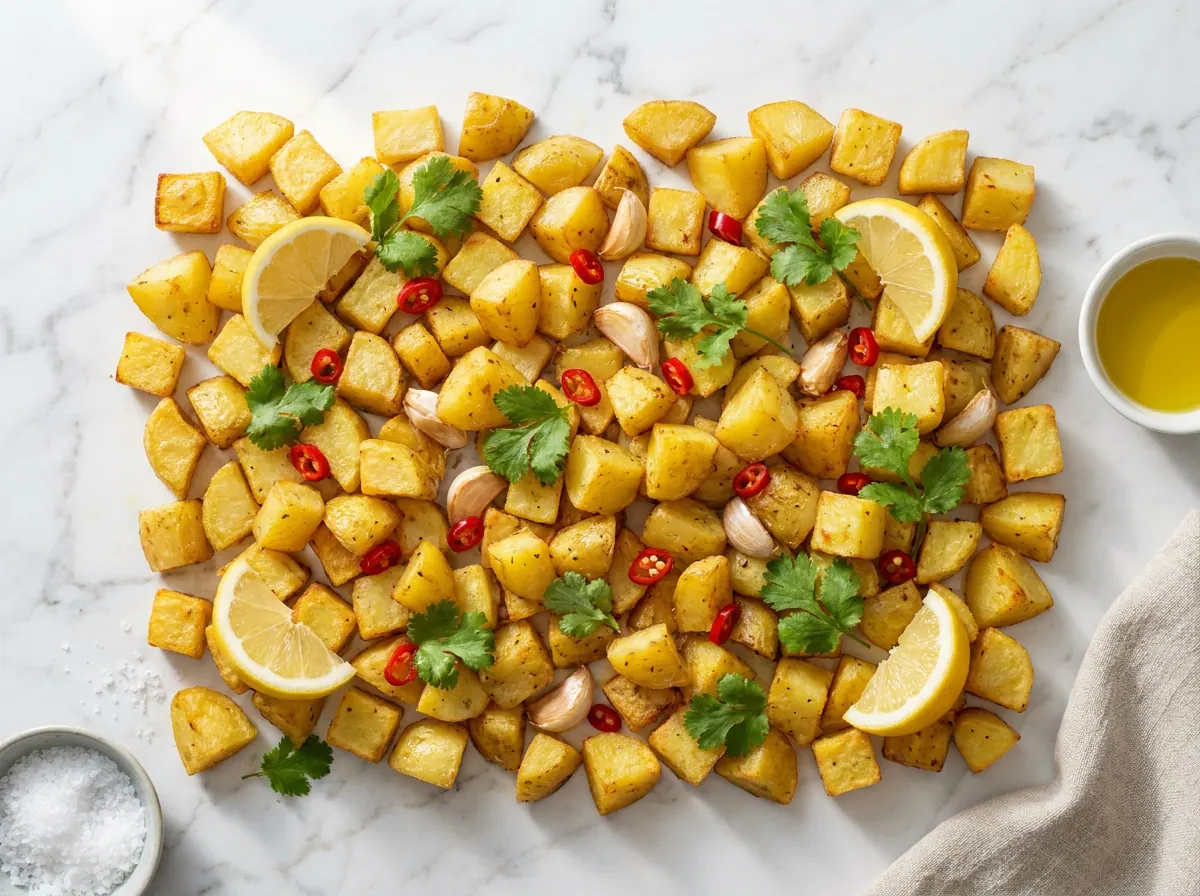
Lebanese spicy potatoes baked instead of fried, with garlic, chili, cilantro, and lemon. The classic mezze dish, with a high GI of 85 and documented methods to lower its glycemic impact.
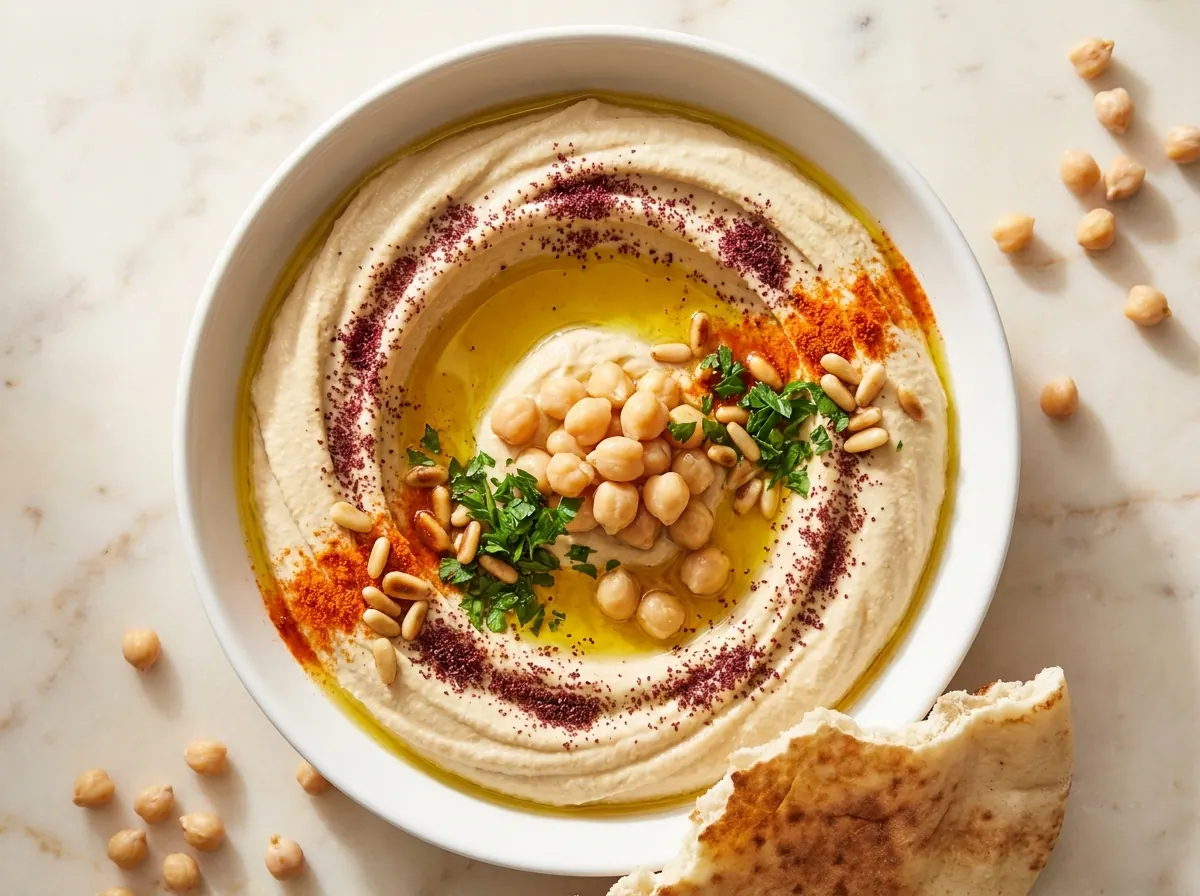
Batata harra is a documented Lebanese-Levantine dish, traditionally served in the mezze alongside hummus, ful, and moutabel. The name describes the dish: potatoes with garlic, chili, cilantro, and lemon — sharp and refreshing.
The baked version instead of fried is an authentic option referenced in Lebanese sources, preserving the same ingredients while reducing absorbed oil. Potatoes themselves are high-GI, which is why the page documents proven methods to lower their glycemic impact.
Preparation Steps
Preheat the oven and dry the potatoes
Preheat the oven to 220°C. Cut the potatoes into even cubes and dry them thoroughly with a towel — this ensures they roast, not steam.
Season and arrange
Toss the potato cubes with 2 tablespoons of olive oil, salt, and pepper, then spread in a single layer on a baking tray without crowding. Crowding makes the potatoes steam and lose their crunch.
Bake
Bake for 30–40 minutes, turning once halfway through, until golden and crispy outside and tender inside.
Sauté the garlic
In a skillet over medium heat, warm the remaining tablespoon of olive oil, add the minced garlic, and stir for one minute until fragrant — do not let it burn.
Add the chili
Add the ground red chili and stir for a few seconds to bloom its flavor in the oil.
Combine with cilantro
Add the roasted potatoes to the skillet and toss quickly to coat them in the garlic-chili mixture, then add the chopped cilantro.
Add lemon and serve
Remove from the heat, squeeze fresh lemon juice over the potatoes and toss. Serve warm as part of a mezze spread.
Lower the glycemic impact
To reduce the effect on blood sugar: cook the potatoes the day before and refrigerate overnight, then reheat gently — the resistant starch formed lowers the glycemic response. Alternatively, replace one-third of the potatoes with sweet potato to lower the glycemic load.
Blood Sugar Impact
The glycemic index (GI) measures how quickly a food raises blood sugar, while the glycemic load (GL) measures how much a full serving raises it. Together they give the complete picture.
Glycemic Index
GI
72High
Low0–55Medium56–69High70+
A low value (≤55) means a gradual rise in blood sugar — the most suitable range for diabetes and insulin resistance.
Glycemic Load
GL
18Medium
Low0–10Medium11–19High20+
Glycemic load reflects the impact of the full serving. To lower it: take half a serving, or pair the recipe with a source of protein and fiber.
Nutritional Information
Per ServingMakes 4 servings · one serving is about 175 g of raw ingredients
Calories217 kcal11%of Daily Value*
Protein3 g6%of Daily Value*
Carbohydrates28 g10%of Daily Value*
Fat11 g14%of Daily Value*
Fiber3 g11%of Daily Value*
Sodium301 mg13%of Daily Value*
Potassium669 mg14%of Daily Value*
Phosphorus93 mg7%of Daily Value*
* Percent Daily Values are based on a 2,000-calorie diet per FDA food-label reference values — your daily needs may be higher or lower. Values are derived from the recipe's ingredients via the USDA database.
Troubleshooting
The most common problems when preparing Baked Batata Harra (Lebanese Spicy Potatoes), and how to fix them:
Potatoes are soft with no crust
The cubes were not dried, or the tray was overcrowded. Moisture turns to steam inside the oven, which boils the potatoes instead of roasting them. Dry the cubes thoroughly with a towel before seasoning, spread in a single layer with space between them on a large tray — use two trays if needed rather than crowding one.
Garlic burned and turned bitter
Garlic was cooked over too high heat or left too long. Minced garlic cooks in about one minute over medium heat until fragrant only. If it starts to darken quickly, lift the pan from the heat for a moment and add the potatoes immediately — their residual heat will stop the garlic cooking further.
Dish has no heat or spice
Too little chili, or it was added too early and its flavor dissipated. Add the chili immediately after the garlic and stir for just a few seconds before the potatoes, to bloom its flavor in the oil. For more heat: increase to a full teaspoon, or add chili flakes alongside the cilantro at the end.
Potatoes fell apart when tossed in the skillet
They were overbaked and became too fragile, or were tossed too vigorously. The toss in the skillet should be gentle and quick — just to coat the potatoes in garlic and chili, not to cook them again. If they came out of the oven very soft: mix the garlic and chili in the serving bowl and add the potatoes on top instead.
Cilantro wilted and lost its green color
The cilantro was added over high heat or cooked too long. Add the fresh cilantro at the very last moment after removing the pan from the heat — the residual warmth is enough to release its fragrance without wilting it. Keep a little fresh cilantro aside to scatter over the top when serving.
Lemon juice made the dish watery
Too much lemon or added too early and it softened the potatoes. Squeeze the lemon directly after removing the pan from the heat, right before serving — start with 2 tablespoons and taste before adding more. Lemon adds a bright acidity, but too much dampens the crunch you worked for in the oven.
Storage and Make-Ahead
Refrigerator (4°C)
3–4 days in a sealed container per USDA guidelines for cooked food. Bonus: refrigerating raises resistant starch in the potatoes, which lowers their glycemic impact when gently reheated later.
Freezer (-18°C)
Not recommended. Baked potatoes lose their crispness after thawing and become soft. Best prepared fresh whenever possible.
Advance prep
Cutting the potatoes: hours before baking, keep the cubes submerged in cold water in the refrigerator to prevent oxidation, then dry thoroughly before seasoning. Day-before baking: roast the potatoes and refrigerate for a full day, then reheat gently and add the garlic, chili, and cilantro just before serving.
Reheating
Restore crunch in an oven or air fryer at 200°C for a few minutes — not in the microwave, which makes them soft. Do not leave the dish outside the refrigerator for more than 2 hours.
Tested Ingredient Substitutions
Original Ingredient
Tested Substitute
Ratio
Flavor Difference
white potato
cooked sweet potato, then baked
one-third or more of quantity
Sweeter with a deeper color; lower glycemic load [6]
fresh cilantro
flat-leaf parsley
same amount
A milder, less assertive flavor than cilantro
ground red chili
chili flakes or fresh chili
to desired heat level
More pronounced heat with visible pieces in the dish
lemon juice
sumac, sprinkled at the end
1 teaspoon
Gentler acidity with a reddish hue; sprinkle cold
oven baking
air fryer at 200°C
same seasoning
Similar crunch with less oil and faster cooking time
How Much Does It Make? Scaling Guide
Number of servings
potatoes
Garlic
Olive oil
Coriander
2 (individual × 2)
2 (~300 g)
2–3 cloves
1.5 tbsp
0.25 cup
4 (base)
4 (~600 g)
5 cloves
3 tbsp
0.5 cup
8 (large family)
8 (~1200 g)
10 cloves
6 tbsp
1 cup
12 (entertaining)
12 (~1800 g)
15 cloves
9 tbsp
1.5 cups
EEINA Nutrition Tip
For people with diabetes and insulin resistance: baked hot potatoes have a high glycemic index and load (85/28). The most documented reduction method is to cook the potatoes the day before and refrigerate them — the resistant starch formed lowers the glycemic response by about 40%. Combine this with reducing the portion size, replacing one-third of the potatoes with sweet potato, and pairing the dish with protein and vegetables.
Add This Recipe to Your Plan
The EEINA app saves your favorite recipes, calculates them from their real ingredients, and shows your daily numbers toward your goal. Try it free now.
Is the baked version authentic, or is the original always fried?
Both versions appear in Lebanese sources. The traditional method is usually fried, but the baked version is explicitly referenced as an authentic option that uses the same ingredients with less absorbed oil.
Is it suitable for people with diabetes?
With caution. Hot baked potatoes have a high glycemic index and load (85/28). Ideally refrigerate them overnight before gently reheating, or replace some with sweet potato, reduce the portion size, and pair with protein and vegetables.
How do I lower the effect on blood sugar?
Cook the potatoes the day before and refrigerate overnight, then reheat gently — the resistant starch formed lowers the glycemic response by about 40%. Or replace one-third of the quantity with sweet potato, which has a lower index.
Can I leave the skin on?
Yes. Leaving the skin on increases fiber. Scrub the potatoes well before cutting if you prefer to bake them unpeeled.