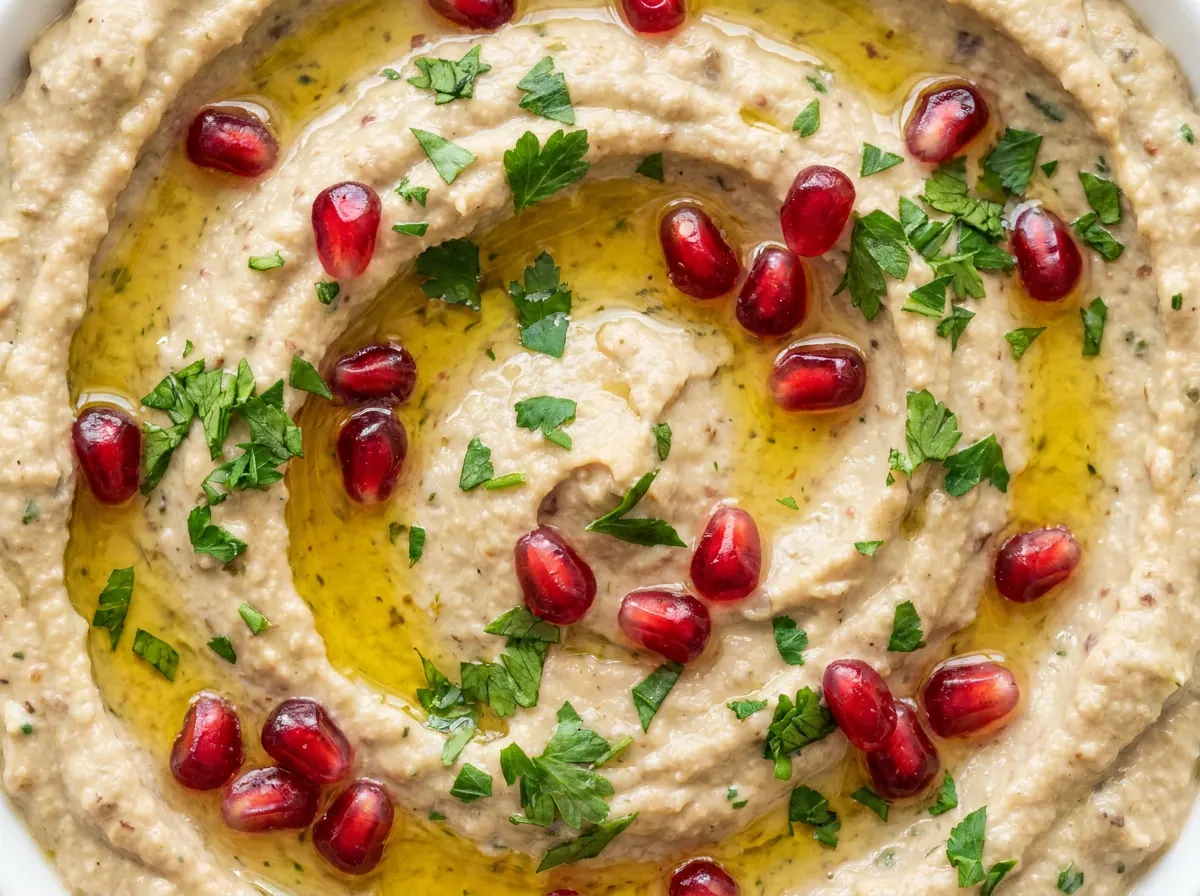
Authentic Levantine Mutabbal (smoky eggplant dip) ? eggplant charred over a flame, mashed with tahini, garlic, and lemon. A very-low glycemic-index appetiser (GI 11) rich in healthy fats and fibre.
Mutabbal (smoky eggplant dip) is a traditional Levantine appetiser and the tahini-rich cousin of baba ganoush.
Its secret is charring the eggplant over an open flame until the skin blackens and the flesh absorbs the smoke. The distinction is clear: Mutabbal (smoky eggplant dip) foregrounds tahini for a pale, creamy finish, while baba ganoush leans toward olive oil and a coarser texture.
Preparation Steps
Char the eggplants
Grill both whole eggplants directly over an open flame or under the broiler, turning until the skin is completely charred and the flesh is soft and infused with smoky flavour. This smoky quality is the soul of Mutabbal (smoky eggplant dip), so do not rush this step.
Drain the flesh
Let the eggplants cool slightly, then peel off the charred skin and place the flesh in a colander for a few minutes to release excess liquid. Draining prevents a watery dip.
Mash the eggplant
Mash the flesh with a fork until creamy but with some texture remaining. Avoid over-processing so it does not lose its character.
Add tahini and season
Add the tahini, lemon juice, crushed garlic, and salt, then stir well until the mixture is uniform, creamy, and pale in colour.
Taste and adjust
Taste and fine-tune to your preference: add more lemon for tartness, more tahini for creaminess, or more salt as needed.
Garnish and serve
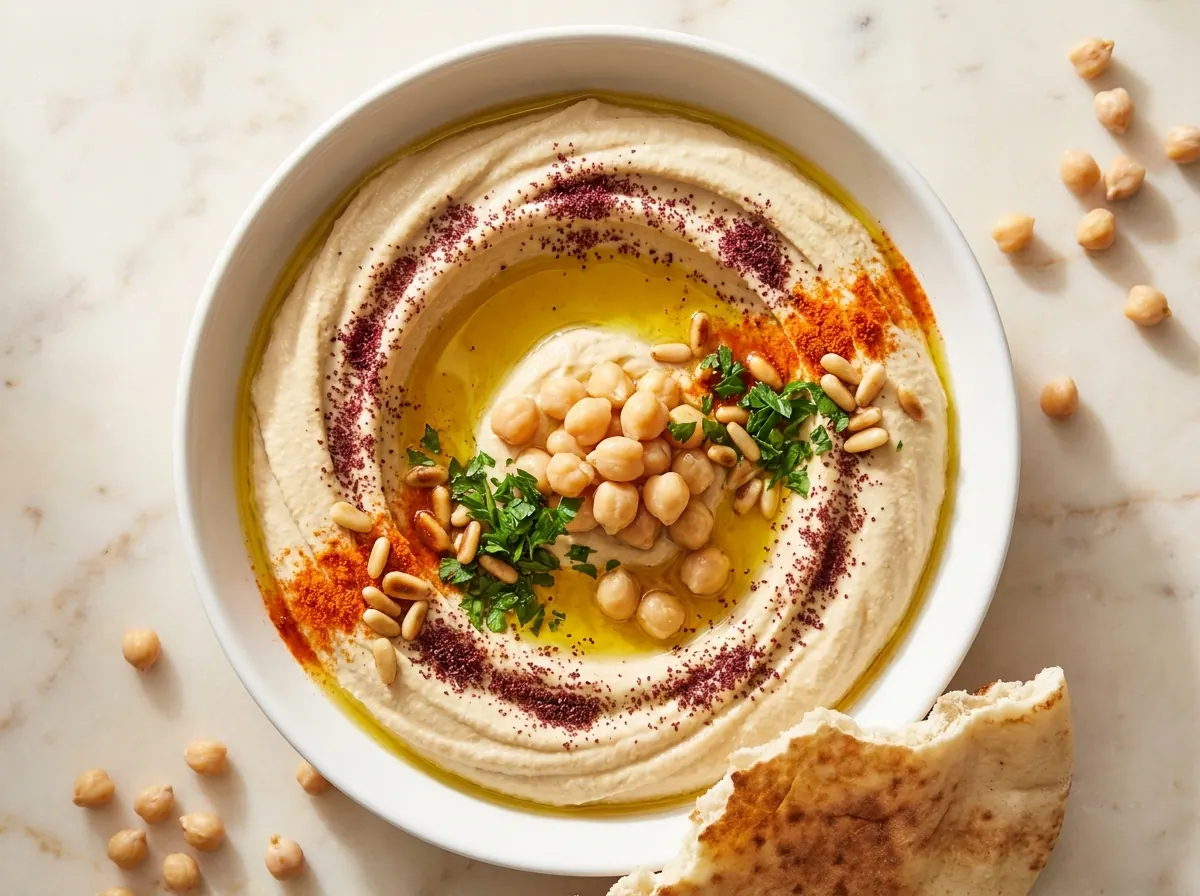
Transfer to a serving plate, make a well with the back of a spoon and pour in the olive oil, then garnish with parsley, pomegranate seeds or sumac (tart purple spice), and a pinch of cumin. Serve chilled with flatbread.
Blood Sugar Impact
The glycemic index (GI) measures how quickly a food raises blood sugar, while the glycemic load (GL) measures how much a full serving raises it. Together they give the complete picture.
Glycemic Index
GI
11Low
Low0–55Medium56–69High70+
A low value (≤55) means a gradual rise in blood sugar — the most suitable range for diabetes and insulin resistance.
Glycemic Load
GL
0Low
Low0–10Medium11–19High20+
Glycemic load reflects the impact of the full serving. To lower it: take half a serving, or pair the recipe with a source of protein and fiber.
Nutritional Information
Per ServingMakes 6 servings · one serving is about 100 g of raw ingredients
Calories88 kcal4%of Daily Value*
Protein2 g4%of Daily Value*
Carbohydrates7 g3%of Daily Value*
Fat6 g8%of Daily Value*
Fiber3 g11%of Daily Value*
Sodium198 mg9%of Daily Value*
Potassium232 mg5%of Daily Value*
Phosphorus80 mg6%of Daily Value*
* Percent Daily Values are based on a 2,000-calorie diet per FDA food-label reference values — your daily needs may be higher or lower. Values are derived from the recipe's ingredients via the USDA database.
Troubleshooting
The most common problems when preparing Mutabbal (Smoky Eggplant and Tahini Dip), and how to fix them:
The dip is watery and loose
The eggplant flesh was not drained before mashing. Place the flesh in a colander and press gently with a spoon. Next time, drain for ten minutes before mashing.
Bitter taste
The eggplant was under-ripe or under-charred, or had many large seeds. Choose a heavy, glossy-skinned eggplant and ensure the flesh is fully soft before removing from the flame.
Smoky flavour is missing
The eggplant was roasted in an oven rather than over open flame. Use the broiler on maximum heat until the skin blackens.
Tahini clumped and turned grainy
Lemon juice was added all at once. Add lemon juice a spoonful at a time while stirring, adding a drop of warm water if needed, until the tahini is smooth before combining with the eggplant.
Garlic flavour is overpowering
Too much garlic or added raw and roughly crushed. Start with one finely crushed clove and add more only after tasting. To soften the bite, add an extra spoonful of tahini and a little more lemon.
Dip is dark, not pale and creamy
Too little tahini, or the flesh oxidised after peeling. Mash and add tahini and lemon immediately after peeling. Add another spoonful of tahini if the colour remains dark.
Storage and Make-Ahead
Refrigerator (4 C)
Three to four days in an airtight container. Cover the surface with a thin layer of olive oil to preserve colour and flavour. Stir before serving if water separates.
Freezer (-18 C)
The charred eggplant flesh freezes well before adding tahini, for up to one month. The finished dip may change slightly in texture after thawing; stir well and re-season.
Meal prep
Char and drain the eggplant the day before and refrigerate. Mash and season on serving day. Garnish just before serving.
Serving
Serve cold or at room temperature. Remove from the refrigerator 15 minutes before serving. Do not leave out for more than two hours.
Tested Ingredient Substitutions
Original Ingredient
Tested Substitute
Ratio
Flavor Difference
Lemon juice
Apple cider vinegar or pomegranate molasses
Half the amount for molasses
Pomegranate molasses adds sweet-tart depth; vinegar is sharper and simpler
Open-flame charred eggplant
Broiler-charred eggplant
Same amount
Lighter smoky flavour, similar texture after thorough draining
Raw garlic
Garlic roasted alongside the eggplant
Same number of cloves
Softer, sweeter, and milder
Pomegranate garnish
sumac (tart purple spice), ground
A pinch
Gentle tartness and a pink colour instead of pomegranate sweetness
Cumin
A pinch of smoked paprika
A pinch
Enhances the smoky note with a warm red colour on the surface
How Much Does It Make? Scaling Guide
Number of servings
Eggplant
Tahini
Lemon juice
Garlic
3 (small dip)
1 large
2 tbsp
1 tbsp
1 clove
6 (base)
2
3–4 tbsp
2–3 tbsp
1–2 cloves
12 (entertaining)
4
7–8 tbsp
4–5 tbsp
3 cloves
18 (large table)
6
10–12 tbsp
6–7 tbsp
4 cloves
EEINA Nutrition Tip
Draining is the secret to texture: spend ten minutes draining the flesh before mashing and you will get a thick, creamy dip without adding any starch or thickener.
Add This Recipe to Your Plan
The EEINA app saves your favorite recipes, calculates them from their real ingredients, and shows your daily numbers toward your goal. Try it free now.
What is the difference between Mutabbal (smoky eggplant dip) and baba ganoush?
Both start from charred smoked eggplant, but Mutabbal (smoky eggplant dip) foregrounds tahini for a pale creamy finish, while baba ganoush leans toward olive oil and a coarser texture.
Is it suitable for people with diabetes?
Very suitable. GI 11 and glycemic load 1. Its effect on blood sugar is among the lowest of any dish. Pay attention to the type of bread served alongside.
How do I get the smoky flavour without a gas stove?
Use the broiler on maximum heat until the eggplant skin blackens, or a charcoal grill. A regular oven cooks the eggplant but with a lighter smoky note.
How long does it keep in the refrigerator?
Three to four days in an airtight container with a thin layer of olive oil on the surface. Stir before serving if some water has separated.