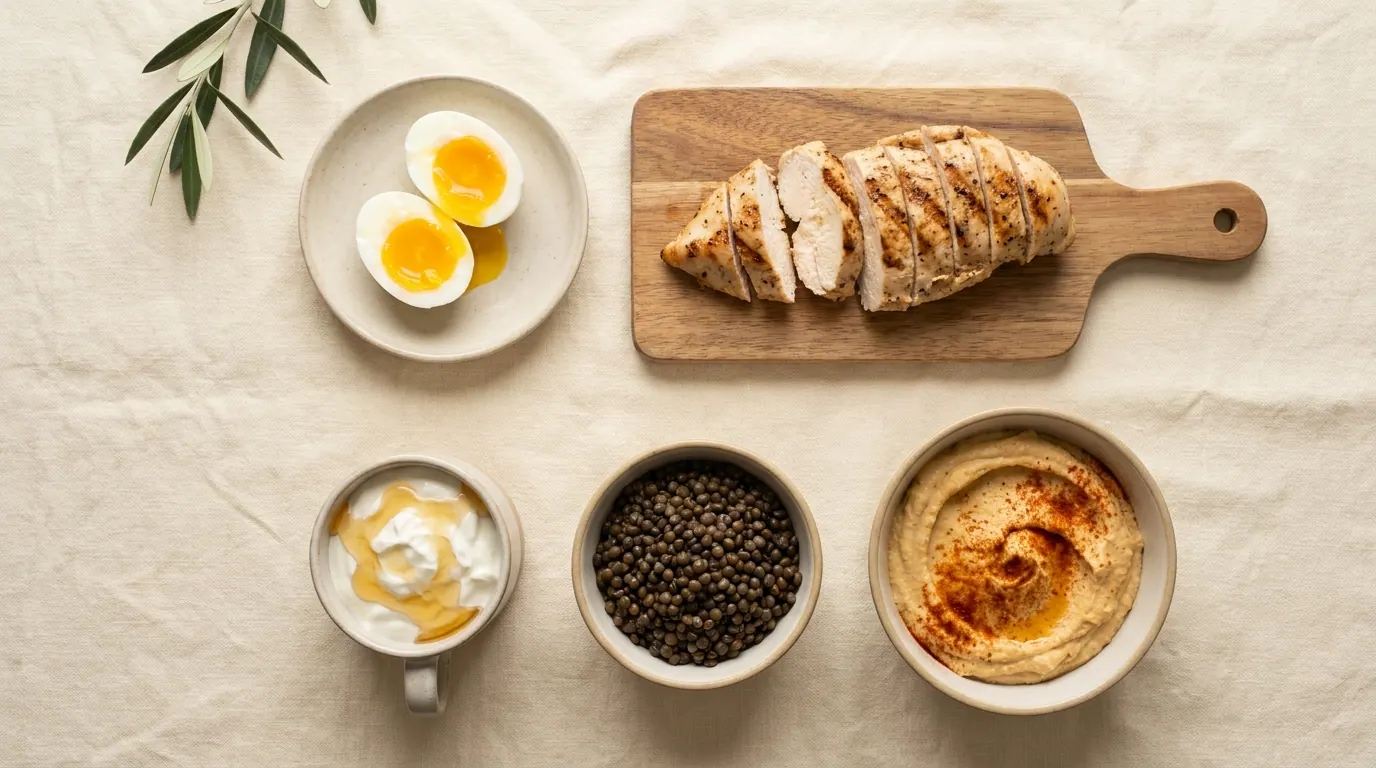
Why You Lose Muscle with Age
As we age, the body's ability to build muscle protein in response to food and exercise slows down, a phenomenon known as anabolic resistance. This means the same amount of protein that was sufficient in your 30s may no longer be enough to stimulate muscle adequately in your 50s. Combined with reduced physical activity, decreased appetite, and hormonal changes, the balance shifts towards breakdown rather than building.
This gradual loss of muscle mass and strength is called sarcopenia. Its effects may begin to appear around age 40 and become more pronounced after 60. However, it's not an inevitable fate: muscle is a living tissue that responds throughout life to adequate protein and resistance training, making muscle building possible at any age.
Saudi & Global Numbers
Muscle loss begins early and accumulates. Reviews indicate a loss of approximately 3% to 8% of muscle mass per decade after age 30, with acceleration after 60. Globally, sarcopenia affects between 10% and 27% of individuals under 70, and may exceed 50% after 80.
In Saudi Arabia, a study on elderly women found that about 20% had sarcopenia, and those affected consumed less protein, fiber, and vitamin D than others. This directly links the issue to our dietary patterns, where carbohydrates often dominate our meals, and quality protein intake can be insufficient in some instances.
How Much Protein You Need After 40
The old recommendation for adults was 0.8 grams of protein per kilogram of body weight per day. However, recent evidence from the PROT-AGE and ESPEN groups raises this recommendation for healthy older adults to 1.0 to 1.2 grams per kilogram, potentially reaching 1.2 to 1.5 grams during illness or recovery.
| Body Weight | Minimum (1.0g/kg) | Optimal (1.2g/kg) |
|---|---|---|
| 60 kg | 60 grams | 72 grams |
| 70 kg | 70 grams | 84 grams |
| 80 kg | 80 grams | 96 grams |
| 90 kg | 90 grams | 108 grams |
These are general guidelines for healthy individuals. Those with chronic kidney disease require different estimations under their doctor's supervision.
Sarcopenia Risk Self-Check
This self-check is for guidance and is not a substitute for a medical evaluation. Select what applies to you:
Distributing Protein Across Meals
The daily quantity alone is not enough; distribution makes a difference. Research shows that each meal needs a sufficient protein threshold to trigger muscle building, around 25 to 30 grams containing about 3 grams of the stimulating amino acid leucine. Therefore, distributing protein across three meals is more effective than concentrating it in dinner alone.
Same total of 90g, but even distribution stimulates muscle building three times daily.
Breakfast is often the poorest protein meal for many of us, yet it's the most crucial to fix. Here are practical examples that reach 30 grams without supplements:
- 3 eggs + half a cup of cottage cheese ≈ 30 grams.
- 1.5 cups Greek yogurt + 1 tbsp nut butter + berries ≈ 30 grams.
- 2 eggs + a thick slice of labneh + half a whole wheat pita ≈ 28 to 30 grams.
Apply the same logic to lunch and dinner: a palm-sized portion of chicken or fish (about 120-150 grams) provides approximately 30 grams.
Best Protein Sources on Your Table
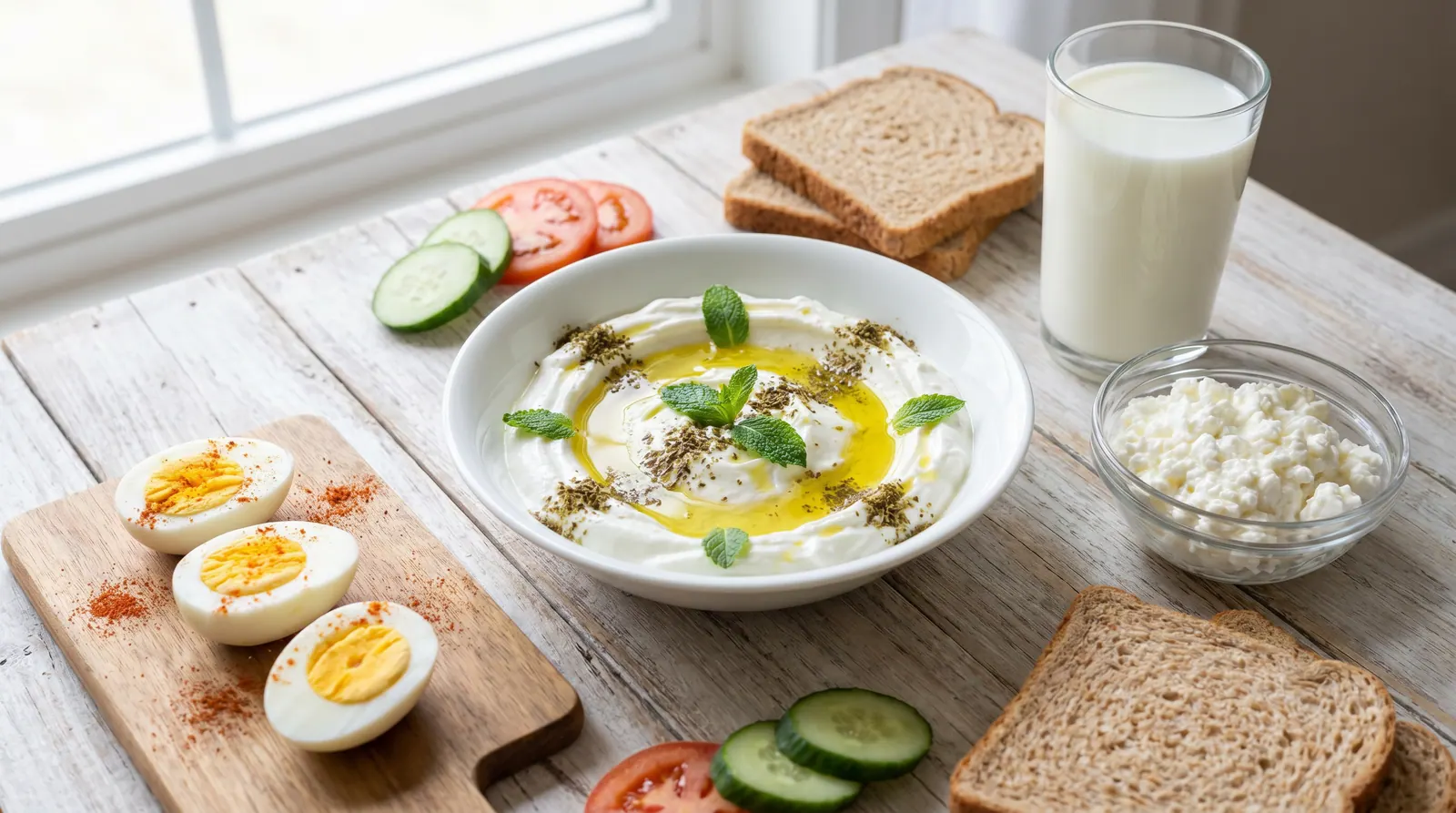
Quality matters as much as quantity. Animal sources are complete in amino acids and richest in leucine, while plant-based sources are excellent when varied and combined. Here are common approximate values per 100 grams:
Approximate values vary by cut and cooking method. Animal sources are richer in leucine, which stimulates muscle.
On the Saudi table, add an egg or labneh to breakfast, incorporate lentils or chickpeas with rice for lunch, and make chicken or fish the centerpiece of dinner. Diversifying between animal and plant sources combines quality and fiber.
The Leucine Secret — Why "Any Protein" Isn't Enough
Here's a detail most people overlook: it's not just about the grams of protein, but how much leucine it contains. Leucine is the amino acid that triggers muscle building, and older adults need about 2.5 to 3 grams of it per meal to stimulate synthesis. The difference between sources is striking:
- 100g Chicken Breast ≈ 2.5g Leucine — Sufficient on its own to exceed the threshold.
- A 30g Whey scoop ≈ 2.5 to 3g Leucine — Also sufficient.
- 2 Eggs ≈ Only 1.2g Leucine — You'd need about five eggs to reach the threshold.
- 1 cup Cooked Lentils ≈ 1.3g Leucine — This is why plant-based sources are often combined with another source or consumed in larger quantities.
The practical takeaway: make sure each meal has a " proteína anchor" from a leucine-rich source (chicken, fish, dairy, or whey), and build the rest of your plate around it. This way, you'll exceed the threshold without complex calculations.
Exercise: Protein's Partner
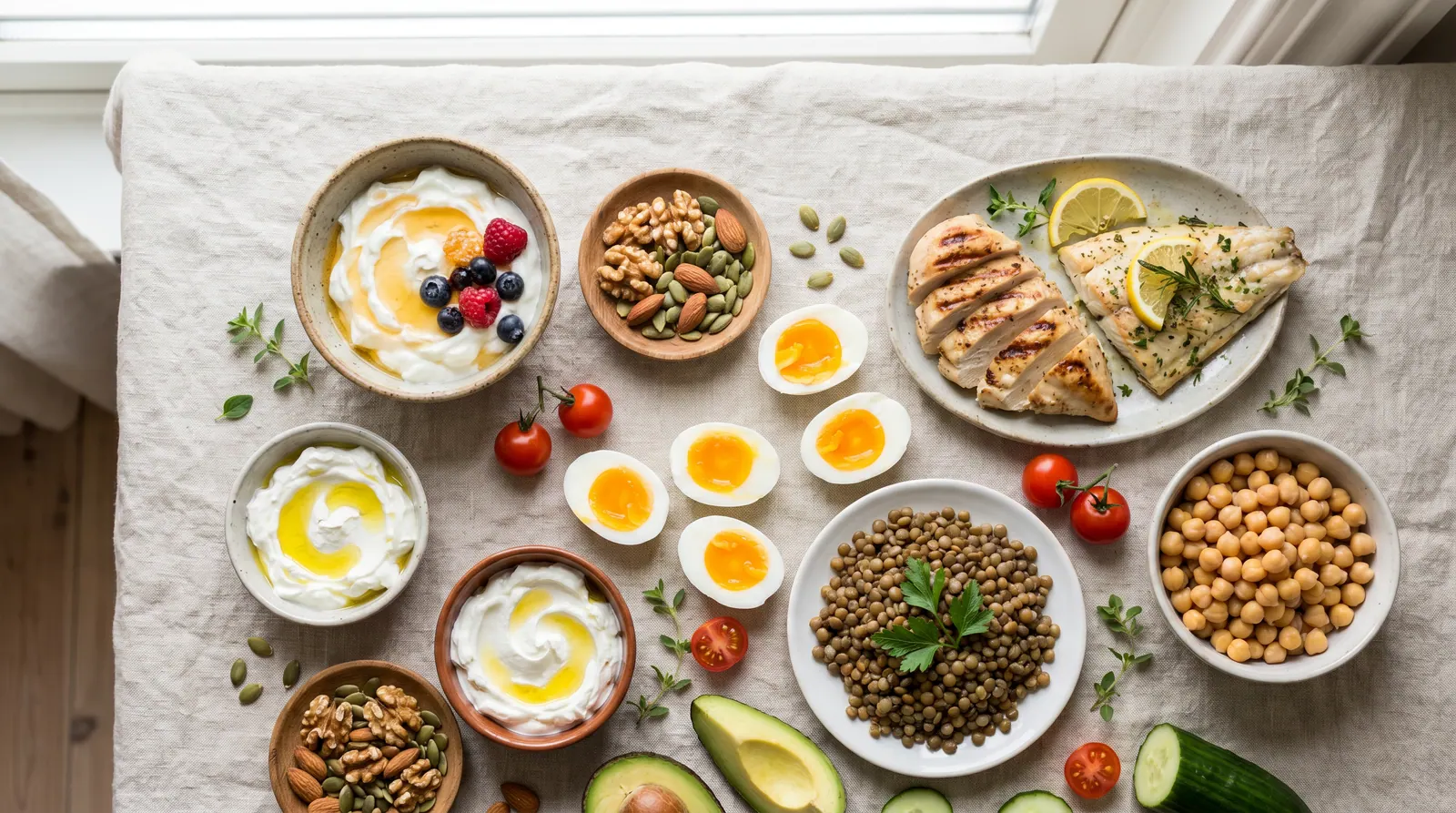
Protein alone doesn't build muscle without stimulation. Resistance exercises, even with bodyweight or resistance bands, are the signal that tells muscles to build and utilize the protein you consume. Even walking after a meal improves the body's utilization of food.
The practical rule: two to three days of resistance training per week, targeting major muscle groups (legs, back, chest), with adequate protein afterward. This is how diet and exercise work together, not in isolation.
The results are not as slow as you might think. Studies have shown that beginner older adults gain about 25% increase in strength within just 12 weeks of progressive resistance training. You don't need a gym or heavy weights: bodyweight, resistance bands, a water bottle, and frequent chair stands can all engage your muscles. The key is progression: gradually increase resistance as exercises become easier.
And Vitamin D is the third pillar. The Saudi study linked sarcopenia to deficiencies in both protein and vitamin D, not just protein alone. Vitamin D supports muscle function and balance, and its deficiency is very common among us despite abundant sunshine. So, make your triad: adequate protein, resistance exercises, and healthy vitamin D levels. (Refer to our detailed guide on Vitamin D and Silent Deficiency.)
And the evening trick. A glass of milk or a piece of cheese before bed provides slow-digesting protein that nourishes muscles overnight, a useful option for those struggling to meet their daily goal. It's not essential, but it's an easy way to add a portion of your protein at the end of the day.

Protein Supplements — When and Which Ones
Supplements are not a substitute for food but a practical tool when it's difficult to meet your protein goals through meals alone, especially with reduced appetite after 60. The four common types differ in digestion speed and amino acid quality:
| Type | Digestion | Best For |
|---|---|---|
| Whey | Fast · High Leucine | Best for seniors post-workout (30-35g) |
| Casein | Slow · Extended Release | Before bed for overnight building |
| Pea Protein | Medium · Plant-based | Good plant-based alternative, close to whey at sufficient dose |
| Soy Protein | Medium · Complete Plant-based | Complete plant-based amino acid option |
How to Choose and Use Practically:
- Whey Post-Workout: 1-2 scoops (providing 25-35g) within an hour of exercise. Older adults need the higher end (around 35g) to exceed the leucine threshold.
- Casein Before Bed: About 40g mixed with water or milk for slow release to nourish muscles overnight.
- Plant-Based (Pea or Soy): Increase the dose slightly (around 40g) or mix types, as their leucine content is lower than whey.
- When Buying: Choose a product with a short ingredient list, less than 5g of sugar per serving, and without excessive colors or sweeteners.
Creatine — The Strongest Evidence-Based Supplement for Muscle After 40
Creatine is a naturally occurring compound stored in muscles to generate quick energy. It is one of the most studied and safest supplements. Its benefits are realized in conjunction with resistance training, not in isolation. Reviews show that 3 to 5 grams daily of creatine monohydrate with resistance training improves muscle strength and mass, and slows sarcopenia, even supporting bone density.
How to Use: 3 to 5 grams daily (1 teaspoon) at any time of day, without the need for a loading phase. Take it consistently every day, even on rest days, as its effect is cumulative, not immediate. Choose the type labeled "monohydrate," as it is the most affordable and well-studied. It may cause slight water retention initially, which is harmless.
It has also been observed to have benefits for memory and concentration in older adults. It is generally well-tolerated and there is no evidence of harm to healthy individuals at the recommended dosage.
Protein's Partners: Vitamins & Minerals
Muscle building isn't solely about protein; it's a system of elements working together. If any component is deficient, muscle building will be hindered, no matter how much protein you consume. Here are the key partners with scientific backing, including their dosages and sources:
- Vitamin D. Supports muscle function and balance, reduces fall risk, and its deficiency exacerbates sarcopenia. Common daily intake is 800-2,000 IU, sourced from the sun, fatty fish, and eggs. Deficiency is very common among us despite sunshine.
- Omega-3 Fatty Acids. Healthy fats that help preserve muscle strength in older adults. Studies have shown they slow the decline in grip strength and muscle mass with consistent intake. The easiest practical way: two servings of fatty fish per week (salmon, sardines, or mackerel).
- Magnesium. A mineral muscles need to function and contract. Its deficiency weakens energy and performance. Found in nuts, legumes, whole grains, and leafy greens; make them a regular part of your diet.
- Vitamin B12 & Zinc. B12 is essential for nerves and blood formation (recommended intake 2.4 mcg), and its deficiency is common with age and long-term use of stomach medications. Zinc supports tissue building and immunity. Sources include meat, fish, eggs, and dairy.
Ideally, these should come from a varied diet. Supplements should only be used to address a confirmed deficiency identified through testing, not randomly.
Protein for Women After Menopause
Women have a unique situation. With declining estrogen during perimenopause and menopause, muscle loss accelerates, and women may lose a portion of their muscle mass even before menopause. Two factors combine: age-related anabolic resistance and estrogen deficiency, raising the protein threshold needed to maintain muscle.
Therefore, many post-menopausal women are advised to consume about 1.0 to 1.2 grams per kilogram for maintenance, potentially increasing to 1.4 to 1.6 grams when losing weight or with resistance training. Practically, for a 70 kg woman, this means about 84 to 112 grams distributed throughout meals.
Bone health is also part of the story: menopause is also a period of accelerated osteoporosis. Resistance training two to three times a week protects both muscle and bone. Combine adequate protein with calcium and vitamin D; they form a unified package, not separate elements. (Refer to our guide on Osteoporosis if relevant to your interests.)
The Safe Upper Limit — How Much is Too Much
Increasing protein intake indefinitely is not beneficial. Reviews suggest that up to about 2 grams per kilogram daily is safe long-term for individuals with healthy kidneys. This means for a 70 kg person, the upper limit is around 140 grams, a level difficult to exceed through food alone without excessive supplementation.
Excess protein beyond your needs won't build additional muscle; the surplus is converted to energy or excreted. Practical signs of overconsumption may include:
- Indigestion and bloating from excessive meat and powders.
- Constipation if fiber and vegetables are lacking in the diet.
- Dehydration as protein metabolism requires more water, so drink abundantly.
- Bad breath sometimes associated with high-protein, low-carbohydrate diets.
Most importantly: individuals with chronic kidney disease need to restrict protein under medical supervision, as the general rule does not apply to them. Do not replace your whole meals with powders, as you will lose fiber and micronutrients.
Five Common Protein Myths
Half-truths about protein often mislead many after 40. Here are the most common ones, and what the evidence actually says:
"Protein harms everyone's kidneys."
"Seniors need less protein."
"Protein supplements are essential."
"One large dinner meal is enough."
"Plant-based protein is useless."
Practical Tips to Implement Today
Before a full plan, here are small tricks to integrate the above into your meals immediately without complex calculations:
- Fix Your Breakfast First. Breakfast is often the poorest protein meal for many. Add eggs, labneh, or Greek yogurt in the morning to start your day above 25 grams – this is the biggest gain with the least effort.
- Give Every Meal a Protein "Anchor." Start each plate with a rich source (chicken, fish, dairy) and build the rest of the meal around it. A palm-sized portion of chicken or fish provides about 30 grams, helping you exceed the threshold without calculation.
- Distribute Protein Across Three Meals. Don't concentrate it all in dinner. Three moderate servings throughout the day stimulate muscle building three times, which is more effective than one large meal.
- Shop Smart. Fill your cart with eggs, labneh, Greek yogurt, chicken, frozen fish, lentils, and chickpeas. Having these sources readily available at home is the best guarantee of reaching your goal.
- The Busy Day Trick. If time is short, a container of Greek yogurt or two hard-boiled eggs ready in the fridge can save a quick meal instead of relying solely on carbohydrates.
- Pair Protein with Exercise. Protein alone doesn't build muscle without stimulation. Dedicate two to three days a week to simple resistance exercises (using your body weight or resistance bands), even at home.
- Avoid the Common Mistake: Do not replace your whole meals with powders. Supplements are a tool when it's difficult to reach your goal, not a substitute for food; otherwise, you lose fiber and micronutrients.
- What to Tell Your Doctor. If you have kidney disease or are taking chronic medications, ask them directly: "How much protein is appropriate for my condition?" before increasing your intake, as the general rule does not apply to everyone.
EEINA's 12-Week Muscle Preservation Protocol
A practical plan based on PROT-AGE and ESPEN recommendations. Three layers build sustainable habits, not sudden changes.
The protocol is based on the PROT-AGE Study Group, ESPEN Expert Group, and leucine threshold research for muscle synthesis.
Muscle Building Habits
Four numerical goals every day.
Weekly Muscle Commitments
Four tasks to repeat weekly.
Measure Impact After 12 Weeks
Measurable results, not just impressions.
The Golden Rule: Muscle is living tissue that responds at any age. Sufficient, distributed protein, regular resistance training, and healthy vitamin D levels — this triad preserves your strength and independence.
Frequently Asked Questions
How much protein do I need after 40?
Why do I lose muscle with age?
Is one large protein meal enough?
Does protein harm the kidneys?
What are the best local protein sources?
Start Your Next Step with EEINA
High-Protein Meal Plans
Saudi recipes with protein distributed throughout the day, preserving your muscles and suiting your taste.
Get Your Plan →Calculate Your Recipes
Accurately know the protein and calories of your favorite Saudi dishes.
Try It →EEINA App
Track your daily protein and meals, with reminders and reports to help you reach your goal.
Download →