What is a Balanced Plant-Based Diet
A plant-based diet is a spectrum, not a single pattern: from vegans who exclude all animal products, to vegetarians who consume eggs and dairy, to pescatarians who reduce meat without eliminating it. The common thread is that plants form the foundation: legumes, whole grains, vegetables, fruits, nuts, and seeds.
The keyword here is "well-planned." According to the Academy of Nutrition and Dietetics, a well-planned vegetarian diet, including veganism, is healthy, nutritionally adequate, and suitable for all life stages. Balance isn't achieved by simply removing meat; it's about consciously building a plate that covers protein and sensitive nutrients.
Health Benefits
Well-planned vegetarian diets may offer benefits in preventing and managing certain diseases, according to the Academy of Nutrition and Dietetics. They are naturally richer in fiber, potassium, magnesium, and antioxidants, and lower in saturated fat, when based on whole foods rather than processed alternatives.
Practically speaking: The benefit isn't inherent in the "vegetarian" label itself, but in the quality of the plate. A vegetarian diet based on fried potatoes, white bread, and vegan sweets isn't healthy just because it lacks meat. The true benefit comes from a plate rich in legumes, whole grains, and vegetables.
How to Ensure Complete Protein
This is where the biggest misunderstanding lies. Plant-based protein is often called "incomplete" because some foods are relatively low in certain essential amino acids. However, the full picture is clearer: according to the Academy of Nutrition and Dietetics, diversifying plant-based foods consumed throughout the day provides all essential amino acids, and there's no need to consume complete proteins in the same meal.
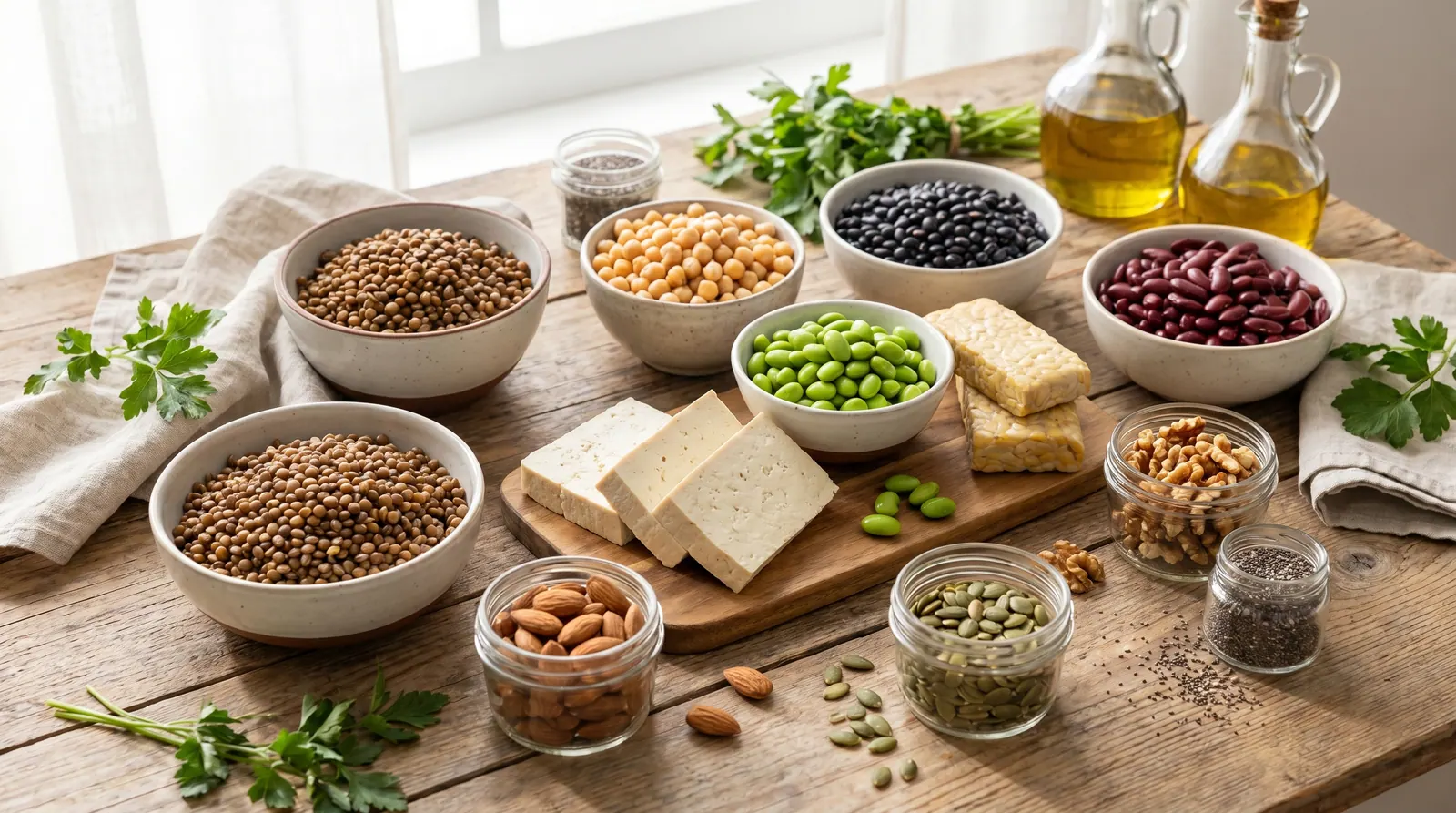
Practically speaking: Don't count amino acids in every meal. Include legumes daily with whole grains, and vary between lentils, chickpeas, fava beans, and kidney beans, adding nuts and seeds. This diversity over the course of the day ensures complete protein without worry or complex calculations.
Combining Legumes and Grains — Complete Protein
Legumes are rich in lysine but relatively low in methionine, while grains are the opposite. When legumes and grains are combined throughout the day, they complement each other, making the mixture close to a complete protein. The beauty is that our cuisine has been doing this naturally for generations.
| Legumes | With Grains or Seeds | Common Dish |
|---|---|---|
| Chickpeas | Tahini (Sesame) | Hummus with Tahini |
| Fava Beans | Whole Wheat Bread | Fava beans with whole wheat bread |
| Lentils | Rice | Lentil Mujadara |
| Kidney Beans | Rice | Kidney beans with rice |
| Mashed Chickpeas | Wheat in bread | Falafel in a whole wheat bun |
| Soybeans (Edamame) | Whole Grains | Edamame with brown rice |
Practically speaking: They don't need to be in the same dish. Lentils for lunch and chickpeas for dinner suffice, as protein complementarity occurs over the day, not necessarily in a single meal.
Is Your Plant-Based Plate Balanced? — A Self-Check
This is a guiding self-assessment that highlights potential indicators of an unbalanced plant-based plate or possible deficiencies. It does not replace a doctor's evaluation or laboratory tests. Select what applies to you:
Vitamin B12 — The Essential Supplement for Vegans
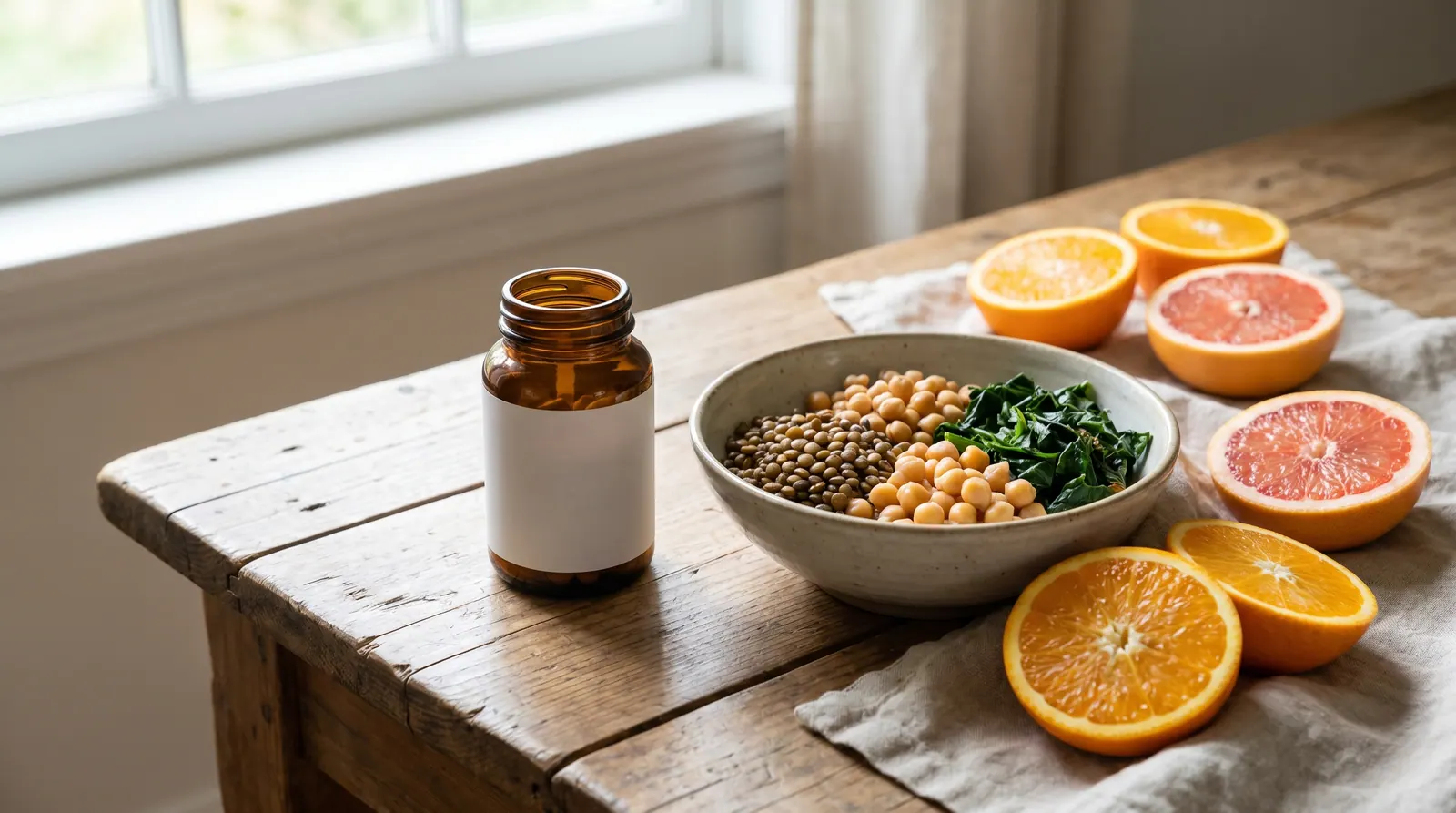
This is the most crucial point in this entire article, so do not skip it. Plant-based foods do not reliably contain Vitamin B12; its natural sources are in animal products. Therefore, the Academy of Nutrition and Dietetics explicitly states: Vegans need reliable sources of Vitamin B12, such as fortified foods or supplements. The American Supplement Institute also emphasizes that those who eat little or no animal products may not get enough.
Practically speaking: Do not treat B12 as optional; it is a necessity for vegans. The recommended daily intake for adults is about 2.4 micrograms, increasing to about 2.6 during pregnancy and 2.8 during breastfeeding. Fortified nutritional yeast is one of the few plant-based sources, but supplements or fortified foods are more reliable. Chronic B12 deficiency can damage nerves, so underestimating it is serious. Consult your doctor to determine the appropriate dosage and check your levels.
Other Nutrients to Watch
After B12, several nutrients require planning in a plant-based diet, especially a vegan one. This is not to cause alarm, but to raise awareness of their plant-based sources:
| Nutrient | Why Pay Attention | Plant-Based Sources |
|---|---|---|
| Vitamin B12 | Not reliably available in plants | Supplement or fortified foods |
| Iron | Plant-based iron is less absorbed | Legumes, leafy greens with Vitamin C |
| Calcium | Absence of dairy may reduce intake | Fortified plant milk, fortified tofu, cruciferous vegetables, legumes |
| Omega-3 | Plant source is ALA | Flaxseeds, chia seeds, walnuts |
| Zinc | Less absorbed from plant sources | Legumes, nuts, whole grains |
| Vitamin D | May be insufficient without attention | Fortified foods or supplement under supervision |
| Iodine | May be deficient without a source | Iodized salt |
Practically speaking: Plant-based Omega-3 comes from ALA in flaxseeds, chia seeds, and walnuts. A tablespoon of flaxseeds provides about 2 grams. Zinc is less absorbed from plants, so you might need a larger quantity; legumes, nuts, and whole grains are good sources. Don't chase every nutrient with a supplement; build a diverse plate and consult your doctor if you have concerns.
Iron and Vitamin C — The Absorption Rule
Iron in plants is of the "non-heme" type, which is less absorbed than heme iron in meat. Therefore, vegetarians need about 1.8 times more iron compared to meat-eaters, according to the American Supplement Institute. The recommended daily intake for adults is about 8 mg for men and 18 mg for women; multiply this by approximately 1.8 for vegetarians.
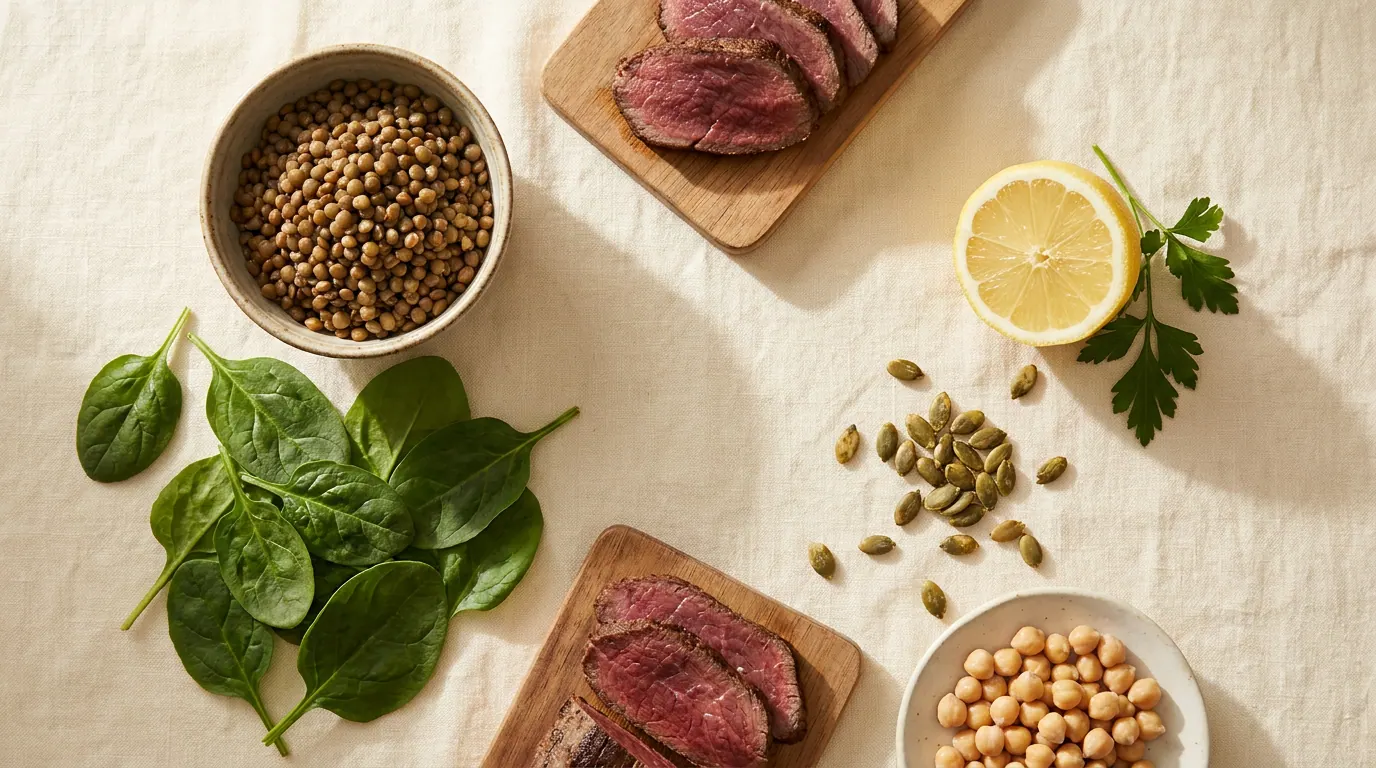
The good news is you have a simple tool: Vitamin C significantly improves the absorption of plant-based iron. Practically speaking: Squeeze lemon juice over lentils, or add peppers, tomatoes, and broccoli to your legume dishes, or finish your iron-rich meal with a citrus fruit. This pairing enhances iron absorption without any supplements, and it's one of the simplest secrets to a balanced plant-based plate.
Building the Balanced Plant-Based Plate
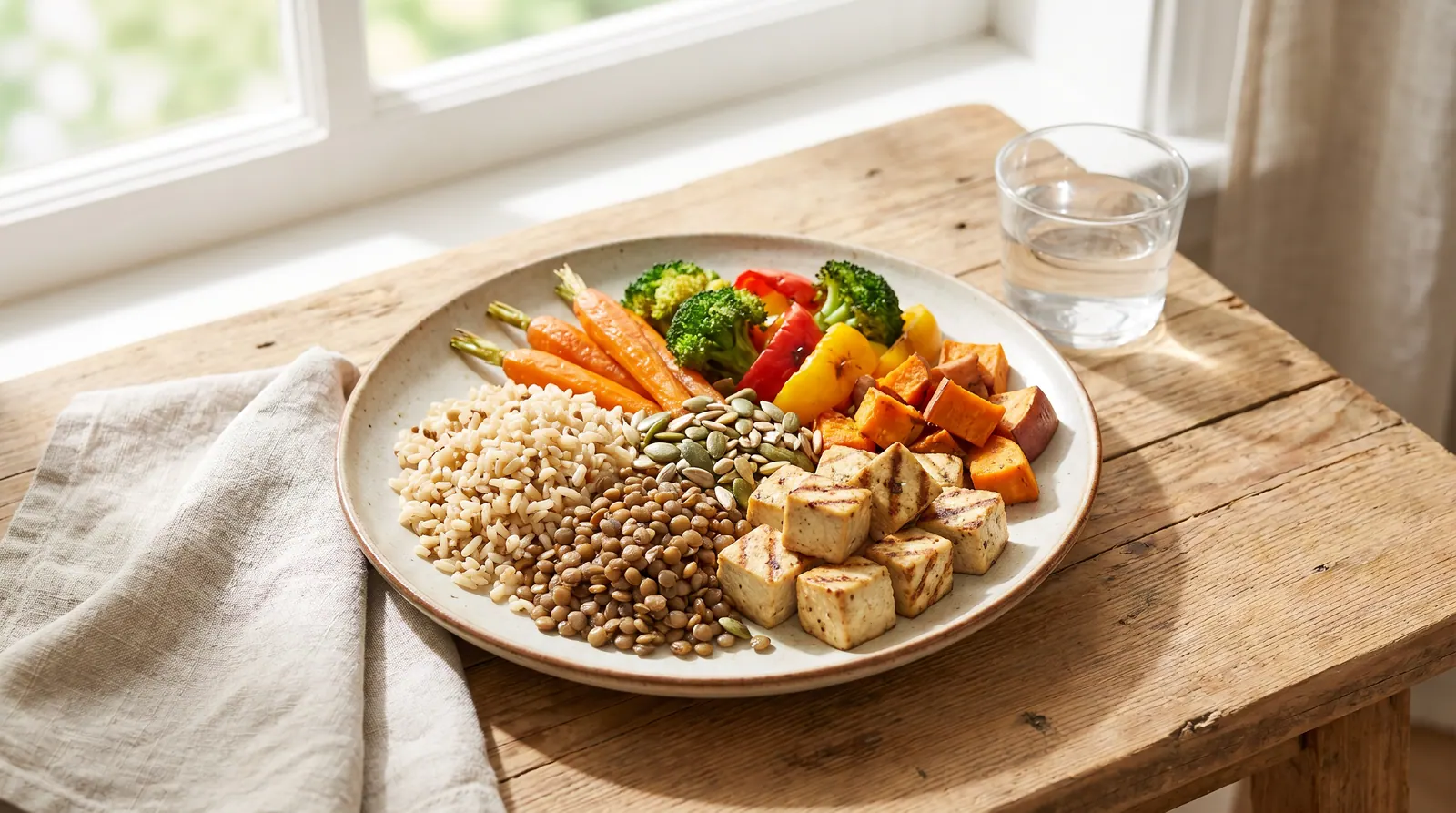
All the above comes together in an easy-to-visualize plate. Divide your plate as follows to cover protein, grains, vegetables, and healthy fats in one meal:
| Portion | Amount | Examples |
|---|---|---|
| Plant Protein | 1/4 of the plate | Lentils, chickpeas, beans, or tofu |
| Whole Grains | 1/4 of the plate | Brown rice, bulgur, or whole wheat bread |
| Vegetables & Fruits | 1/2 of the plate | Leafy and colorful vegetables with a Vitamin C source |
| Healthy Fats | Addition | Spoonful of flaxseeds, handful of walnuts, or olive oil |
Practically speaking: Combine legumes and grains throughout the day, add a Vitamin C source to each meal containing iron, and take a B12 supplement if you are vegan. This plate isn't complicated, and much of it is already present in our cuisine.
Why Your Saudi Plate Helps
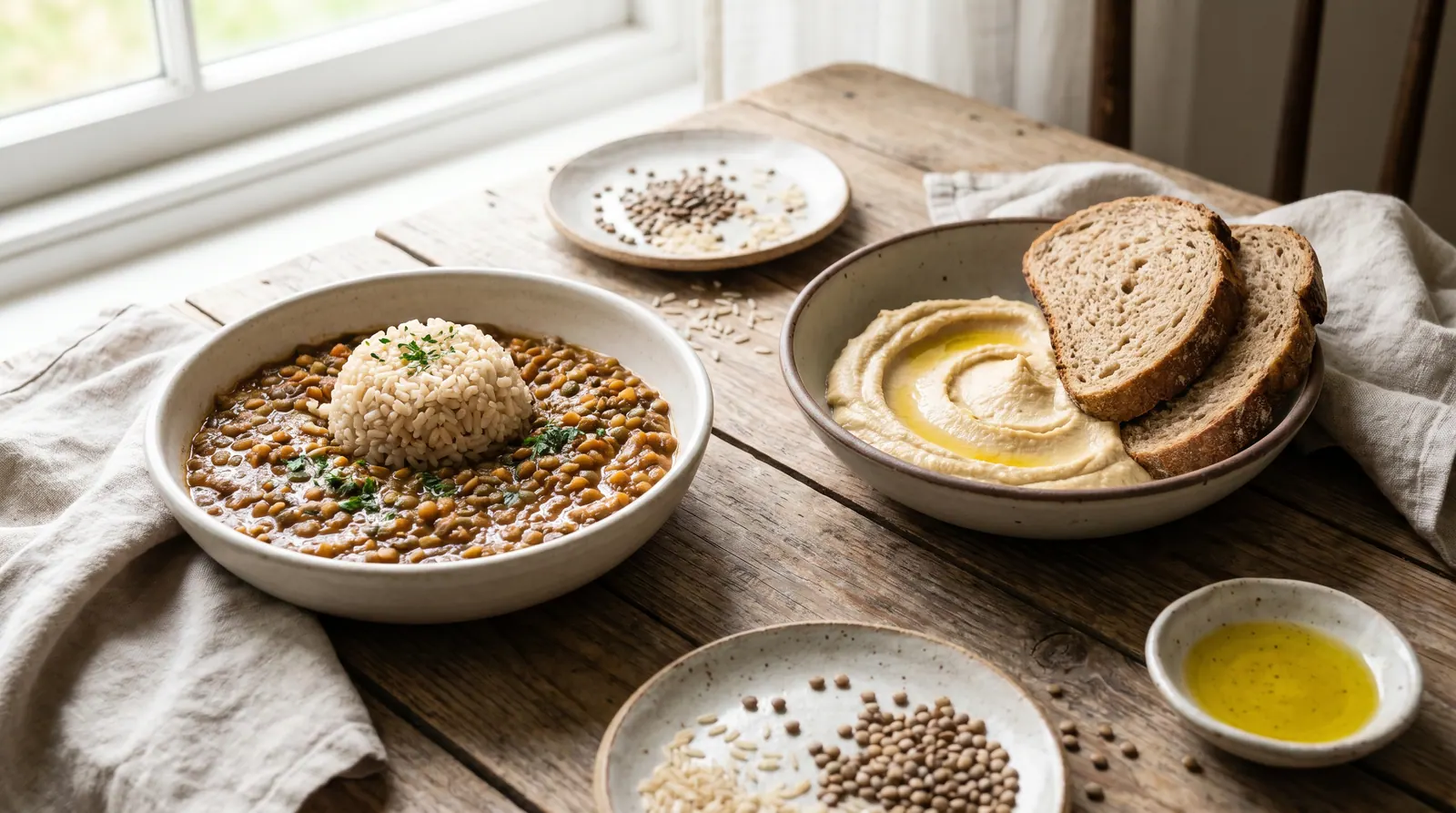
Our cuisine is more suited to a balanced plant-based diet than we might think. Fava beans, chickpeas, and lentils are staples in daily dishes. Mujadara combines lentils with rice, falafel combines chickpeas with wheat bread, and tahini accompanies chickpeas, complementing them. This combination of legumes and grains is present in our meals without conscious planning.
The practical message: Build on what you have. Increase legumes and whole grains on your plate, squeeze lemon on lentils, and incorporate seeds and nuts common in our diet. However, don't forget the one point traditional cuisine doesn't cover for strict vegans: Vitamin B12 remains a need for a supplement or fortified foods, no matter how nutritious your plate is.
What the Science Actually Says
The position of the Academy of Nutrition and Dietetics is clear and balanced: Well-planned vegetarian diets, including veganism, are healthy, nutritionally adequate, and may be beneficial in preventing and managing certain diseases. They are suitable for all life stages, including pregnancy, breastfeeding, childhood, and old age, and for athletes.
Crucially, the same position does not ignore caveats: it explicitly states that vegans need reliable sources of Vitamin B12, such as fortified foods or supplements. The practical conclusion: Don't treat a plant-based diet as a fad or a danger, but as a consciously planned system. Plan it well, reap its benefits; neglect B12, and pay the price.
Five Common Myths About Plant-Based Diets
Misconceptions about plant-based diets abound, with exaggerations in both directions: some demonize it, while others portray it as entirely without caveats. Here are the most common myths and the evidence-based truth:
"Plant-based protein is incomplete and of lower quality than animal protein."
"As long as it's plant-based, it's automatically healthy."
"Supplements for vegetarians are all marketing; they're unnecessary."
"Plant-based iron is absorbed the same way as animal iron."
"A plant-based diet is unsuitable for pregnancy and children."
Practical Tips to Implement Today
Before diving into the full protocol, here are small, actionable tips derived from the above, helping you build a balanced plant-based plate without turning your life upside down:
- Combine legumes and grains throughout your day. Lentils, chickpeas, or beans with brown rice or whole wheat bread, as protein complementarity occurs over the day, not in a single meal.
- Take a B12 supplement if you are vegan. This is not an optional recommendation but a necessity, as plants do not reliably provide it. Determine your dosage with your doctor.
- Pair plant-based iron with Vitamin C. Squeeze lemon on lentils or add peppers and tomatoes; this significantly boosts iron absorption without any supplements.
- Incorporate flaxseeds, chia seeds, and walnuts. A spoonful of seeds in your vegan yogurt or salad easily provides plant-based Omega-3.
- Choose fortified calcium sources. Fortified plant milk, fortified tofu, and cruciferous vegetables can compensate for the absence of dairy.
- Prioritize whole foods over processed ones. Legumes, whole grains, and vegetables are superior to processed vegan alternatives high in salt and fat.
- Use iodized salt. Iodine intake may be low in a plant-based diet without a clear source.
- Get regular check-ups and consult your doctor. Especially during pregnancy, for children and the elderly, and if you experience symptoms like fatigue or paleness, to assess iron and B12 levels.
EEINA's Protocol for a Balanced Plant-Based Plate Without Deficiencies
A practical plan combining the above into three progressive layers. Start layer by layer and note your response to understand what works best for you.
The protocol is based on the Academy of Nutrition and Dietetics' position, supplement guidelines, and plant-based nutrient values.
Build a Balanced Plate
Four daily habits.
Cover What Needs Attention
Essential steps.
Check and Review Under Supervision
Before any major change.
Golden Rule: A balanced plant-based diet isn't just about removing meat; it's about building a conscious plate that covers protein and sensitive nutrients. Vitamin B12 is a red line that must not be crossed in strict veganism.
Frequently Asked Questions
Is plant-based protein incomplete or of lower quality?
Do vegans need a Vitamin B12 supplement?
How can I absorb iron from plant-based food?
How do I build a balanced plant-based plate?
Is a balanced plant-based diet suitable for all life stages?
When to Consult a Doctor — Red Flags
A well-planned plant-based diet is safe in most cases, but certain symptoms warrant immediate medical evaluation:
- Severe fatigue, paleness, shortness of breath, or palpitations may indicate iron deficiency and require testing.
- Numbness, tingling, memory problems, or neurological changes could suggest Vitamin B12 deficiency and require urgent evaluation.
- Strict vegan for months without a reliable Vitamin B12 source; consult your doctor to check your levels and determine supplementation.
- Pregnancy, breastfeeding, or a child on a plant-based diet requires follow-up with a registered dietitian to ensure adequacy.
- Chronic health condition or medications before making significant dietary changes.
- Unexplained weight loss or progressive weakness despite a seemingly adequate diet.
Start Your Next Step with EEINA
Balanced Plant-Based Meal Plan
Saudi recipes combining legumes and grains into a complete plate, with attention to sensitive nutrients.
Get Your Plan →Legume & Grain Recipes
Easy ideas for incorporating lentils, chickpeas, and beans with whole grains into your meals.
Try Them →EEINA App
Balances your plant-based plate and reminds you of protein, iron, and Vitamin B12 sources in your day.
Download →