What is Iron Deficiency Anemia
Anemia is a condition where hemoglobin or red blood cell count is below normal, weakening oxygen delivery to your body's tissues. The most common type is iron deficiency anemia, which occurs when the body doesn't have enough iron to produce hemoglobin.
Iron isn't a secondary element. It's the oxygen carrier in your blood. When its stores are depleted, your energy gradually fades before any visible sign appears.
Iron deficiency progresses through three stages: first, stores deplete (ferritin drops) without symptoms; then, iron available for cell production decreases; finally, hemoglobin drops, leading to full-blown anemia. This is why you might feel tired and have a "normal" hemoglobin test while your ferritin is already low.
Saudi & Global Numbers
Iron deficiency anemia is one of the most widespread nutritional deficiencies globally, with women of reproductive age and children being the most affected. The picture in numbers:
Source: WHO Global estimates 2019 · AlFaris N et al. · Int J Gen Med 2021 · NIH Office of Dietary Supplements.
Saudi Context
A study on non-pregnant women in Riyadh linked high anemia rates to factors including heavy menstrual periods, a diet relying more on grains than meat, and the habit of drinking black tea with or immediately after meals. These habits significantly reduce the absorption of plant-based iron, a point we will return to in detail.
Iron deficiency in women in the region isn't always due to insufficient food, but sometimes to food rich in substances that hinder iron absorption. Adjusting timing alone can make a big difference.
Silent Symptoms of Iron Deficiency
Symptoms of iron deficiency creep in slowly, and because they resemble daily tiredness, many ignore them for months. Here are the most prominent ones according to Mayo Clinic and reputable medical sources:
Fatigue and General Weakness
Tiredness not explained by sleep, and a lack of energy that increases with exertion. Caused by insufficient oxygen reaching your muscles and brain.
Pale Skin and Cold Extremities
Pale face and lower eyelid, with cold hands and feet. A sign a doctor can quickly notice.
Shortness of Breath and Palpitations
Rapid breathing when climbing stairs, and a feeling of rapid heartbeats. The heart tries to compensate for the lack of oxygen.
Brittle Nails and Hair Loss
Nails that break easily and may become spoon-shaped, with more hair loss than usual with prolonged deficiency.
Strange Cravings (Pica)
Compulsive desire to chew ice or eat non-food items. A distinctive sign of iron deficiency known to doctors.
Restless Legs Syndrome at Night
An uncomfortable sensation in the legs when lying down, relieved by movement. Linked to iron deficiency in some cases.
Your Risk Factors: A Self-Check
Select all that apply to estimate your need for an iron store check-up:
Hemoglobin Calculator: Where Does Your Number Stand?
Hemoglobin is the first test requested in a Complete Blood Count (CBC). Normal ranges vary by sex and pregnancy. Enter your number in g/dL and select your category to see the World Health Organization's classification:
World Health Organization (WHO 2011) cut-offs: Normal for men is 13+, for non-pregnant women is 12+, and for pregnant women is 11+ (g/dL). Hemoglobin alone does not confirm iron deficiency without ferritin and your doctor's evaluation.
Read Your Labs: Ferritin is Key
Hemoglobin tells you if you have anemia now, but ferritin tells you about your iron stores before hemoglobin drops. This is why your ferritin might be low while your general test is "normal."
| Test | What it Measures | Significance of Low Value |
|---|---|---|
| Ferritin | Body's Iron Stores | < 15 ng/mL means depleted stores |
| Hemoglobin (Hb) | Actual Oxygen Carrier | Below threshold means existing anemia |
| Mean Corpuscular Volume (MCV) | Red Blood Cell Size | Typically small in iron deficiency |
| Transferrin Saturation | Available Iron for Transport | Low in active deficiency |
Heme vs. Non-Heme Iron: A Difference That Changes Everything
Not all iron in food is equal. There are two types that differ fundamentally in the body's absorption rate:
Heme Iron
Animal source: Red meat, liver, poultry, and fish. The body absorbs it very efficiently, and absorption inhibitors have little effect.
Non-Heme Iron
Plant source: Lentils, spinach, fortified cereals, and seeds. Absorption is much lower but is affected by accompanying foods, so it can be doubled or inhibited.
If you eat meat, your heme iron is likely covered. But if you're vegetarian or eat little meat, the real battle is in increasing plant-based iron absorption, not just eating more of it.
Iron-Rich Foods
These are common foods on our tables, ranked by their approximate iron content per 100 grams. Remember that meat sources are better absorbed, even though some plants have higher numbers:
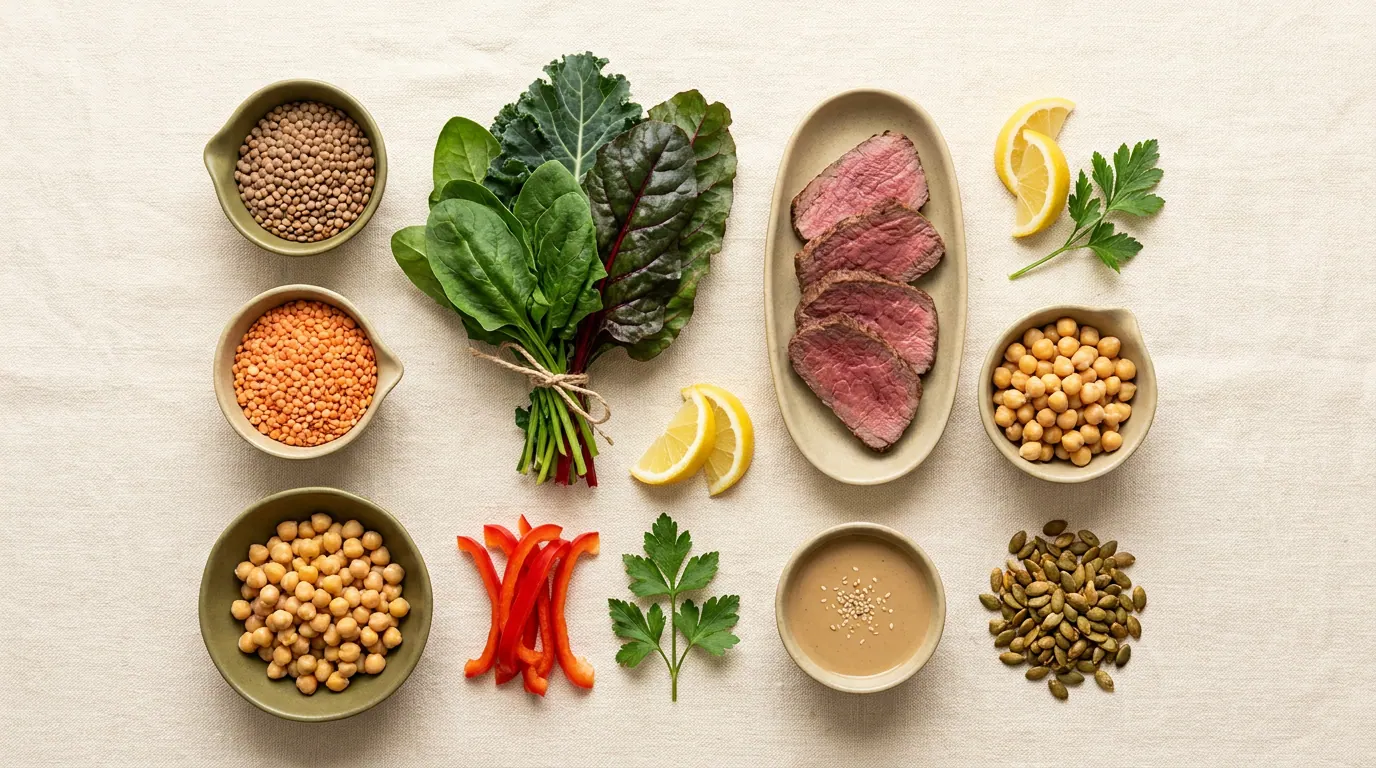
Approximate values per USDA FoodData Central · NIH Office of Dietary Supplements. Varies by type and cooking. High value doesn't mean higher absorption: meat and liver iron is heme and better absorbed than plant-based.
Absorption Enhancers: Vitamin C is the Hero
The most potent enhancer of plant-based iron absorption is vitamin C. Consuming it with your meal converts iron into a more easily absorbed form, potentially doubling the absorbed amount according to NIH:
Source: NIH Office of Dietary Supplements · Iron Fact Sheet. Vitamin C and animal protein are the most prominent enhancers for non-heme iron.
Practically: a squeeze of lemon on your lentil dish, or an orange after your beans, does more than you might expect. And it's cheaper and safer than jumping to supplements.
Absorption Inhibitors: Why Tea Timing Matters
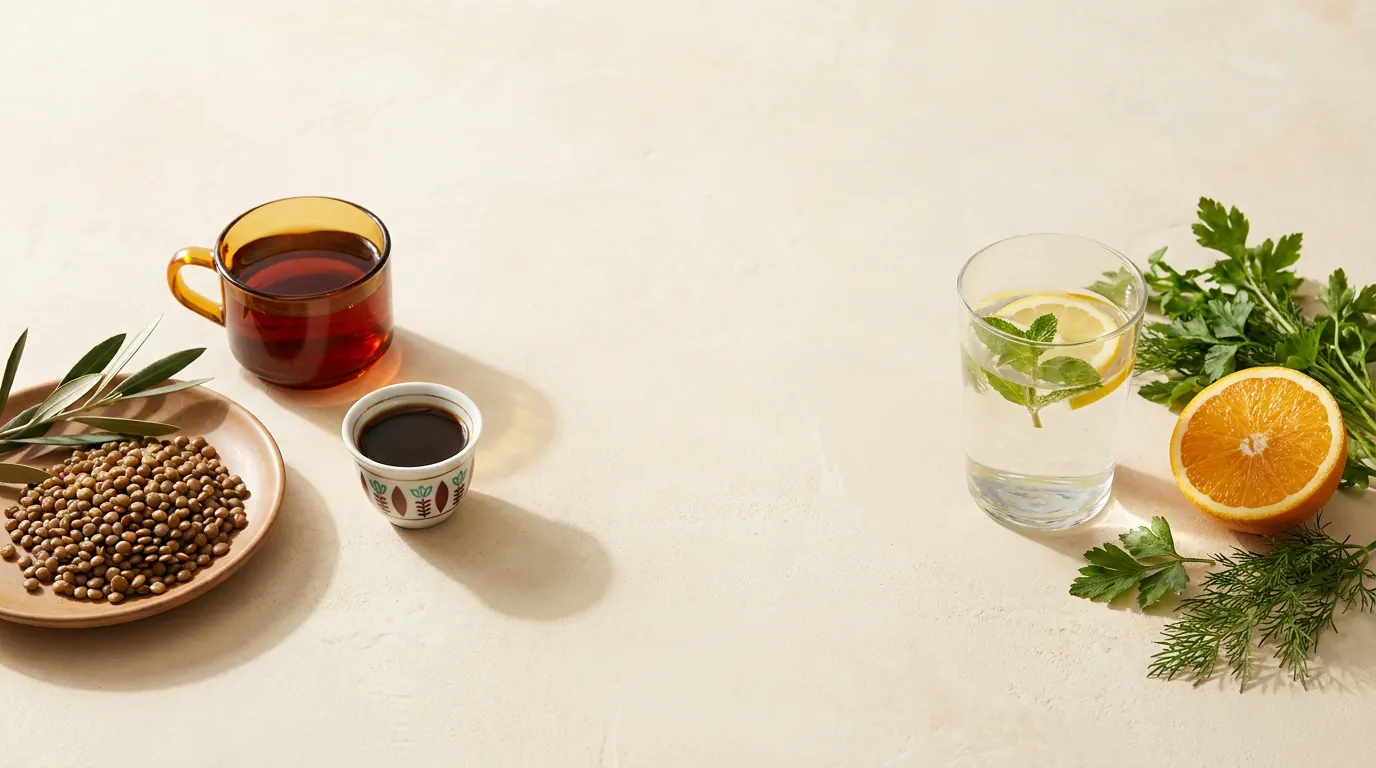
Conversely, some drinks and components reduce plant-based iron absorption when consumed with a meal. This is a crucial point for Saudi habits:
Saudi Context
The habit of drinking black tea or Arabic coffee with or immediately after meals is very common in our homes. Tannins and polyphenols in tea and coffee bind to plant-based iron and reduce its absorption. The solution isn't to stop, but to time it: drink tea between meals, or one to two hours after a meal, not with it.
Source: NIH ODS · Iron Fact Sheet. Tannins, calcium, and phytates are the main inhibitors. The greatest effect is on non-heme iron.
Groups Most at Risk
Iron deficiency does not affect everyone equally. These groups require greater attention and earlier screening:
Women of Reproductive Age
Monthly blood loss depletes iron. Heavy periods are a primary cause of iron deficiency in women, and the most common in Saudi statistics.
Pregnant Women
Iron requirements increase significantly during pregnancy to build the blood for both mother and fetus. Deficiency is linked to risks, which is why ferritin is monitored during prenatal care.
Vegetarians
Those who don't eat meat rely on less absorbable plant-based iron. They need to focus more on enhancers and avoiding inhibitors.
Individuals with Digestive Diseases
Celiac disease and inflammatory bowel diseases impair iron absorption. Deficiency here can be a sign of the underlying condition.
Supplements: When & How
Supplements are an effective tool when deficiency is confirmed by a test, not a guess. Dosage, type, and duration are determined by your doctor, but there are principles that enhance their effectiveness:
Diagnosed, Not Guessed
Do not start high-dose iron supplements without a test, as excess iron can accumulate and be harmful. Test first.
Every Other Day
Studies suggest that one dose every two days may increase absorption rates and reduce gastrointestinal side effects, under medical supervision (Stoffel 2017).
With Vitamin C
Taking the supplement with water and citrus juice, and at least two hours away from tea, coffee, and milk, enhances its benefit.
Duration & Follow-up
Replenishing stores typically takes months and is monitored by re-testing ferritin. Do not stop it just because symptoms improve without your doctor's recommendation.
Regular Screenings
Simple screening detects deficiency before it worsens and monitors response to treatment:
| Screening | When | Purpose |
|---|---|---|
| Complete Blood Count (CBC) | With symptoms or risk factors | Detect anemia and cell size |
| Ferritin | With deficiency symptoms | Measure iron stores |
| Repeat Ferritin & Hemoglobin | Months after treatment | Confirm store replenishment |
| Investigate Bleeding Cause | With unexplained deficiency | Rule out gastrointestinal bleeding, for example |
Periods & Pregnancy
These are the two biggest iron drains for women and deserve special attention:
Heavy Periods
Long or heavy periods lose more iron than diet can replace. If your periods are consistently heavy, discuss it with your doctor, as it might be the reason for your fatigue.
Pregnancy & Breastfeeding
Iron requirements increase significantly during pregnancy. Regular monitoring of ferritin and hemoglobin is a crucial part of prenatal care, and supplements are prescribed when needed.
Five Common Myths
"Spinach is the richest source of iron."
"All fatigue is caused by iron deficiency."
"Iron supplements give everyone instant energy."
"Drinking tea with meals is a harmless habit."
"Dates cure anemia on their own."
EEINA's 12-Week Iron Restoration Plan
A practical plan based on WHO and NIH ODS guidelines. Three layers combining diet, habits, and measurement. Remember: supplements and dosages are for your doctor after diagnosis.
Protocol based on WHO Anaemia guidance and NIH Office of Dietary Supplements.
Habits That Boost Iron Absorption
Four goals every day.
Weekly Iron Commitments
Four tasks to repeat each week.
Measure Impact After 12 Weeks
A measurable result, not an impression.
The Golden Rule: Diet builds iron slowly and steadily, while supplements accelerate replenishment for confirmed deficiency. Both together, under supervision, are the fastest way to restore your energy.
Frequently Asked Questions
- Symptoms often improve within weeks, but replenishing stores (ferritin) takes months. This is why ferritin is monitored before stopping supplements, and they should not be stopped just because you feel better.
- For mild deficiency and prevention, yes, especially with improved absorption and avoiding inhibitors. However, moderate to severe anemia requires a supplement under your doctor's supervision, as diet alone is too slow to correct a large deficit.
- Drink it between meals, or one to two hours after a meal, not immediately with it. This way, you can enjoy your tea without it inhibiting the absorption of iron from your plant-based meal.
- Regular blood donation gradually depletes iron stores, especially in women. If you are a frequent donor, monitor your ferritin and focus on an iron-rich diet between donations.
- Iron deficiency is the most common cause, but there are other types: vitamin B12 or folate deficiency, anemia of chronic disease, or inherited conditions like thalassemia. Therefore, accurate diagnosis through lab tests is essential before treatment.
Seven Points to Remember
- Iron deficiency is the most common cause of anemia. Women of reproductive age are most at risk.
- Ferritin before Hemoglobin. Stores deplete first before anemia appears.
- Heme iron is better absorbed. Meat and liver, while plant-based iron needs enhancement.
- Vitamin C doubles absorption. A squeeze of lemon on lentils makes a difference.
- Tea & coffee between meals. Not with them, to protect your plant-based iron.
- Supplements with diagnosis, not guesswork. Excess iron can be harmful, so test first.
- Measure after 12 weeks. Re-testing ferritin confirms store replenishment.
Start Your Next Step with EEINA
Iron-Rich Meal Plan
Saudi recipes combining legumes and meat with vitamin C enhancers, and smart tea timing.
Get Your Plan →Lentil & Vegetable Recipes
Dishes rich in plant-based iron, designed to boost absorption with simple ingredients.
Browse →EEINA App
Track your meals and energy, get supplement and check-up reminders, and generate reports for your doctor.
Download →