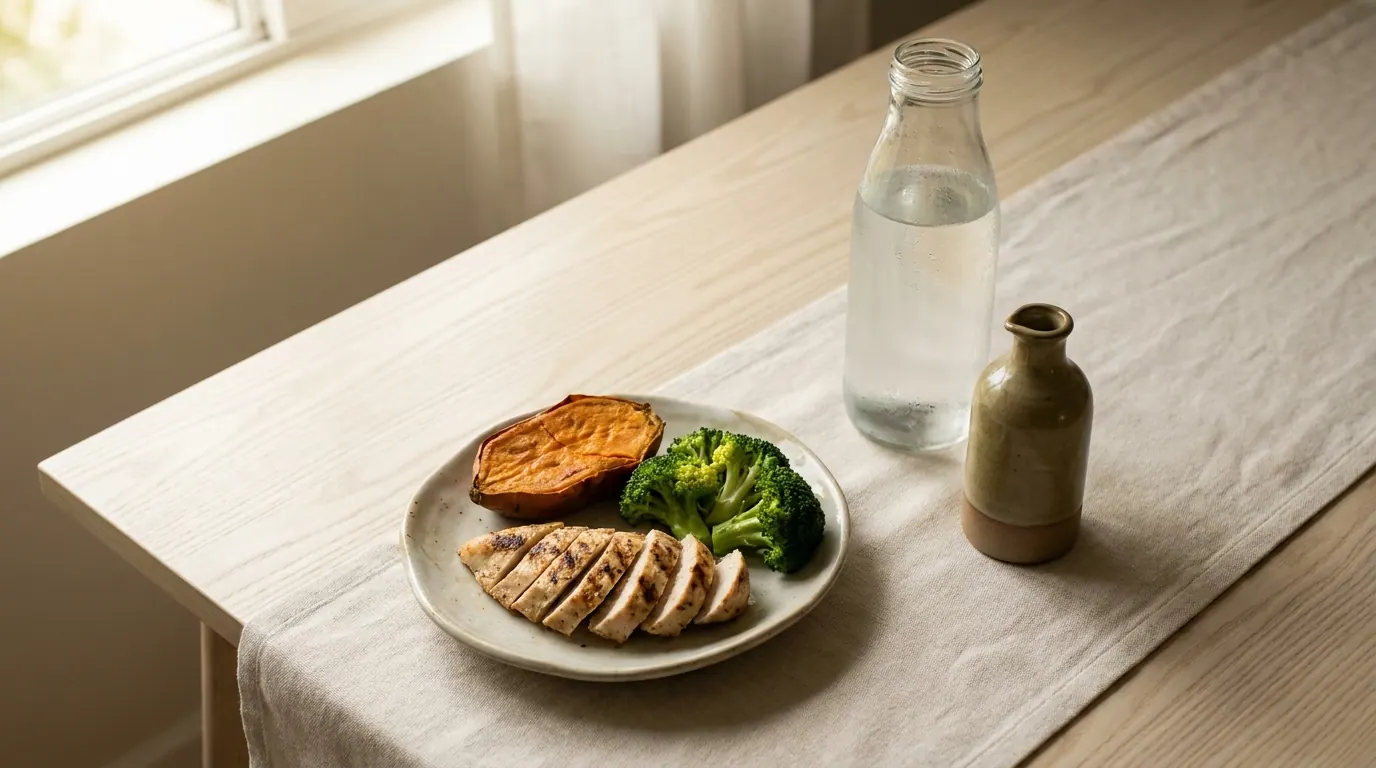
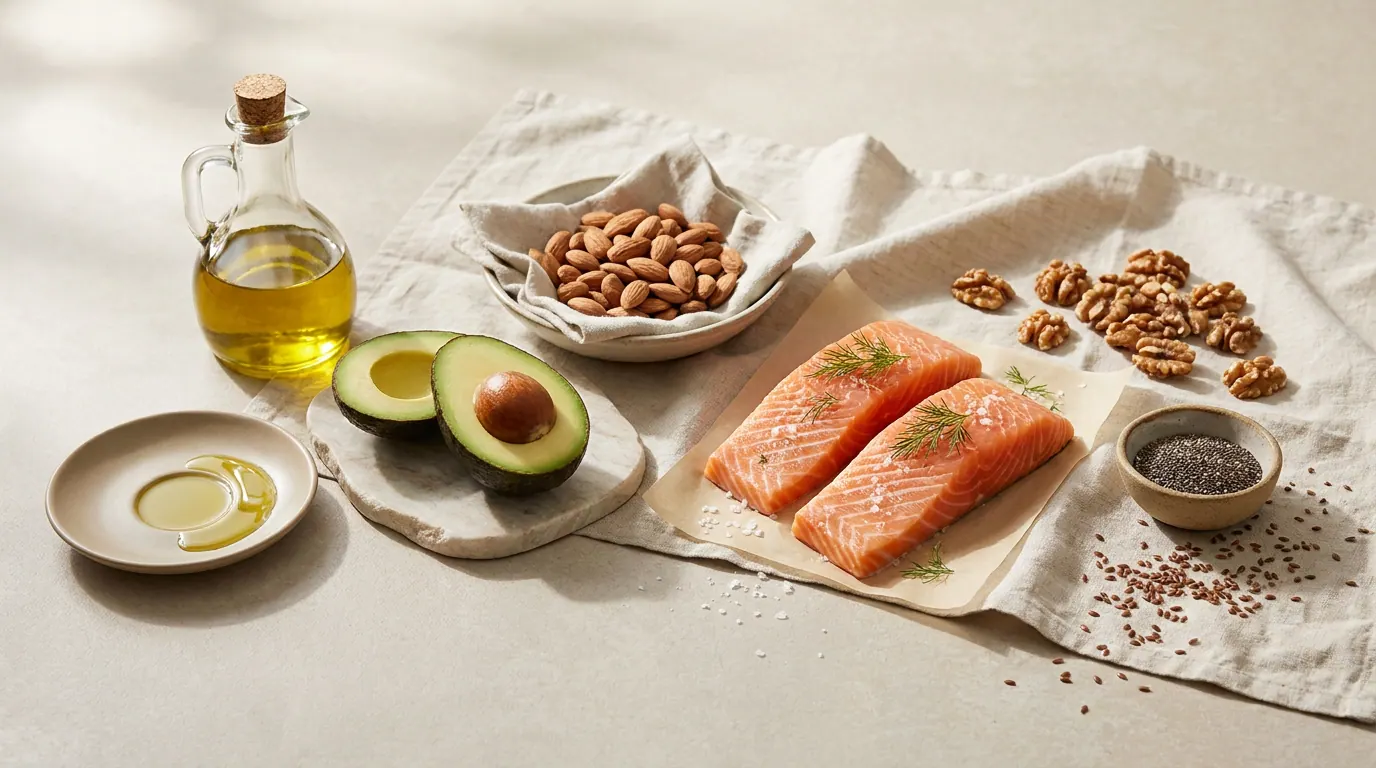
Protein is the building material of the body: muscles, skin, hair, enzymes, hormones, and the immune system. Since the body does not store it like carbohydrates and fats, you need it daily and in regular amounts.
Why Protein is More Important Than You Think
- Satiety: The most satiating macronutrient, it curbs hunger and cravings for snacks.
- Thermic Effect: The body burns 20% to 30% of its calories digesting it.
- Muscle Preservation in Calorie Deficit: Without it, you lose muscle along with fat during dieting.
- Recovery: Muscles grow during rest, not during exercise, and protein provides the necessary materials.
How Much Exactly — Calculate It Now
| Goal | g/kg of Body Weight | For a 70 kg Person |
|---|---|---|
| Normal Life without Exercise | 0.8 | 56 g |
| Light Exercise | 1.2 to 1.4 | 84 to 98 g |
| Muscle Building | 1.6 to 2.2 | 112 to 154 g |
| Weight Loss While Preserving Muscle | 1.6 to 2.4 | 112 to 168 g |
| Seniors (Over 65) | 1.2 to 1.6 | 84 to 112 g |
An indicative estimate. Individuals with kidney disease or specific conditions should consult their doctor before increasing protein intake.
Distribute Your Intake — and the Leucine Threshold
The body can utilize 20 to 40 grams of protein per meal to stimulate muscle protein synthesis, making distribution across four or five meals more important than the total amount alone[2].
100 grams distributed over four meals will build more muscle than 100 grams consumed in two meals.
Best Saudi Sources
| Source | Protein per 100g | Note |
|---|---|---|
| Grilled Chicken Breast | 31 g | Cheapest and highest in protein |
| Lean Beef | 27 g | With iron and vitamin B12 |
| Salmon | 25 g | With Omega-3 |
| Hamour | 23 g | Local |
| Eggs | 13 g (approx. 6.5 per egg) | Most complete in amino acids |
| Cottage Cheese | 11 g | Low-fat |
| Greek Yogurt | 10 g | With probiotics |
| Cooked Lentils | 9 g | Vegetarian and cheapest protein |
Source: USDA FoodData Central. Values are approximate and vary by cut and cooking method.
Whey Protein vs. Real Food
Whey protein is a complete, fast-absorbing protein, beneficial after workouts or when you're short on a meal. However, it's a supplement, not a replacement: whole foods provide vitamins, minerals, and fiber. The practical rule: 70% to 80% of your protein should come from food, and the rest from whey when needed.
Sample Saudi Day (Approx. 140 grams)
- Breakfast (35 g): Three eggs with 200 grams of Greek yogurt and a slice of cottage cheese.
- Snack (20 g): One scoop of whey with water and a handful of almonds.
- Lunch (40 g): 150 grams of chicken breast with a quarter cup of rice, salad, and five tablespoons of hummus.
- Pre-Workout (15 g): Whey with a banana.
- Dinner (30 g): 120 grams of grilled salmon with sautéed vegetables and a small boiled potato.
For Vegetarians — Complete Protein Without Meat
The best vegetarian sources include lentils, chickpeas, fava beans, kidney beans, quinoa, tofu, seeds, and nuts, along with whole grains. Smart combinations create "complete protein": chickpeas with whole wheat bread, lentils with rice, and fava beans with barley bread. These traditional Saudi combinations provide all essential amino acids.
Five Common Myths About Protein
- "Excess protein harms the kidneys." This is untrue for healthy individuals and only applies to those with chronic kidney disease[3].
- "Protein causes osteoporosis." On the contrary: it strengthens bones when calcium intake is sufficient.
- "Women need less protein." The ratio is the same for both genders based on body weight.
- "Whey is bad for the liver." There is no evidence for healthy individuals at recommended dosages.
- "One egg is enough for your daily protein." An egg provides only about 6.5 grams.
Frequently Asked Questions
- No, if you can reach your goal through food. Whey is just a convenient option when that's difficult (travel, busy schedule, low appetite). Build your foundation with whole foods first.
- Theoretically, it's possible if you significantly exceed your total calorie intake. However, it's the hardest macronutrient to convert to fat due to its high thermic effect and satiety. Within reasonable limits, protein is a friend to fitness, not an enemy.
- As people age, the body becomes more resistant to building muscle, increasing the need to preserve muscle mass and prevent weakness and falls. Refer to the Muscle Building Guide for details on sarcopenia.
- Most plants lack certain essential amino acids, so it's best to diversify throughout the day (legumes with grains). The quantity might need to be slightly higher to reach the same leucine threshold.
- You'll notice increased satiety and stable energy levels within days. Changes in body composition (more muscle, less fat) typically become apparent within eight to twelve weeks with consistent training and adequate sleep.
Six Points to Remember
- Daily total first. Start with your weight multiplied by 1.6 for muscle building.
- Distribute across four or five meals. Better than consuming it all at once.
- Reach the leucine threshold. Around 25 to 30 grams per meal is good.
- Food is the foundation, whey is a supplement. 70% to 80% should come from whole foods.
- Protein preserves your muscle during dieting. So you don't lose muscle along with fat.
- Results in twelve weeks. With consistent training and sufficient sleep.
Calculate Your Protein Needs
EEINA's calculator provides your optimal daily intake of protein, carbohydrates, and fats based on your weight and goals, with calculated Saudi recipes.