A Saudi woman bends to pick up a tissue and hears a crack in her back—her foot didn't slip, a vertebra fractured on its own. Osteoporosis is a silent disease that takes years to develop, then reveals itself with the first fracture. Forty percent of Saudi women over 50 are affected, and most don't know it. This guide reveals the single test that changes everything.
14 minute readPublished May 28, 2026Reviewed: EEINA team
Scroll down to discover ↓
00The Paradox
A hip fracture doesn't happen from falling. The fall happens because of the hip fracture.
We believe an elderly person falls and breaks their hip. Modern medical science (NEJM 2024) shows the opposite is often true: the vertebra or hip fractures first due to weak bone structure, causing the fall. Osteoporosis comes with no pain or symptoms—it reveals itself with a sudden fracture, and by then, much has been lost.
40%
Of Saudi women over 50 have osteoporosis or osteopenia.
70%
Vitamin D deficiency in Saudi Arabia—the biggest risk factor for osteoporosis in the land of the sun.
20%
Mortality within a year of a hip fracture. The most dangerous complication of osteoporosis.
Strong bones don't come from calcium alone. They come from movement, sunshine, sleep, and understanding that bone is built at night and destroyed by inactivity.
What is Osteoporosis
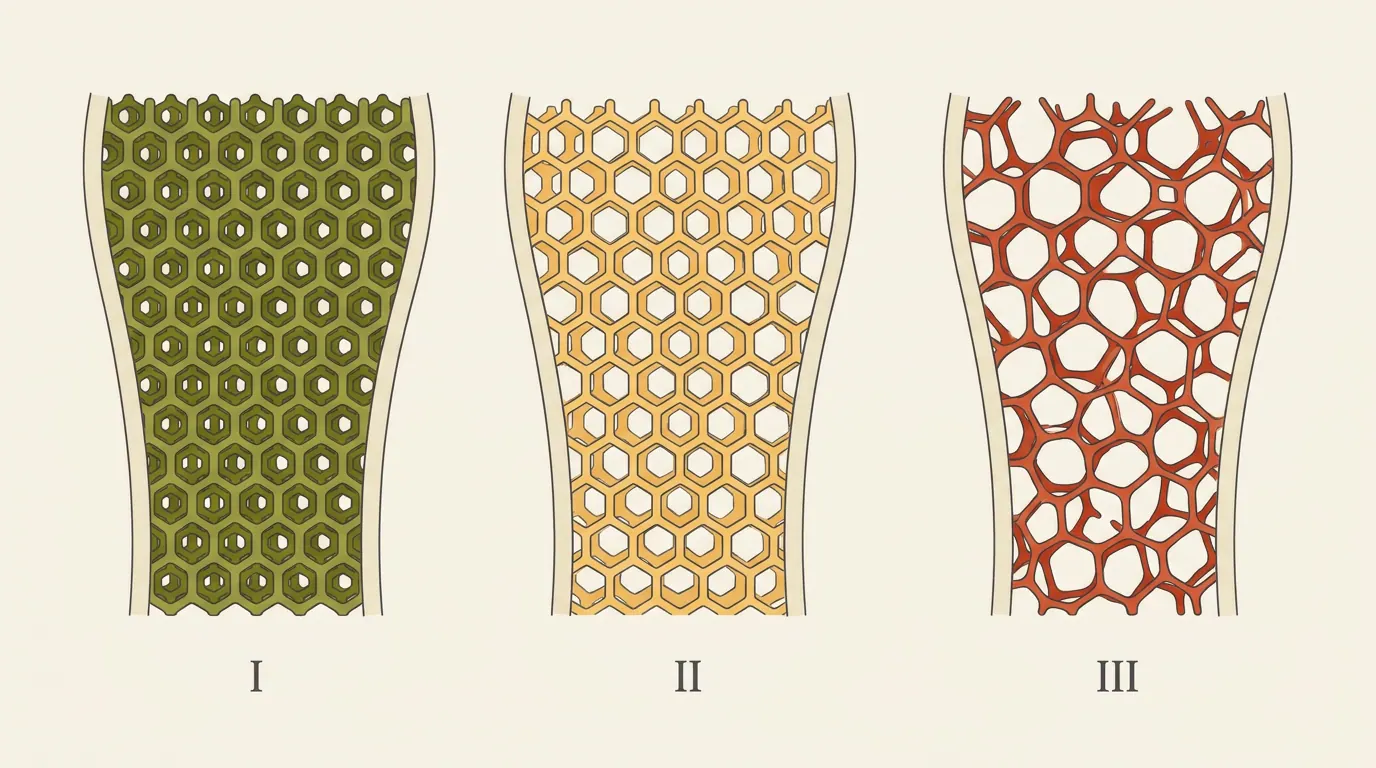
Osteoporosis is a condition where bones gradually lose density, becoming brittle and prone to fracture with minimal stress. It is preceded by Osteopenia (mild bone loss). Bone building stops around age 30, and gradual loss begins thereafter—1% annually in healthy individuals, and 3% post-menopause in women.
Bone structure evolution · From dense network to brittle, scattered structure
The Fundamental Rule
Bone is a living tissue that constantly renews itself. Cells called Osteoblasts build, and others called Osteoclasts break down. Osteoporosis occurs when breakdown exceeds building—due to hormonal, nutritional, or inactivity reasons.
How Bone Forms and Degrades
Bone is built from three layers: Calcium (provides hardness), Collagen (provides flexibility), and Phosphorus. These components require hormones to regulate their distribution—Estrogen, Testosterone, Vitamin D, and Parathyroid Hormone. When any of these are imbalanced, the equilibrium is disrupted, and loss begins.
Why Women Are Four Times More Susceptible
Two primary reasons: Women have a lower initial bone mass by 20% compared to men. And menopause—a sudden drop in estrogen accelerates bone loss from 1% to 3% annually. The result: a woman post-menopause loses 20% of her bone density within 5 to 7 years.
According to the Saudi Society of Endocrinology and MOH 2023:
Prevalence of Osteoporosis in Saudi Arabia
Women over 50
40%
Men over 60
22%
General Vitamin D Deficiency
70%
Annual Hip Fractures
25,000
Aware of their condition
25%
Source: Saudi Society of Endocrinology 2023 · MOH Vitamin D Survey 2023 · IOF MENA Atlas 2024.
Three out of four Saudi women have Vitamin D deficiency in a land of sunshine. The reason: clothing, heat, and avoiding going out, not lack of sun itself.
The FRAX Calculator — 10-Year Fracture Risk
FRAX is a global tool that calculates the probability of an osteoporotic fracture in the next 10 years based on your risk factors:
Enter Your Basic Information
A quick risk estimate—not a substitute for DEXA
Years
Threshold differs by sex
Low RiskLess than 10%
Moderate Risk10% to 20%
High RiskOver 20%
Simplified directional estimate. Actual assessment requires additional factors + T-Score from DEXA. Get a DEXA scan if risk is over 10%.
Your Risk Factors — A Self-Check
Osteoporosis Risk Factors
Silent Warning Signs Before Fracture
Osteoporosis isn't symptomless as often claimed. These are subtle signals many of us ignore:
Height Loss
More than 2 cm in years
A silent vertebral fracture can shorten the spine without pain in many cases. Measure your height annually.
Stooped Posture (Kyphosis)
"Dowager's Hump" appearance
Accumulated vertebral fractures cause the back to curve forward. A change in clothing fit can be an early indicator.
Chronic Back Pain
Starts suddenly without cause
A vertebral fracture can cause sharp pain that becomes chronic. Pain between the shoulder blades or in the lower back.
Weak Hand Grip
Difficulty opening a jar
Associated muscle weakness (Sarcopenia) often accompanies osteoporosis. Test your grip strength annually.
Tests — DEXA, FRAX, and the T-Score
The gold standard test is DEXA (Dual-Energy X-ray Absorptiometry)—it measures bone density in the hip and spine in 10 minutes, painlessly. The result is a T-Score:
Normal T-Score
Above -1.0
Healthy bone density: Maintain your lifestyle. Get tested once every 5 years after age 65.
Osteopenia
Between -1.0 and -2.5
Early bone loss: Immediate dietary + exercise intervention. Medications for those with high FRAX risk.
Osteoporosis
Below -2.5
Full-blown osteoporosis: Medications are necessary. With a prior fracture = severe osteoporosis requiring urgent intervention.
Z-Score
For young adults under 50
Comparison to peers: If below -2, investigate secondary causes (thyroid, cortisone, malabsorption).
The 3 Major Types of Osteoporotic Fractures
Hip Fracture
20% mortality within a year
The most dangerous by far. Requires immediate surgery. 50% never regain their independence. Prevention is far better than treatment.
Vertebral Fracture
Most common · Most silent
Can occur with normal bending. Shortens height, stoops the back. 70% of vertebral fractures go undiagnosed.
Wrist Fracture (Colles)
Often the first osteoporotic fracture
Falling on an outstretched hand causes a wrist fracture. It often precedes a hip fracture by years—a signal to start treatment.
Other Fractures
Shoulder · Pelvis · Ankle
Any fracture after menopause with a minor fall = osteoporosis until proven otherwise. Request a DEXA scan immediately.
Calcium—Friend or Foe
Calcium is essential, but excess intake can be dangerous. The smart dose:
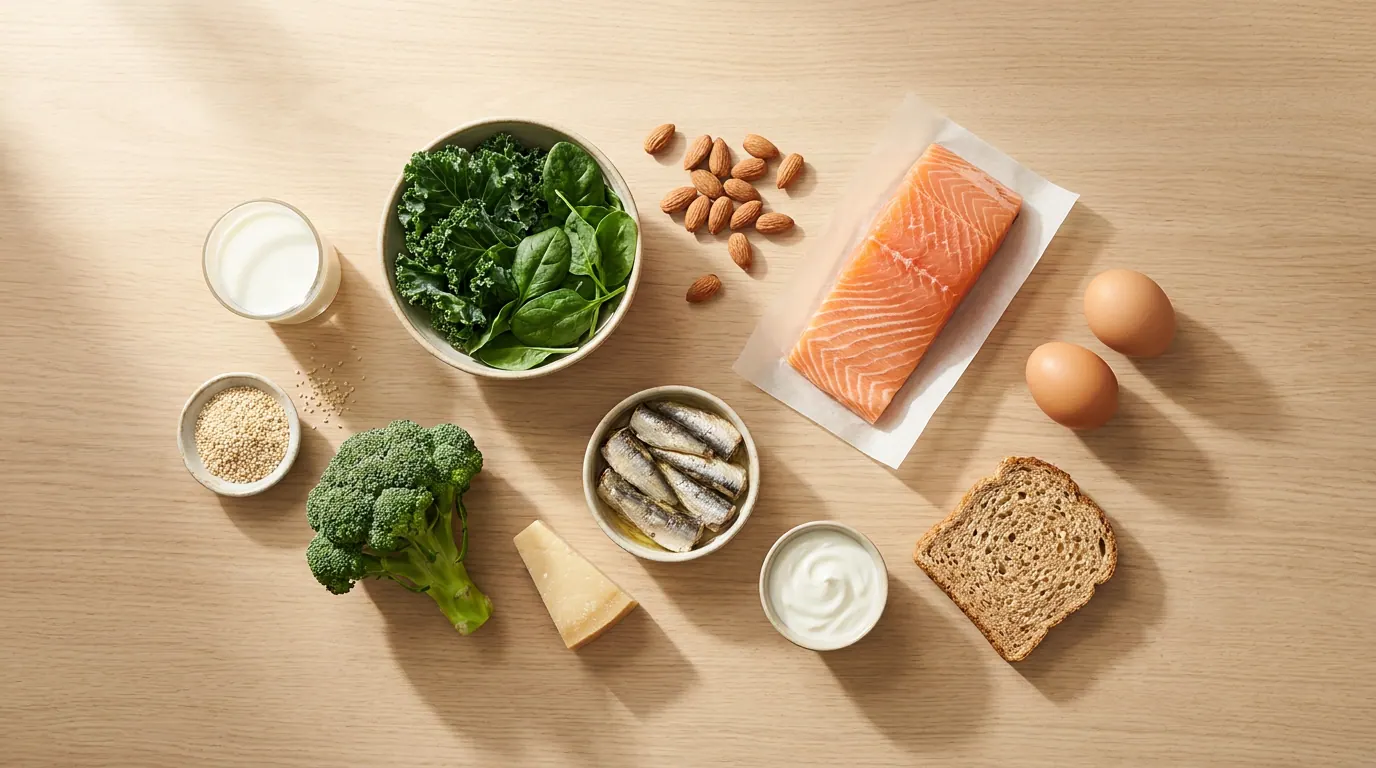
Seven Foods That Support Bone Health
Seven foods clinically proven to increase bone density
Calcium in One Serving (mg)
Cup of Milk or Yogurt
300 mg
Can of Sardines (with bones)
325 mg
Two Slices of Hard Cheese
400 mg
Cup of Cooked Kale or Spinach
200 mg
Handful of Almonds (28g)
75 mg + Magnesium
Two Tablespoons of Tahini
130 mg
Salmon with bones
220 mg + Vitamin D + Omega-3
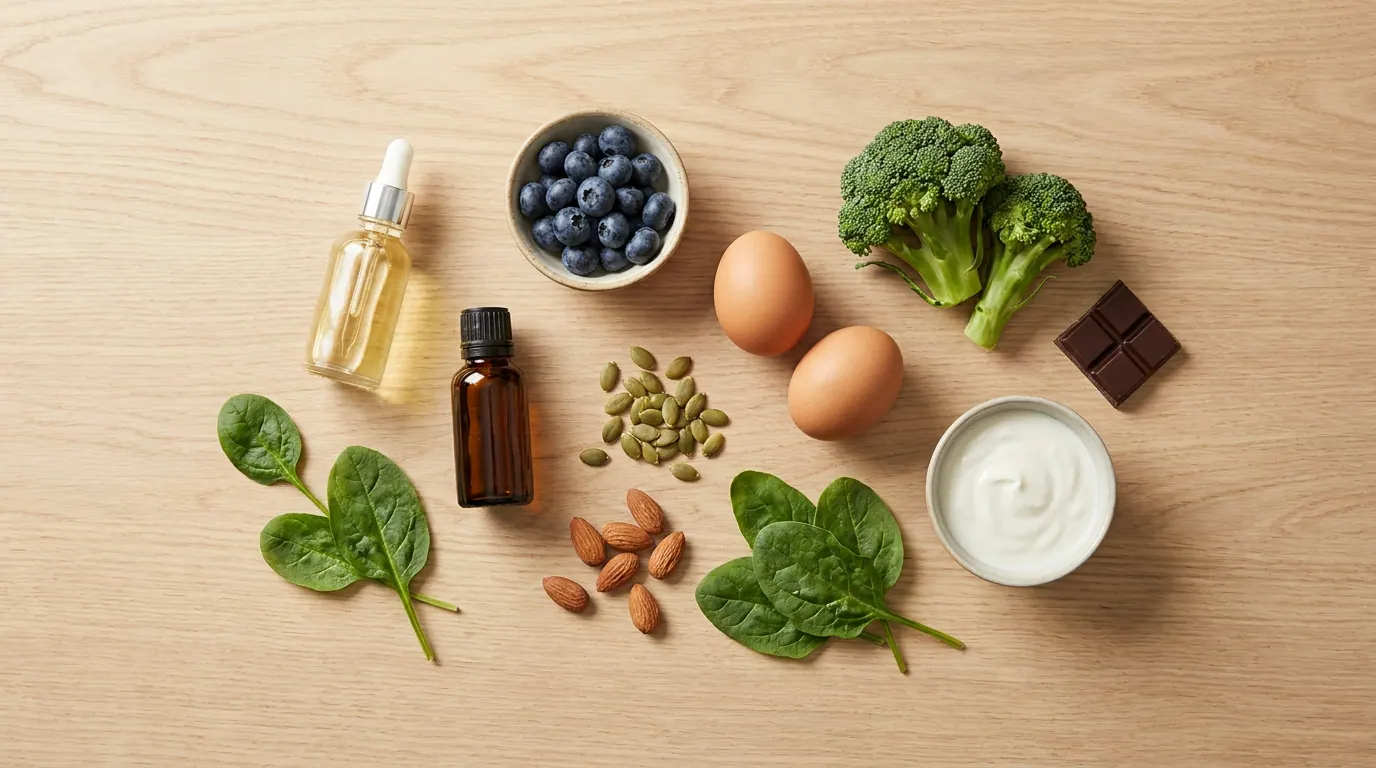
Vitamin D, K2, and Magnesium—The Smart Trio
Morning sunlight · The natural source of Vitamin D
The Smart Trio · Vitamin D, K2, and Magnesium
Resistance Exercise — Bone is Built Through Stress
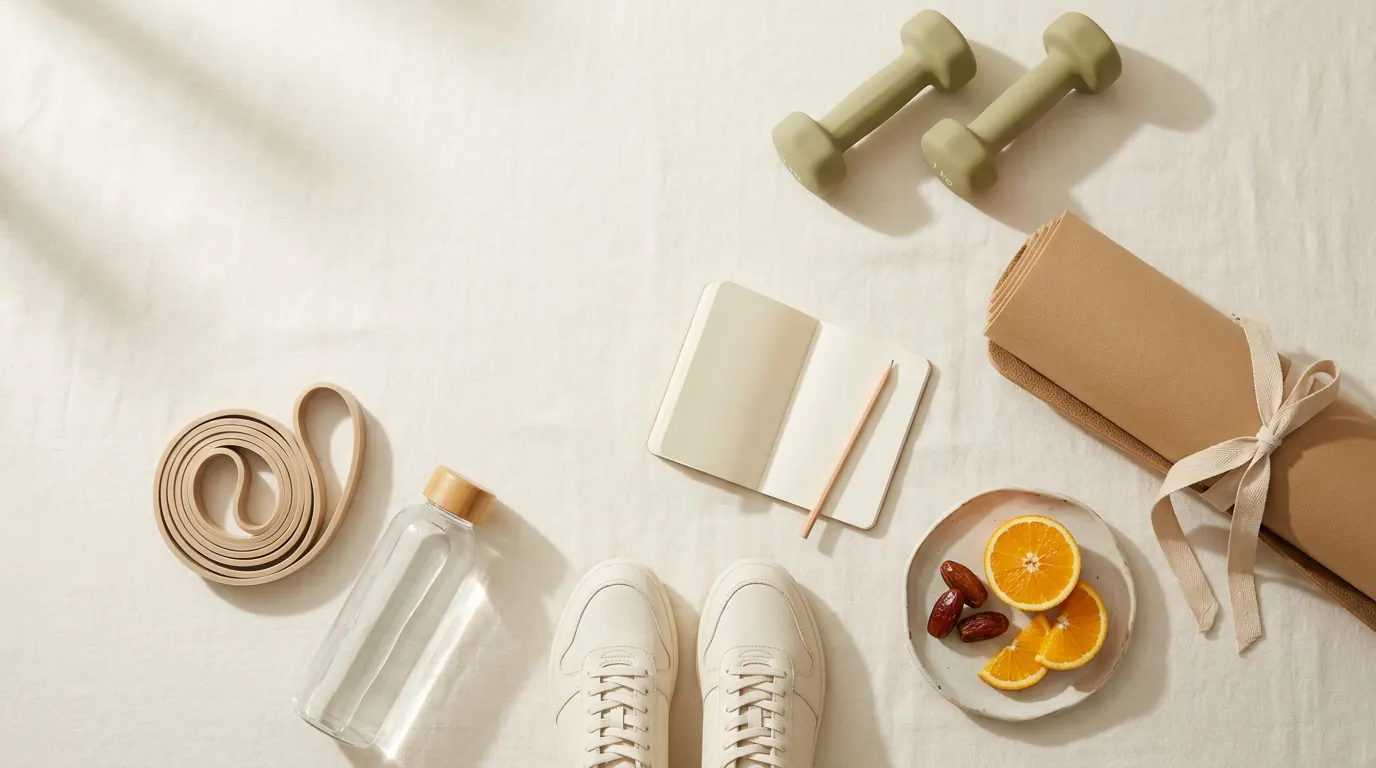
Bone adapts to stress—more stress equals more density. Different types of exercise have varying effects:
Resistance and Weight-Bearing Exercises · The strongest bone builders
Effect of Exercise on Bone Density (2 Years)
Resistance Training (Weights)
2% to 5% Increase
Brisk Walking + Jogging
Maintains Density
Light Jumping Daily
Strong Hip Stimulation
Yoga & Tai Chi
Reduces Fall Risk by 30%
Swimming Only
Does Not Build Bone (No Weight-Bearing)
Medications—Bisphosphonates, Denosumab, and HRT
Bisphosphonates (Alendronate)
70 mg once weekly
The first choice worldwide. Reduce hip fractures by 40%. Take in the morning on an empty stomach with a full glass of water, and remain upright for 30 minutes. Duration: 5 years, then reassess.
Denosumab (Prolia)
Injections every 6 months
Stronger than Bisphosphonates. For those who failed them. Risk: Sudden discontinuation causes multiple fractures; must be followed by a Bisphosphonate.
Romosozumab (The New One)
Monthly injections for 1 year
A drug that builds bone instead of just preventing breakdown. Strongest effect. For severe cases. Cardiac warning—do not use in those with a prior stroke.
HRT — Hormone Replacement Therapy
For early menopause
Estrogen prevents bone loss after menopause. A good option for women in their 50s with menopausal symptoms. Balance between bone benefits and breast cancer risk.
Women immediately after menopause (around 50), and men after 70. Earlier if you have a family history, long-term cortisone use, or early menopause. The cost in Saudi Arabia is 300 to 600 SAR. DEXA is not repeated annually—every two years is sufficient.
If you don't have severe osteoporosis, no. Light jumping (in place) stimulates hip bone building. Start with five jumps and gradually increase. For those with full osteoporosis, start with a physical therapist.
Yes, indirectly. It improves balance and reduces falls by 30%. However, it doesn't build new bone like resistance exercises. Combine it with weights.
In women under 60 with recent menopause, benefits outweigh risks. As age increases, the balance shifts. Discuss with an endocrinologist. Newer (Bioidentical) formulations have lower risks than older generations.
Aromatase Inhibitors (Letrozole, Anastrozole) significantly accelerate bone loss. Get a DEXA scan before starting, repeat every two years. Start a prophylactic Bisphosphonate with the first dose. This is the ASCO 2024 guideline.
In Saudi Arabia, it's rarely sufficient. Obesity, age, avoiding sun due to heat, and clothing prevent absorption. 70% of Saudis need a supplement. Check your blood level to be sure.
Yes. Eggs contain Vitamin D, protein, and choline. Egg yolks, in particular, are a natural source of Vitamin D. Two eggs daily support bone and muscle health.
Key Takeaways
Seven Points to Take With You
Osteoporosis is a silent disease. It reveals itself with the first fracture—don't wait.
DEXA scan immediately after menopause. The gold standard test, relatively inexpensive.
Calcium without Vitamin D + K2 is dangerous. It accumulates in arteries.
70% Vitamin D deficiency. Sun alone is not enough in Saudi Arabia.
Resistance exercises are the strongest. Swimming does not build bone.
Preventing falls = half the treatment. Yoga + lighting + good shoes.
HRT in early menopause. Benefits outweigh risks under 60.