What Honey Really Is
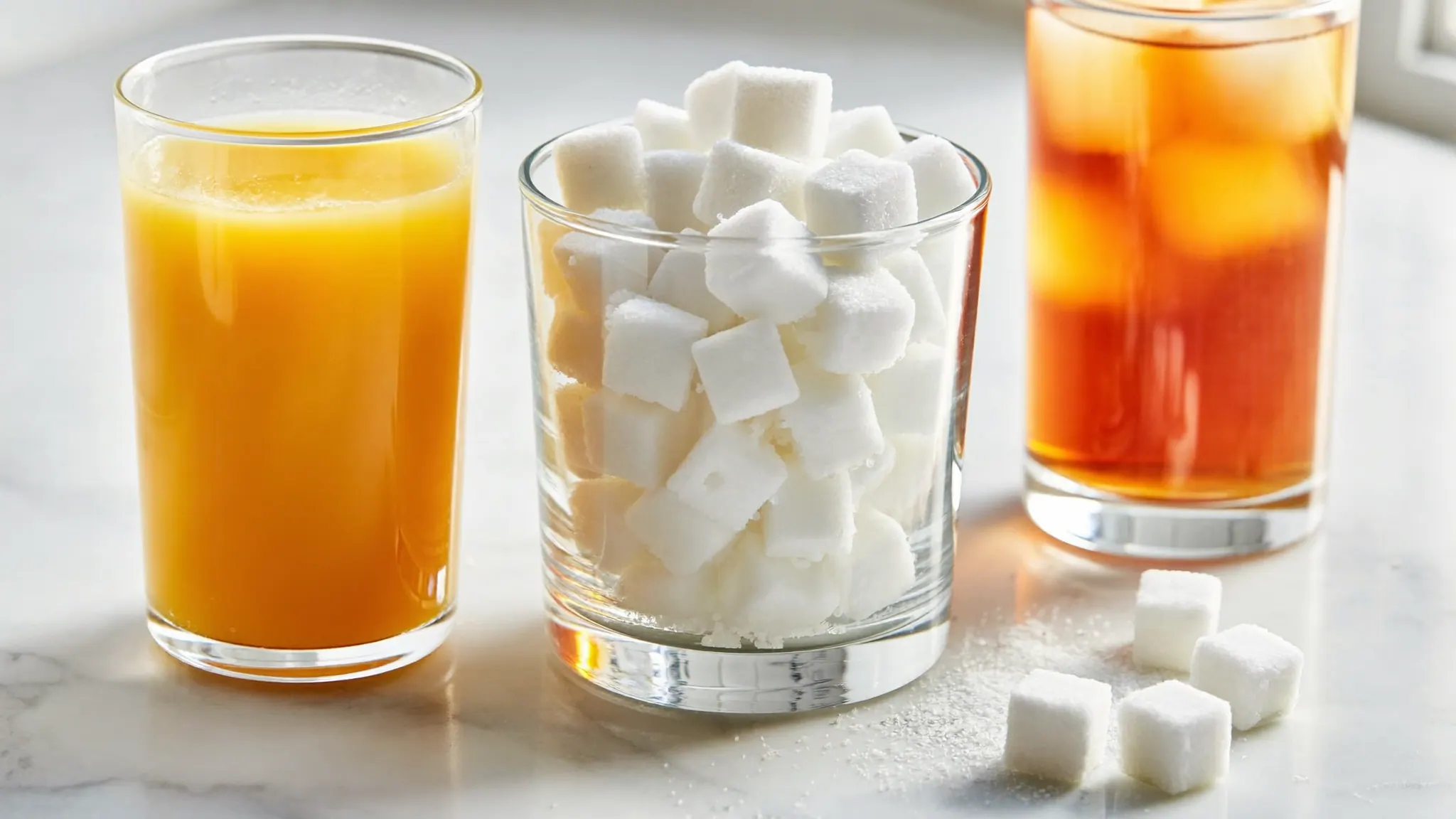
Honey is essentially a concentrated sugar solution. Nutritional composition data indicates that about eighty-two percent of its weight is sugars, mostly fructose and glucose, with about seventeen percent water, and a very trace amount of protein, and virtually no fat. What distinguishes it from white sugar are the trace amounts of minerals like potassium, calcium, and iron, and plant compounds and antioxidants that give it its color and flavor.
Practically speaking: these minerals and compounds are present in small quantities insufficient to cover your needs. One hundred grams of honey provides only about 52 mg of potassium. The meaning is that honey is not a reliable source of any micronutrient; rather, it is a natural sweetener with a rich flavor and a marginal nutritional impact. Treat it as such, not based on promises.
Honey vs. Table Sugar — A Modest Difference
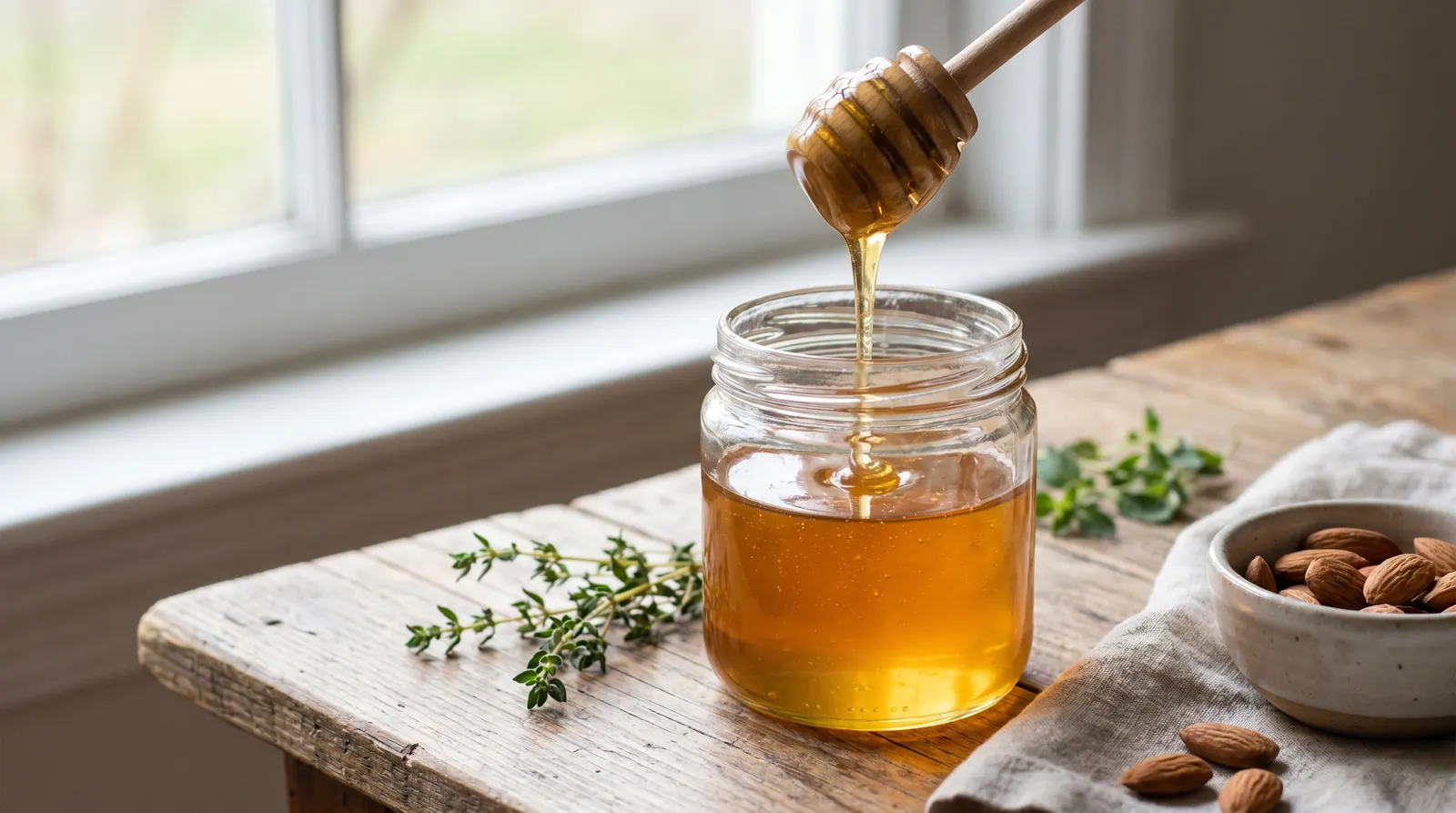
Many people switch from sugar to honey, thinking it's a healthy leap. The reality is that the difference is modest, not radical. Table sugar is sucrose, a molecule of glucose and fructose linked together, while honey is a mixture of free glucose and fructose in a similar ratio. The fructose in honey gives it a slightly higher sweetness, so you might use a smaller amount for the same taste, which is its small real advantage.
As for calories, they are comparable: a tablespoon of honey is about 64 calories, close to a tablespoon of sugar. The effect on the body is ultimately similar, as both are free sugars. Practically speaking: if you enjoy the taste of honey, use it, but don't replace sugar with it thinking you're making a healthy food. The real replacement is reducing all sweeteners, not swapping one for another.
Honey is a Free Sugar to Count Towards Your Limit
This is a point that many miss. The World Health Organization explicitly defines free sugars to include sugars naturally present in honey, syrups, and fruit juices, not just added sugars. This means honey counts towards your daily limit just like table sugar, despite its natural origin.
The organization recommends reducing free sugar intake to less than 10% of daily energy intake, preferably below 5%, which is about 25 grams or 6 teaspoons. The American Heart Association sets a daily limit of about 6 teaspoons for women and 9 for men, and explicitly classifies honey as an added sugar. Practically speaking: a single tablespoon of honey contains about 17 grams of sugar, consuming a significant portion of your daily limit before you even account for other sweets and beverages.
Is Your Relationship with Honey Worth Reviewing? — A Self-Check
This is a guiding self-check that combines consumption habits and common perceptions. It does not replace an assessment by a nutritionist or doctor. Choose what applies to you:
Its Effect on Blood Sugar
Honey raises blood sugar, and this is an undeniable fact. Its average glycemic index is around 58, close to table sugar which is around 66, not far off. The value varies by floral source; some honeys are lower and some are higher, but the range remains within moderate to high.
Practically speaking: individuals with diabetes or pre-diabetes treat honey like any other sugar, counting it within the carbohydrate content of their meal, not adding it on top under the guise of it being natural. The slight difference in index does not make it a free pass. The safe rule: if you want it, use it in a small, calculated amount within your plan, and monitor your readings, rather than relying on a promise that it's gentle on blood sugar.
What the Evidence Says About Cough — Honey's Strongest Point
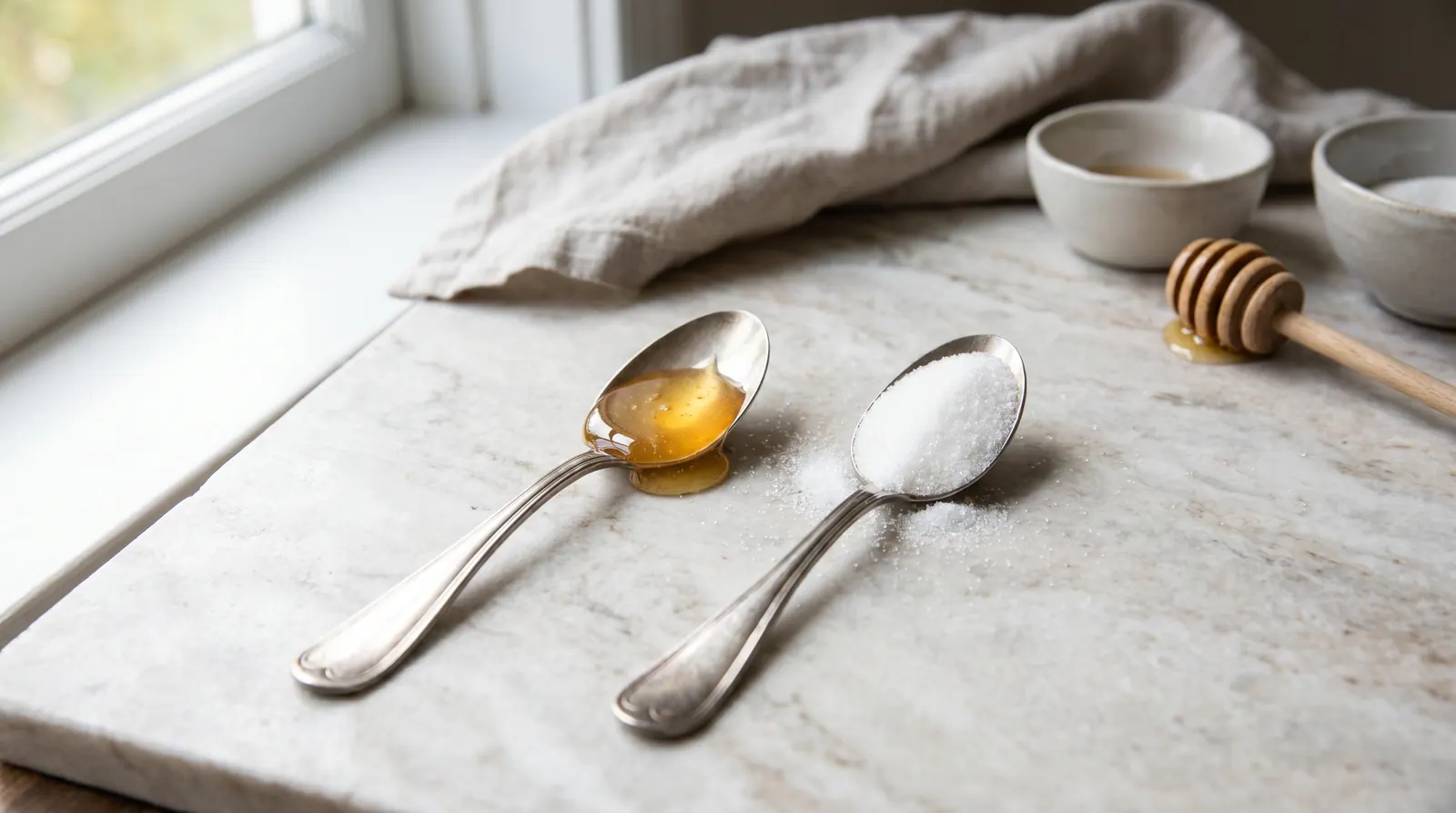
Here, honey holds up to the evidence. A systematic review on the use of honey for acute cough in children found that it soothes cough symptoms better than no treatment, and better than some decongestants like diphenhydramine, and is comparable to the common dextromethorphan. This is a practical, gentle benefit for those over one year old.
However, the honesty is complete with a caveat: the authors classified the quality of evidence as low to moderate, and most children were given honey for only one night. Thus, the effect is short-term symptomatic relief, not a cure. Most importantly: this benefit is exclusively for those over one year old; honey is absolutely not given to children under one, no matter how severe the cough. Practically speaking: a teaspoon of honey before bed for a child over one year old may soothe their night, but it is not a medicine that replaces a doctor's evaluation if the cough persists or worsens.
Other Claims, Honestly — What Holds Up and What Doesn't
Honey is often credited with being antibacterial and rich in antioxidants. The correct part: honey does contain antioxidant compounds and has antimicrobial properties observed in laboratories and in the care of some wounds in specialized medical contexts. However, the leap from the lab to promises that a daily spoonful of honey builds immunity, expels toxins, or cures chronic diseases is not supported by strong human evidence.
The honest rule: what is observed in the lab or in topical medical application is one thing, and what advertisements promise is another. The antioxidants in honey are low compared to its caloric sugar content; they will not compensate for a serving of vegetables or fruits with many times the benefit and less sugar. Practically speaking: enjoy the flavor of honey, but don't buy promises of healing and purification, as honey is neither medicine nor a miracle food.
Crucial Warning: No Honey for Those Under One Year Old
This is the most critical point in the article and tolerates no negligence. Health organizations warn against giving honey to any child under twelve months old, as honey may carry spores of the bacterium Clostridium botulinum. An infant's intestines are not yet mature enough to prevent it from releasing its toxin, leading to what is known as infant botulism.
The instructions are explicit: do not give your child honey before they complete one year of age, and do not put it in their food, water, formula, or on their pacifier. Infant botulism is a medical emergency that can cause weakness, descending paralysis, and difficulty breathing, requiring immediate care. Practically speaking: no matter what folk remedies you hear for soothing an infant or sweetening their mouth with honey, ignore them completely before the age of one. This is a safety rule with no exceptions.

Raw vs. Processed — Does the Difference Matter?
Raw, unpasteurized honey is marketed as purer and richer, contrasted with processed, heat-treated honey. The real difference: raw honey retains more pollen, enzymes, and plant compounds, and is often darker and deeper in flavor. Processed honey is clearer in appearance and has a longer shelf life, and may lose some of those compounds due to heat.
However, this difference does not change the essence: both are free sugars with nearly the same calories, both count towards your daily limit, and both are forbidden for infants under one year old. In fact, the risk of spores is more associated with raw honey. Practically speaking: if you enjoy the flavor and sensory value of raw honey, choose it, but don't expect health benefits that justify the significantly higher price. The difference is more about taste and sensory experience than medical benefit.
Who Should Limit It More
Honey is not forbidden for anyone over one year old, but certain groups should be more mindful of its quantity. Individuals with diabetes or pre-diabetes count it within their carbohydrates, not add it on top, as its glycemic index is close to sugar. Those monitoring their weight should remember that a tablespoon is about 64 caloric, non-satiating sugar calories.
This also applies to those who already consume a lot of sweeteners; honey adds to the free sugar burden rather than reducing it. The practical rule for these individuals: treat honey as a small, calculated treat, not as an open-ended daily food. A teaspoon on occasion or for flavor is better than daily tablespoons under the guise of it being natural and healthy.
Sidr Honey in Our Saudi Context
Honey holds a cherished place in our homes, and Sidr honey, in particular, is sought after and expensive, often given as a gift. This is beautiful and authentic to our hospitality. However, honesty requires distinction: the high value of Sidr honey comes from its rarity, deep flavor, and cultural significance, not from a miraculous medicinal property that makes it a cure.
Sidr honey, like any honey, remains a free sugar to be counted within your daily limit and is forbidden for infants under one year old, regardless of its price. The practical message: enjoy Sidr honey for its sensory and cultural value and honor your guests with it, but do not associate it with promises of healing, nor use it excessively thinking its high price makes it an open-ended health food. Quality lies in taste and authenticity, not in a promised miracle.
Five Common Myths About Honey
Half-truths promising more than honey delivers are widespread. Here are the most common ones, and what the evidence says:
"Honey is a healthy alternative to sugar that can be consumed liberally without worry."
"Honey is safe for diabetics because it's natural."
"A drop of honey for an infant soothes and strengthens them."
"Honey boosts immunity, expels toxins, and cures diseases."
"Expensive honey like Sidr is a medicine superior to others in benefit."
Practical Tips to Apply Starting Today
Before you reach the full protocol, here are small guidelines from the core of the above, making your relationship with honey more honest and calmer without depriving you of its enjoyment:
- Count it towards your daily sugar intake. Treat a tablespoon of honey as free sugar, just like table sugar, so don't add it as if it's free because it's natural.
- Use it for its flavor, not as medicine. Enjoy the taste of honey and savor it, but don't expect healing, purification, or immunity building that it doesn't provide.
- Reduce, don't replace. The goal is to lower all sweeteners, not to swap sugar for honey thinking you're making a healthy food.
- For those over one year old with a cough. A teaspoon of honey before bed may soothe your child's throat over one year old, but it's symptomatic relief, not a substitute for a doctor if the cough persists.
- No honey for those under one year old, ever. Not in food, water, milk, or on a pacifier. This is a safety rule with no exceptions.
- Choose raw for its taste, not for a medical promise. The difference between raw and processed is more sensory than health-related. Don't pay a significant price difference expecting benefits that won't materialize.
- If you have diabetes, count and be precise. Include it in your meal's carbohydrates in a small amount and monitor your readings. Do not add it on top under the guise of being natural.
- Honor your guests sparingly. Sidr honey is a beautiful and authentic gift. Enjoy its cultural value without making it an open-ended daily food.
EEINA's Protocol for an Honest and Calm Relationship with Honey
A practical plan combining the above into three progressive layers. Start layer by layer, making it a habit that preserves the taste of honey and frees you from its promises.
The protocol is based on the definition of free sugar and its daily limits, glycemic index, and infant safety warnings.
Know What You Eat
Four facts to solidify.
Use It Wisely
Gentle daily steps.
Protect Those Around You
Rules not to be taken lightly.
The Golden Rule: Honey is a beautiful-tasting natural sugar, counted towards your daily limit and forbidden for infants under one year old. Love it sparingly, and don't expect more from it than it can give.
Frequently Asked Questions
Is honey better than sugar?
How many calories are in a tablespoon of honey?
Does honey raise blood sugar?
Can honey be given to infants?
Does honey treat cough?
When to See a Doctor — Red Flags
Honey is, in most cases, a simple pleasure for those over one year old. However, some situations go beyond it and require immediate medical evaluation:
- Symptoms appearing in an infant under one year old after consuming honey, such as constipation, poor feeding, lethargy, or difficulty breathing, is a medical emergency.
- A cough that persists or worsens despite honey and rest for those over one year old requires evaluation of its cause, not just relying on honey.
- Frequent high blood sugar readings in a diabetic patient after consuming honey; review your plan with your doctor.
- An allergic reaction such as rash, itching, or swelling after consuming honey, especially in those with pollen allergies.
- Reliance on honey as a treatment for a chronic condition instead of proper medical follow-up.
- Weight gain or blood sugar imbalance with excessive honey consumption, believing it to be an open-ended healthy alternative.
Start Your Next Step with EEINA
Balanced Sugar Meal Plans
Saudi recipes that intelligently manage daily sugars, leaving room for a flavor you love in moderation.
Get Your Plan →Low-Sugar Recipes
Sweet, moderate ideas that use sweeteners wisely without sacrificing enjoyment.
Try Them →EEINA App
Calculates your daily sugars, reminds you of your limit, and suggests gentle alternatives.
Download →