Dates: A Daily Saudi Symbol, Not Just Occasional
Dates are not just for Ramadan; they are part of the daily fabric: with morning coffee, when hosting guests, and as fillings in Maamoul and Qatayef. This constant presence means quantities can accumulate without notice; three dates with morning coffee, another three with an afternoon visitor, and one more after dinner, totaling nine dates in a single day.
The first practical step is not abstinence, but awareness: count what you actually consume over a full day, not just a single serving. Dates are nutritious, but uncounted accumulation is what raises calories and sugar, not the date itself.
Nutritional Value: More Than Just Sugar
Dates are not empty calories; they are a nutritional package. According to USDA data, 100 grams of Medjool dates contain about 277 calories, 696 mg of potassium (representing 15% of the daily requirement), 54 mg of magnesium, and nearly 7 grams of fiber.
A serving of two dates, about 48 grams, provides 133 calories, 3 grams of fiber, and 19% of the daily copper requirement, and 7% of vitamin B6. Fiber is the hidden hero: it slows down sugar digestion, preventing a sudden surge. Therefore, dates are fundamentally different from a sugar-added candy; their sugar is packaged with fiber, minerals, and antioxidants, not just empty calories.
Potassium and Magnesium: Why They Matter
The potassium in dates, about 696 mg per 100 grams, is a mineral that supports balanced blood pressure and muscle and nerve function, particularly beneficial for those reducing sodium intake. Magnesium participates in hundreds of biochemical reactions, including blood sugar regulation.
Practically: a moderate serving of dates contributes to these minerals without supplements, but it's not the sole source; vegetables, legumes, and nuts complement them. Do not overeat dates for their potassium content; a small serving is sufficient, and excess raises calories and sugar more than the mineral benefits. Make it a supplement to a varied diet, not a replacement.
Low to Medium Glycemic Index: The Real Number
Despite their sweetness, the glycemic index (GI) of dates is low to medium. A study by Qassim University on seventeen Saudi varieties found an average GI of 55.2, ranging from 42.8 to 74.6. Another Emirati study on five varieties showed GIs between 46 and 55 in diabetic subjects themselves.
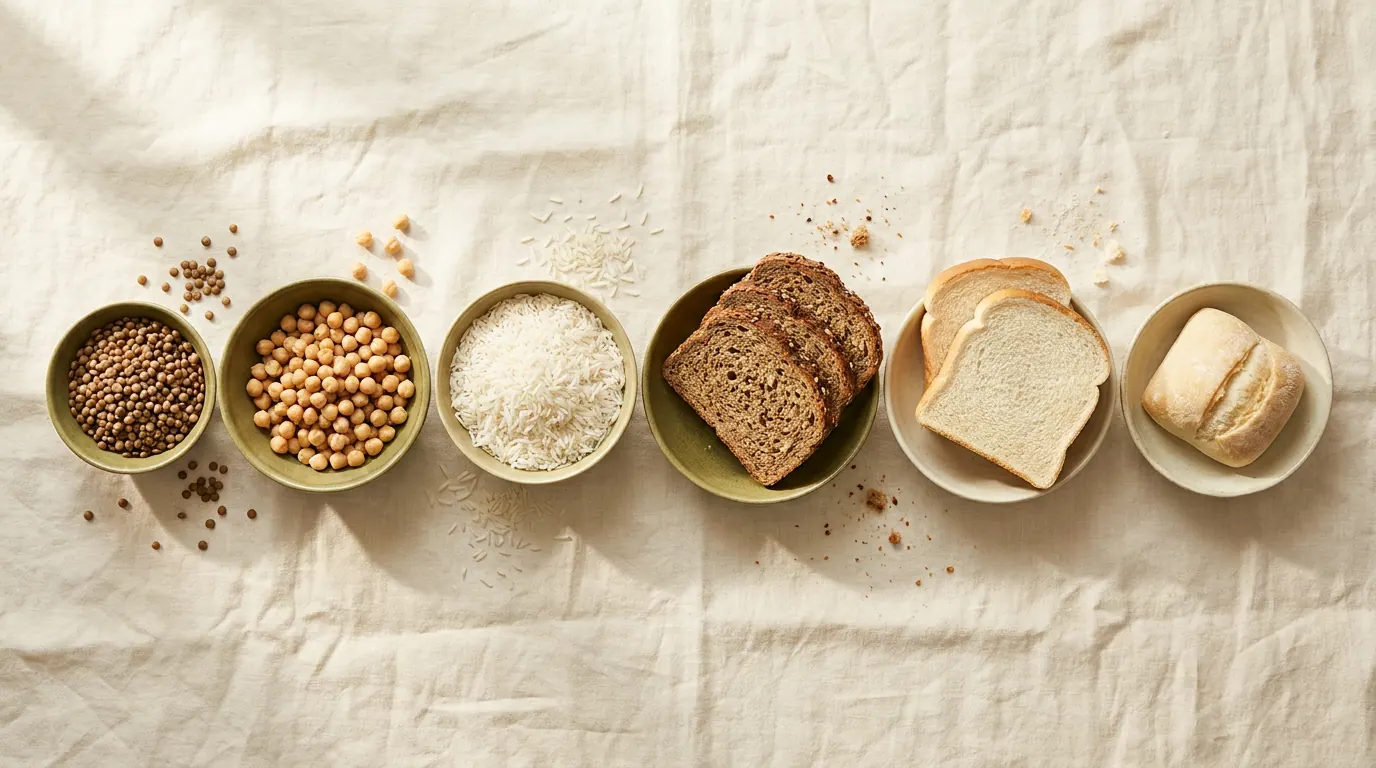
What does this mean practically? Dates raise blood sugar gradually, not in a sharp spike like white bread or sugary drinks. However, be aware: GI measures quality, while glycemic load measures quantity; eating ten dates results in a high load regardless of the GI. The low number is a license for a moderate serving, not an unlimited quantity.
Is Your Date Consumption Appropriate? — A Self-Check
This self-check is a guide to help you review your date consumption habits and does not replace consultation with your doctor or nutritionist. Select what applies to you:
How Many Dates Are Safe for Healthy Individuals?
For healthy individuals, there's no strict limit, but nutritional logic suggests a moderate serving within daily calorie intake. A single medium Medjool date contains about 66 calories; thus, three to five dates, or approximately 200 to 330 calories, is a reasonable serving for those without weight or blood sugar issues.
More important than the absolute number is the context: is it an addition to a balanced diet or a replacement for processed sweets? In the latter case, dates are a much better choice. Practically: make them an intentional snack, not random nibbling throughout the day, and count them within your calorie budget, not on top of it.
How Many Dates Are Safe for Diabetics?
Research is reassuring within limits. Recommendations from the Saudi Ministry of Health and diabetes clinics suggest that two to three dates are usually safe for individuals with controlled blood sugar. In a randomized controlled trial on adults with pre-diabetes and type 2 diabetes, consuming three dates daily for 16 weeks did not negatively alter HbA1c; instead, it significantly reduced total cholesterol.
The practical takeaway: start with one to three dates and monitor your blood sugar two hours later to observe your personal response, which varies from person to person. If you are on insulin or your blood sugar is unstable, consult your doctor before establishing a daily quantity.
Pair with Protein or Nuts: The Smart Trick
The simplest modification to reduce the impact of dates on blood sugar is to not eat them alone. The Joslin Diabetes Center explains that protein, fat, and fiber slow down carbohydrate digestion and delay absorption, preventing sharp blood sugar spikes.
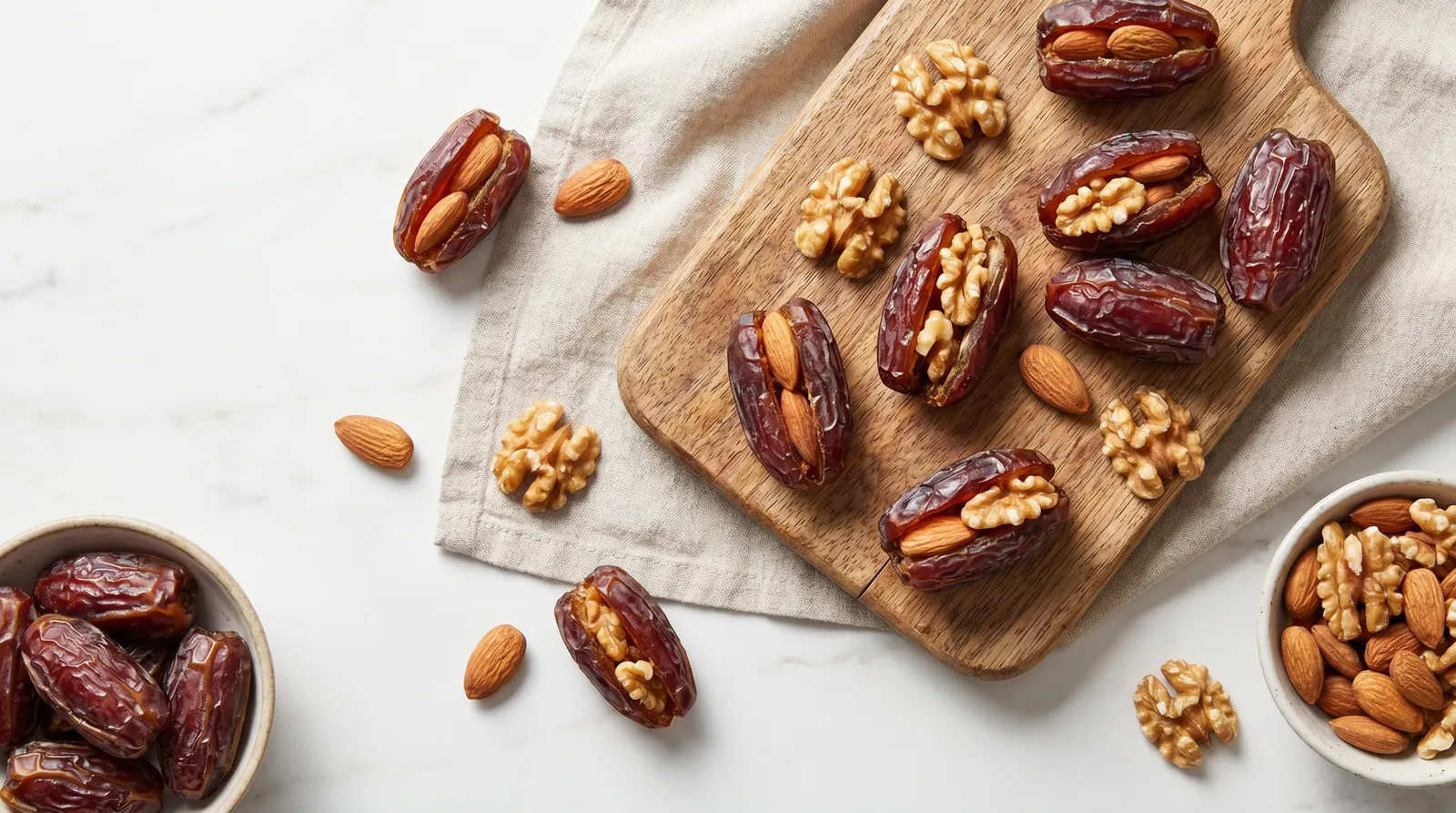
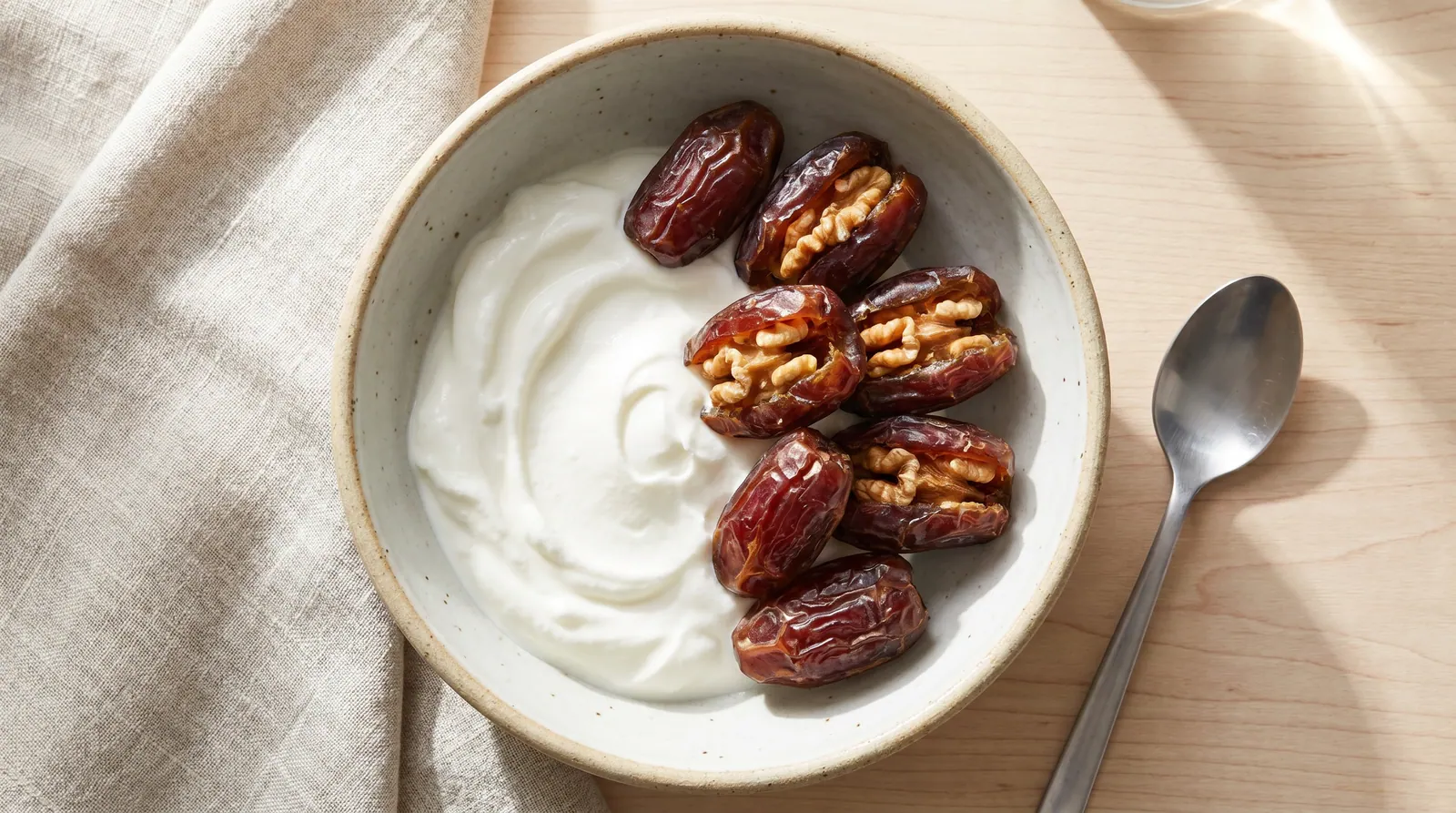
Practically: stuff a date with half an almond or walnut, or eat it with a tablespoon of peanut butter, a handful of nuts, or a cup of milk or yogurt. This pairing transforms dates from a quick sugar source into a balanced snack that promotes longer satiety and a gentler blood sugar rise. The general rule: any sweet carbohydrate becomes gentler on blood sugar when accompanied by healthy protein or fat.
Dates at Iftar: Why It Makes Sense
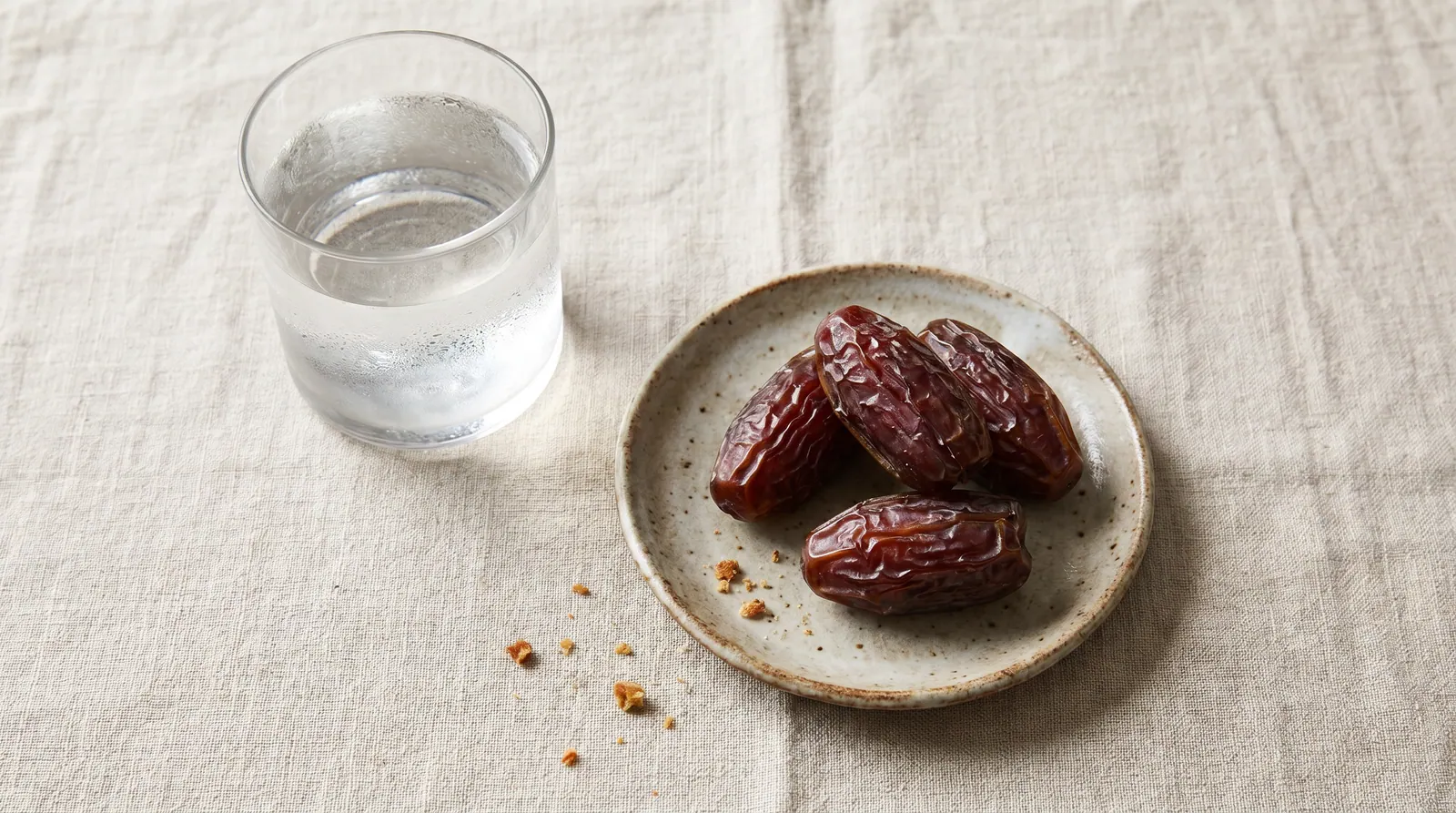
Breaking the fast with dates is a Prophetic tradition with nutritional logic: after fasting hours, the body needs a relatively quick sugar source to raise low glucose levels, and dates provide this along with fiber and minerals, not just isolated sugar. However, an important caution for diabetics: do not exceed two to three dates at Iftar, according to the Ministry of Health, and do not immediately follow with concentrated sweets and juices, as accumulation after fasting can cause severe blood sugar spikes.
Break your fast with one to three dates and water, then pray, then have a balanced meal. Monitor your blood sugar; testing does not break the fast and increases your ability to fast safely. If your blood sugar drops below 70 mg/dL during fasting, break your fast immediately.
Date Varieties and Differences That Matter
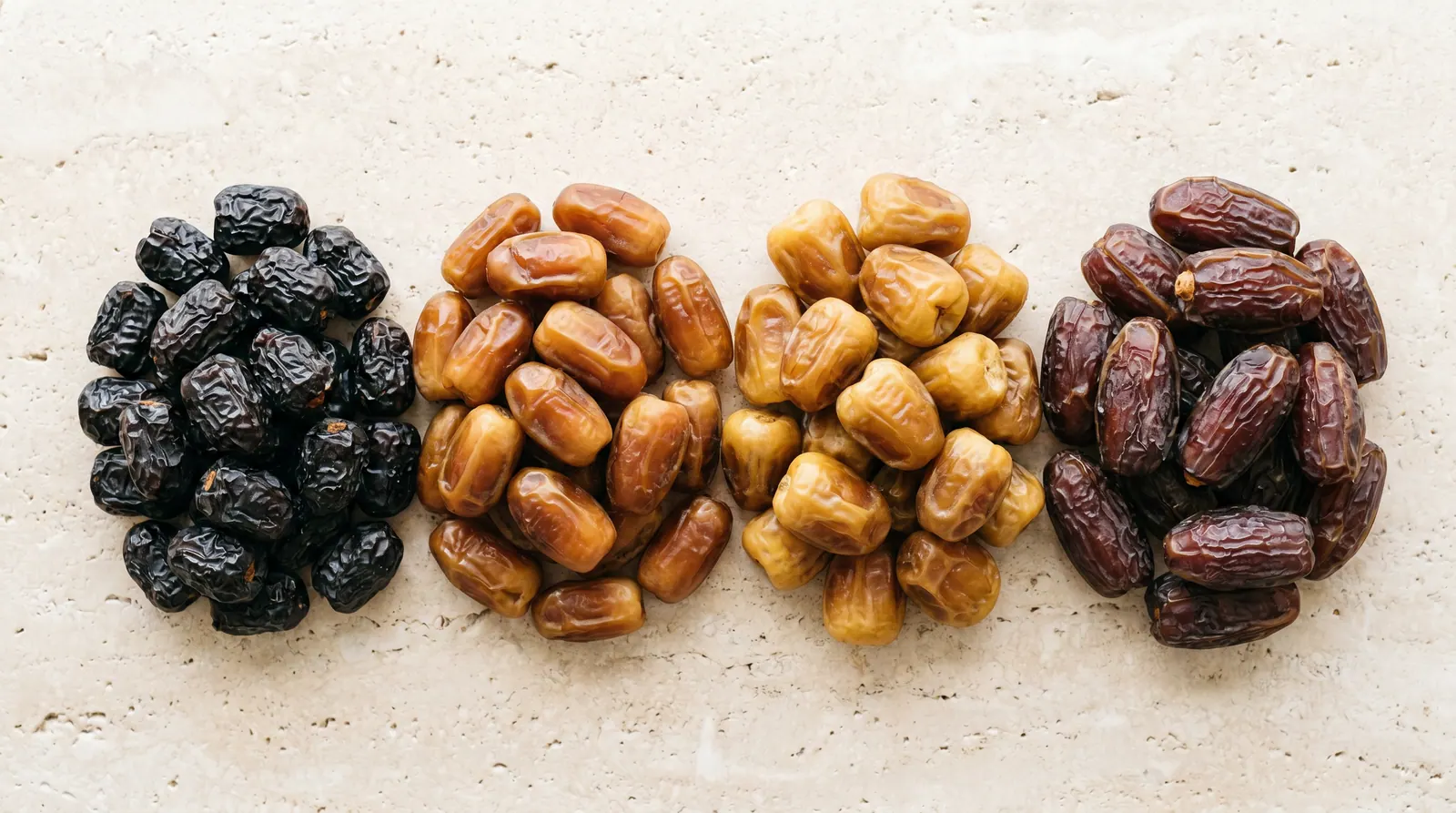
Varieties differ in sweetness, moisture content, and glycemic index. Sukari dates from Qassim are among the sweetest and softest, yet recorded a low GI of around 43 in the Qassim study. Ajwa dates from Medina are less sweet and darker. Khalas dates from Qassim and Al-Ahsa are moderately sweet and soft. Medjool dates are large, caramel-flavored, and one date is equivalent in calories to two regular dates.
Practically: for blood sugar monitoring, prefer varieties with lower GIs and remember to account for date size when counting; one Medjool date is not the same as a small Sukari date in terms of calories. Variety adds enjoyment without changing the rule: moderation is safe.
The Difference Between Date Sugar and Processed Sweeteners
The sweetness of dates is natural, packaged with fiber and antioxidants, while the sweetness of cakes and soft drinks is added, isolated sugar. The difference is not philosophical but physiological: the fiber in dates slows the release of sugar into the bloodstream gradually, preventing the sharp rise and fall caused by refined sugar.
This does not mean dates are limitless; large quantities will raise blood sugar regardless of their natural origin. However, it means replacing a piece of processed cake with two dates and nuts is a winning nutritional deal. Choose dates as a smart alternative to sweets, not an addition to them.
When to See a Doctor — Red Flags
Dates are nutritious, but certain signs after consumption or in the context of diabetes warrant immediate medical attention and should not be managed with self-directed dietary changes:
- Extreme thirst, frequent urination, and nausea after eating dates may indicate high blood sugar; review your quantity and consult your doctor.
- Repeated high blood sugar readings two hours after eating dates, despite moderate quantities, require a review of your diet plan with a specialist.
- Blood sugar dropping below 70 mg/dL during Ramadan fasting means break your fast immediately and do not wait, then consult your doctor about medication dosages.
- Unexplained weight loss, persistent thirst, or extreme fatigue are signs requiring medical evaluation, not self-directed dietary adjustments.
- Relying on dates to treat hypoglycemia without consulting a doctor if you are on insulin or blood-sugar-lowering medications.
The presence of any of these signs does not necessarily indicate a serious problem, but it means the issue goes beyond adjusting date quantity and requires medical assessment.
Five Common Myths About Dates and Diabetes
Half-truths circulate about dates, leading some to abstain from this blessing or others to feel overly reassured about overconsumption. Here are the most common myths and what research says:
"Dates drastically raise blood sugar and should be forbidden for diabetics."
"The sweetness of dates is exactly like that of processed sweets."
"All date varieties have the same effect on blood sugar."
"Eating dates excessively is beneficial because they are natural and rich in potassium."
"Measuring blood sugar with a finger prick breaks the fast."
Practical Tips to Implement Today
Before diving into the full protocol, here are small guidelines derived from the above, to manage your relationship with dates without deprivation:
- Count your day's dates, not just a single serving. Accumulation through coffee, hospitality, and snacking is what raises sugar and calories, not a single moderate date.
- For diabetics: Start with 1 to 3 dates and monitor. Measure your blood sugar two hours later to understand your personal response, which varies individually.
- Don't eat dates alone. Pair them with a handful of nuts, a cup of milk or yogurt, or a tablespoon of peanut butter to slow sugar absorption.
- During Ramadan: Break your fast with 1 to 3 dates and water. Then, postpone other carbohydrates and sweets to avoid post-fasting sugar spikes.
- Pay attention to date type and size. Prefer varieties with lower glycemic index, and remember that a large Medjool date equals the calories of two regular dates.
- Replace a processed sweet with two dates and nuts. It's a better nutritional deal thanks to fiber, minerals, and antioxidants.
- Make dates an intentional snack. At a specific time, not random nibbling throughout the day, which is hard to track.
- If you are on insulin or have unstable blood sugar, consult first. Consult your doctor or nutritionist before establishing a daily date quantity.
EEINA's Protocol for a Smart Relationship with Dates
A practical plan combining the above into three progressive layers. Start layer by layer, and note your response to understand what works for you.
The protocol is based on Saudi Ministry of Health recommendations and peer-reviewed studies on dates and diabetes.
Habits to Control Quantity
Four daily habits.
Control Through Monitoring
Steps to reveal your response.
Balanced Iftar
Breaking the fast gently on blood sugar.
Golden Rule: The goal is not to deprive you of dates, but to manage quantity and pairing. Dates are a blessing to be managed with awareness, not an enemy to be avoided.
Frequently Asked Questions
How many dates are allowed for a diabetic daily?
Do dates really raise blood sugar?
Why should I pair dates with nuts?
What is the best type of date for a diabetic?
How many dates are safe when breaking the fast in Ramadan?
Start Your Next Step with EEINA
Blood Sugar Balanced Meal Plans
Saudi recipes with calculated glycemic load, incorporating dates in smart portions, not restrictive ones.
Get Your Plan →Calculate Glycemic Load
Understand how your date portion actually affects your blood sugar and compare varieties and quantities.
Try It →EEINA App
Calculates date calories and glycemic load, and reminds you of the appropriate portion for your goal.
Download →