How Ginger Works in Your Stomach
Ginger's active compounds, primarily gingerols and shogaols, are responsible for its pungent taste and effects on the digestive system. These compounds possess antioxidant and anti-inflammatory properties. It's believed they may alleviate nausea partly by affecting serotonin 5-HT3 receptor antagonists, the same receptors targeted by some anti-nausea medications.
Practically speaking: This explains why many report feeling their stomach calmed after a cup of ginger tea. However, understanding the mechanism is one thing, and proving its benefit in every situation is another. Ginger is a gentle, low-risk supportive agent in moderate doses, not a magic pill. Use it with this realistic perspective.

Pregnancy Nausea — Its Strongest Evidence
This is where ginger stands on the firmest ground. A Cochrane review and subsequent systematic reviews found that ginger reduced pregnancy nausea compared to placebo. The American College of Obstetricians and Gynecologists even considers it a non-pharmacological option that can be considered. However, the picture isn't complete: the effect on vomiting episodes was weaker and inconsistent, with three out of four reviews finding no significant difference in vomiting compared to placebo.
The dosage mentioned in this context is a common formulation: around 250 mg four times daily. Practically: If you are pregnant and experiencing nausea, ginger is a reasonable option to try, but under the guidance of your OB-GYN, not on your own, especially since the quality of evidence is limited and high doses warrant caution.

Post-Surgery and Chemotherapy Nausea
Ginger also has considerable research support here, though it's less definitive than for pregnancy. For post-surgery nausea, a systematic review found that ginger reduced the severity of nausea but did not significantly reduce vomiting or the incidence of nausea and vomiting combined, nor did it significantly reduce the need for rescue medications.
For chemotherapy-induced nausea, the picture is mixed: one review indicated a reduced likelihood of acute vomiting with a dose not exceeding 1 gram daily for more than three days, but it found no consistent association with other nausea outcomes due to significant variability between studies. The U.S. National Center for Complementary and Integrative Health (NCCIH) describes its benefit in these two areas as uncertain. Practically: Ginger may be a supportive addition, but for chemotherapy patients specifically, the decision should be made with their treating physician, not through self-judgment.
Motion Sickness — Evidence Weakens Here
The common claim that ginger prevents car or sea sickness is not well-supported by research. The NCCIH explicitly states that most ginger studies for motion sickness have shown no benefit.
Practically: If you've tried ginger for travel sickness and found no relief, this is expected, not a personal failure. Don't rely on it alone for long journeys; consider more established methods like sitting in the front of the vehicle and looking at the horizon, and consult a pharmacist for a suitable medication if your motion sickness is severe.
Indigestion and Gastric Emptying
Many drink ginger tea to aid digestion, and the research here is intriguing but incomplete. A small randomized controlled trial found that ginger did indeed speed up gastric emptying, with a median emptying time of about 12.3 minutes after ginger compared to 16.1 minutes after placebo, showing a non-statistically significant trend towards increased antral contractions.
However, the surprise came in the other half of the results: despite faster emptying, patients' symptoms of indigestion did not improve in that study, and measured gut hormones did not change. The researchers themselves noted that a single dose is insufficient to judge a chronic, recurring condition like functional dyspepsia. Practically: Ginger might help you feel lighter after a heavy meal, but don't consider it a proven treatment for chronic indigestion; rather, a potential gentle aid.
Is Ginger Right for You? — A Self-Check
This is a guiding checklist combining areas where ginger's evidence is strong with situations requiring caution or prior medical consultation. It does not replace professional advice. Select what applies to you:
Safe Dosage — How Much is Enough?
The common dosage in nausea studies is around 1 gram per day, often divided into small doses throughout the day. Specifically for pregnancy nausea, a formulation of about 250 mg four times daily is mentioned.
Reviews indicate that moderate doses of ginger are generally well-tolerated. However, excessive intake can cause heartburn, reflux, cramps, and diarrhea. Very high doses can exacerbate gastrointestinal upset. The practical rule: Start with the lowest effective dose, and let food and beverages be your primary route before resorting to concentrated supplements. Do not treat concentrated ginger capsules as equivalent to a cup of tea; their dosage is much higher.
| Condition | Strength of Evidence | Practical Takeaway |
|---|---|---|
| Pregnancy Nausea | Considerable | Often relieves nausea, less effect on vomiting; requires medical supervision |
| Post-Surgery Nausea | Considerable | Relieves nausea severity, but not clearly vomiting or need for rescue medication |
| Chemotherapy-Induced Nausea | Mixed | Some indications of reduced acute vomiting; inconsistent results; requires physician's decision |
| Functional Dyspepsia | Limited | Speeds up gastric emptying without confirmed symptom improvement |
| Motion Sickness | Weak | Most studies showed no benefit; do not rely on it alone |
Forms in Your Food and Drink
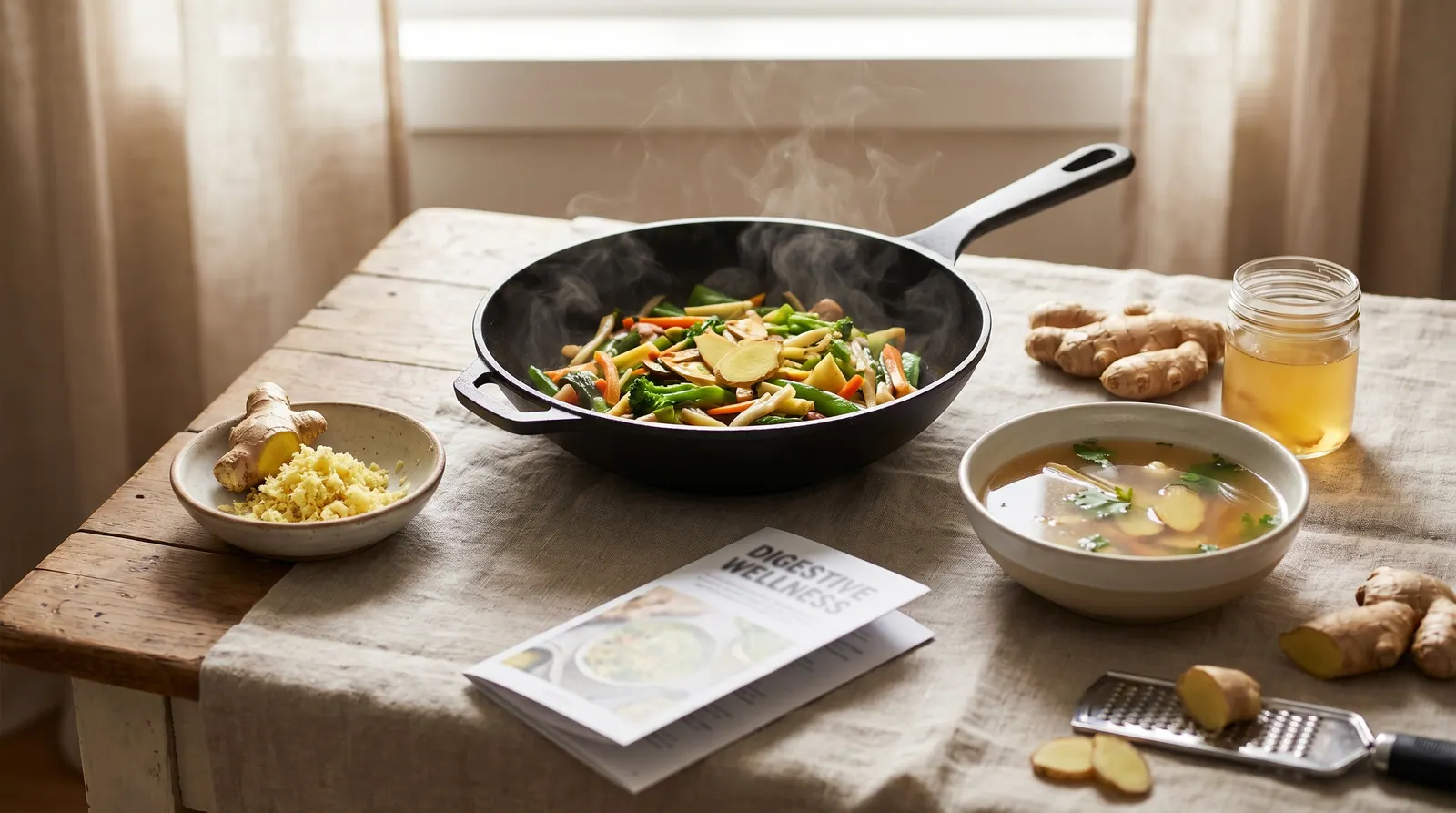
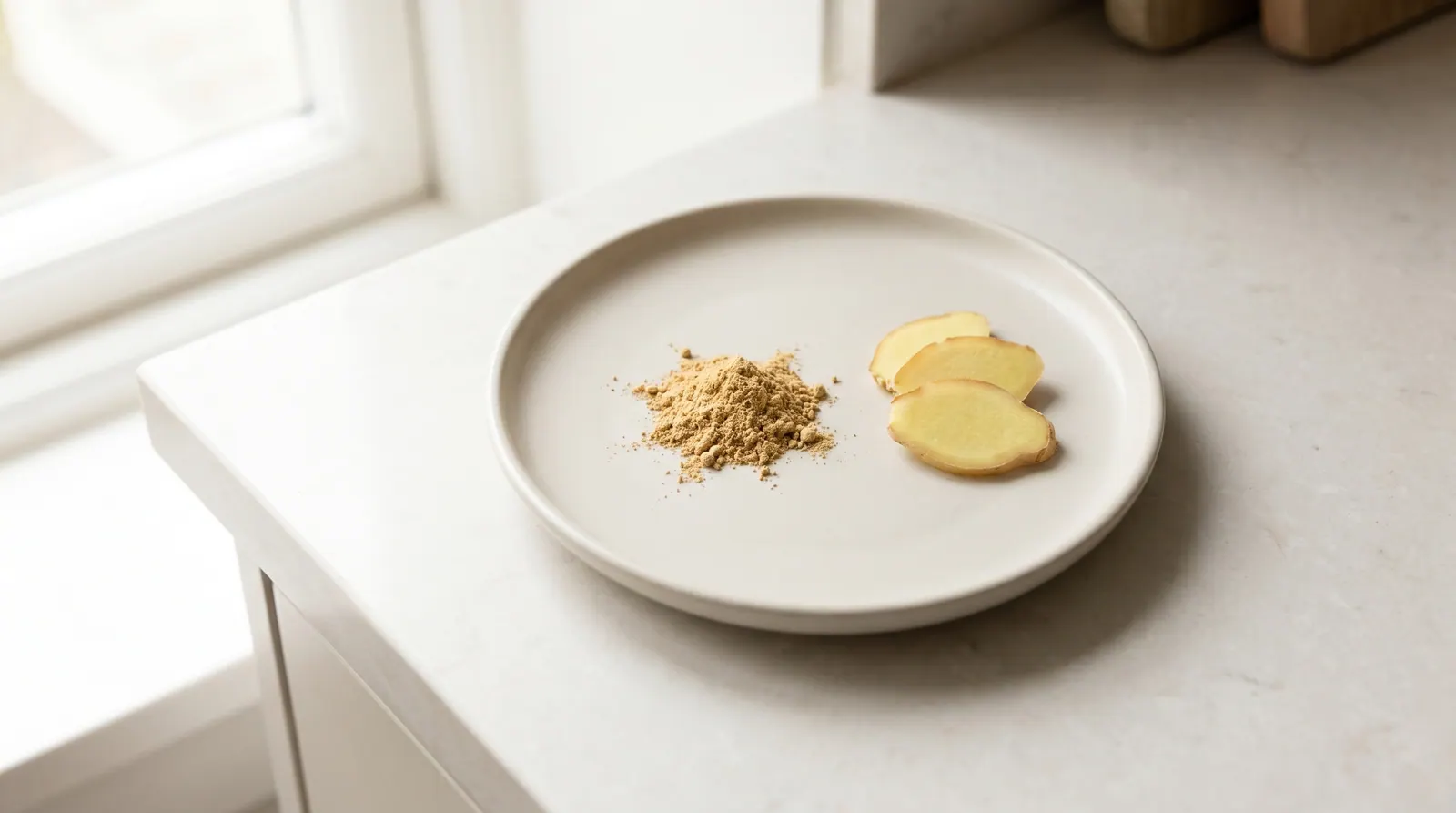
You don't need a capsule to consume ginger. The simplest and most familiar forms are fresh root, grated or brewed into tea, followed by dried powder in cooking, then pickled ginger and concentrated capsules. Each form differs in its compound concentration; a light tea is much gentler than a concentrated capsule.
Practically: Make food and drink your first gateway. Add fresh ginger slices to tea or warm water with lemon, or grate it into soups and broths, or incorporate it into marinades for chicken and fish. These forms provide its gentle benefits in moderate doses, remaining further from the risk of overdose than concentrated capsules.
Ginger in Our Kitchen — Naturally Present
Ginger is a traditional guest on our tables: in coffee and tea, in Kabsa and Mandi, and in warm winter drinks. This natural presence is an advantage because it enters your body in moderate doses within a balanced meal, far from the concentration of capsules.
The practical message: Leverage this cherished habit without overburdening it. Let ginger be a spice, a flavor, and a comforting drink, not a medicine you expect to cure every ailment. If you seek a therapeutic dose for a specific nausea, discuss it with your doctor or pharmacist rather than self-prescribing.
Important Warnings Before Overdoing It
Ginger is safe for most people in moderate doses, but three warnings warrant serious attention. First, blood thinners: Ginger may increase the effect of medications like warfarin and aspirin, raising the risk of bleeding.
Second, gallstones: Ginger has a property that stimulates bile secretion. Therefore, it's advised to avoid it if you have gallstones or bile duct obstruction, as increased bile secretion could worsen the condition. Third, high doses during pregnancy and before surgeries require caution and medical consultation. It may also interact with diabetes medications, increasing their effect. Practically: If you are on chronic medication, pregnant, or undergoing surgery, do not start ginger as a supplement before consulting your doctor or pharmacist.
What Science Actually Says
If you want an honest summary: Ginger's evidence is strongest for relieving nausea, particularly pregnancy and post-surgery nausea, and weaker for vomiting, motion sickness, and chronic indigestion. The NCCIH describes its benefit for chemotherapy-induced and post-surgery nausea as uncertain and notes that most motion sickness studies have shown no benefit.
Most importantly: Many reviews have classified the quality of their evidence as low to very low, with significant variability between studies. The practical conclusion: Don't expect miracles from a root; treat ginger as a potential supportive agent in its strong areas, safe in moderate doses, with limited effects outside those contexts.
Five Common Ginger Myths
Half-truths promising more than ginger can deliver circulate around it. Here are the most common ones and what the evidence says:
"Ginger cures all types of nausea and vomiting."
"Ginger is a proven treatment for chronic indigestion."
"Ginger is the best natural remedy for travel and sea sickness."
"Since it's natural, ginger has no limits or contraindications."
"The more ginger you take, the more it benefits your stomach."
Practical Tips to Apply Today
Before you get to the full protocol, here are small guidelines from the core of the above, helping you benefit from ginger with confidence and without exaggeration:
- Make food and drink your first gateway. Fresh ginger slices in tea, soup, or marinades provide its gentle benefits in moderate doses, safer than concentrated capsules.
- Divide the dose, don't stack it. Around 1 gram per day, divided into small doses, is gentler on your stomach than one large dose that might cause heartburn.
- For pregnancy nausea, consult first. Ginger is a reasonable option but requires OB-GYN supervision, especially near delivery or with chronic medications, not independently.
- Don't expect it to cure travel sickness. The evidence is weak here; rely on sitting in the front and looking at the horizon, and consult a pharmacist for a medication option if needed.
- Consult your doctor if you take blood thinners. Ginger may increase the risk of bleeding with warfarin and aspirin, so don't overdo it without advice.
- Avoid with gallstones. It stimulates bile secretion, which can worsen the condition if gallstones or bile duct obstruction are present.
- Distinguish between a capsule and a cup of tea. A concentrated capsule has a much higher dose; don't treat it with the casualness of a daily beverage.
- Stop before surgeries. Inform your doctor if you regularly consume ginger before any upcoming surgery.
EEINA's Protocol for Smart and Safe Ginger Use
A practical plan combining the above into three graduated layers. Start layer by layer, and note your response to understand what works for you.
The protocol is based on strong evidence areas, common dosages, and documented safety warnings.
Use it as Food and Drink
Four gentle habits.
Target Its Strong Areas
Where evidence is strong.
Respect the Warnings
Before any concentrated dose.
Golden Rule: Ginger is a gentle supportive agent in its strong areas, not a cure-all for every stomach issue. Use it within its limits as food and drink, and only increase to therapeutic doses under supervision.
Frequently Asked Questions
Does ginger actually help with nausea?
What is a safe daily dose of ginger?
Is ginger safe during pregnancy?
Does ginger treat indigestion?
When should ginger be avoided?
When to See a Doctor — Red Flags
Ginger is gentle and low-risk for most people, but certain symptoms and conditions go beyond its scope and require prompt medical evaluation:
- Unusual bleeding or easy bruising, especially if you are taking blood thinners and consuming large amounts of ginger.
- Severe abdominal pain or recurrent cramps with gallstones or suspected bile duct obstruction.
- Persistent nausea or vomiting during pregnancy that doesn't subside, which may require prescribed medication and evaluation.
- Severe vomiting or nausea with chemotherapy: This is a decision for the treatment team, not self-management.
- Heartburn or severe reflux that worsens with ginger, requiring reduction and investigation of the cause.
- Upcoming surgery: Inform your doctor if you regularly consume ginger before the operation.
Start Your Next Step with EEINA
Gentle Stomach Meal Plans
Saudi recipes incorporating ginger in moderate doses, with light dishes to ease your digestion.
Get Your Plan →Recipes with Fresh Ginger
Easy ideas for incorporating ginger into soups, drinks, and marinades without overdoing it.
Try Them →The EEINA App
Helps you build stomach-friendly meals and reminds you to moderate spices and drinks.
Download →