Occasional Heartburn vs. Chronic GERD
Experiencing occasional heartburn after a heavy meal is normal and happens to most people; some stomach contents may reflux into the esophagus without it being a disease. However, true chronic reflux disease differs: it's when heartburn and regurgitation occur persistently and bothersomely, or when acid reaches the esophagus enough to damage its lining.
Practically, the common guideline is that heartburn or regurgitation occurring twice a week or more, or disrupting sleep and daily life, warrants evaluation as a disease, not just a transient discomfort. When symptoms are classic (heartburn and regurgitation without red flags), guidelines recommend an 8-week therapeutic trial before resorting to endoscopy.
The Lower Esophageal Sphincter: The Gatekeeper
At the end of the esophagus where it meets the stomach is a high-pressure zone called the lower esophageal sphincter (LES). Its function is to prevent stomach contents from refluxing. Normally, this sphincter remains contracted with an internal pressure of about 30 mmHg, typically ranging between 15 and 30, forming a tight seal. When you swallow, the sphincter momentarily relaxes to allow food passage, then closes again.
Externally, it's supported by the diaphragm, which acts as an external sphincter, crucial during inhalation and when intra-abdominal pressure rises. When the sphincter weakens or relaxes inappropriately, acid leaks into the esophagus, causing heartburn. Understanding this guardian explains why anything that relaxes it—like fats, caffeine, and smoking—or increases pressure below it—like weight and large meals—worsens symptoms.
Saudi Arabia Statistics
Heartburn is one of the most common digestive complaints on the Saudi table. A comprehensive systematic review of 22 Saudi cross-sectional studies, involving 18,478 participants, estimated the prevalence of GERD at approximately 33% overall, with wide variations between cities. For instance, Abha reported nearly 68%, Arar about 62%, and Qassim and Hail around 58%.
The study linked GERD to spicy and fatty foods, caffeine, smoking, shisha, obesity, and a sedentary lifestyle. With heavy Iftar meals during Ramadan and sleeping soon after Suhoor, understanding the mechanism of heartburn and how to soothe it becomes practical knowledge many people need.
Do Your Symptoms Suggest Chronic Reflux? — A Self-Check
This screening is for guidance only and does not replace a doctor's diagnosis. Select what applies to you:
The Deeper Mechanism: Transient LES Relaxations
Most reflux episodes don't stem from a constantly weak sphincter but from moments when it relaxes spontaneously without swallowing. Doctors call this transient LES relaxation (TLESR). What often triggers these moments is stomach distension; the sphincter relaxes to release excess gas but simultaneously opens the door for acid.
This simply explains why large, fatty meals ignite heartburn more: the fuller the stomach, the higher the chance of these relaxation events. The practical solution is straightforward: divide your meals into smaller portions instead of one huge meal, so your stomach is less full, and relaxation episodes decrease.
Why Fatty Foods, Coffee, & Chocolate Burn
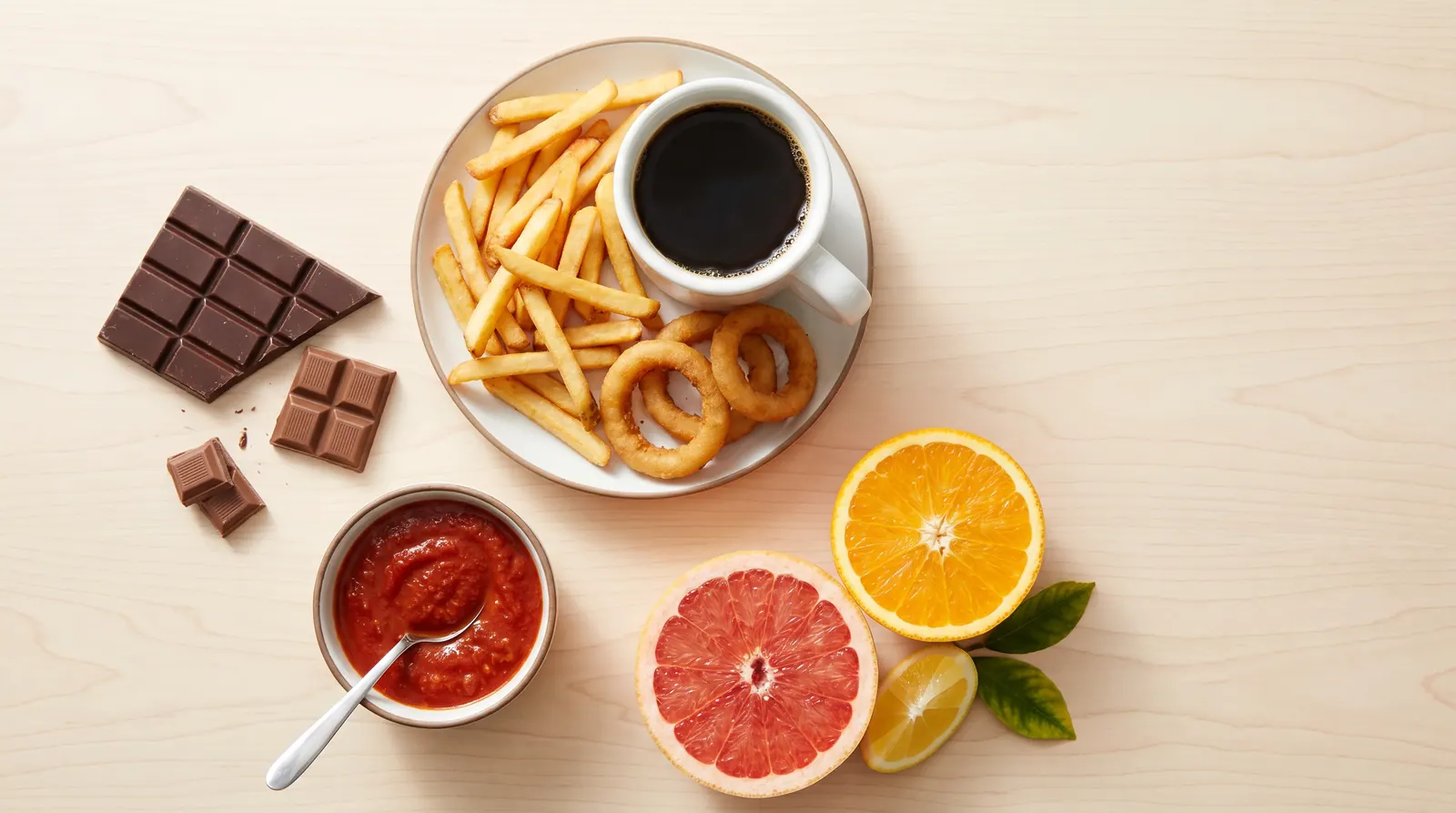
Classic trigger foods share a common mechanism: relaxing the lower esophageal sphincter. After consuming fats, LES pressure decreases, explaining why fatty and fried foods cause heartburn in many. Similar reductions were observed after chocolate, alcohol, and smoking. Coffee's caffeine relaxes the sphincter muscle and increases acid secretion, while chocolate contains caffeine, theobromine, and methylxanthines that relax the sphincter similarly.
The practical application isn't necessarily to eliminate these foods entirely but to note which ones personally trigger your symptoms and reduce them, especially in evening meals. An important observation: major guidelines acknowledge that evidence for banning specific foods, beyond linking them to individual patient symptoms, is weaker than for weight loss and meal timing.
Mint: A Common Trigger, But Its Mechanism Is Debated
Mint is traditionally listed among sphincter relaxants. The menthol it contains is thought to relax the LES by blocking calcium channels, potentially facilitating acid reflux. However, the scientific picture isn't clear-cut. One controlled study found that infusing menthol into the esophagus of GERD patients did not actually alter esophageal motility, casting doubt on whether the effect is purely mechanical on the sphincter.
The balanced practical approach is that if you notice mint tea or mint candies trigger your heartburn, avoiding them is beneficial for you personally, but it's not necessary to generalize this ban to everyone. This exemplifies the distinction between what triggers an individual patient and what strong group evidence supports—a distinction that maintains credibility.
Eating Before Bed: The Most Dangerous Habit
Sleeping immediately after eating is one of the strongest triggers for nighttime reflux. The reason is simple: when you lie down, you lose gravity's help in keeping stomach contents down. If your stomach is full, its contents can easily reflux into the esophagus. One study compared those who ate two hours before bed versus those who ate earlier and found that late eating prolonged esophageal acid exposure during supine rest.
The clear practical application is to leave at least three hours between your last meal and bedtime. This habit is highly relevant to the Saudi diet, where dinner is often eaten late, and becomes even more critical during Ramadan with Suhoor close to bedtime.

Excess Weight: Direct Pressure on the Gatekeeper
Excess weight is a strong cause of reflux, and the reason is direct: abdominal fat presses on your stomach from the outside, pushing its contents upward towards the esophagus, and may weaken the natural seal over time. The reassuring news is that weight loss is one of the most proven benefits. Studies have shown that even modest weight loss, around 10 kilograms, significantly reduces esophageal acid exposure.
This means you don't need to achieve a perfect weight to feel the difference; even a small loss can calm symptoms. This is important in our region where obesity rates are high and linked to reflux in local studies.
Elevating the Head of the Bed: A Simple, Proven Modification
Elevating the head of the bed is one of the most proven ways to soothe nighttime reflux. The idea is simple: you use gravity to your advantage, keeping acid down in the stomach while you sleep. One study found that sleeping in an elevated bed reduced esophageal acid exposure during supine rest and improved symptoms. Crucially, the elevation should be from the bed's base or using a wedge under the mattress, not just extra pillows that only bend the neck.
The important practical application is that the entire head of the bed should be elevated, by placing blocks under the headboard legs or a wedge under the mattress, not by just piling pillows. Bending only the neck can increase abdominal pressure and worsen the condition. This intervention is particularly helpful for those bothered by nighttime symptoms or episodes of cough and hoarseness when lying down.
| Modification | How It Works | Strength of Evidence |
|---|---|---|
| Weight Loss | Reduces intra-abdominal pressure on the sphincter | Strong |
| Meal Timing (3 hours before sleep) | Allows stomach to empty before lying down | Strong |
| Elevating Head of Bed | Gravity keeps acid in the stomach at night | Strong for nighttime symptoms |
| Dividing Large Meals | Reduces stomach distension and TLESR | Inferred from mechanism |
| Banning Specific Foods for Everyone | May relax the sphincter in some individuals | Weaker (linked to individual symptoms) |
Proton Pump Inhibitor Medications & Their Limits
Proton pump inhibitors (PPIs), such as omeprazole and esomeprazole, are the most potent medical treatment. Guidelines recommend taking them once daily before a meal for eight weeks for typical symptoms without red flags. However, they are not medications to be taken indefinitely without review. Long-term use has been linked to potential health concerns in some studies, such as impaired absorption of certain nutrients and a possible increased risk of some infections.
The American Gastroenterological Association recommends periodic review to assess the continued need and consider discontinuing the medication for those without a permanent indication. The practical approach is not to stop the medication abruptly on your own if you are in a high-risk group; instead, discuss a gradual tapering plan with your doctor. Treatment is a means, not an end goal.
Stopping Medication & Rebound Acid Hypersecretion
If you stop antacid medication abruptly after prolonged use, heartburn may return more intensely for a few days. This is not a recurrence of the disease but a temporary reaction from the stomach that has become accustomed to the medication, and it usually resolves on its own over time. However, it can be mistakenly interpreted as a permanent need for the medication, which is why gradual tapering is preferred over abrupt cessation.
Therefore, guidelines allow for gradual or abrupt discontinuation, while warning the patient that these temporary symptoms do not necessarily mean the disease has returned.
- Barrett's Esophagus: Continuous use is recommended over stopping.
- Severe Erosive Esophagitis: One of the conditions where stopping is not advised.
- Esophageal Ulcer or Stricture: Requires continued treatment.
- High Risk of Upper Gastrointestinal Bleeding: Discontinuation is not recommended.
Ramadan: Opportunity and Challenge
Ramadan presents a unique situation with dual aspects. A Saudi study followed a group of GERD patients and found that their symptoms generally improved after Ramadan, with reduced heartburn, regurgitation, and supine-induced heartburn that disrupts sleep. However, the same study highlighted habits that worsen the condition during the month, most notably breaking fast with a heavy, fatty meal after a long fast, and sleeping shortly after Suhoor.
The practical takeaway for fasting individuals with reflux is to have a moderate, gradual Iftar rather than a heavy feast all at once, and to separate Suhoor from sleep as much as possible, along with elevating the head of the bed. The mixed results across studies mean that individual experience and habit modification are the guiding factors.
Five Common Heartburn Myths
Half-truths circulate about heartburn, increasing anxiety or hindering effective treatment. Here are the most common ones and what the evidence says:
"Heartburn is always just excess stomach acid."
"Milk or baking soda is a definitive cure."
"Sleeping after eating aids digestion."
"Antacid medications are safe for life without review."
"Fasting inevitably harms all GERD patients."
When to See a Doctor — Red Flags
Occasional heartburn is bothersome but not inherently dangerous. However, certain symptoms are not typical and require prompt medical attention to rule out other causes:
- Difficulty swallowing or a sensation of food getting stuck (dysphagia).
- Painful swallowing (odynophagia).
- Unexplained weight loss.
- Gastrointestinal bleeding (vomiting blood or black, tarry stools) or anemia.
- Persistent vomiting.
- Chronic hoarseness or frequent nighttime cough associated with symptoms.
- Chest pain that requires ruling out cardiac causes first.
- Persistent symptoms despite optimal medical treatment (refractory symptoms).
The presence of any of these signs does not necessarily indicate a serious illness but means the issue goes beyond occasional heartburn and requires medical evaluation.
Practical Tips You Can Implement Today
Before diving into the full protocol, here are small tricks derived from the above, which you can start with your next meal:
- Distribute your food into smaller meals: Instead of a large plate that distends your stomach, opt for gentler meals throughout the day. A less full stomach reduces spontaneous sphincter relaxation moments.
- Leave three hours between you and sleep: Adjust your dinner time earlier. If sleepiness strikes after a late meal, stay upright or reclined, not lying flat, to help gravity keep acid down.
- Elevate your bed correctly: Place blocks or a wedge under the headboard legs or mattress, not just pillows under your head. Bending only the neck can increase abdominal pressure and be counterproductive.
- Keep a food and symptom diary: Record what you eat and when heartburn appears. After a few days, the diary will reveal your personal triggers, saving you from unnecessary dietary restrictions.
- Don't completely ban coffee and chocolate: The evidence for universally banning them is weaker than you might think. It's smarter to identify what personally triggers your heartburn and reduce it, especially in the evening, rather than eliminating everything.
- Watch out for fatty foods and fried items, especially in the evening: Fatty foods relax the LES. If possible, postpone them to daytime meals when you are upright and active, not before bed.
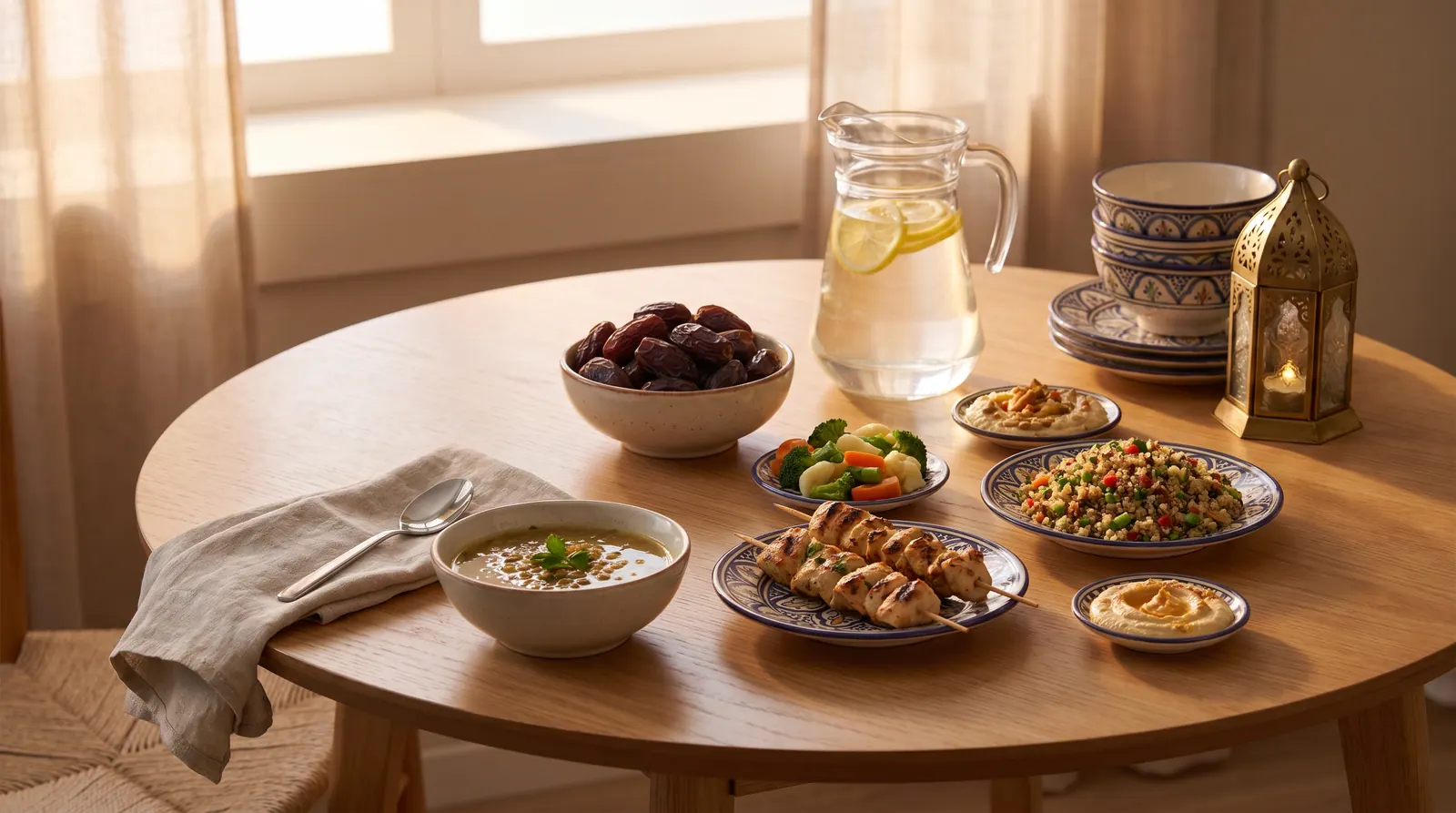
- Make your Ramadan Iftar gradual: Start with dates and water, then a light item, followed by your main meal a bit later, instead of a heavy feast all at once on an empty stomach. Separate Suhoor from sleep as much as possible.
- Tell your doctor the key phrase: If you experience difficulty swallowing, weight loss, or bleeding, mention it explicitly. These are red flags that go beyond occasional heartburn and require evaluation; don't just rely on an over-the-counter remedy.
EEINA's 8-Week Heartburn Soothing Protocol
An actionable plan combining the above into three progressive tiers. Start tier by tier, and log your symptoms daily to understand what works best for you.
This protocol is based on GERD evaluation guidelines and proven lifestyle modification research.
Gate-Soothing Habits
Four daily habits.
Greater Impact Modifications
Steps to reduce pressure.
Treatment & Follow-up
A medical, not self-determined, decision.
Golden Rule: The goal is not to chase acid with antacids but to strengthen the gate and reduce pressure on it. Daily modifications are fundamental, and medication is a tool decided by a doctor, not a permanent solution.
Frequently Asked Questions
When is heartburn normal, and when should I worry?
Should I completely avoid coffee and chocolate?
How many hours should I leave between dinner and sleep?
Should I stop my antacid medication on my own if I feel better?
Does elevating the head of the bed really help?
Start Your Next Step with EEINA
Gentle Meal Plans
Moderately portioned Saudi meals, lower in fat and triggers, spaced to allow a gap before sleep.
Get Your Plan →Modify Your Favorite Recipes
Adapt your favorite Saudi dishes into versions lower in fat and gentler on the LES.
Try It →The EEINA App
A food and symptom diary to reveal your personal triggers, with meal timing reminders and reports for your doctor.
Download →