Why "Before" Pregnancy, Not "During"
The reason is purely temporal: the neural tube closes within 28 to 32 days of conception, often before a woman knows she's pregnant. By the time a missed period is confirmed as pregnancy, this vital organ has largely completed its development. Therefore, starting folic acid after learning about the pregnancy may miss the critical window.
Practically speaking: If you are planning a pregnancy, start at least one month before trying to conceive. If pregnancy is a possibility without precise planning, it's logical to make folic acid a consistent daily habit rather than a decision made later, as many pregnancies are unplanned.

400 mcg: The Number to Remember
The universally and locally agreed-upon recommendation is 400 micrograms (mcg) of folic acid daily for every woman capable of becoming pregnant. The Saudi Ministry of Health advises 400 mcg before pregnancy and continuing until the 10th week. Some organizations accept a range of 400 to 800 mcg.
This number isn't just for pregnant women but for all women of reproductive age because pregnancy can be unexpected. Note that the total daily requirement for a pregnant woman increases to 600 mcg Dietary Folate Equivalents (DFE), but any increase in supplementation should be decided by a doctor. Do not attempt to increase the dose on your own.
Dietary Folate vs. Supplemented Folic Acid
"Folate" is the natural form found in foods like vegetables, legumes, and citrus fruits. "Folic acid" is the synthetic form used in supplements and fortified foods. The key difference lies in absorption: natural folate is absorbed less efficiently, while supplemented folic acid is absorbed much more efficiently, approaching complete absorption. This is why scientists developed the "Dietary Folate Equivalent" (DFE) unit to standardize comparisons between the two forms.
The practical takeaway: A diet rich in folate is an excellent foundation for general health, but it may not be enough on its own to raise the body's stores to the required protective level for pregnancy planning. A supplement, under medical guidance, can fill this gap.
Are You Folic Acid Ready? — A Self-Check
This screening is for guidance and education; it does not replace consultation with your doctor or gynecologist. Select what applies to your current situation:
Natural Folate Sources on Your Plate
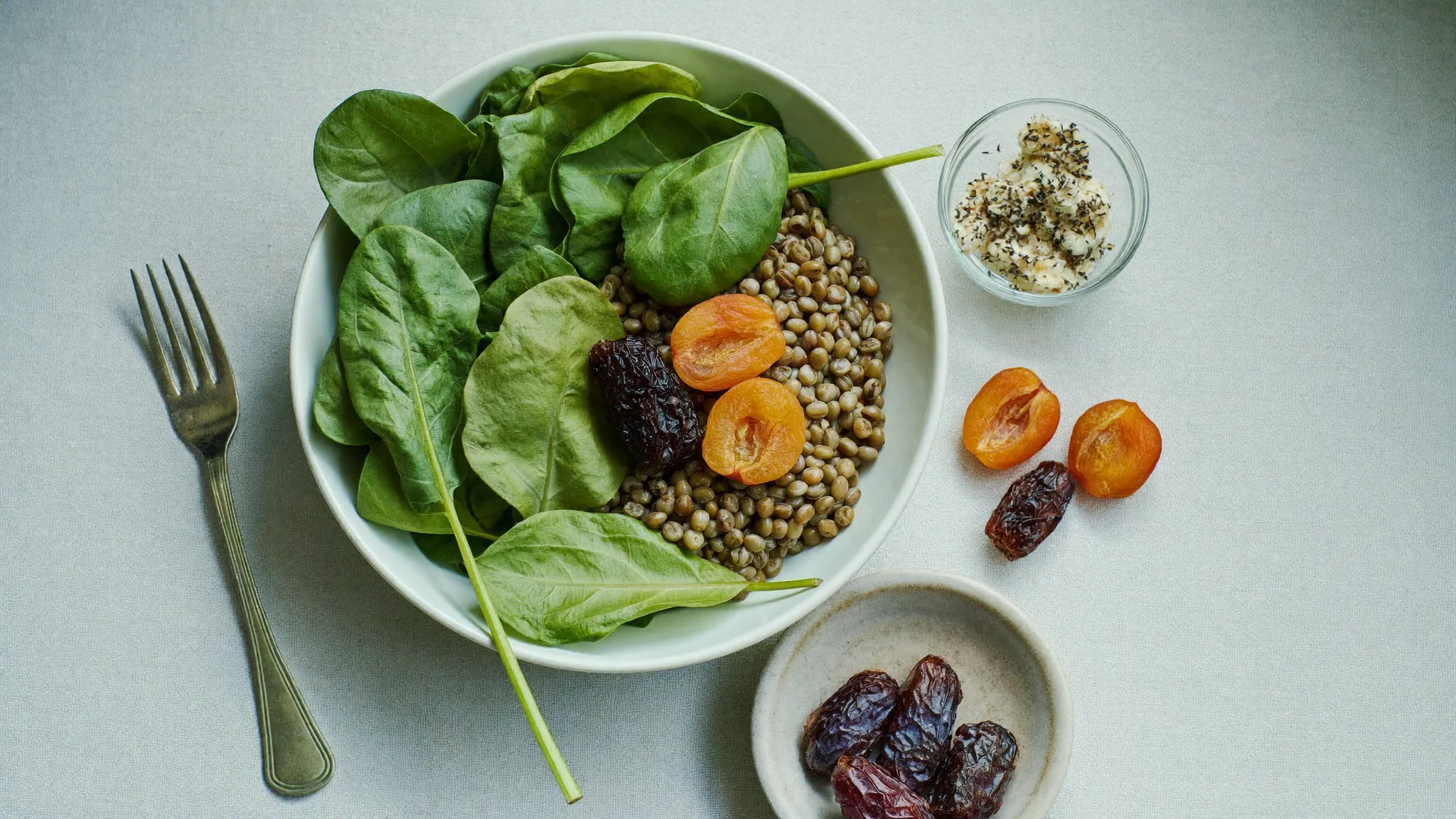
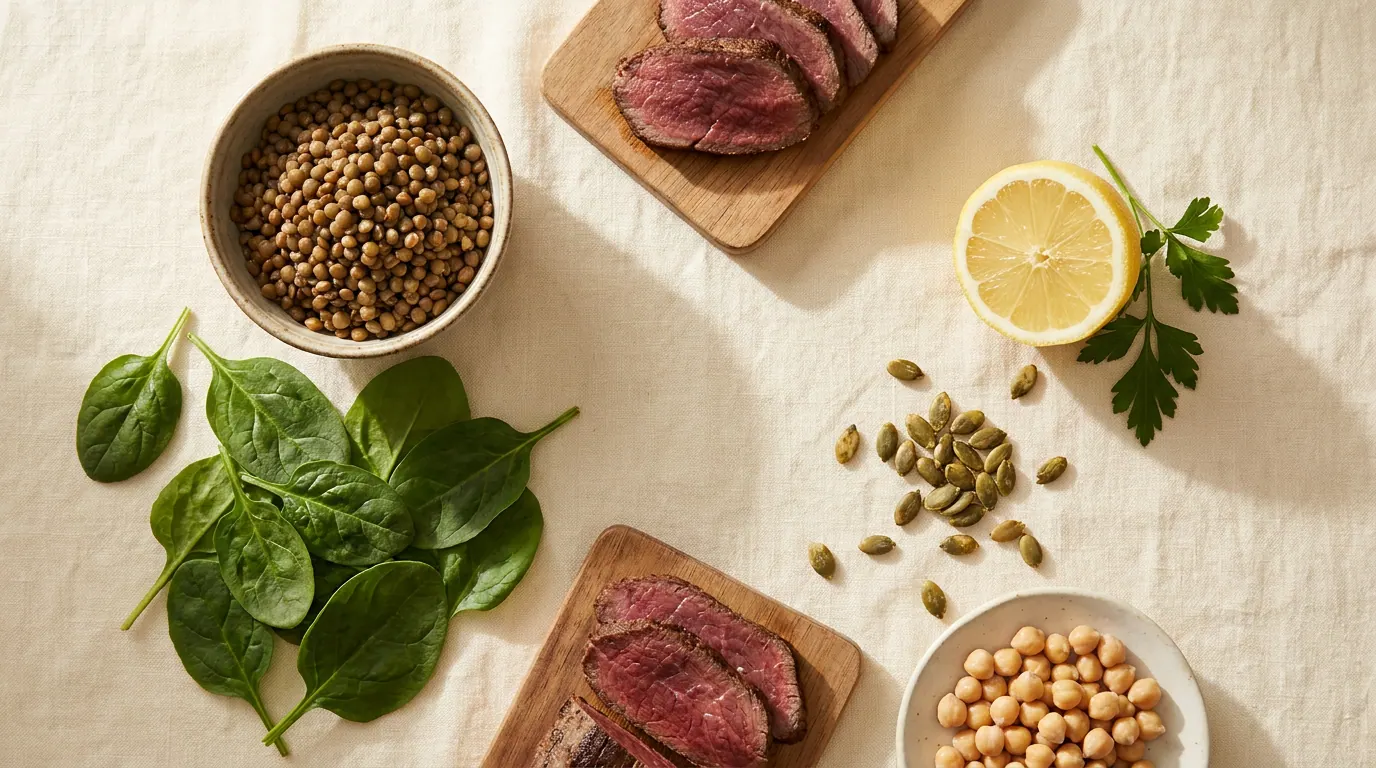
Folate is abundant in familiar foods on the Saudi table. Lentils are among the richest sources, with one cooked cup providing about 358 mcg. Dark leafy greens like spinach are also generous sources; half a cup of cooked spinach offers around 131 mcg. Among legumes, red beans provide about 46 mcg per half cup, as do black-eyed peas. Citrus fruits like oranges are a good source, with one large fruit containing about 55 mcg.
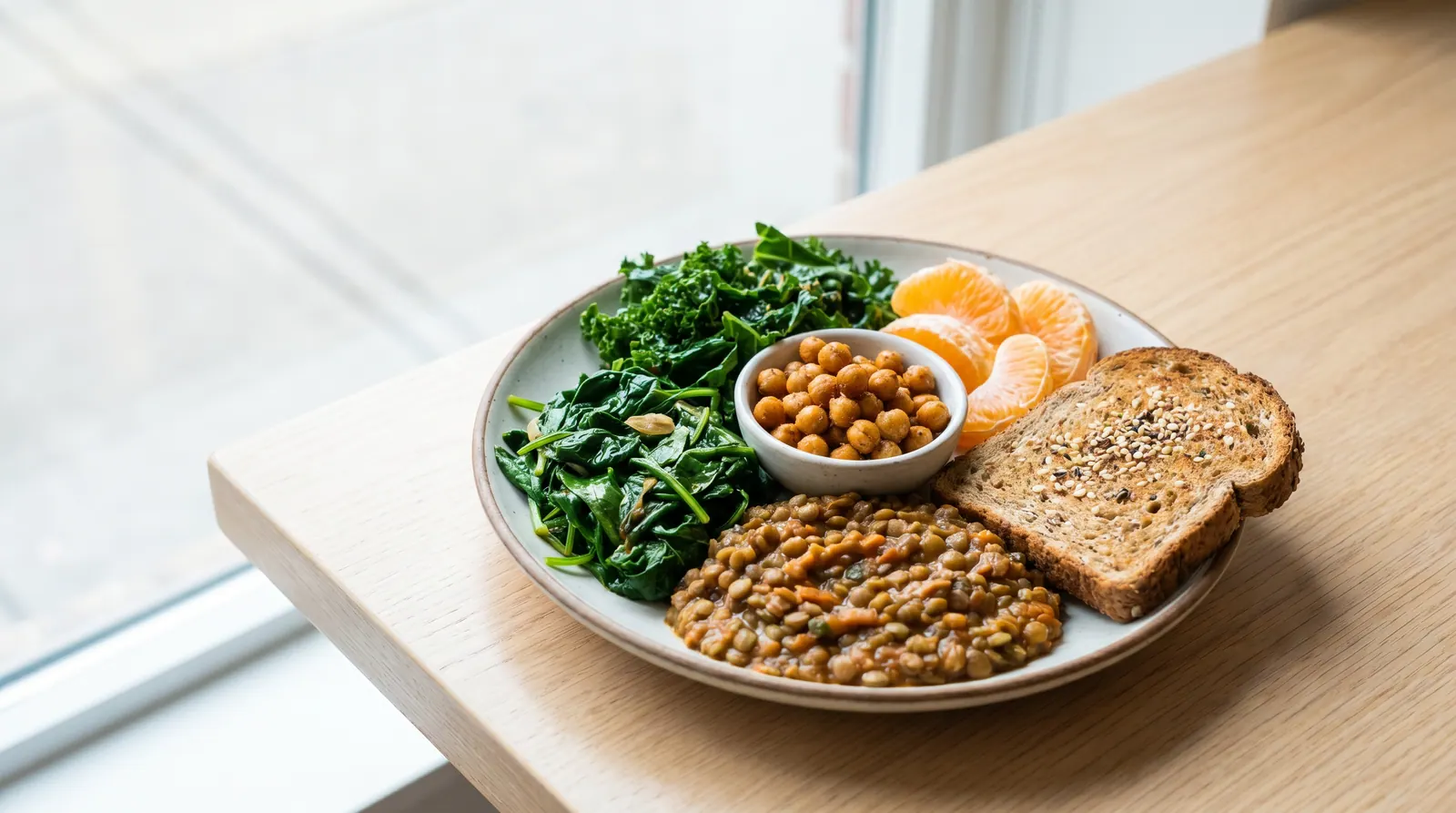
Practical tip: Lentil soup, a plate of foul (fava beans), a leafy green salad, and a glass of fresh orange juice can form a good daily folate base. The name "folate" itself is derived from "foliage" because it was first discovered in spinach leaves.
Cooking Reduces Folate
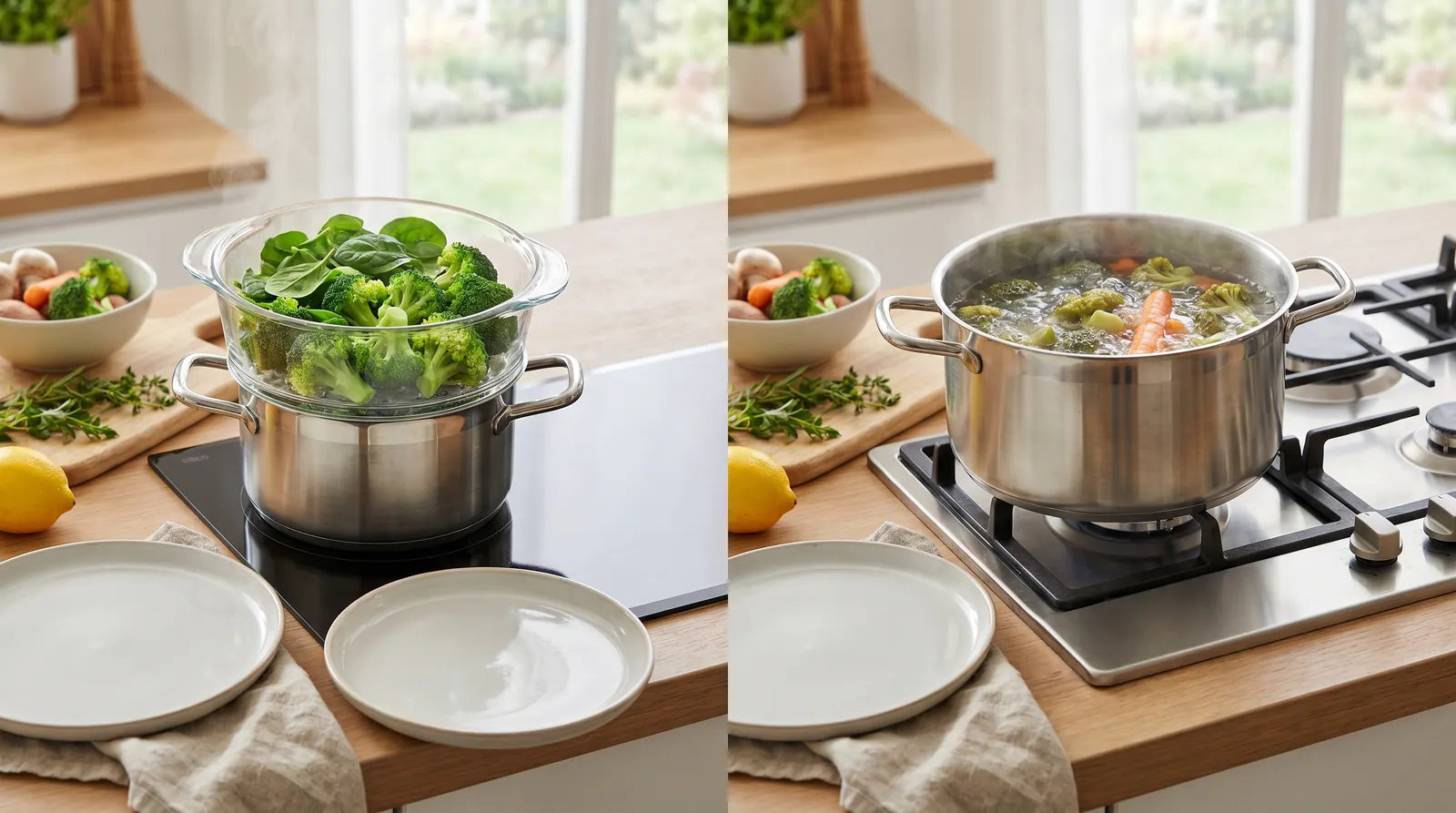
Folate is a heat-sensitive and water-soluble vitamin, meaning it can leach into cooking water and be degraded by prolonged heat. Therefore, long boiling methods retain less folate, while steaming or microwaving preserves more.
Practically: Steam vegetables instead of boiling them for extended periods, minimize cooking water, and utilize cooking water in soups instead of discarding it. Consume some sources raw when possible, such as salads and oranges. This doesn't negate the value of cooked food but explains why diet alone isn't relied upon for prevention.
Why Food Alone Isn't Enough for Prevention
A folate-rich diet is a health cornerstone, but three factors make it insufficient on its own for preventing neural tube defects: the lower absorption of natural folate compared to supplements, folate loss during cooking, and the difficulty of ensuring a consistent daily intake from food alone. Research indicates that diet alone may not raise blood folate levels to the required protective threshold.
Therefore, international recommendations combine both: a folate-rich diet as a base, and a 400 mcg supplement as a guarantee. Diet builds overall health, while the supplement bridges the critical protective gap.
Fortified Foods: An Additional Source
Some foods are artificially fortified with folic acid, most notably breakfast cereals and wheat flour. Saudi Arabia implemented folic acid fortification of flour around 2001, a public health measure that has contributed to a reduction in certain cases.
Read the nutrition facts label on products: if you find "folic acid," it's a highly absorbable source. These foods help increase daily intake but are not a substitute for a dedicated preconception supplement, as the added amount may not reach the full protective dosage.
Daily Timing and Consistency Over Perfection
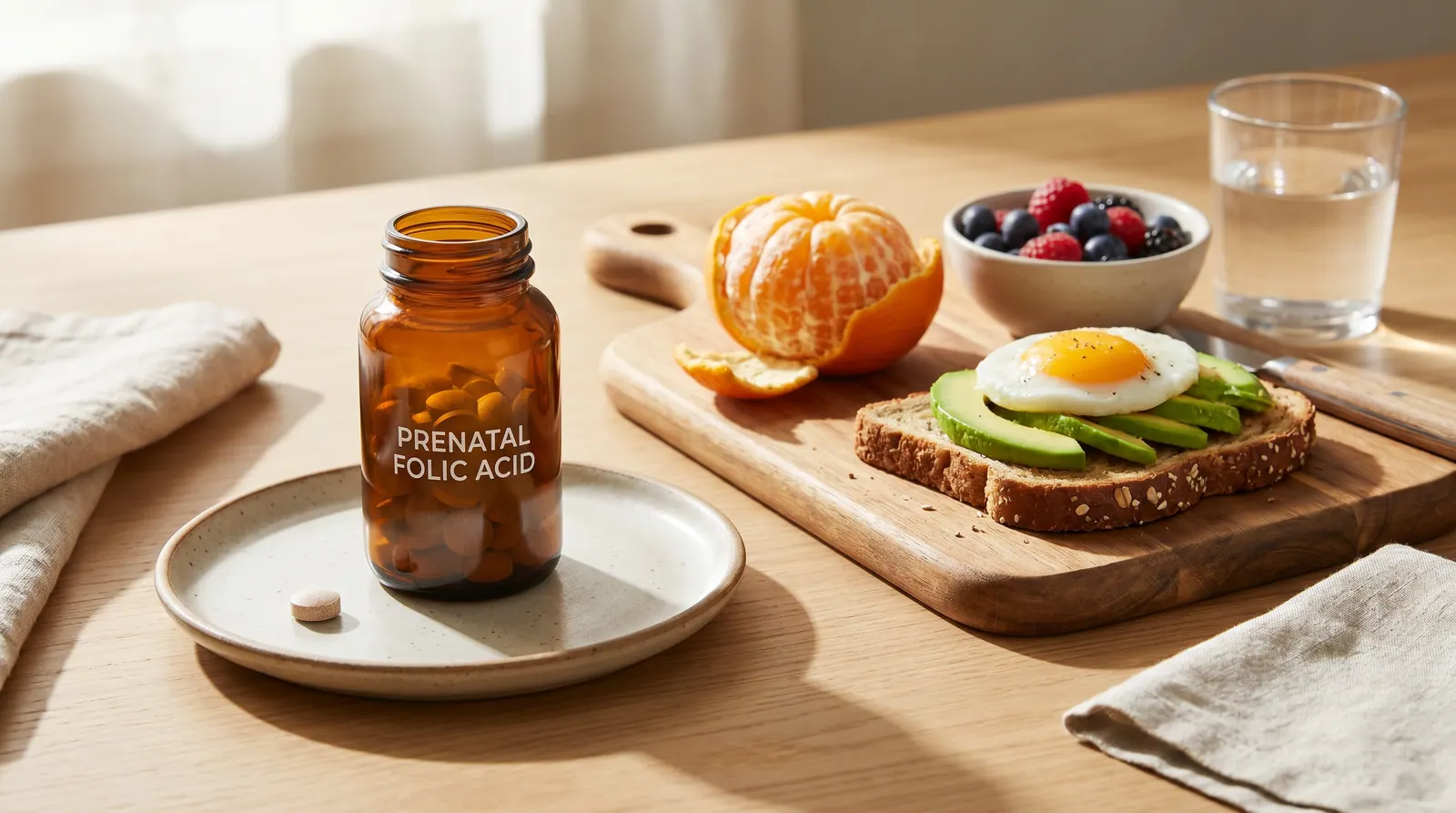
Folic acid needs time to build up sufficient stores in red blood cells to reach a protective level. This is why daily consistency is more important than an ideal, intermittent dosage. Choose a fixed time to link it to a daily routine, such as taking it with breakfast. Don't worry about occasionally missing a pill, but don't let forgetting become a pattern.
The World Health Organization (WHO) indicates that the goal is to raise folate levels in red blood cells above a certain threshold, which is achieved through consistency, not sporadic doses. Consistency is the true hero here.
When You Might Need a Higher Dose: A Doctor's Decision Alone
There are situations where a much higher dose, up to 4000 mcg daily, is recommended. This is particularly true for women who have previously had a pregnancy affected by a neural tube defect, as trials have significantly reduced the risk of recurrence. However, this high dose is strictly a medical decision and should not be taken independently.
Other factors like diabetes, certain medications, or absorption issues may require special evaluation. The Saudi context also includes consanguinity (blood relation between spouses) as a studied risk factor. Therefore, before any dose increase, present your complete medical history to your doctor.
Connect Folic Acid to the Complete Preconception Nutrition Picture
Folic acid isn't the only nutrient on the table. The preconception and pregnancy stages require nutritional integration: iron to prevent anemia and because its demand increases during pregnancy, and managing blood sugar for those at risk of gestational diabetes. Folate, iron, and blood sugar control are interconnected systems that benefit both mother and child's health. Do not isolate one element from the others.
Plan a comprehensive preconception nutritional strategy with your doctor, including essential tests and appropriate supplements. You can also explore our content on Iron During Pregnancy, Gestational Diabetes Nutrition, and Iron Deficiency Anemia to gain a clearer understanding.
Five Common Myths About Folic Acid
Half-truths and misconceptions about folic acid abound, leading to missed timing or unnecessary dose increases. Here are the most common ones, and what the evidence says:
"It's enough to start when pregnancy is confirmed."
"A healthy diet makes supplements unnecessary."
"Folate and folic acid are the same thing."
"The more folic acid, the better."
"Folic acid is only for pregnant women."
Practical Tips to Implement Today
Before you get to the full protocol, here are small guidelines from the above, making folic acid a part of your day without disrupting your life:
- Make it a habit, not a delayed decision. If pregnancy is a possibility, make 400 mcg of folic acid a consistent daily habit, not a decision postponed until after pregnancy is confirmed, as the critical window precedes the news.
- Link the pill to an existing habit. Associate it with breakfast or a daily action you repeat so you don't forget; consistency is more important than perfection.
- Start early. Begin at least one month before attempting pregnancy, as the neural tube completes its formation in the first 28 to 32 days.
- Cook gently. Steam leafy greens or cook them in the microwave instead of prolonged boiling to preserve their folate content.
- Don't waste cooking water. Use the water from boiling vegetables in soups instead of discarding it, as folate dissolves in it.
- Read the label. Look for "folic acid" on fortified breakfast cereals and flour to identify your high-absorption sources.
- Vary your daily sources. Combine lentil soup, a plate of foul, a leafy green salad, and an orange to build a diverse folate base.
- Consult before planning. Present your complete medical history to your doctor before any pregnancy planning, especially if you have a history of affected pregnancies or consanguinity.
EEINA's Preconception Folic Acid Readiness Protocol
A practical plan combining the above into three progressive layers. Start layer by layer, and make it an ongoing dialogue with your doctor, not an isolated decision.
The protocol is based on recommendations from the Saudi Ministry of Health and international bodies (CDC, USPSTF, NIH).
A Consistent Habit Precedes the News
Four daily habits.
Preparation One Month Before Conception
Steps preceding the attempt.
Decisions Solely for the Doctor
What not to take independently.
Golden Rule: Timing precedes dosage, and consistency precedes perfection. Folic acid is not a decision made on the day of discovery, but a habit that precedes it by a month.
Frequently Asked Questions
When should I start taking folic acid before pregnancy?
What is the appropriate daily dosage?
Is a folate-rich diet sufficient instead of supplements?
What is the difference between folate and folic acid?
Are there risks associated with taking too much folic acid?
Start Your Next Step with EEINA
Folate-Rich Meal Plans
Saudi recipes combining lentils, leafy greens, and citrus fruits to build a daily folate foundation before pregnancy.
Get Your Plan →Folate-Rich Recipes
Lentil soups, spinach dishes, and legume recipes prepared with gentle cooking methods to preserve folate.
Browse Now →EEINA App
Daily reminders for your folic acid pill and folate-rich meals, tracking your preconception readiness.
Download Now →