What is Gestational Diabetes and Why Does it Happen?
Gestational diabetes mellitus (GDM) is high blood sugar that first appears during pregnancy, usually in the second or third trimester. The reason is simple: placental hormones weaken the body's response to insulin, causing insulin resistance, leading to elevated blood sugar if the pancreas cannot keep up with the increased demand. The primary and fundamental treatment is medical nutrition therapy, as most cases are managed by diet alone before resorting to medication.
It is not your fault or a failure; it's a common condition that can be managed well. The risk increases with age, pre-pregnancy weight, and a history of GDM or delivering a large baby. Most importantly, controlling it through diet and monitoring protects both mother and baby and reduces delivery complications.
Saudi Arabia's Numbers
Gestational diabetes is one of the most common pregnancy complications in Saudi Arabia. Its prevalence rate is approximately 15.5%, with a confidence interval of 12.6% to 18.8%, according to a meta-analysis of the Middle East and North Africa region that included forty-eight studies. This is the second highest rate in the region after Qatar, which reported 20.7%, and it exceeds the overall regional average of 13%.
This means about 1 in 6 to 7 pregnant women in Saudi Arabia may develop it, making it very common and deserving of early nutritional awareness. The reassuring news is that its prevalence also means its management is well-studied and its tools are clear.
Are You More at Risk for Gestational Diabetes? — Self-Check
This is a screening tool that only reviews some known risk factors and does not diagnose the condition. Diagnosis is made through an oral glucose tolerance test ordered by your doctor at the appropriate time. Select what applies to you:
The Balanced Plate Principle — Half Vegetables, Quarter Protein, Quarter Carbohydrates
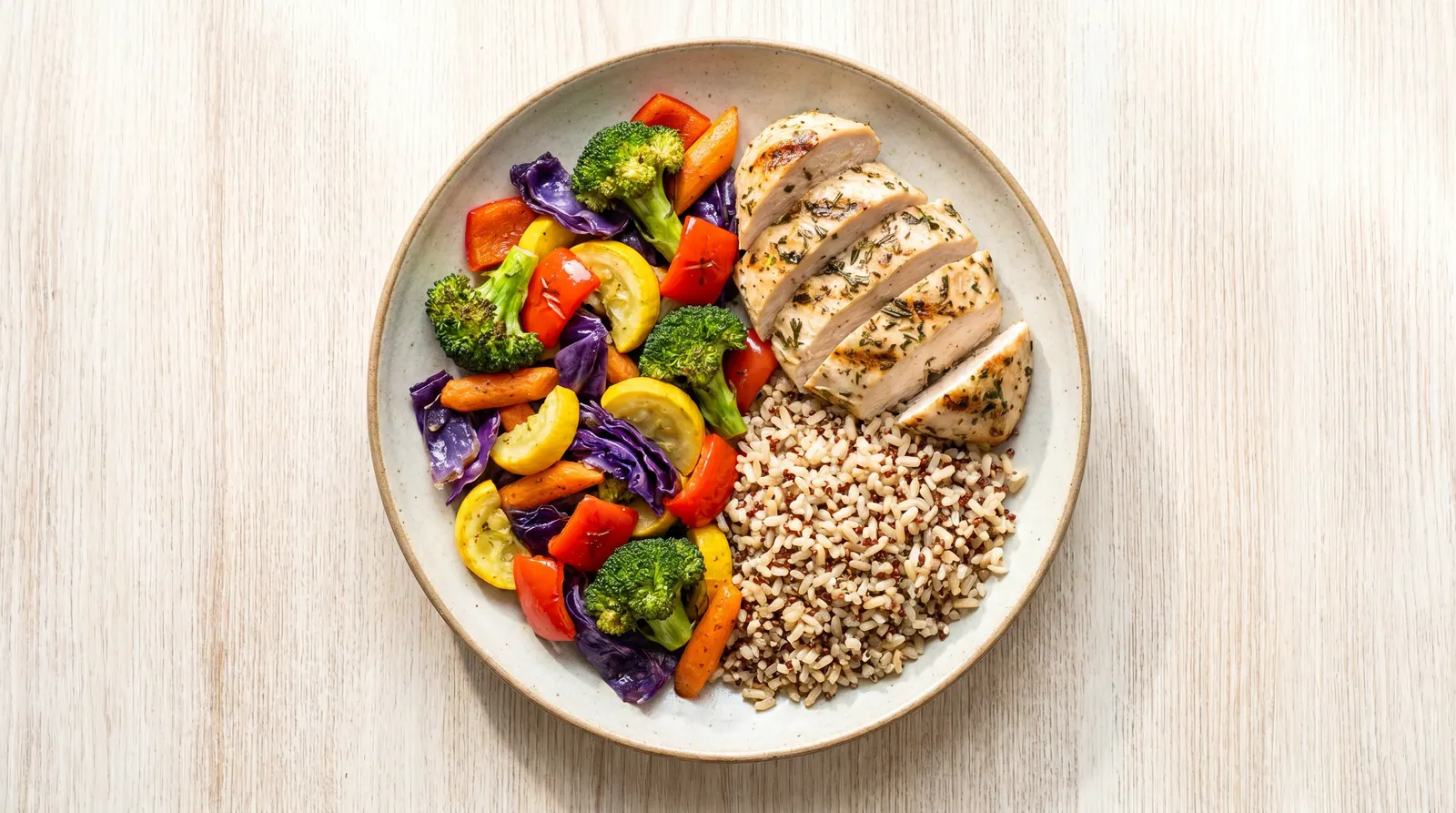
The simplest practical tool is the "Plate Method," adopted by the American Diabetes Association: fill half your plate with non-starchy vegetables like leafy greens, zucchini, and cauliflower, a quarter with lean protein such as chicken, fish, or legumes, and the final quarter with whole grains like brown rice or oats. This distribution naturally slows down sugar absorption, as fiber and protein reduce post-meal glucose spikes.
You don't need a scale or complex calculations for every meal; the visual of the plate is sufficient as a daily guide. Start your meal with vegetables, then protein, then carbohydrates, as this order alone lowers the post-meal sugar peak.
Distribute Carbohydrates Over Small, Frequent Meals
Instead of three large meals, it's better to have three moderate main meals and three small snacks in between. Guidelines recommend distributing carbohydrates approximately as follows: breakfast 10-15%, lunch 20-30%, and dinner 30-40%, with each snack being 5-10% of the total daily intake. The idea is that a small amount of carbohydrates every few hours doesn't overwhelm the system like a large dose all at once.
This doesn't mean starving your body of carbohydrates; the recommended minimum is about 175 grams per day to nourish the fetus and prevent ketosis. A bedtime snack of protein and simple carbohydrates can help stabilize morning sugar levels. Adjust portions based on your readings with your dietitian, as distribution is individualized.
Protein and Fiber — Your Allies in Every Meal
Protein is satiating, slows sugar absorption, and supports fetal growth. The Diabetes Association recommends at least 71 grams per day for pregnant women, from lean sources like chicken, fish, eggs, legumes, and yogurt. Fiber, on the other hand, is a natural sugar regulator, with a target of about 28 grams per day from whole grains, vegetables, and low-sugar fruits.
The practical rule: never eat plain carbohydrates alone; always pair them with protein, fiber, or healthy fats. A date with a handful of almonds is better than a date alone, and whole-wheat bread with cheese and eggs is better than white bread alone. This simple pairing significantly lowers post-meal glucose spikes.
Foods That Stabilize Sugar You Can Rely On
Non-starchy vegetables hardly raise blood sugar, so eat them generously: cucumbers, leafy greens, zucchini, eggplant, and peppers. Lean proteins from chicken, fish, eggs, legumes, and healthy fats like olive oil, avocado, and unsalted raw nuts slow down absorption.
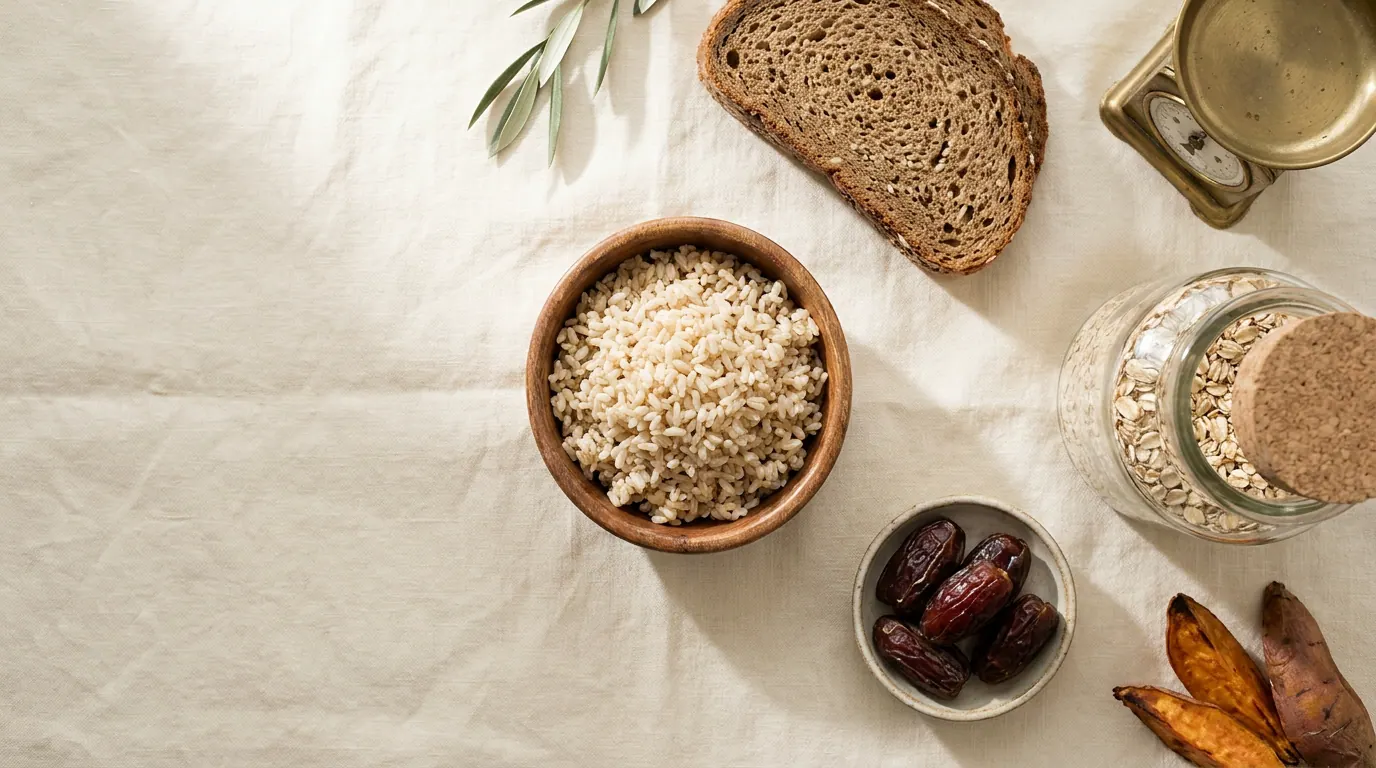
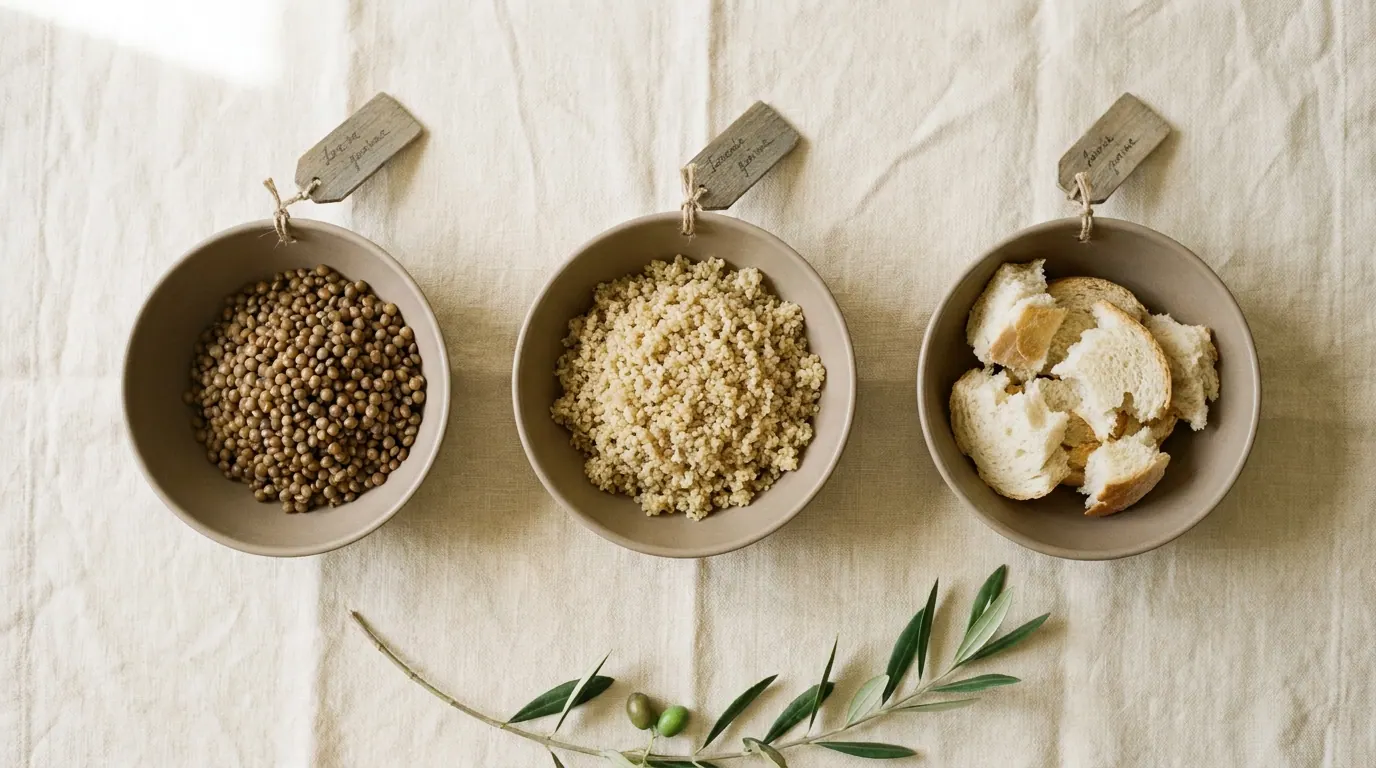
Low-glycemic index whole grains like plain oatmeal, brown rice, quinoa, and bulgur raise blood sugar more slowly than their refined counterparts. Plain Greek yogurt is an excellent snack. The rule is that whole foods rich in fiber and protein are the pillars of your diet. Your body's response, as revealed by your sugar readings, remains the ultimate judge.

Foods That Quickly Raise Sugar: Reduce or Avoid
Sugary drinks are the most dangerous because they bypass digestion and raise blood sugar immediately. This includes sodas, even natural juices, and sweetened beverages, which should be completely eliminated. Similarly, refined carbohydrates that cause rapid spikes, such as white rice, white bread, fried potatoes, pastries, and sweets, should be limited.
This doesn't mean complete deprivation, but rather reducing quantities and always pairing them with fiber and protein. In the Saudi context, be mindful of concentrated dates, sweetened coffee, and celebration sweets. A date paired with nuts is better than several dates on an empty stomach. Replace juice with whole fruit and white grains with whole grains, gradually and without being too hard on yourself.
| Category | Reduce or Avoid | Stabilizing Alternative |
|---|---|---|
| Beverages | Sodas, juices, sweetened drinks | Water, whole fruits with skin |
| Carbohydrates | White rice, white bread, pastries | Brown rice, oats, quinoa, bulgur |
| Protein | Fatty fried foods | Chicken, fish, eggs, legumes, Greek yogurt |
| Vegetables | Excessive fried potatoes | Cucumber, leafy greens, zucchini, eggplant, peppers |
| Snacks | Sweets, dates on an empty stomach | Dates with nuts, plain Greek yogurt |
Why is Breakfast the Hardest Meal for Gestational Diabetes?
In the morning, cortisol levels naturally rise, and insulin resistance is at its peak. Therefore, many pregnant women record their highest blood sugar readings specifically after breakfast. Common practical advice is to limit breakfast carbohydrates to about 15 to 30 grams and avoid purely starchy breakfasts like white bread with jam, sweetened cereals, or juice.
Make your breakfast more protein-rich: eggs with vegetables, or Greek yogurt with nuts, or a small portion of whole-wheat bread with cheese. The most accurate approach is to test your breakfast by measuring your sugar an hour later and adjusting with your dietitian, as responses are individual and revealed by measurement, not guesswork.
Self-Monitoring — The Numbers You Track
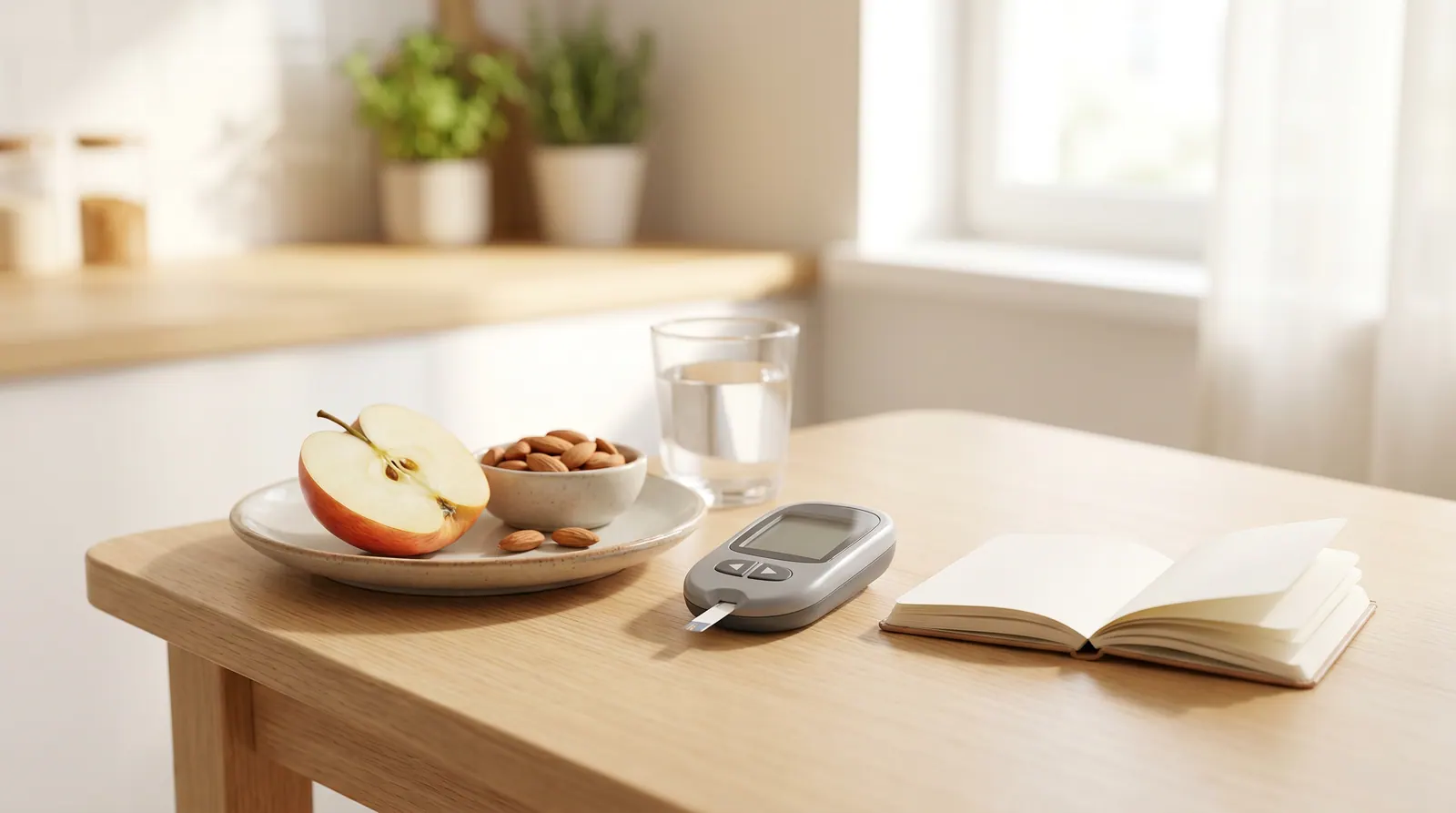
Home blood glucose monitoring with a finger prick test is your compass, revealing which foods suit you. The common schedule involves measuring fasting blood sugar in the morning, then one to two hours after each main meal, totaling about four times a day. The targets adopted by the American Diabetes Association are: fasting less than 95 mg/dL, one hour after meals less than 140 mg/dL, or two hours after meals less than 120 mg/dL.
Record your reading along with what you ate. This logbook reveals that a specific food item raises your sugar, allowing for adjustments. Don't get discouraged by an occasional high reading; the overall pattern is what matters. Share your log with your medical team at each visit to adjust the plan.
Walking After Meals — A Simple, Effective Tool
Physical activity after a meal helps muscles draw sugar from the blood and reduces post-meal spikes. The general recommendation is about thirty minutes of daily activity, which can be broken down. Aim for a light, comfortable walk fifteen to thirty minutes after finishing your meal.
Any physical activity during pregnancy should be approved by your doctor, especially if there are complications. Start gradually, drink water, and stop if you feel any discomfort. Movement is a support, not a burden.

Gestational Diabetes During Ramadan — A Medical Decision First
Pregnant women are generally permitted to break their fast. With gestational diabetes, fasting becomes more sensitive, as prolonged abstinence can cause hypoglycemia or blood sugar fluctuations that harm the fetus. This is not purely a dietary decision but a medical one to be made with your doctor and dietitian before Ramadan.
If fasting is permitted for a mild case, the principles remain the same: a protein-rich, fiber-filled suhoor that digests slowly, and an iftar that begins with a single date paired with water and a light soup, rather than immediately consuming sweets and juices. Distribute food between iftar and suhoor, and monitor blood sugar more closely. Do not decide to fast on your own; your safety and your baby's safety come first.
Five Common Myths About Gestational Diabetes
Half-truths and misconceptions about gestational diabetes can increase anxiety or lead to incorrect management. Here are the most common ones and the facts:
"Gestational diabetes means I ate too much sugar and it's my fault."
"I must avoid carbohydrates completely."
"Fruits are forbidden because they contain sugar."
"If I need insulin, my diet plan has failed."
"The risk ends once I give birth."
Practical Tips to Implement Today
Before diving into the full protocol, here are small, actionable tips derived from the above, which can help stabilize your daily blood sugar without drastically changing your life:
- Start with vegetables. Begin every meal with non-starchy vegetables, then protein, and carbohydrates last. This order alone lowers sugar spikes.
- No plain carbs. Pair bread with eggs or cheese, dates with nuts, and rice with chicken or vegetables. Pairing slows absorption.
- Protein-rich breakfast. Make breakfast eggs with vegetables or Greek yogurt with nuts, and limit its carbohydrates to about 15 to 30 grams.
- Replace juice. Drink water or whole fruits with their skin instead of juices and sweetened beverages that raise sugar instantly.
- Move after eating. Take a light walk for ten to fifteen minutes after each main meal instead of sitting down immediately.
- Measure and log. Measure your sugar fasting and after meals, and record the reading with what you ate to identify foods that raise your sugar.
- Switch grains. Gradually transition to whole grains: brown rice, plain oats, whole-wheat bread, quinoa, bulgur.
- Distribute your meals. Have three small meals and three snacks, and avoid prolonged fasting for many hours.
EEINA's Protocol for Managing Gestational Diabetes with Diet
A practical plan combining the above into three progressive layers. Start with one layer at a time, and record your daily readings to understand what works for you. All of this should be done under the supervision of your medical team.
This protocol is based on medical nutrition therapy recommendations for gestational diabetes and the American Diabetes Association's Plate Method.
Building the Plate and Distribution
Four habits every day.
Measurement and Adjustment
Numbers reveal what suits you.
Your Plan with Your Medical Team
Supervision, not individual guesswork.
Golden Rule: The goal is not to deprive yourself, but to build a balanced plate and measure to discover what suits you. Diet first, medication when necessary, and medical supervision at every step.
When to Seek Immediate Medical Attention — Red Flags
Managing gestational diabetes with diet is reassuring, but certain signs require immediate consultation with your medical team:
- Frequent high blood sugar readings despite adhering to diet and exercise (fasting above 95 or post-meal above 140 mg/dL), as you may need medication.
- Symptoms of hypoglycemia such as trembling, cold sweats, severe dizziness, and confusion, especially if you are on insulin or fasting.
- Excessive thirst, frequent urination, and unusual fatigue, or the presence of ketones if tested.
- A noticeable decrease in fetal movement, bleeding, or severe headache with sudden swelling.
- Considering fasting during Ramadan without prior consultation with your doctor and dietitian.
The presence of any of these signs means the situation requires immediate medical evaluation. Do not hesitate to contact your team.
Frequently Asked Questions
Will gestational diabetes definitely harm my baby?
How many times a day should I check my blood sugar?
What are the target blood sugar numbers?
Why is my blood sugar higher after breakfast even if I eat little?
Can I fast during Ramadan?
Start Your Next Step with EEINA
Gestational Diabetes Meal Plan
Balanced Saudi dishes based on the plate method, stabilizing blood sugar and nourishing mother and baby, complementing your doctor's care.
Get Your Plan →Transform Your Favorite Recipes
Modify your favorite Saudi dishes into blood-sugar-friendly versions with whole-grain alternatives and smart plate arrangements.
Try It →EEINA App
A food and reading logbook that reveals what raises your sugar, with reminders for meals, walks, and reports to share with your doctor.
Download →