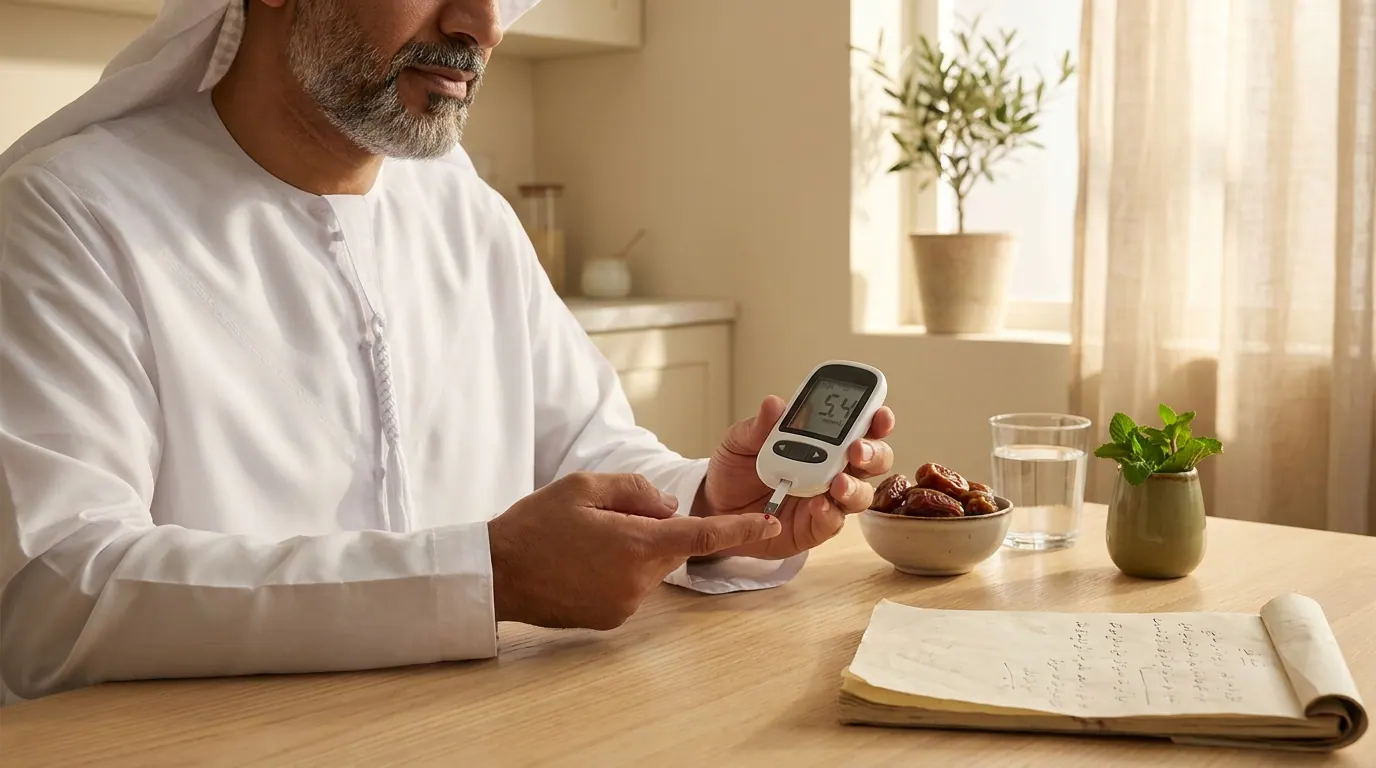
What is Type 2 Diabetes
Type 2 diabetes is a metabolic condition where blood sugar levels rise because the body either resists insulin or doesn't produce enough of it. Insulin is the key that allows glucose to enter cells for energy. When the response to this key weakens, sugar remains in the blood and gradually rises.
Type 2 diabetes isn't just about "eating sugar," but about accumulated insulin resistance with excess weight and lack of activity. That's why it's managed by improving insulin sensitivity, not by eliminating a single food group.
It differs from Type 1, where the pancreas stops producing insulin entirely and requires lifelong insulin injections. Type 2 accounts for over ninety percent of diabetes cases and is most strongly linked to lifestyle, making it the most manageable.
Saudi Arabia's Numbers: The Facts
Saudi Arabia is among the countries with the highest diabetes prevalence globally. According to IDF estimates and Ministry of Health studies, the picture is as follows:
Source: IDF Diabetes Atlas 2025 · Saudi Ministry of Health · Diabetes Prevention Program (DPP) · NEJM 2002.
Up to 58% of prediabetes cases can be delayed or prevented with moderate weight loss and regular exercise (DPP · NEJM 2002). Prevention is far cheaper than treatment.
HbA1c Calculator: Read Your Average Sugar
HbA1c measures your average blood sugar over the past two to three months. It can be converted to an 'estimated average glucose' (eAG) in the same units as your home meter, to help you understand your number more concretely:
Conversion equation per ADAG Study · Nathan 2008: Estimated Average Glucose (mg/dL) = 28.7 x HbA1c - 46.7. The general target for most patients is below 7%, determined individually by your doctor.
Target Values for Non-Pregnant Adults
According to ADA Standards of Care 2024 and Saudi Ministry of Health guidelines:
| Test | Normal | Diabetes Patient Target |
|---|---|---|
| Fasting Blood Sugar | 70 to 99 mg/dL | 80 to 130 |
| 2 Hours Post-Meal | Below 140 | Below 180 |
| HbA1c | Below 5.7% | Below 7% |
Your Risk Factors: A Self-Check
Select all that apply to estimate your need for a diabetes screening:
Glycemic Load & The Diabetes Plate
The common mistake is focusing on what's "forbidden" instead of what truly matters: the glycemic load of the meal. It's not the presence of carbohydrates that raises your sugar, but their quantity, type, and what accompanies them in terms of protein and fiber.
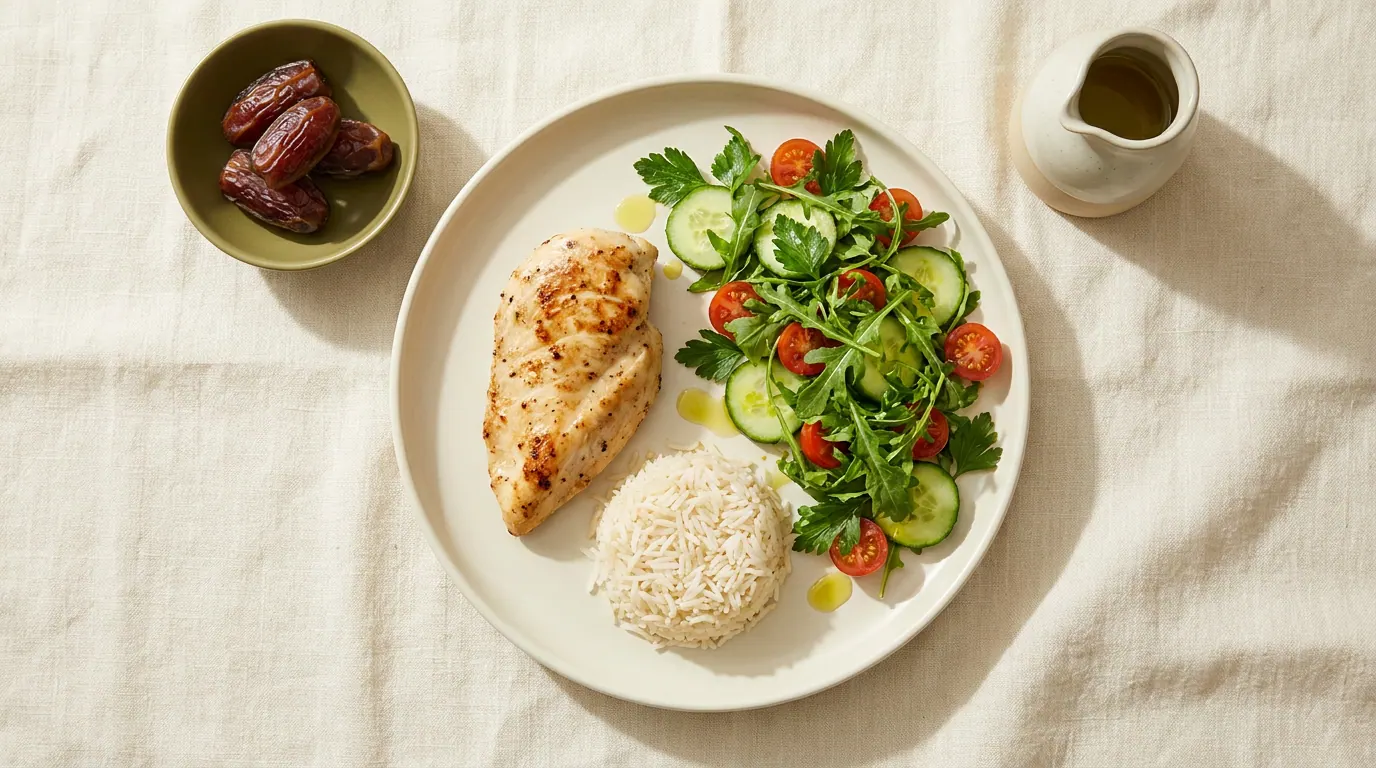
Values are approximate per International Tables of Glycemic Index and Glycemic Load · Atkinson et al. 2021. Actual values vary with cooking, ripeness, and accompanying foods.
Chicken Kabsa with long-grain basmati rice (GI 58) has a milder impact on your sugar than a "healthy" sandwich with white bread (GI 75). The secret isn't the size of the plate, but the type of carbohydrates and what accompanies them. To transform your favorite recipes into calculated versions, use EEINA's GI Calculator.
Foods That Help Control Blood Sugar
These foods don't "cure" diabetes, but they slow sugar absorption and improve insulin response when part of a consistent pattern:
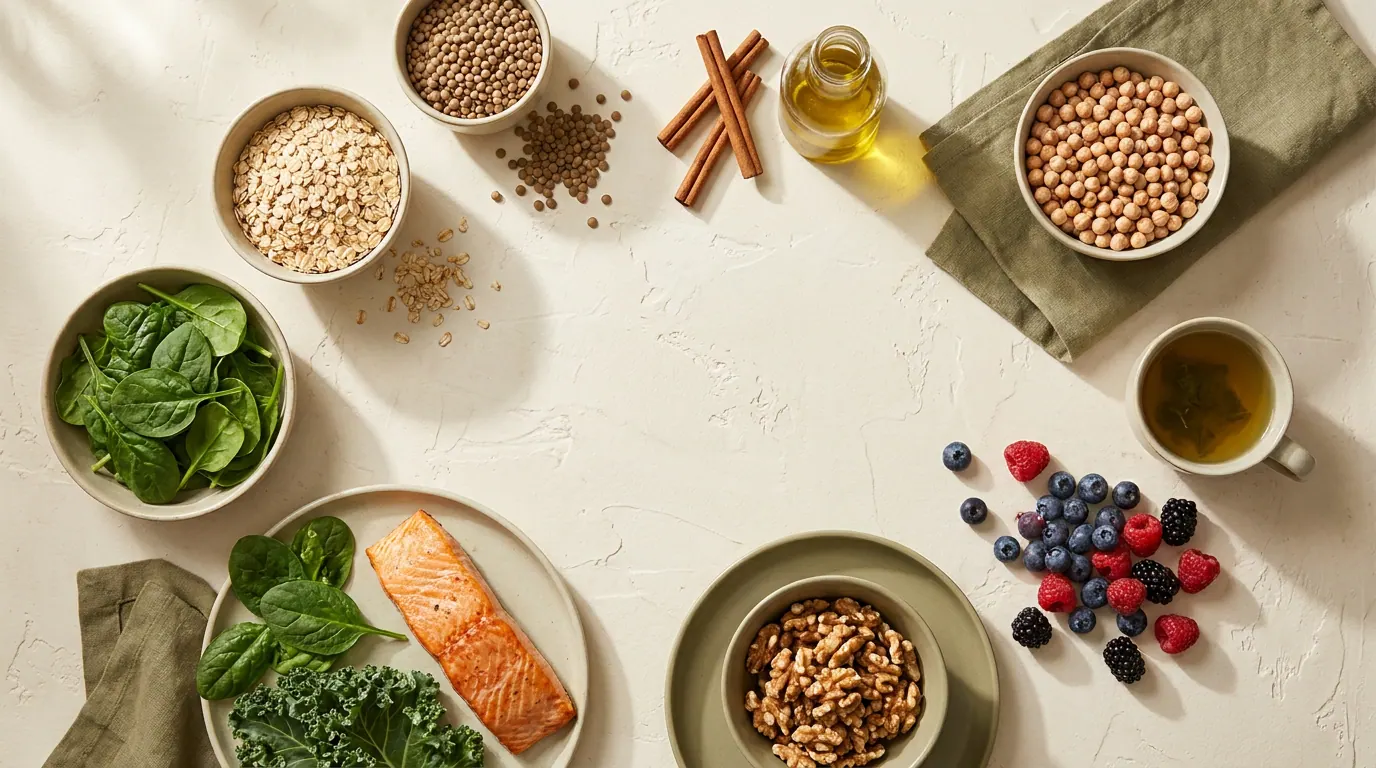
Legumes — Lentils, Chickpeas, Beans
They combine fiber and plant-based protein, slowing sugar absorption and providing long-lasting satiety. A solid foundation for any diabetes plate.
Leafy & Non-Starchy Vegetables
Arugula, spinach, cucumber, tomatoes, zucchini. They fill half the plate without raising sugar and slow the digestion of accompanying foods.
Fatty Fish & Nuts
Salmon, sardines, and walnuts. They don't raise sugar and support heart health, which is particularly affected in diabetes patients.
Cinnamon — A Modest Helper
May modestly lower fasting sugar in some studies, but evidence is inconclusive. It adds flavor that can replace sugar, but doesn't replace medication.
Foods That Raise Blood Sugar Quickly
These categories rapidly raise blood sugar, especially liquid beverages lacking the fiber to slow them down:
GI values per Atkinson et al. 2021. Sweetened beverages are measured by their high glycemic load, not just GI.
Exercise & Insulin Sensitivity
Exercise is one of the most powerful tools for managing diabetes. The World Health Organization recommends 150 minutes of moderate-intensity activity per week. Its most significant effect is improving insulin sensitivity, meaning your body uses the same amount of insulin more effectively:
Saudi Context
Riyadh and Jeddah's heat can exceed 40°C in summer. Exercise in the early morning before 7 AM, or in the evening after 7 PM, or in indoor spaces like malls. Avoid exercising under direct sunlight. A ten-minute walk after each main meal is an easy and effective option.
Hydration — Water Supports Blood Sugar Control
Dehydration increases glucose concentration in the blood and strains the kidneys, which are already working overtime in diabetes patients. Drinking two to three liters daily is a reasonable standard in the hot Saudi climate, adjusted based on activity and doctor's advice.
Diet carbonated drinks are not a substitute for water. Some studies link artificial sweeteners to changes in gut microbiome and glucose tolerance (Suez et al. · Cell 2022). Best options: water, unsweetened green tea, or water with lemon slices and mint.
Sleep & Stress — The Hidden Factor in HbA1c
Cortisol, the stress hormone, directly raises blood sugar. Diabetes patients who sleep less than six hours have a significantly higher HbA1c compared to those who sleep seven to eight hours (Anothaisintawee et al. 2016).
- Maintain consistent sleep hours, even on weekends.
- Avoid caffeine after 4 PM.
- Practice deep breathing or meditation for ten minutes before bed.
- Stop screen use half an hour before sleep.
Medications — Adherence, Not Guesswork
Every medication prescribed by your doctor has a specific purpose. Understanding its mechanism helps you adhere to it:
Metformin
Reduces liver glucose production and improves insulin sensitivity. The most prescribed, rarely causes hypoglycemia on its own.
GLP-1 Receptor Agonists
Slow gastric emptying and promote satiety, reducing both sugar and weight. A strong option for diabetic patients with obesity.
SGLT-2 Inhibitors
Remove excess sugar through urine and protect the heart and kidneys. Particularly beneficial for those with heart or kidney disease.
Insulin
Some Type 2 patients may need it as the condition progresses. It's not a failure, but an effective tool for precise sugar control.
Regular Screenings — Early Detection, Fewer Complications
Diabetes silently affects the kidneys, eyes, nerves, and heart. Regular screenings detect problems before symptoms appear:
| Test | Frequency | Purpose |
|---|---|---|
| HbA1c | Every 3 to 6 months | Average blood sugar over three months |
| Blood Pressure | Every visit | Early detection of hypertension |
| Kidney Function Tests | Annually | Detecting diabetic nephropathy |
| Eye Exam (Retina) | Annually | Detecting diabetic retinopathy |
| Foot Exam | Annually | Detecting loss of sensation or ulcers |
| Blood Lipids | Annually | Cholesterol and triglycerides |
Silent Complications
Controlling blood sugar isn't an end goal, but prevention of silent damage that accumulates slowly in four areas:
Eyes — Retinopathy
High blood sugar damages the microvasculature in the retina. Annual eye exams detect it early when treatment is possible.
Kidneys — Diabetic Nephropathy
Kidneys filter blood, and high sugar strains them. Urine tests and kidney function tests annually monitor early damage.
Nerves — Neuropathy
Starts with tingling in the extremities. Loss of sensation allows unnoticed injuries, leading to ulcers. Annual foot exams are essential.
Heart & Blood Vessels
Diabetes doubles the risk of heart disease. Controlling sugar, blood pressure, and cholesterol together is true protection.
Read the Encyclopedia on CholesterolSpecial Case: Fasting During Ramadan
Many Saudi diabetes patients fast during Ramadan, even though some are medically advised against it. The final decision rests with you and your doctor, but here's the classification according to IDF-DAR guidelines:
Low Risk
Type 2 diabetes well-controlled by diet or Metformin alone. Fasting is generally safe with monitoring.
Moderate Risk
Requires adjusting medication timing with your doctor before Ramadan and more frequent sugar monitoring during fasting.
High or Severe Risk
Type 1, insulin use, pregnancy, or chronic kidney disease. Medically advised against fasting due to risk of severe hypoglycemia.
Five Common Myths
"Diabetics are completely forbidden from eating dates."
"Only those who eat a lot of sugar get diabetes."
"If I start insulin, it means I've failed."
"Fruits are forbidden because they contain sugar."
"Diet products without sugar are safe without limits."
EEINA's 12-Week Blood Sugar Control Protocol
A practical plan based on ADA 2024 and Diabetes Prevention Program. Three pillars. Adherence can lower HbA1c by 1 to 2% within months.
The protocol is based on ADA Standards of Care 2024 and DPP · NEJM 2002.
Blood Sugar Control Habits
Four numerical goals every day.
Weekly Sugar Commitments
Five tasks to repeat each week.
Measure Impact After 12 Weeks
A measurable result, not just an impression.
Golden Rule: Losing 5-7% of body weight significantly improves blood sugar control and can reverse prediabetes. You don't need perfection, you need consistency.
Frequently Asked Questions
- In some cases, remission (a state of 'quiet' diabetes) can be achieved with significant early weight loss, especially in the first few years. However, it requires continuous monitoring as sugar levels can return. The realistic goal for most is stable control, not a 'cure'.
- It measures your average blood sugar over the past two to three months, not at the moment of the test. The higher it is, the higher your average sugar. Use the calculator at the top of the page to convert it to an estimated average glucose in your home meter's units.
- Yes, in moderation. Dates have a moderate glycemic index, and one or two dates with a handful of nuts or yogurt is a reasonable choice that slows sugar absorption. Monitor your quantity and your sugar response.
- This depends on your medication and the stability of your condition. Those using insulin may need several measurements daily, while those managing with diet and Metformin may need fewer. Your doctor will determine the most suitable schedule for you.
- Many health insurance plans in Saudi Arabia and the government sector cover basic glucose meters and strips for registered diabetes patients. Ask your doctor or pharmacist for details.
- Type 1 is autoimmune, where the pancreas stops producing insulin and requires lifelong injections, usually appearing in childhood. Type 2 is insulin resistance linked to weight and lifestyle, accounting for over ninety percent of cases, and is more manageable through lifestyle changes.
Seven Points to Remember
- One in five Saudi adults has diabetes. Many are unaware. High sugar is silent.
- Know your number. HbA1c below 7% is a general target, and your doctor will set yours individually.
- Glycemic load matters. The type of carbohydrates and what accompanies them, not just the plate size.
- Sweetened beverages are the primary enemy. Liquid sugar without fiber to slow it down.
- Exercise improves insulin sensitivity. Walking after meals is a simple start.
- Losing 5-7% of body weight improves control. You don't need perfection, you need consistency.
- Regular screenings detect complications early. Annual checks for eyes, kidneys, feet, and heart.
Start Your Next Step with EEINA
Sugar Control Meal Plan
Calculated Saudi recipes, controlled carbohydrate portions, legumes, vegetables, and fatty fish.
Get Your Plan →GI Calculator for Your Recipes
Transform Kabsa, Mandi, and Machboos into calculated versions with transparent GI values.
Try It →EEINA App
Track sugar and weight, get medication and test reminders, and a monthly report for your doctor.
Download →