What is Creatine?
Creatine is a natural compound your body produces in the liver and kidneys, and stores primarily in muscles. You get some from your diet, especially from meat and fish, and synthesize the rest internally. Creatine monohydrate is the most researched supplement form, described as the most effective dietary supplement available to athletes for increasing high-intensity exercise capacity and lean body mass.
Practically: Creatine is not a stimulant or a hormone, but an auxiliary fuel for your muscles' rapid energy system. It benefits those who engage in short, intense exercises like weightlifting and interval sprinting. For those who are sedentary, the supplement won't build muscle out of thin air. Start with exercise and a balanced diet, then consider it as a supportive tool.
How It Works: The Phosphocreatine System
The direct fuel for muscles is ATP, but its stores are depleted within a few seconds of maximal effort. This is where the creatine-phosphocreatine system comes in: it acts as a rapid energy reserve that regenerates ATP the moment it's used up, ensuring its availability, especially during short anaerobic efforts like maximal sprinting.
Practically, this explains why creatine is beneficial in the final reps of a set or during interval running: as your phosphocreatine stores increase in your muscles, you recover energy faster between bursts of effort, allowing you to do more work over time. However, it's not an instant magic, but an advantage that accumulates with regular training.
Evidence for Strength and Mass
This is where creatine's true power lies. The International Society of Sports Nutrition's position stand describes it as the most effective supplement for increasing high-intensity exercise capacity and lean body mass during training, and it's one of the few supplements consistently shown to be beneficial by research.
Practically: Creatine works with exercise, not instead of it. It helps you perform more work in a session, and this accumulated extra work is what builds strength and muscle over time. Don't expect a transformation from week to week, but a quiet advantage that emerges over weeks of consistent training, adequate protein, and good sleep.
Is Creatine Right for You? — A Guide
This guide provides indicators that may suggest creatine could be beneficial for you. It does not replace consultation with your doctor or a nutritionist, especially if you have any health conditions. Select what applies to you:
Daily Dosage
The standard maintenance dose is 3 to 5 grams daily, or about 0.1 grams per kilogram of body weight. This small daily dose is effective for saturating muscle creatine stores and supporting muscle growth, performance, and recovery.
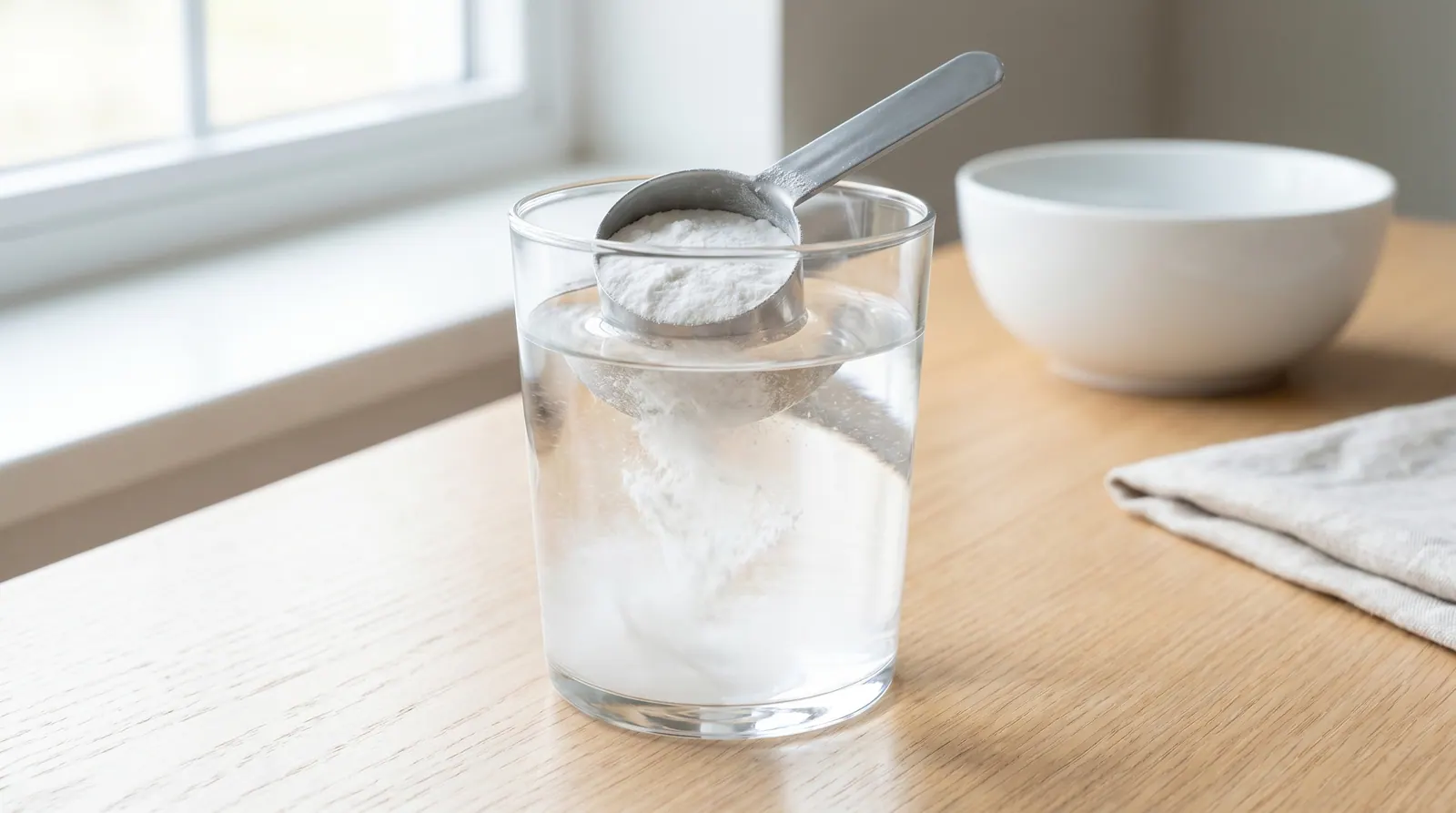
Practically: No need for large numbers or complexity. Approximately one teaspoon daily is sufficient, and consistency is more important than precise timing. Dissolve it in water or add it to your drink at any time that fits your routine, as stores accumulate through consistent use, not by the moment you take it.
Loading or Direct Maintenance?
You have two paths. Loading: About 5 grams, four times a day (approximately 20 grams) for 5 to 7 days, rapidly saturates muscle stores, after which you transition to maintenance. Or Direct Maintenance: 3 grams daily for about 28 days reaches the same stores but at a slower pace.
Practically: Loading is optional, not mandatory. If you're in a hurry before a training season, you might choose it, but be aware that large divided doses can upset some stomachs. If you're not in a rush, the simpler and gentler approach for your stomach is 3 to 5 grams daily from the start, and the end result is the same.
Safety and the Kidney Myth
This is creatine's most common concern, and the evidence is reassuring: the International Society of Sports Nutrition concludes that there is no convincing evidence that creatine negatively affects kidney function in healthy individuals, and doses up to 30 grams daily for 5 years are safe and well-tolerated in healthy individuals and across various age groups from infants to the elderly.
The story about elevated creatinine is often misinterpreted: creatine may slightly and temporarily raise blood creatinine levels because creatinine is a normal metabolic byproduct of creatine metabolism, not an indicator of kidney damage itself. Nevertheless, the strict rule remains: if you have known kidney disease, do not start without consulting your doctor. As a general precautionary measure, it's preferable to avoid it during pregnancy and breastfeeding until advised by a doctor.
Water Retention — The Quiet Truth
Many notice early weight gain with creatine and assume it's fat. The truth is that creatine loading promotes short-term fluid retention of about 0.5 to 1 liter, correlating with the initial rapid weight gain. This is water within the muscle, not fat.
More importantly: research does not find that creatine increases body fat mass across various populations. Practically: Don't be alarmed by the scale number in the first week; it's intracellular water within muscle cells, and many athletes consider it a desirable effect that plumps up the muscle. If it bothers you, it usually normalizes over time and doesn't indicate fat accumulation.
Sources in Your Diet
Before supplements, know that your plate already contains creatine. The richest sources are red meat and fish. A serving of about 170 grams of meat contains approximately 0.7 grams of creatine, and your body synthesizes the rest internally. This explains why creatine stores might be lower in those who consume less meat or follow a vegetarian diet.
| Source | Serving Size | Approximate Creatine |
|---|---|---|
| Red Meat | 170g | Approx. 0.7g |
| Fish (e.g., Salmon, Tuna) | Serving | Rich Source |
| Poultry | Serving | Moderate Source |
| Plant-Based Foods | — | Very Scarce |
Practically: Diet alone cannot saturate muscle stores as effectively as a supplement, as this would require impractically large amounts of meat. However, a serving of meat or fish in your daily diet supports your natural stores and is a logical first step before considering a supplement.

Which Form to Choose?
The market is full of forms promising better absorption and higher prices, but creatine monohydrate remains the most researched and best-documented form for efficacy and safety. Newer forms have not demonstrated superior benefits that justify their higher cost.
Practically: Don't pay more for marketing claims. Choose creatine monohydrate from a reputable source, preferably one with a quality certification from an independent testing body. Consistent daily intake of monohydrate is far more important than the label or the color of the container.
What Science Actually Says
The scientific consensus is consistent and calm: creatine monohydrate is the most effective supplement for increasing high-intensity exercise capacity and lean body mass. Its safety profile extends up to 30 grams daily for 5 years in healthy individuals, with no convincing evidence of kidney harm in this population.
Scientific reviews debunk its major myths one by one: no hair loss, no dehydration, no cramps, no fat gain. The practical takeaway: approach creatine with moderate confidence. It's a well-evidenced supportive tool for those who train, not a magic solution or a terrifying danger. Benefits accumulate with training, and safety is conditional on kidney health and doctor consultation when any condition arises.
Five Common Creatine Myths
Fears and promises unsupported by evidence circulate around creatine. Here are the most prominent ones, and what research says:
"Creatine damages kidneys."
"Creatine causes hair loss."
"Creatine causes dehydration and muscle cramps."
"Creatine increases body fat."
"A loading phase is mandatory for benefits."
Practical Tips to Apply Today
Before diving into the full protocol, here are small guidelines from the core message, helping you use creatine confidently and without exaggeration:
- Establish the foundation first. Consistent training, adequate protein, and good sleep are the bedrock. Creatine supports them, it doesn't replace them. Don't expect results without training.
- Choose monohydrate. It's the most researched and best-documented form. Don't pay more for newer forms that haven't proven superior.
- 3 to 5 grams daily is enough. A small, consistent dose is more important than precise timing. Dissolve it in water or your drink anytime that suits you.
- Loading is optional, not mandatory. If you're not in a hurry, direct maintenance is gentler on your stomach and reaches the same stores within weeks.
- Don't panic about early scale gains. Initial weight gain is intracellular water, not fat, and is an expected effect that normalizes over time.
- Drink enough water. Maintain good hydration as a general healthy habit; it benefits you with or without creatine.
- Consult a doctor with any condition. If you have kidney disease, are pregnant, or take chronic medication, consult your doctor before starting.
- Give creatine time. Benefits accumulate over weeks of consistent training, not overnight. Judge it after a sufficient period.
EEINA's Protocol for Confident Creatine Use
A practical plan combining the above into three progressive layers. Start layer by layer, and note your response to understand what works best for you.
The protocol is based on the International Society of Sports Nutrition's scientific position and common FAQ reviews on creatine.
Establish the Foundation First
Before any supplement.
Your Simple Dose
If you decide to add it.
Evaluate and Review with Guidance
Moderate expectations.
Golden Rule: Creatine is a well-evidenced supportive tool, not a magic solution or a terrifying danger. Establish your foundation first, take a small consistent dose, and consult a doctor for any kidney issues or pregnancy.

Frequently Asked Questions
Is creatine safe for kidneys?
Do I need a loading phase?
What is the appropriate daily dosage?
Does it cause water retention?
Does it cause hair loss or dehydration?
When to Consult a Doctor — Red Flags
Creatine is safe for healthy individuals in most cases, but certain circumstances warrant medical consultation before starting or during use:
- Known kidney disease or impaired kidney function: Do not start creatine before consulting your doctor, as evidence is limited in this situation.
- Pregnancy or breastfeeding: Consult your doctor first, as safety evidence is insufficient during these periods.
- Chronic medications or ongoing health conditions: Consult your doctor or pharmacist before adding any supplement.
- Troubling digestive symptoms such as nausea or diarrhea, especially with high loading doses, warrant reducing the dose or discontinuing.
- Unusual swelling or changes in urine output: Seek medical attention and do not ignore the symptom.
- Any unexplained symptom appearing after starting warrants stopping and evaluating the cause with a specialist.
Start Your Next Step with EEINA
High-Protein Meal Plans
Saudi recipes that support your training with adequate protein and servings of meat and fish, the foundation for any muscle growth.
Get Your Plan →Meat & Fish Recipes
Easy ideas for incorporating meat and fish into your diet, natural sources of creatine and protein.
Try Them →EEINA App
Tracks your daily protein and meat/fish servings, reminds you to hydrate and stick to your workout routine.
Download →