What is Cholesterol and Why Your Body Needs It
Before fearing it, know that cholesterol is a vital substance you cannot live without. Your body uses it to build every cell membrane, hormones like estrogen, testosterone, and cortisol, vitamin D, and bile acids for fat digestion. That's why your liver produces most of your internal needs, regardless of what you eat.
The problem isn't its presence, but how it's transported in the blood. Cholesterol is fatty and doesn't dissolve in water, so it needs lipoprotein carriers to transport it through the bloodstream. The difference between a harmful and a beneficial carrier is the core of the entire story: it's not the cholesterol itself that determines risk, but the particle carrying it and its destination. This shift in understanding explains why experts stopped chasing dietary cholesterol and focused on the type of fat.
The Bad and The Good: The Carrier, Not The Cargo
Low-density lipoprotein, or LDL cholesterol, carries cholesterol from the liver to tissues. When it's elevated, it can seep into artery walls and accumulate, forming plaque that narrows blood flow, increasing the risk of heart attack and stroke. This is why it's dubbed 'bad'.
High-density lipoprotein, or HDL cholesterol, works in reverse: it picks up excess cholesterol from arteries and returns it to the liver for disposal, so its healthy level protects the heart. But beware: HDL doesn't erase LDL; it carries only a small fraction of blood cholesterol. The direct dietary application is that foods that lower LDL cholesterol, like soluble fiber, monounsaturated fats, and legumes, are key to reducing risk. Raising HDL alone isn't the golden goal as once believed. Read your lab results with this logic in mind, and look at LDL cholesterol first.
Triglycerides: The Energy Store That Swells with Carbohydrates
Triglycerides are the most common type of fat in the body, and their function is to store excess energy from your food. When they rise, especially with high LDL or low HDL cholesterol, they accelerate plaque buildup in artery walls.
The crucial dietary angle here is often overlooked: triglycerides don't primarily rise from dietary fats, but from excess calories, sugar, and refined carbohydrates. The liver converts excess sugar into triglycerides and packages them into transport particles. Triglycerides are elevated in a significant portion of the population, and are higher in men. Practical application: to lower them, reduce sweetened beverages, sweets, white bread, and refined white rice before worrying about fats themselves.
Does Your Diet Raise Your Cholesterol? — A Self-Check
This is a dietary screening tool to assess eating habits associated with high cholesterol. It does not replace a blood test or a doctor's diagnosis. Select what applies to you:
The Real Culprit: Saturated Fat, Not Dietary Cholesterol
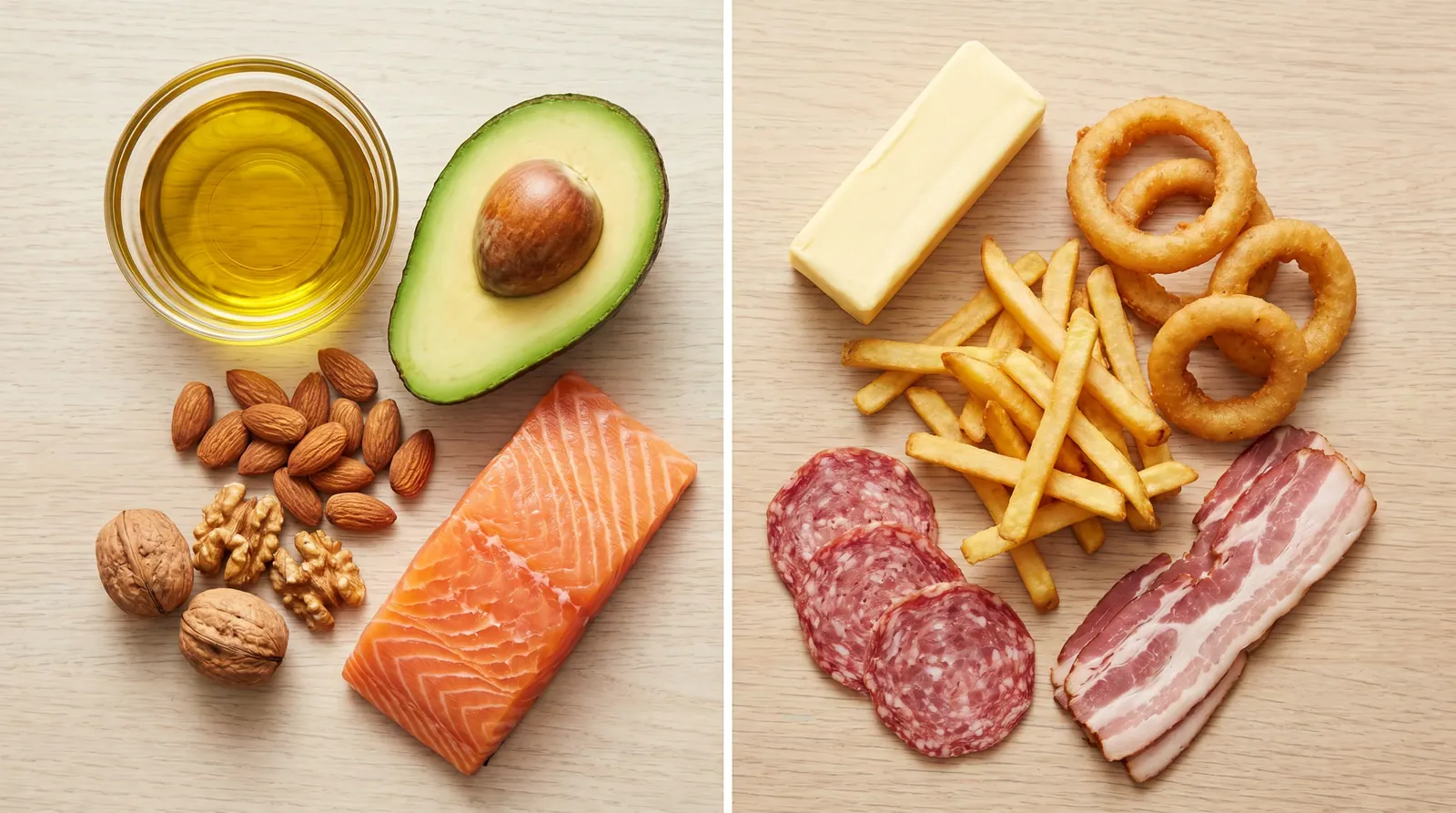
This is the most crucial point in the article. When researchers compared the impact of saturated fat versus dietary cholesterol, it became clear that the amount of saturated fat you eat is what raises your blood LDL cholesterol, not the cholesterol in the food itself. In short: saturated fats are the strongest driver of elevated LDL cholesterol.
The reason is simple: saturated fats make your liver slower at removing LDL cholesterol from the blood, causing it to accumulate and its level to rise. What does this mean for you practically? Focus on reducing animal ghee, visible fats in meats, skin, butter, and full-fat cream, rather than panicking about an egg or a piece of liver. This distinction frees you from unwarranted anxiety and directs you toward what truly makes a difference on your plate.
Trans Fats: Double Harm That Should Be Zero
If saturated fats are bad, industrially produced trans fats are twice as bad. They raise LDL cholesterol and lower HDL cholesterol simultaneously, meaning they increase what clogs arteries and decrease what cleans them, in addition to damaging blood vessel health.
Their source is partially hydrogenated oils found in some processed baked goods, fast foods, and older types of vegetable shortening. The good news from Saudi Arabia is that the World Health Organization recognized the Kingdom among countries that implemented exemplary policies to eliminate industrial trans fats. Application: read ingredient labels and avoid any product mentioning partially hydrogenated oil. The goal is zero trans fats, not just reduction.
The Egg Myth: Why You're Freed from the Blacklist
For decades, eggs were unjustly blamed. The scientific truth is that consuming dietary cholesterol has a minimal impact on blood cholesterol for most people, as the liver compensates by reducing its own production. This is why the U.S. dietary guidelines removed the daily dietary cholesterol limit in 2015.
For most people, cholesterol levels are barely affected by eggs. A smaller group, called hyper-responders, may see an increase in LDL, but their HDL also rises, and their LDL particles shift to a larger, less harmful pattern. An important exception: some reviews suggest that individuals with diabetes may need to moderate their daily egg intake. These individuals should consult their doctor. Application: one to two eggs daily within a healthy dietary pattern is acceptable for most healthy individuals. Concern should be directed towards what the eggs are cooked in (like ghee), not the eggs themselves.
Oats and Soluble Fiber: How Beta-Glucan Catches Bile
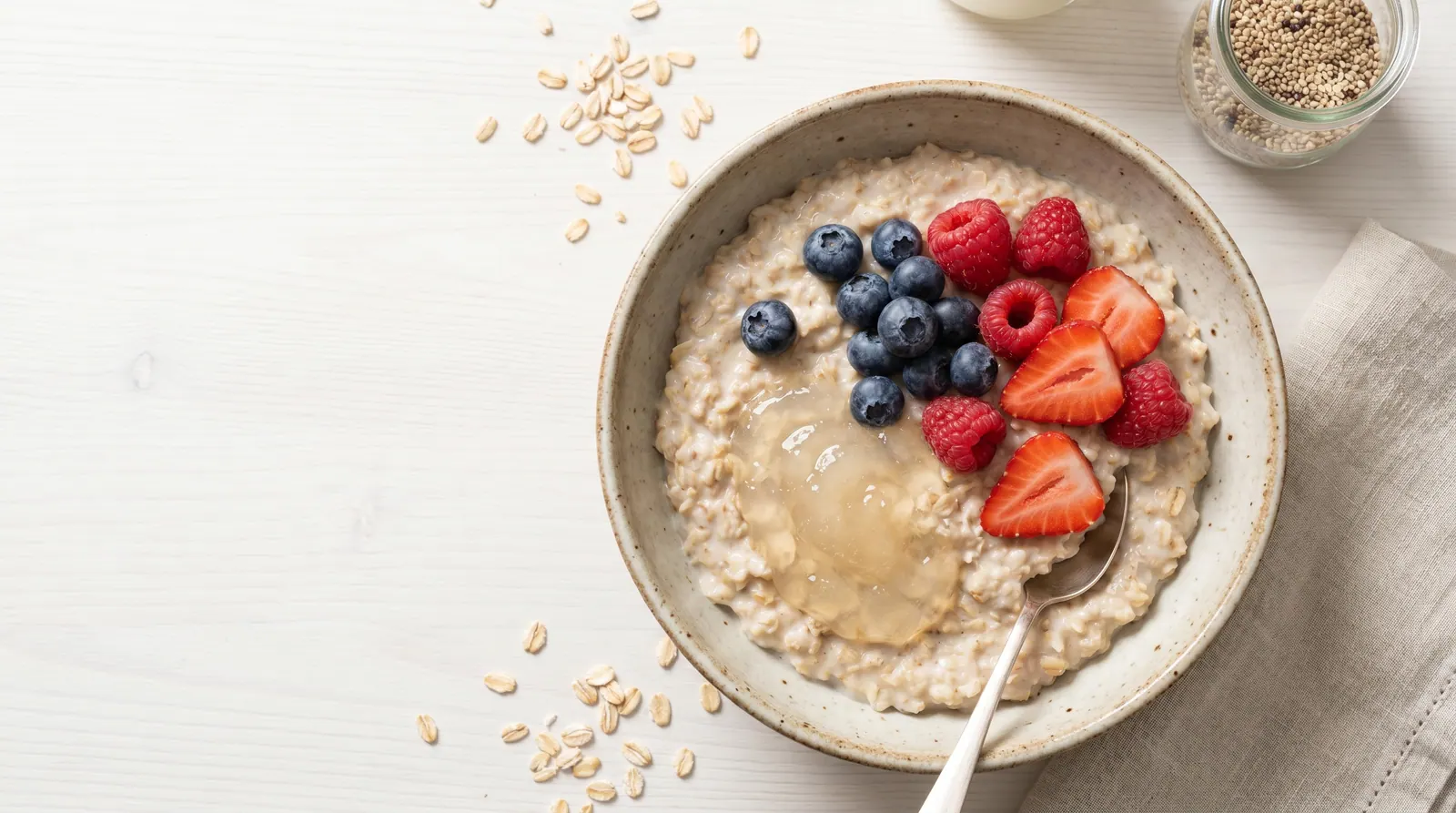
Oats contain beta-glucan, a viscous soluble fiber, and its mechanism is elegant. When it contacts water in the intestines, it swells into a gel that traps bile acids, preventing their reabsorption and thus excreting them with stool. Bile acids are originally made from cholesterol in the liver, forcing the liver to produce a new batch. To do this, it draws LDL cholesterol from the blood, lowering its level.
The amount recommended by nutrition experts for a noticeable effect is about one and a half bowls of cooked oats daily, sufficient to significantly lower LDL cholesterol with consistent consumption over weeks. An important condition: choose whole or rolled oats, not instant varieties that are heavily processed, as oats closer to their natural state are more effective. In your Saudi kitchen, a bowl of oats with low-fat milk for Suhoor during Ramadan is an ideal meal that keeps you full longer and lowers your cholesterol.
Legumes and Nuts: A Daily, Affordable Treasure
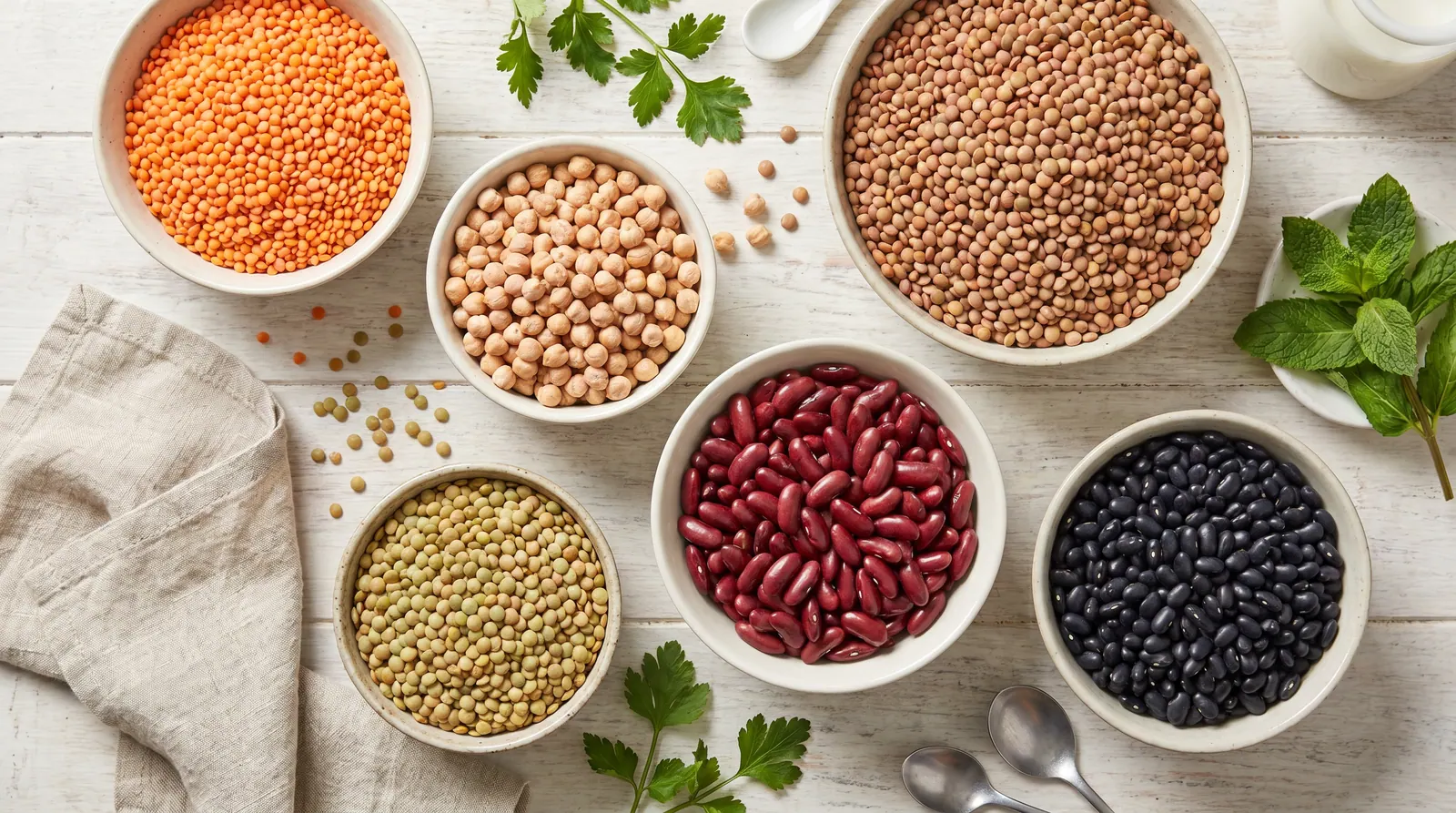
Lentils, chickpeas, beans, and peas are a daily Saudi treasure. Research indicates that one serving per day, about three-quarters of a cup, can lower LDL cholesterol by about 5% within weeks. The reason is twofold: legume fiber sweeps away some cholesterol, similar to oats, and their plant protein replaces fatty meat often accompanied by saturated fats. Application is easy in your kitchen: Ful medames for breakfast, lentil soup, hummus with tahini, and beans with tomatoes. The simplest, documented step is to replace a plate of fatty red meat with a legume dish twice a week.
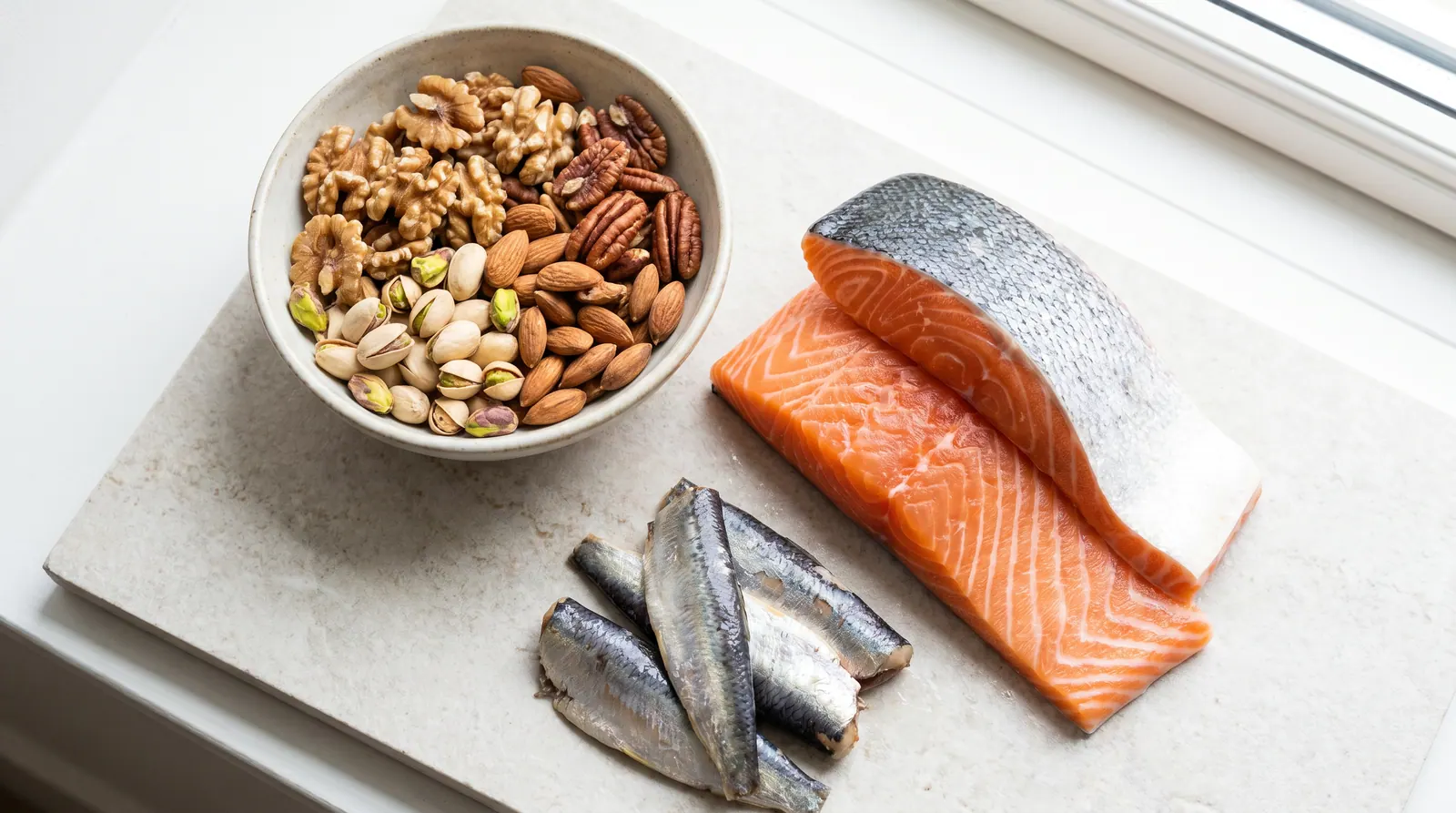
Nuts, though fatty, contain healthy unsaturated fats. Studies suggest a daily serving of nuts lowers LDL cholesterol, and walnuts specifically lower LDL and triglycerides without harming HDL. The idea is simple: when you eat nuts instead of a fatty, saturated-fat snack, you replace a cholesterol-raising fat with one that lowers it. Application: a handful, about 30 grams, of unsalted almonds or walnuts as a replacement for a salty or sweet snack. Be mindful that they are calorie-dense, so let them replace something else, not be added on top.
Fatty Fish and Olive Oil: The Strongest Experimental Evidence
Salmon, mackerel, sardines, and tuna are rich in marine omega-3s, and their most significant effect is on triglycerides, not LDL cholesterol. Simply put, marine omega-3 helps your liver produce fewer triglycerides, and the American Heart Association recommends fish as the source. The important distinction to remember: fish strongly lower triglycerides, but their effect on LDL cholesterol is limited; they complement fiber and legumes, not replace them. Application: two servings of fatty fish per week, grilled or baked, not fried. This is an accessible option in your coastal cuisine, like Sayadieh or grilled fish.
The strongest evidence that a complete pattern protects the heart comes from a large trial in Spain. Thousands of high-risk individuals were followed, and those who adhered to the Mediterranean diet rich in extra virgin olive oil and nuts saw their risk of cardiovascular disease and mortality decrease by about 30% compared to those who simply reduced fat. The more extra virgin olive oil in the diet, the lower the risk. Importantly, nuts improved the quality of LDL cholesterol itself, making it less atherogenic. The conclusion is that the miracle isn't in a single food but in the overall pattern. The simplest Saudi application is to replace ghee with olive oil in your cooking and salads.
What to Replace Saturated Fats With: The Crucial Equation
Reducing saturated fat alone is not enough; what you replace it with is crucial. Replacing saturated fats with polyunsaturated fats from vegetable oils, nuts, and fish reduces heart disease risk by about 30%, according to the American Heart Association. However, replacing them with refined carbohydrates and sugar does not benefit the heart and may even increase triglycerides.
This is where most people make a mistake: they give up butter only to eat white bread, juices, and refined rice, and don't improve. The practical rule: when you reduce ghee, replace it with olive oil, canola oil, or nuts, not with more white rice, bread, and sweets. Replace bad fat with good fat, not with bad carbohydrates.
Lowering vs. Raising Foods — A Quick Chart
Here are common examples of foods that raise LDL cholesterol, with recommended alternatives that lower it and serve the same purpose on your table:
Illustrative relative ranking of effect direction, not absolute values. Actual impact varies by quantity and overall diet.
| Category | Reduce (Raises LDL) | Substitute (Lowers LDL) |
|---|---|---|
| Cooking Fats | Animal ghee, butter, hydrogenated oils | Extra virgin olive oil, canola oil |
| Protein | Fatty & processed meats, skin | Legumes, fatty fish, skinless chicken |
| Carbohydrates | White bread, refined white rice | Whole oats, whole grains |
| Snacks | Processed baked goods, fried foods, sweets | Handful of unsalted almonds or walnuts |
| Dairy | Cream, full-fat milk | Low-fat products in moderation |
| Beverages | Juices & sweetened drinks | Water, unsweetened tea |
Remember that the overall pattern is more important than a single food item. This list is a guide to start, not a permanent restriction.
Quality of LDL Cholesterol, Not Just Quantity
Not all LDL cholesterol is equally dangerous. There's a type of LDL particle that is small and dense, making it more atherogenic because it infiltrates artery walls more easily and stays in the blood longer. There's also a larger, lighter type that is less harmful as it often bounces off the artery wall. So, what matters isn't just your number, but the quality of what that number represents.
What creates the more dangerous type? Sugar, refined carbohydrates, and high triglycerides. This is why two people with the same LDL number can have vastly different risk levels. What can you do about this? The same things that lower triglycerides also improve particle quality: reduce sugar and refined carbs. This is precisely what nuts achieved in the Spanish trial. Lowering LDL cholesterol isn't just about reducing a number; it's about improving its quality too.
Five Common Cholesterol Myths
Misinformation about cholesterol often misdirects concern to the wrong culprit. Here are the most common myths and what the evidence says:
"Eggs raise cholesterol and should be avoided."
"Dietary cholesterol is the cause of high LDL."
"All fats are bad for the heart."
"Raising HDL cholesterol is the most important goal."
"High triglycerides are caused by eating fat."
Practical Tips You Can Implement Today
Before the full protocol, here are small, easy-to-implement tips derived from the above, making a real difference without turning your life upside down:
- Read Ingredient Labels First: Any product mentioning "partially hydrogenated oil," put it back on the shelf. Your goal is zero trans fats, not just reduction. These are the most dangerous fats for your heart.
- Make One Cooking Fat Swap: Replace ghee and butter with olive oil for cooking and salads, and use canola oil for higher-heat frying. One change in the kitchen impacts every meal.
- Build Your Plate Around Legumes, Not Fatty Meat: Make lentils, chickpeas, or beans the centerpiece of two meals a week instead of fatty red meat. Their plant protein protects your heart and fills you up.
- Make Nuts Your Snack: A handful (about 30 grams) of unsalted almonds or walnuts as a replacement for salty or sweet snacks, ensuring it replaces something else, not added on top, as they are calorie-dense.
- Avoid the Most Common Mistake: When you cut out bad fat, don't replace it with white bread, juices, and refined rice. This doesn't benefit your heart and may even raise triglycerides. Replace bad fat with good fat, not bad carbohydrates.
- A Smart Ramadan Trick: A bowl of whole oats with low-fat milk for Suhoor is a ready-made meal that keeps you full longer and lowers your cholesterol without extra effort.
- Reduce Sugar Before Worrying About Fat: If your triglycerides are high, cut out sweetened beverages and sweets first. Sugar and refined carbohydrates are the primary cause, not dietary fat.
- What to Ask Your Doctor: Request a blood lipid panel if you haven't had one in over two years, as the condition is silent and asymptomatic. If you are taking cholesterol-lowering medication, do not stop it due to dietary changes without consulting your doctor first.
EEINA's Dietary Cholesterol-Lowering Protocol
A practical plan combining the above into three progressive layers. Start layer by layer; the goal is a sustainable pattern, not temporary deprivation.
The protocol is based on American Heart Association recommendations, the PREDIMED trial, and soluble fiber research.
Replace Bad Fat with Good Fat
Four swaps to start with.
Add Cholesterol-Lowering Foods
Foods that actively reduce LDL.
Reduce Sugar & Refined Carbs
To improve particle quality.
The Golden Rule: The miracle isn't in a single food, but in the overall pattern. Swap, then add, then reduce refined carbs, and screen your lipids regularly.
Frequently Asked Questions
Should I stop eating eggs if my cholesterol is high?
How many bowls of oats do I need daily to effectively lower cholesterol?
What is the best substitute for ghee in Saudi cooking to protect the heart?
Is diet alone enough, or do I need medication?
How can I lower high triglycerides through diet during Ramadan?
Start Your Next Step with EEINA
Heart-Friendly Meal Plans
Saudi recipes featuring olive oil, oats, legumes, and fish, designed for dietary cholesterol lowering.
Get Your Plan →Transform Your Favorite Recipes
Modify your favorite Saudi dishes into heart-friendlier versions with low-saturated fat alternatives.
Try It →The EEINA App
Track your daily saturated fat and soluble fiber intake, and get reminders for fish and legume servings.
Download →